Having trouble submitting? Email us directly at nicole@beauway.com and we'll get back to you within 24 hours.











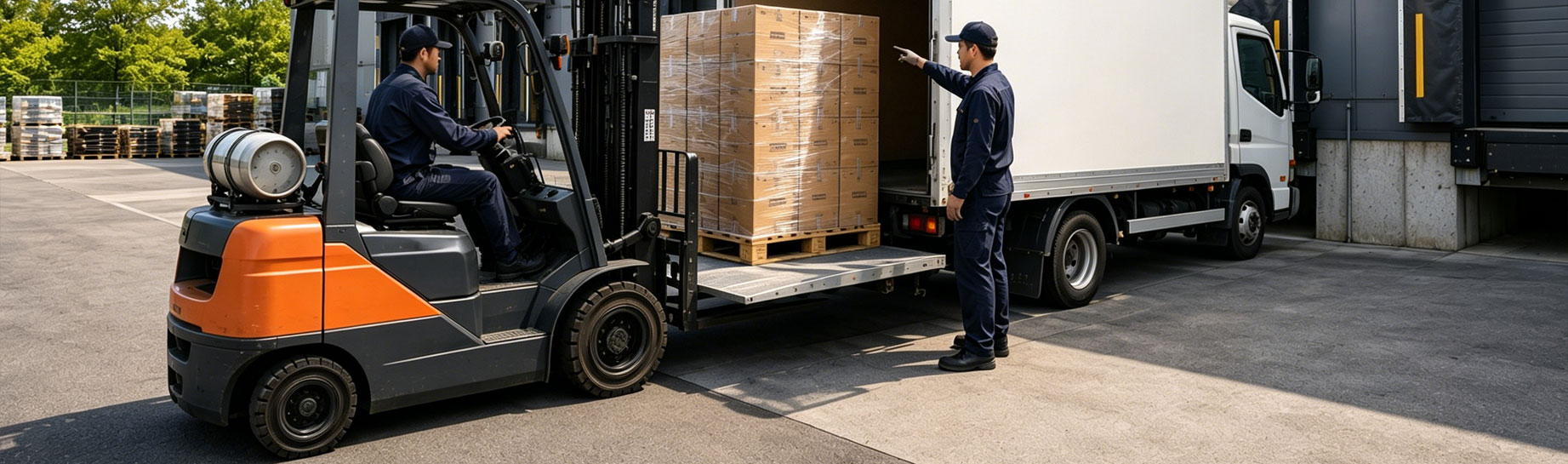
Tail Lift Running Rough or Leaking Seals? Fix It With the Right Hydraulic Oil
Let me be straight with you — I’ve made the wrong call on hydraulic oil before. Early in my career maintaining commercial vehicle equipment, I swapped in a generic ISO VG32 oil on a hydraulic tail lift because the workshop had run out of the specified grade. Three months later, the platform seals started weeping. The cylinder response got sluggish. By month five, we had a full stick-slip problem on a truck liftgate serving a busy distribution depot. That mistake cost the client two days of downtime and a seal replacement job nobody wanted to deal with.
That experience changed how I approach tail lift maintenance permanently.
So if you’re here because you’re staring at your hydraulic liftgate and wondering what oil to pour in — or because something isn’t moving quite right and you’re starting from scratch — this is the guide I wish I’d had.
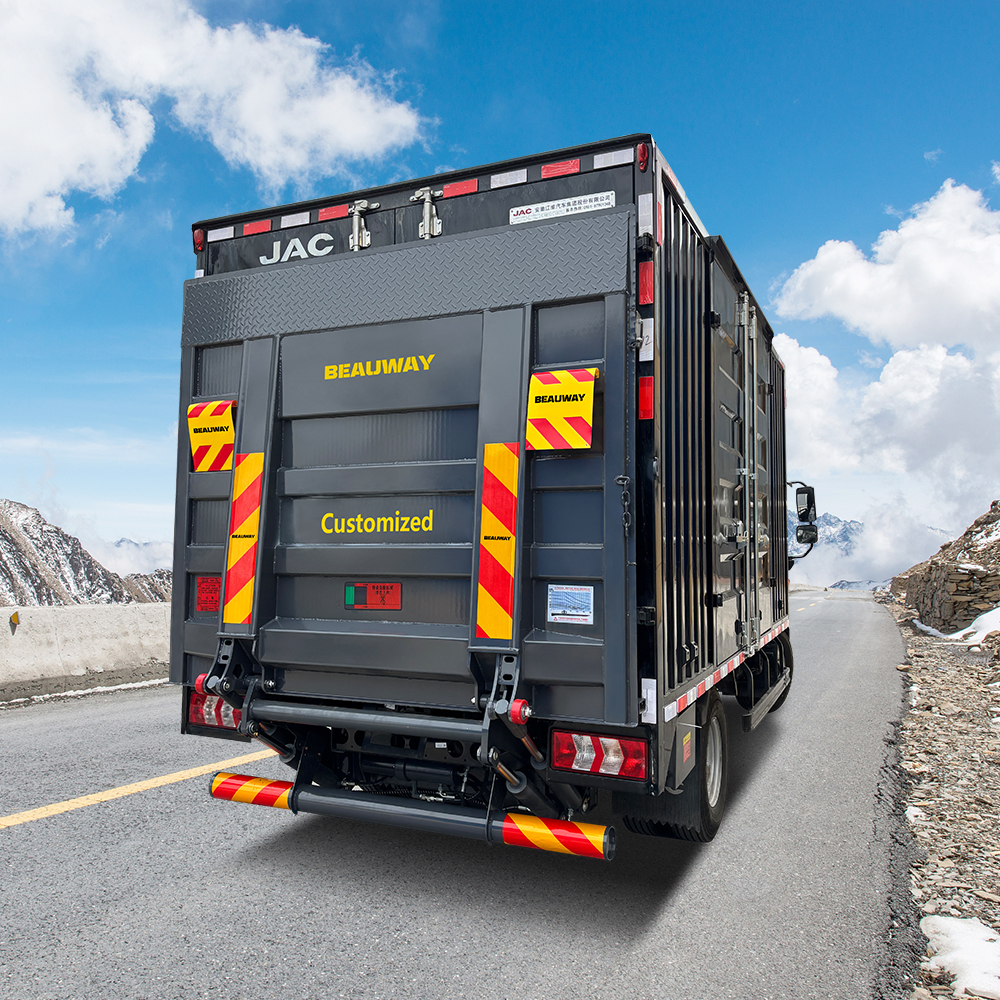
The oil question nobody gives a straight answer to
Search online and you’ll get a lot of “it depends” responses. Which, fine, technically true. But most operators running a truck tail lift day-to-day need something more useful than that.
Here’s my honest take after years of hands-on tail lift troubleshooting: the majority of hydraulic tail lift systems running in standard commercial conditions perform best on ISO VG22 dedicated hydraulic lift oil. Not engine oil. Not ATF. Not whatever’s sitting on the shelf. A proper, purpose-formulated lift hydraulic oil in the VG22 viscosity range.
Why VG22 specifically? Because it sits in a practical middle ground. It flows well enough in cooler morning starts without losing its film strength when the system heats up during heavy afternoon loading cycles. For a truck liftgate or cargo liftgate running in a temperate climate with mixed seasonal conditions, VG22 covers you across most of the year without drama.
That said, there are real exceptions. And they matter.
When VG22 isn’t the right answer
Cold weather operations — if your vehicle liftgate is working through genuine winter conditions, sub-zero mornings, refrigerated dock environments — drop down to VG10. I’ve seen box truck tail lift platforms refuse to move on cold mornings because the oil was too thick to circulate properly through the valve block. The pump was working fine. The oil just wouldn’t flow fast enough to build pressure in time. VG10 solves that.
Heavy sustained loads in hot climates — running a hydraulic liftgate at or near its rated capacity, repeatedly, in summer heat? VG32 gives you better film strength under those conditions. The oil won’t thin out as aggressively when the system temperature climbs.
Here’s a simple reference to keep near your maintenance bay:
| Operating Condition | Recommended Grade | Notes |
|---|---|---|
| Cold climates, winter use | ISO VG10 | Essential for cold chain vehicle liftgate operations |
| General year-round use | ISO VG22 | Best all-round choice for truck tail lift fleets |
| Heavy loads, hot climates | ISO VG32 | Better film strength for high-cycle hydraulic liftgate work |
| Heavy-duty, rated capacity daily | ISO VG32 to VG46 | Consult manufacturer spec for truck loading liftgate |
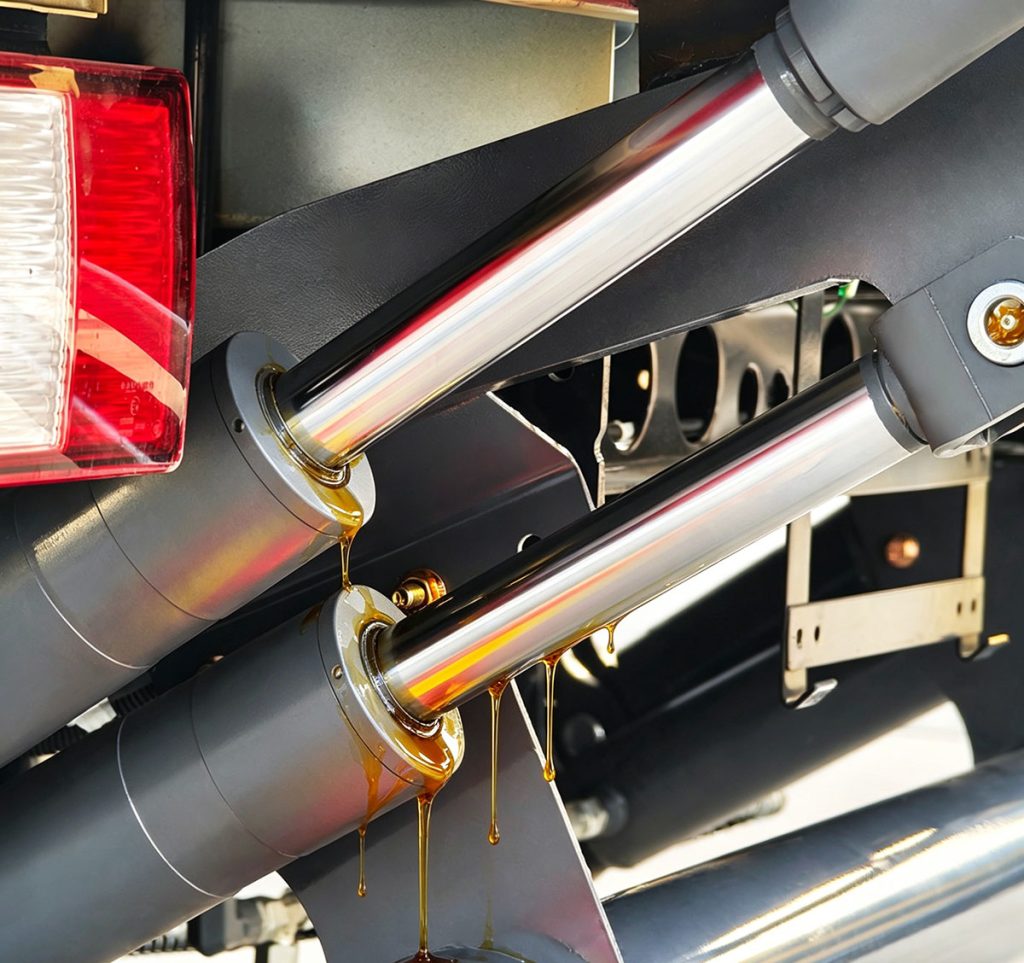
What the viscosity number actually means in practice
Viscosity is just resistance to flow. Higher number, thicker oil, slower movement through the system. Lower number, thinner oil, faster circulation but less protective film at pressure.
For a hydraulic tail lift system, the oil needs to do two contradictory things simultaneously: flow freely enough to respond instantly to valve commands, and maintain enough body under pressure to protect every seal and bore in the circuit. That tension is why viscosity grade matters so much — and why “close enough” often isn’t.
The other thing worth understanding is that viscosity changes with temperature. An oil that’s perfectly graded at 40°C behaves very differently at -5°C or at 80°C. Good dedicated lift hydraulic oils have a stable viscosity index — meaning they don’t thin out or thicken as dramatically across the temperature range. Cheap general-purpose oils often don’t.
One thing I always check on the technical data sheet before recommending any oil for a truck rear lift platform: the viscosity index number. Anything below 100 makes me hesitant. Above 130 and you’re in good territory for year-round tail lift maintenance.
The stuff they don’t put on the product label
Viscosity grade gets most of the attention. But there are two other properties that genuinely determine how long your hydraulic liftgate components last.
Anti-foam performance — every time that platform cycles, oil gets agitated inside the reservoir. Foam forms. Foam in a hydraulic circuit is essentially air in the lines, which means spongy, unpredictable platform movement, and over time, cavitation damage to pump internals. A good tail lift hydraulic oil has active defoamers built in. A cheap general oil often doesn’t — and you’ll notice it during fast consecutive cycles on a busy truck loading liftgate.
Water separation and rust inhibition — this one catches people off guard, particularly in older tail lift systems. Water gets into hydraulic reservoirs. It happens through condensation, through contaminated fill equipment, through seals that aren’t perfect anymore. Once water is in there, without proper rust inhibitors in the oil, you get internal corrosion. Rust particles circulate through the system and score valve seats. In cold conditions, water in the oil can crystallize and jam a valve solid.
I’ve pulled reservoir caps off truck tail lift units and found what looked like muddy coffee at the bottom. That’s emulsified oil-water contamination, and it’s a sign the previous oil had no meaningful rust protection at all.
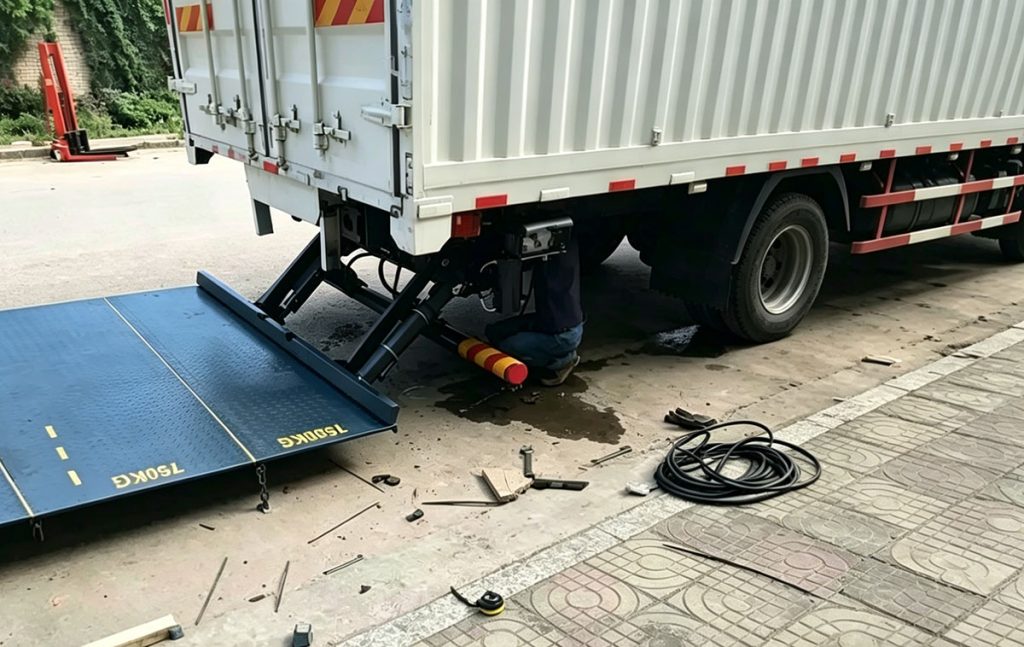
How often should you actually change it
The manufacturer line is usually twelve months or one thousand hours, whichever comes first. That’s a reasonable baseline for a hydraulic tail lift system under normal working conditions.
In reality:
- High-cycle operations — daily loading and unloading, multiple shifts, consistent heavy use — inspect every six months. Don’t just top up. Pull a sample, look at it, smell it. If it’s dark, murky, or has any milkiness to it, change it.
- Seasonal check before winter — mandatory, not optional. Water contamination in the oil plus freezing temperatures is how you crack a valve body on a cargo liftgate and spend a week waiting for parts.
- After any major repair — if you’ve had seals replaced, a cylinder rebuilt, or any significant work done on the hydraulic liftgate, change the oil at the same time. There will be contaminants in the system from the repair.
Signs the oil needs changing regardless of schedule:
- Platform hesitates or surges during lifting — classic tail lift troubleshooting indicator
- Oil has gone dark brown or black
- Milky or cloudy appearance in the reservoir
- Any visible particles or grit when wiping the dipstick or fill cap
- System takes noticeably longer to build pressure than it used to
How much oil does a tail lift actually take
This varies more than people expect. Rough figures based on what I see regularly:
- Lighter platform units, sub-500kg rated capacity: 3 to 5 litres
- Mid-range truck tail lift, 500kg to 1,500kg: 5 to 8 litres
- Heavy commercial hydraulic liftgate, above 1,500kg: 8 to 15 litres
If you’re flushing the system — not just draining and refilling, but actually running fresh oil through to clear out contamination — budget for roughly double the standard fill volume. You’ll use the first batch for flushing cycles, drain it, then fill properly with the second.
Always go back to the manufacturer’s documentation for your specific box truck tail lift or truck rear lift platform model. These figures are reasonable starting points, not universal rules.
The step-by-step oil change process
I’ve done this enough times that it’s muscle memory, but I’ll walk through it properly because the sequence matters.
Lower the platform completely first. The tail lift system needs to be fully retracted before you start. This puts the oil back into the reservoir where you can actually drain it, and gives you an accurate read on oil level afterward.
Set up your drain equipment before you open anything. Waste oil container positioned, funnel ready, rags within reach. Hydraulic oil goes places you don’t want it if you’re not prepared.
Remove the drain plug slowly. Let the old oil flow out fully. While it’s draining, look at what’s coming out. Color, clarity, any visible particles — this tells you something about what’s been happening inside the hydraulic liftgate system.
Decide whether to flush. If the oil coming out looks clean-ish and you’re just on a routine interval change, you can refill directly. If it’s heavily contaminated, emulsified, or full of debris, flush the system. Add a small quantity of fresh oil, cycle the platform several times manually, drain again.
Refill to the marked level — not above it. Overfilling causes pressure issues and can push oil out through seals that are doing fine otherwise. Fill to the line, not past it.
Run the system and recheck. Five to ten full lift cycles. Then let it sit for a few minutes and check the level again. Top up to the line if needed.
Don’t skip the leak check. After the first full working session post-change, get under the unit and look at every connection point, the reservoir cap, and the cylinder rod seals. A fresh oil change sometimes reveals a slow leak that the old, thickened oil was masking.
What not to use — this list matters
During tail lift troubleshooting callouts, I still encounter this regularly. People reach for whatever is available. The following are not acceptable substitutes in any hydraulic tail lift system:
- Engine oil — wrong additive package entirely, viscosity index unsuitable for hydraulic circuits, accelerates seal degradation
- Automatic transmission fluid — additive chemistry is incompatible with most hydraulic liftgate seals, causes swelling and premature failure
- Brake fluid — completely incompatible, will destroy seals rapidly, full stop
- General-purpose gear oil — too heavy, wrong chemistry, will slow the tail lift installation’s entire hydraulic response
Following any tail lift installation or major component replacement, refer to the equipment manufacturer’s hydraulic specification before selecting oil. If you can’t locate the documentation, contact the supplier directly rather than guessing.
Summary of what this article covers
This piece works through the hydraulic oil question from the ground up — viscosity selection logic for different operating conditions, the anti-foam and rust protection properties that most people overlook, realistic change intervals beyond the manufacturer’s conservative baseline, how much oil a typical tail lift system actually takes, a practical step-by-step change procedure, and a clear list of what not to use.
Everything here comes from real tail lift maintenance and tail lift troubleshooting work, not from product brochures.
A note on sourcing through Beauway
For operators sourcing hydraulic oil, seal kits, or complete hydraulic tail lift system components at volume, Beauway handles procurement across the full range — from individual truck liftgate consumables through to bulk supply agreements for fleet operators.
Their catalogue covers hydraulic oil specifications compatible with major tail lift brands, along with the seals, valve assemblies, and control components that come up most often in tail lift troubleshooting and scheduled tail lift maintenance. If you’re running a mixed fleet with different box truck tail lift and cargo liftgate configurations, their team can help match oil specifications to each unit rather than defaulting to a single grade across the board.
For pricing and specification enquiries, reach out directly through Beauway‘s sales channel. For volume orders they’re worth talking to before you commit to a supplier.
Trusted by Fleet Operators Across 60+ Countries
Stop Losing Time at the Loading Dock.
Get a Custom-Matched Tail Lift Quote in 24 Hours.
60
Countries Served
24h
Quote Turnaround
99.9
Field Uptime
5.0
Customer Rating
No Obligation
CE & UKCA Certified
Standard & Custom Builds
Worldwide Shipping