Having trouble submitting? Email us directly at nicole@beauway.com and we'll get back to you within 24 hours.











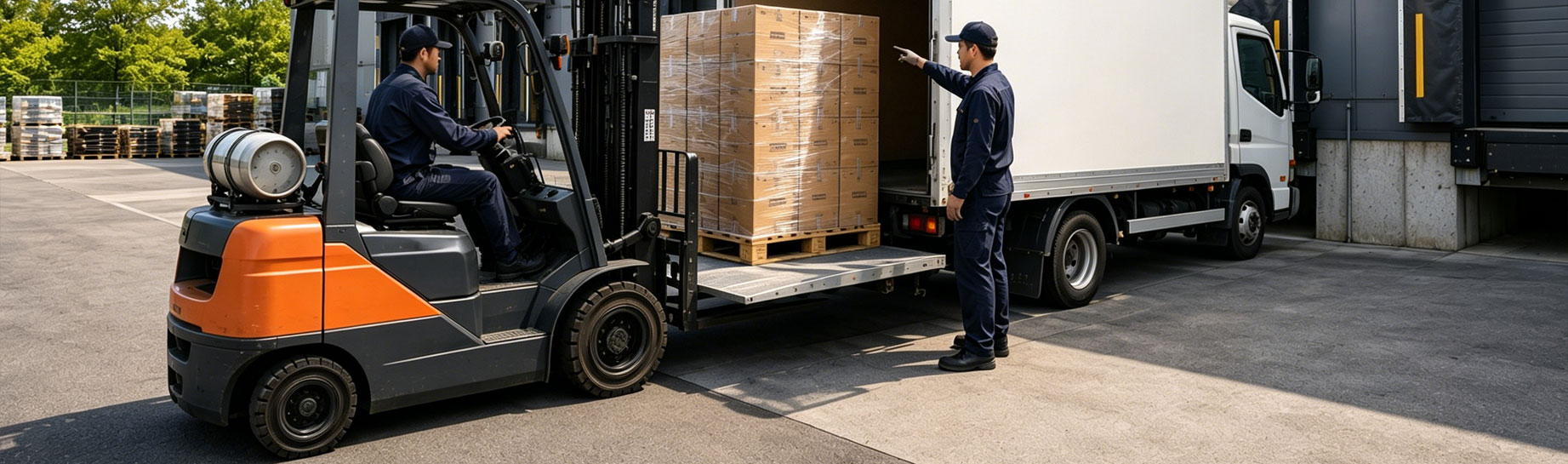
Folding vs Concealed Tail Lift: Which One Fits Your Fleet?
Folding Tail Lift vs Concealed Tail Lift: Which One Is Right for Your Fleet?
Quick answer: Folding tail lifts are better for high-cycle, heavy-load, and outdoor operations. Concealed tail lifts are better for urban delivery fleets where vehicle appearance, rear clearance, or city access restrictions drive the decision. The operating environment — not purchase price — should determine the choice.
Quick Decision Guide
Choose a folding tail lift if your operation involves high daily cycle counts, heavy cargo above 1,500 kg, outdoor or coastal environments, multi-country routes where fast parts availability matters, or straightforward in-house maintenance requirements.
Choose a concealed tail lift if your operation involves urban last-mile delivery with city access restrictions, fleet branding that requires a clean vehicle rear, loading bays with limited rear clearance, moderate cargo loads under 1,500 kg, or e-commerce fulfilment and retail replenishment routes.
What Is a Folding Tail Lift?
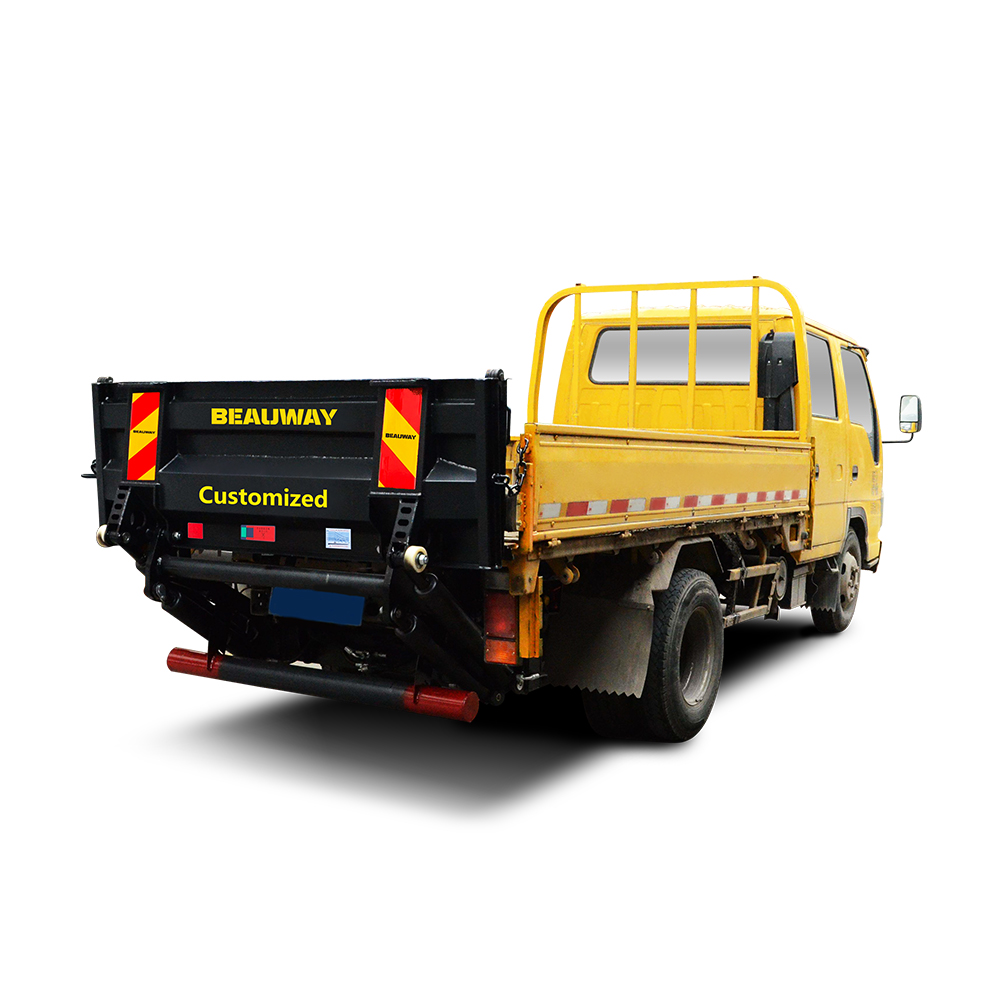
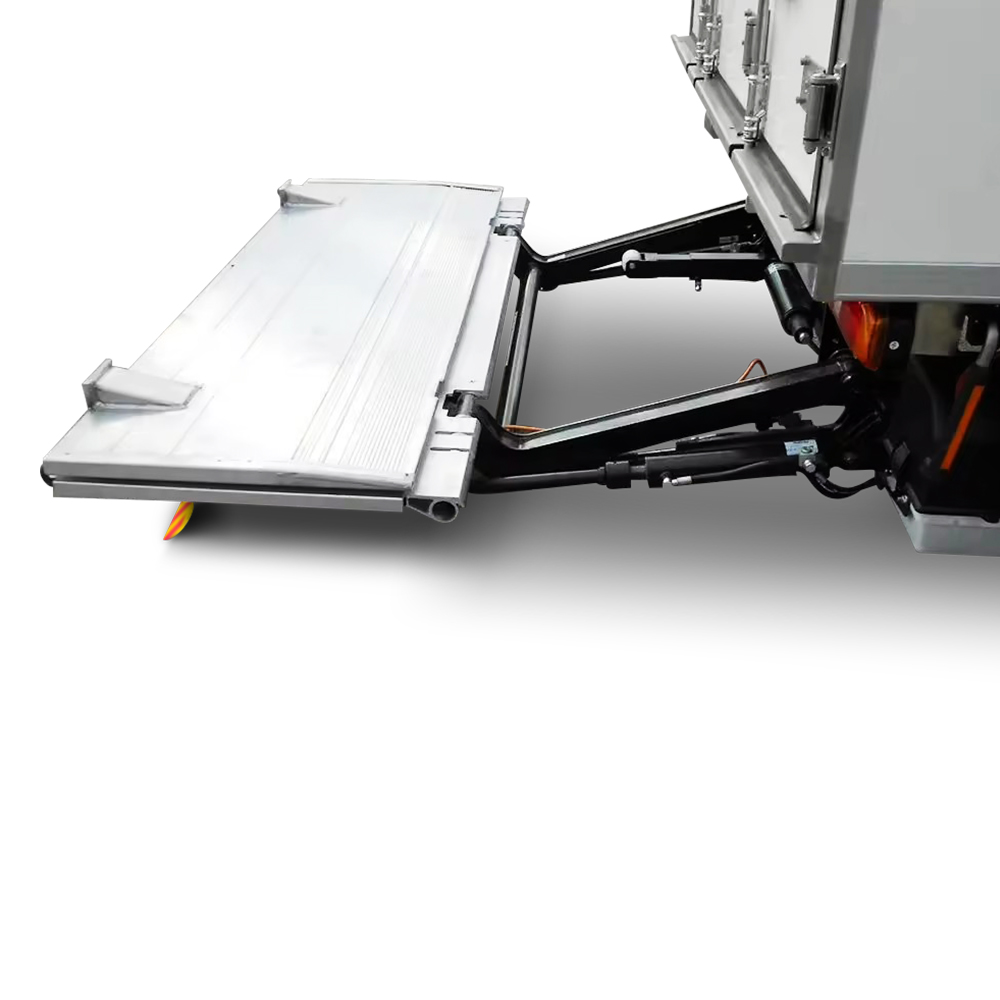
A folding tail lift has a two-section hinged platform that folds flat against the vehicle rear when stored and drops into a full working surface when deployed. One hydraulic cylinder drives the main arm; the fold is mechanically linked, so the platform opens in a single continuous motion.
Main components include a two-section aluminium alloy or steel platform with an anti-slip surface, a primary hydraulic cylinder in single or twin configuration, a hinge assembly where wear appears first on high-cycle vehicles, a control valve block operated by pendant or panel switch, and a travel lock to secure the platform during transit.
Rated load capacity runs from 500 kg to 2,000 kg for standard commercial truck applications. Typical deployed platform dimensions range from 1,200 mm × 1,600 mm up to 1,600 mm × 2,200 mm depending on vehicle body width.
What Is a Concealed Tail Lift?
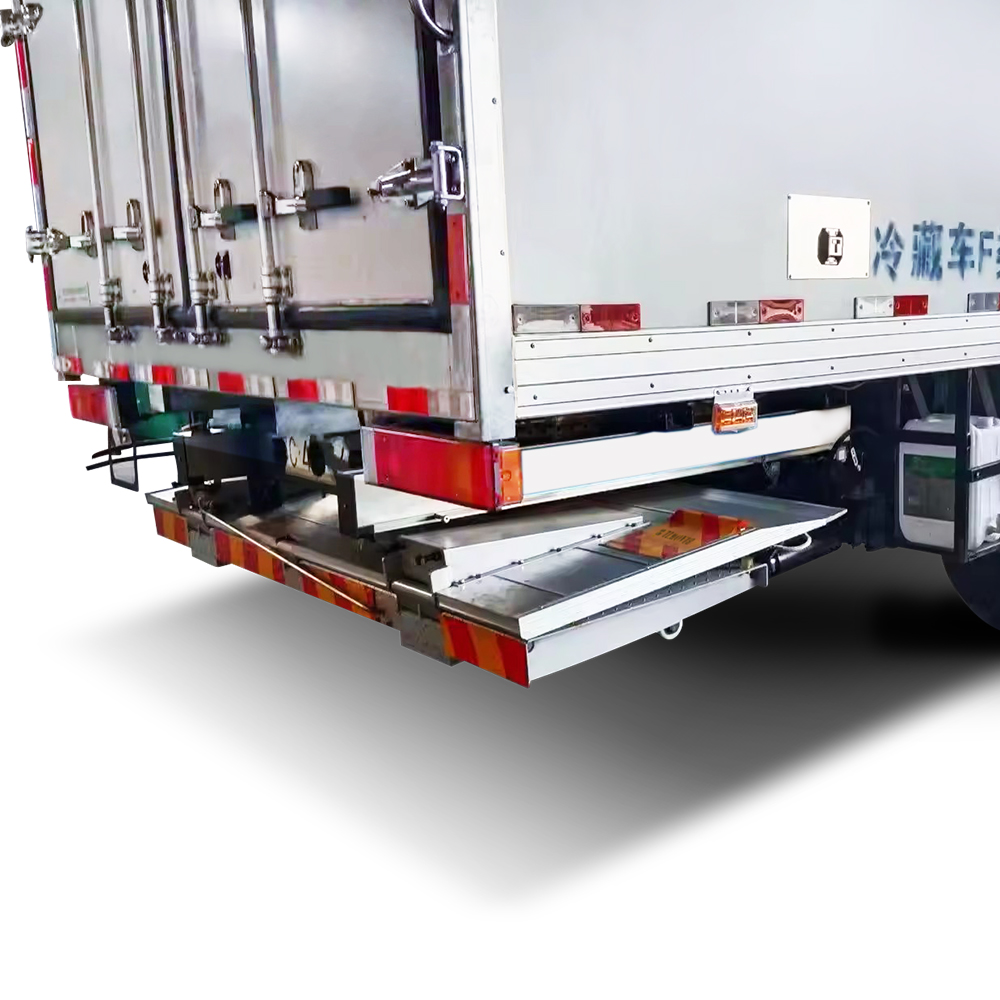
A concealed tail lift — also called a tuckaway tail lift or hidden liftgate — stores completely within the vehicle underframe. From outside the truck, it is not visible at all.
Deployment requires two steps: the platform slides horizontally out from under the vehicle body, then pivots down into the working position. The hydraulic power unit is housed inside the underframe to reduce exposed components and keep the installation clean. Two-step deployment means cycle time is longer than a folding unit — a practical consideration for high-frequency routes.
The engineering challenge is clearance. Low-floor box trucks may have under 400 mm of ground clearance beneath the chassis. The folded platform must fit within that space, which demands tighter manufacturing tolerances. The difference between well-engineered and poorly-engineered concealed units becomes visible years later, in how guide rails and rollers wear.
Main components include slide rails and guide channels (the primary wear points), an integrated hydraulic power unit, guide rollers that require regular alignment checks, and perimeter seals on the underframe opening that prevent water ingress when maintained correctly.
Rated load capacity is 500 kg to 2,000 kg — comparable to folding units. The difference is not capacity, but installation complexity, maintenance requirements, and purchase cost.
Folding Tail Lift vs Concealed Tail Lift: Side-by-Side Comparison
Stowed appearance: folding lifts leave the platform visible at the vehicle rear; concealed lifts are fully hidden within the underframe.
Suitable vehicle types: folding lifts suit flatbeds, box trucks, and refrigerated vehicles; concealed lifts suit box trucks and last-mile delivery vehicles.
Rated load capacity: 500–2,000 kg for both types.
Deployment: folding lifts use a single motion and are faster; concealed lifts use a two-step motion and take longer per cycle.
Installation complexity: folding lifts require moderate installation; concealed lifts require structural modification to the chassis frame, which increases both installation time and labour cost.
Primary wear points: folding lifts wear at hinge bushings and cylinder seals; concealed lifts wear at slide rails, guide channels, and perimeter seals.
High-frequency use suitability: folding lifts handle high daily cycles well; concealed lifts are manageable but require consistent guide rail lubrication — this is non-negotiable.
Price for steel platform: folding lifts run USD 965–1,170; concealed lifts run USD 2,210.
Price for aluminium platform: folding lifts run USD 1,380–1,520; concealed lifts run USD 2,900.
Pricing based on Beauway 2025–2026 export quotes. Freight and local installation not included.
Best Tail Lift Type by Application
Parcel delivery: folding tail lift. High daily cycle counts and straightforward loading conditions favour the faster deployment and simpler maintenance of a folding unit.
Grocery logistics and multi-drop routes: folding tail lift. Volume and frequency of use make cycle speed and parts availability the priority.
Urban retail replenishment: concealed tail lift. City centre access restrictions and loading bay constraints often make a concealed unit the only viable option.
Coastal and port-adjacent logistics: folding tail lift. Salt air and humidity accelerate corrosion in guide channels; folding lifts expose fewer precision components to the environment.
Last-mile e-commerce fulfilment: concealed tail lift. Load weights typically fall well under 1,500 kg, and clean vehicle appearance is often a brand requirement.
Heavy cargo transport: folding tail lift. Loads above 1,500 kg, combined with demanding outdoor conditions, consistently favour folding over concealed.
Cold chain and refrigerated transport: folding tail lift. Temperature cycling and outdoor exposure favour the more exposure-tolerant folding design.
When to Choose a Folding Tail Lift
Folding tail lifts consistently outperform in four conditions: high daily cycle counts, loads above 1,500 kg, outdoor or variable environments, and fleets where maintenance needs to be fast and straightforward.
Maintenance logic on a folding unit is direct. A worn hinge bushing is replaced. A failed seal is swapped. Most established folding tail lift suppliers hold common wear parts in stock, and lead times are short. For operators running vehicles across multiple countries, this matters — a truck out of service waiting for a part is a cost that compounds quickly.
Folding units also tolerate environmental exposure better than concealed units. Exposed hinge assemblies and cylinder rods do require corrosion protection — especially near coasts or in winter salt conditions — but the maintenance steps are visible, accessible, and well-understood.
When to Choose a Concealed Tail Lift
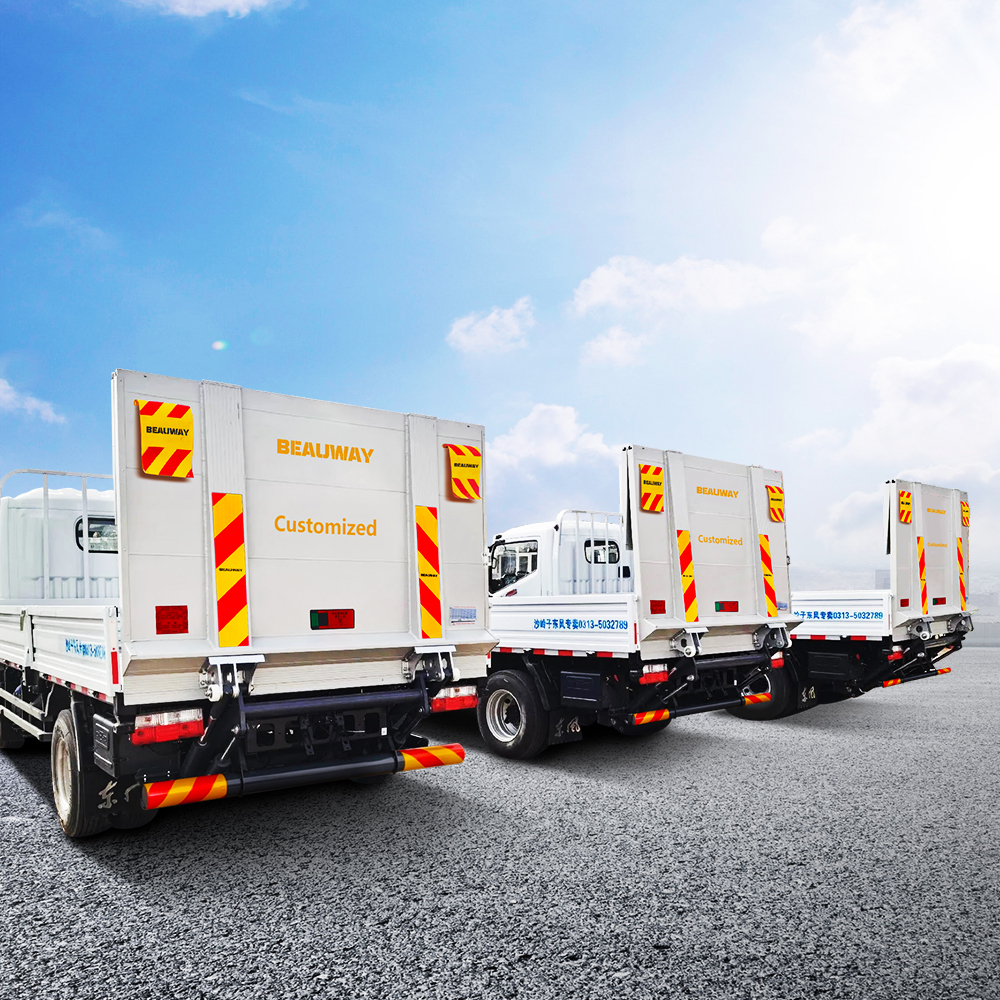
The consistent requirement among fleets that specify concealed tail lifts is that the vehicle rear cannot show external equipment. For some operators, this is a brand standard. In regulated markets, however, several European city centres restrict vehicles with external rear appendages operating in pedestrian zones or low-emission areas. Additionally, tight urban parking environments make a folded platform a physical obstruction — leaving a concealed unit as the only practical option.
Concealed units are also appropriate where loads stay under 1,500 kg and daily cycle counts are moderate — conditions typical of e-commerce fulfilment and retail replenishment.
One point that cannot be skipped: installing a concealed tail lift requires opening and reinforcing the chassis frame to create the platform cavity. This structural work must be carried out by a manufacturer-authorised installer, not a general fabrication shop. In most European markets, unauthorised structural chassis modification causes an immediate roadworthiness failure at annual vehicle inspection.
Industry Standards and Certification
Most European commercial tail lifts are designed and tested to EN 1756-1, the harmonised standard for tail lifts on road vehicles covering safety requirements, load cycle testing, and structural integrity. CE certification is required for sale and use within the EU and confirms the product has been assessed against these requirements.
For protection against environmental exposure, IP65 is the minimum recommended rating for concealed tail lifts operating in coastal, port-adjacent, or high-humidity environments. IP65 confirms the unit is dust-tight and protected against water jets — a meaningful difference from the more common IP54 rating, which does not provide the same level of moisture protection. Specifying IP rating and guide channel material (stainless steel or hot-dip galvanised, not carbon steel) in writing as part of the purchase contract is the step that protects the buyer if a warranty dispute arises later.
For markets outside the EU: UKCA certification applies in Great Britain, AS/NZS standards apply in Australia and New Zealand, and local equivalents apply elsewhere. Confirm the applicable standard before procurement.
What Goes Wrong — and Why
Folding tail lift: hinge bushing wear
On vehicles running 30 or more lifts per day, hinge bushing wear accelerates. This is not a product defect — it reflects the load that accumulates across thousands of fold-unfold cycles per year. Early signs are slight play or noise at the hinge. Left unaddressed, play becomes structural misalignment and misalignment becomes damage that is significantly more expensive to repair than a bushing replacement would have been.
Weekly inspection of hinge play, with prompt action on any looseness found, is the prevention.
Concealed tail lift: guide channel corrosion in the wrong environment
A 28-truck logistics fleet operating near Rotterdam port specified concealed tail lifts with carbon steel guide channels and IP54 protection. The operating environment involved salt air, diesel particulate, and daily humidity cycling as trucks moved between an outdoor yard and temperature-controlled warehouses.
By month five, guide channel corrosion was narrowing slide clearance and increasing friction load on the hydraulic motor. By month six, motor current readings were elevated across multiple vehicles. Three trucks required full slide rail and channel replacement — a significantly higher cost than the original upgrade to stainless channels would have been.
The warranty claim was rejected. Salt-spray exposure exceeded the product’s documented design environment.
The error was not in choosing a concealed tail lift. It was in not tying the specification to the actual operating environment. Port-adjacent, salt-exposed operation requires IP65 minimum and stainless steel or hot-dip galvanised guide channels, confirmed in the purchase contract. Neither was in the original specification. Both were available as upgrades. Neither was flagged as necessary.
Maintenance: What Each Type Actually Requires
Folding tail lift
Weekly: check hinge bushing for play. Any movement should be addressed before it produces noise, and any noise before it produces damage.
Monthly: inspect the hydraulic cylinder rod surface for corrosion, particularly on vehicles operating near coasts or in winter road-salt conditions.
Every 1,500 operating hours or 12 months, whichever comes first: change hydraulic oil and filter. High-cycle vehicles should shorten this interval. Most tail lift manufacturers write this into warranty conditions, not just maintenance guidance — skipping it creates grounds for warranty rejection on hydraulic failures.
Ongoing: monitor anti-slip surface wear depth and repair or replace below the usable threshold.
Concealed tail lift
Every two weeks: clean guide channels, remove debris and moisture, and reapply lithium-based grease. This is the single most important maintenance interval on a concealed unit. Repeated skipping is the most direct path to accelerated guide channel wear and the type of failure described above.
Monthly: inspect guide rollers for uneven wear, which indicates developing misalignment.
Quarterly: check perimeter seals on the underframe opening. A cracked seal is an open path for water ingress into the mechanism.
Every six months: inspect all hydraulic line fittings, with focus on bends and flex points where fatigue initiates before any visible damage appears.
Frequently Asked Questions
How much does a tail lift cost?
Folding tail lifts in steel configuration typically run USD 965–1,170. Aluminium folding platforms run USD 1,380–1,520. Concealed tail lifts run USD 2,210 for steel and USD 2,900 for aluminium. These are unit prices based on 2025–2026 export quotes and do not include freight or local installation costs. Installation for a concealed unit involves chassis modification and runs higher than a standard folding unit install.
Can a concealed tail lift handle the same load as a folding tail lift?
Yes. Rated load capacity is comparable — 500 kg to 2,000 kg across both types. The difference between the two is not load rating. It is cycle speed, installation complexity, maintenance requirements, and unit cost.
Is a concealed tail lift harder to maintain?
It requires a different maintenance discipline. A folding tail lift has simpler repair logic — identify the worn component, replace it. A concealed tail lift requires fortnightly guide channel cleaning and lubrication to prevent accelerated wear. Neither type is inherently unreliable; they fail through different mechanisms and require different levels of scheduled attention.
What information do I need before requesting a quote?
Have the following confirmed before approaching any supplier: vehicle make, model, and chassis specification; maximum operating load (goods plus pallet combined, not goods net weight alone); average daily cycle count and typical duration per cycle; operating environment including indoor/outdoor use, coastal proximity, dust exposure, and temperature range; measured floor height from ground to vehicle bed (measured directly — wrong floor height is the most common cause of installation problems); and required certifications for the relevant market.
What happens if floor height is measured incorrectly?
The lift platform must reach the vehicle bed level precisely at full extension. An incorrect floor height measurement produces a platform that either falls short or overshoots, creating an angled working surface. Both outcomes require reinstallation. The measurement should be taken directly from the vehicle, not estimated from manufacturer specifications.
Summary
Folding or concealed — the choice is determined by five factors working together: operating environment, daily cycle count, load requirement, vehicle type, and local access regulations. Get those factors right and either type performs reliably within its design parameters. Get them wrong and the equipment corrects the decision through accelerated wear, warranty disputes, or forced reinstallation — at a cost that consistently exceeds the original price difference between the two options.
Selecting the right tail lift configuration should always be based on actual operating conditions, realistic maintenance capability, and local compliance requirements — not on purchase price alone.
Content provided by Beauway, a commercial loading equipment supplier. For technical consultation, contact our engineering team.
Trusted by Fleet Operators Across 60+ Countries
Stop Losing Time at the Loading Dock.
Get a Custom-Matched Tail Lift Quote in 24 Hours.
60
Countries Served
24h
Quote Turnaround
99.9
Field Uptime
5.0
Customer Rating
No Obligation
CE & UKCA Certified
Standard & Custom Builds
Worldwide Shipping