Having trouble submitting? Email us directly at nicole@beauway.com and we'll get back to you within 24 hours.











Which Type of Tail Lift Is Right for a Box Truck?
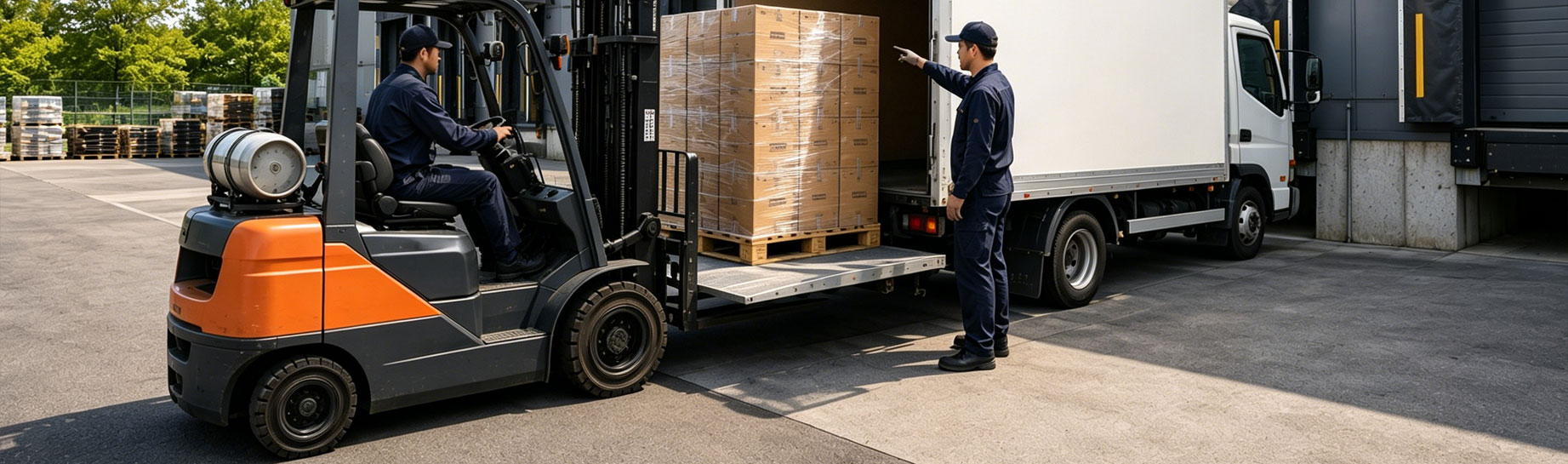
Box trucks are among the most widely deployed platforms in urban distribution, regional logistics, and multi-stop delivery operations. Selecting the wrong tail lift type for a box truck does not just create operational inconvenience — it drives up cycle times, increases operator injury risk, and adds unnecessary mechanical stress to the equipment. This article breaks down the main tail lift types used on box trucks, explains how each one works structurally, and gives fleet managers and procurement teams a clear framework for matching the right design to their operating requirements.
How Box Trucks Shape Tail Lift Selection
A box truck features a fully enclosed cargo body mounted on a chassis cab. The rear of the cargo body is sealed — typically with hinged doors or a roller shutter — and the cargo floor sits at a fixed height above ground determined by chassis specification and body build.
This enclosed-body configuration has direct consequences for tail lift compatibility:
- The tail lift must integrate with, or replace, the rear door system — or be stored in a position that allows the rear doors to function independently
- Platform width must match the rear opening of the cargo body
- The stored position of the tail lift must not compromise door sealing, particularly for temperature-controlled bodies
- Ground clearance at the rear of the chassis constrains which designs can be fitted without risk of contact on ramps and uneven surfaces
These constraints are the starting point for any serious tail lift specification exercise.
The Main Tail Lift Types Used on Box Trucks
Cantilever Tail Lift
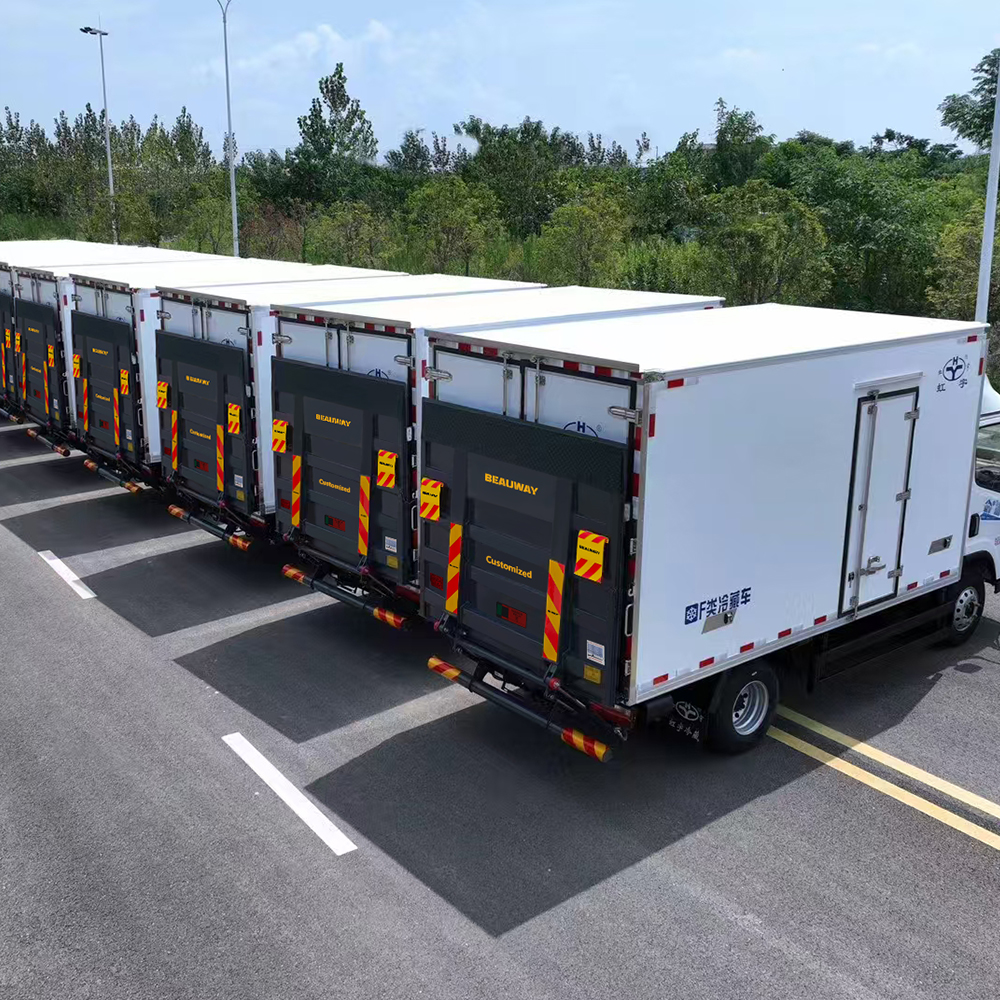
The cantilever tail lift is the most widely used type on medium and heavy box trucks. Its lift frame is mounted directly to the vehicle chassis via hydraulic rams on hinges. When not in use, the platform folds vertically upward and rests against the rear of the vehicle body — forming all or part of the rear door itself, eliminating the need for a separate door or roller shutter. When deployed, the platform is hydraulically folded open and lowered to ground level.
The operating mechanism uses two sets of hydraulic rams: one set controls the tilt angle of the platform, providing automatic levelling; the other raises and lowers it. This dual-ram arrangement allows the platform to remain level regardless of the ground surface angle beneath it, and also allows the platform to be used as a ramp.
Key operational advantages for box trucks:
- Deployment requires only two actions — fold the platform open, then lower it — making it faster to deploy than tuck-under designs
- Because the platform forms the rear door, the driver does not need to open separate rear doors or walk into a traffic lane
- The platform can function as a bridge plate between the truck and a loading dock
- Better rear ground clearance than tuck-under designs, as no mechanism is stored beneath the chassis
Limitations to consider:
- The truck cannot reverse fully against a refrigerated dock and form a complete seal, because the platform must be lowered before the vehicle can approach
- Heavier than tuck-under designs, reducing available payload marginally
- Heavy forklifts cannot drive directly into the rear of the truck if their combined weight with the load exceeds the platform’s rated capacity
The cantilever design suits box trucks making larger, less frequent deliveries where rapid deployment, high capacity, and platform stability are priorities.
Column Tail Lift (Railgate)
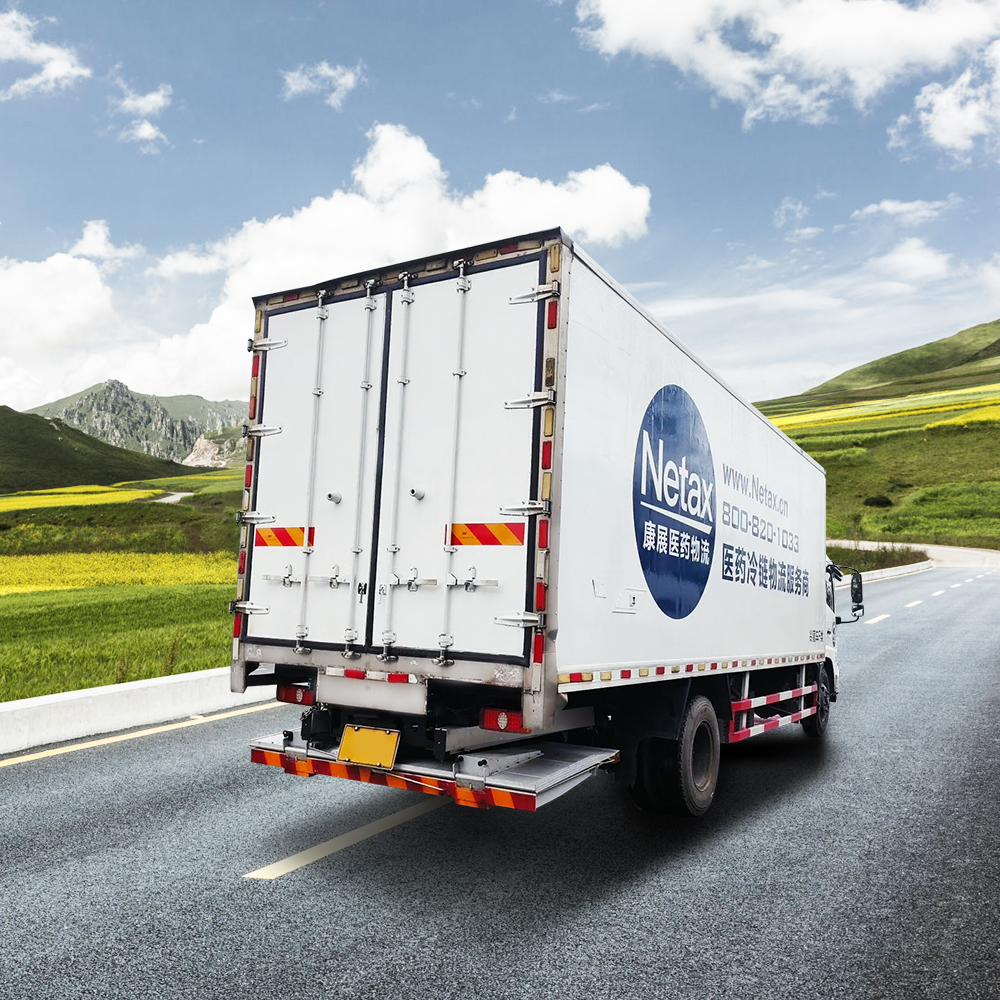
The column tail lift — also referred to as a railgate — is mounted to the rear of the vehicle via a structural H-frame fixed to the body. The flat platform extends at a 90-degree angle from the vertical columns and travels straight up and down along the tracks. When not in use, the platform folds flat against the rear of the cargo body, covering part of the rear doorway in its stowed position. The vehicle retains its own rear doors, which must be opened before the tail lift can be deployed.
Unlike cantilever and tuck-under designs, the column tail lift platform does not tilt or auto-level — it operates at a fixed vertical angle relative to the vehicle. Column tail lifts have the ability to lift higher than the vehicle’s cargo floor level, which is useful where the truck bed height is below standard dock height.
Key operational advantages for box trucks:
- Fast operational cycle — well suited to multi-drop distribution where the lift is deployed and retrieved many times per shift
- Lighter construction than cantilever designs, reducing the weight penalty on the vehicle
- Can lift above cargo floor height, accommodating non-standard bed heights
Limitations relevant to box trucks:
- Because the platform operates at a fixed 90-degree angle, it will not sit flush on uneven or cambered ground — a meaningful limitation for kerbside deliveries
- Load capacity is lower than cantilever designs
- Platform depth is typically restricted due to leverage constraints on the H-frame mounting
- When stowed, the folded platform covers part of the rear doorway, meaning the tail lift must be operated at every stop where the rear of the vehicle needs to be accessed
Column tail lifts are most appropriate for lighter-duty box truck applications — home delivery, parcel distribution, and similar multi-stop routes where speed of operation is the primary requirement.
Matching Tail Lift Type to Box Truck Application
The right tail lift for a box truck is determined by the specific operating pattern of the vehicle, not by price alone. The following framework covers the scenarios most commonly encountered in box truck fleet specification:
High-frequency multi-drop urban delivery (no dock access): The column tail lift offers the fastest cycle time and suits vehicles making many short stops with lighter loads. If loads are heavier or the ground surface at delivery points is uneven, the cantilever provides more reliable platform stability.
Mixed dock and ground-level delivery: The tuck-under design allows the truck to reverse against a dock with rear doors open and the tail lift fully stowed, then switch to lift-assisted ground-level delivery at other stops. This is the most common configuration for vehicles serving both warehouse dock points and retail or residential locations.
Heavy or bulky goods delivery (fewer stops): The cantilever tail lift is the strongest performer here. Its capacity, platform stability, bridge plate capability, and fully hydraulic operation make it the natural choice where loads exceed manual handling limits and delivery point conditions vary.
Refrigerated or temperature-controlled box trucks: The tuck-under design is the standard choice for chilled and frozen distribution. Its fully stowed position under the chassis allows a complete dock seal when reversing to a refrigerated bay — something a cantilever design cannot achieve due to the platform position against the rear of the vehicle.
Key Technical Parameters to Confirm at Specification Stage
Beyond design type, the following must be confirmed before any tail lift is ordered for a box truck:
- Rated load capacity: Must account for the maximum cargo weight plus any handling equipment — pallet trucks or roll cages — placed on the platform simultaneously
- Platform dimensions: Width must match the rear opening of the cargo body; depth must accommodate the intended load footprint
- Mounting compatibility: The tail lift frame must be compatible with the chassis specification and body builder’s rear frame design
- Electrical system voltage: Confirm 12V DC or 24V DC to match the vehicle chassis
- Ground clearance in stowed position: Critical for tuck-under designs — must be verified for both laden and unladen vehicle conditions on the steepest gradients the vehicle will encounter
- Platform material: Steel for high-load durability; aluminium where weight reduction and corrosion resistance are priorities
Closing Note
Specifying a tail lift for a box truck is a decision with long-term consequences for operational efficiency, operator safety, and maintenance costs. The cantilever design dominates medium and heavy box truck applications for its speed of deployment, capacity, and platform stability. The tuck-under is the preferred configuration where dock compatibility and rear door independence are operational requirements. The column tail lift remains the most practical solution for lighter multi-drop work where cycle speed matters most.
Beauway’s engineering team works directly with fleet operators and body builders to match tail lift specifications to vehicle and operational requirements — from initial selection through to installation, commissioning, and long-term parts support. If you are specifying a tail lift for a new box truck build or evaluating options for an existing fleet, we welcome the conversation.
Trusted by Fleet Operators Across 60+ Countries
Stop Losing Time at the Loading Dock.
Get a Custom-Matched Tail Lift Quote in 24 Hours.
60
Countries Served
24h
Quote Turnaround
99.9
Field Uptime
5.0
Customer Rating
No Obligation
CE & UKCA Certified
Standard & Custom Builds
Worldwide Shipping