Having trouble submitting? Email us directly at nicole@beauway.com and we'll get back to you within 24 hours.











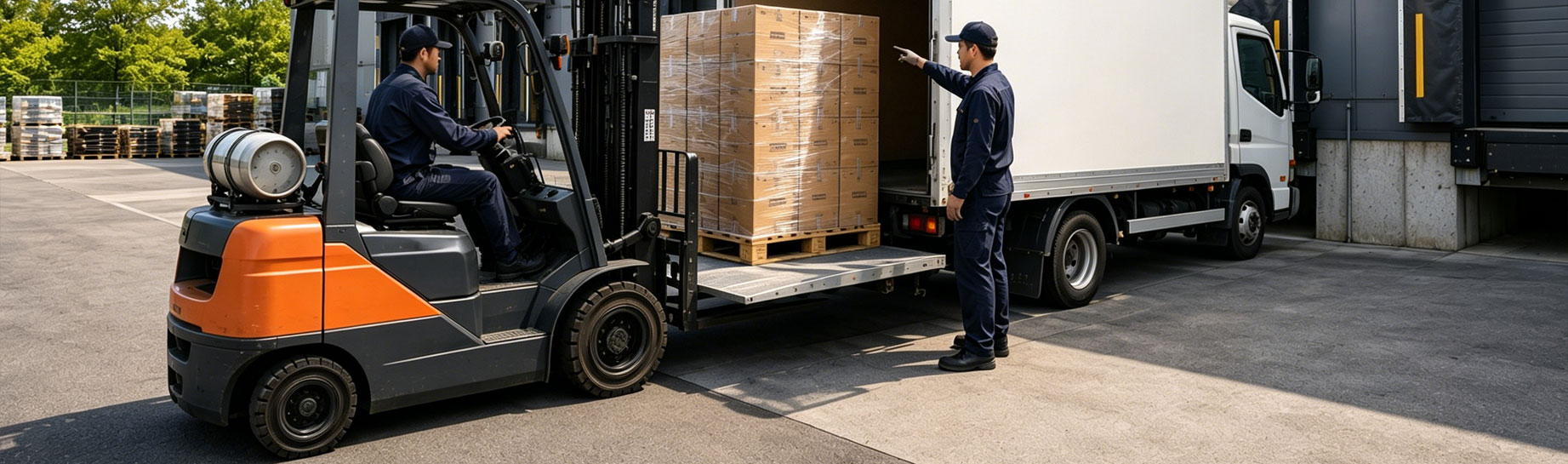
Tail Lift Supplier Evaluation: 6 Criteria, 3-Stage Checklist & Decision Framework
Tail Lift Supplier Evaluation: 6 Key Criteria, a 3-Stage Checklist, and What Goes Wrong in Global Procurement
Written by [David], equipment procurement specialist with [12] years in logistics material handling. Based on field assessments across Southeast Asia and Europe.
After years of working on equipment selection in the logistics material handling industry, I’ve seen too many procurement decisions go sideways. Some fleets spent serious money sourcing from a so-called reputable tail lift supplier, only to find hydraulic systems leaking three months after installation. Others cut corners with a small factory and ended up waiting six weeks for parts that never came.
This article isn’t here to lecture you. It’s a distillation of hard lessons — a practical reference for equipment procurement staff, fleet managers, and maintenance engineers who need to make better sourcing decisions without repeating someone else’s mistakes.
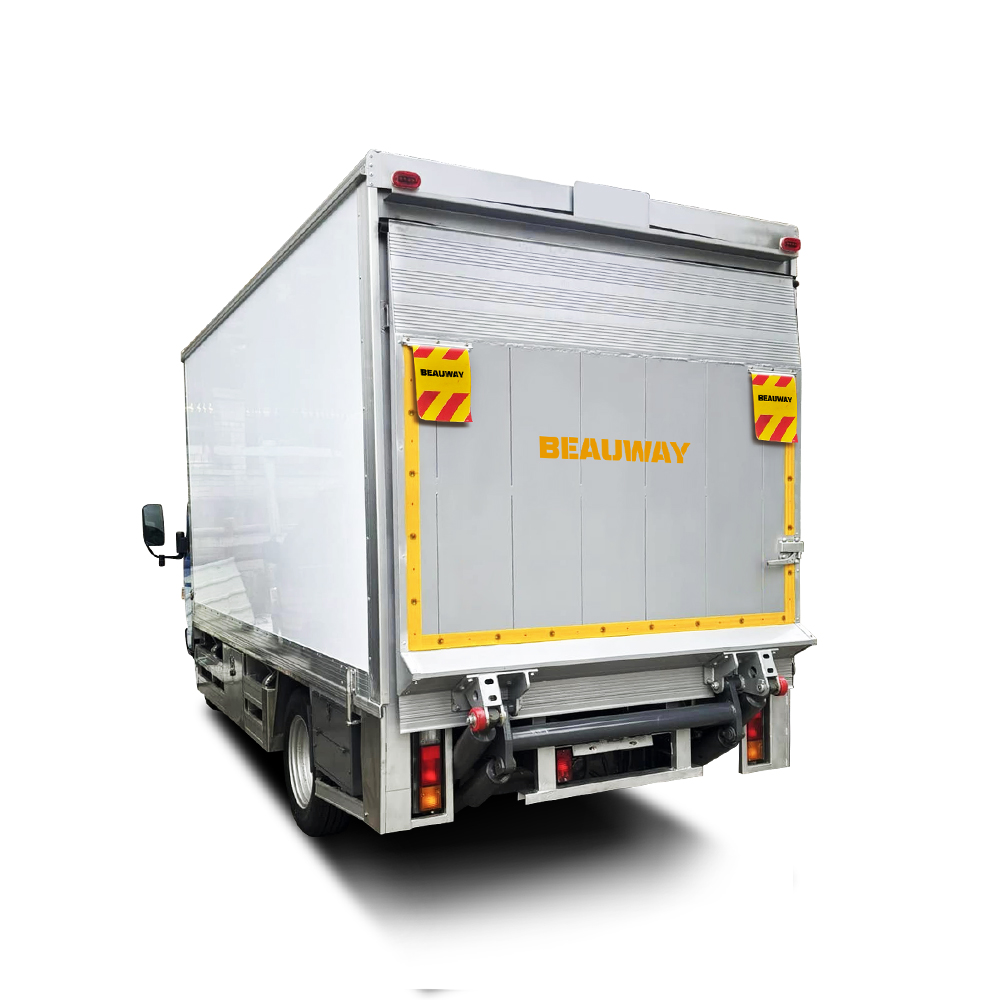
Quick Reference: How to Evaluate a Tail Lift Supplier
When comparing tail lift suppliers, procurement teams should assess six key factors:
- Factory credentials — ISO 9001, CE marking, EN 1756-1 compliance, verified independently on the issuing body’s website
- Production capacity — confirmed via actual shipping records, not sales claims
- Component traceability — know the source of hydraulic pumps, valves, and cylinders
- Control system capability — CAN bus integration vs. relay logic directly affects long-term total cost of ownership
- Warranty terms — target 18–24 months on the full unit, 12 months on hydraulic cylinders
- Parts response commitment — 48-hour turnaround on critical wear items is the industry standard
Evaluating Supplier Qualifications: Don’t Stop at the Catalog
The first thing most people get from a hydraulic lift manufacturer is a polished product catalog — impressive specs, competitive pricing. But a catalog tells you very little about what actually matters.
Factory Certifications and Production Credentials
Any legitimate truck lift OEM factory should hold ISO 9001 quality management certification at minimum. Products destined for European markets require CE marking, and certain hydraulic components need to comply with EN 1756-1 — the core safety standard for tail lifts. Once you have the certificate numbers, verify them directly on the issuing body’s website. Don’t rely on a PDF scan from the supplier.
Actual Production Capacity and Delivery Reliability
If a cargo equipment supplier claims annual output of 5,000 units but can’t produce shipping records from the last three months, that’s a signal worth taking seriously. In bulk purchasing scenarios, consistent delivery cadence matters more than unit price. One of the most common risks in bulk equipment procurement is a supplier who delivers the first order on time and then starts slipping on replenishment.
In-House Manufacturing vs. OEM Assembly
Know whether you’re dealing with a manufacturer or an integrator. Many B2B industrial equipment supplier operations source their core hydraulic components — pumps, valves, cylinders — from third parties and simply assemble the final unit. That’s not automatically a problem, but you need to know where the weak links in the supply chain are and who’s accountable when something fails.
A few things that tend to get skipped during initial screening — worth adding to your checklist:
- Does the factory have its own hydraulic test bench? Can they provide factory pressure test reports?
- Are there in-house QC personnel, or does the factory rely entirely on third-party inspection?
- Do the electrical components — control boxes, wiring harnesses, switches — carry independent IP rating certifications? IP65 or above is the baseline.
- Is there a WPS (Welding Procedure Specification) on record? Have critical load-bearing welds been subject to non-destructive testing?
Technical Parameter Comparison: How to Actually Read the Numbers
A spec sheet is a starting point for procurement negotiation — not a finishing line. Knowing how to read it matters more than having it.
Load Capacity and Platform Dimensions
Rated load capacity is not the same as usable load capacity. Many industrial lifting equipment vendor listings reflect static test loads. Under real operating conditions — road vibration, off-center loading during cargo transfer — actual capacity degrades. A 20–30% safety margin is standard practice. If your operational requirement is 1,500 kg, you should be looking at products rated for 2,000 kg.
On platform dimensions: 500 kg-rated units typically come with platform widths in the 1,800–2,100 mm range. For 1,000 kg and above, width expands to 1,800–2,500 mm. This needs to be confirmed at the vehicle configuration stage — discovering after installation that the platform extends beyond the vehicle body edge is an expensive mistake to correct.
Tail Lift Types and Structural Differences
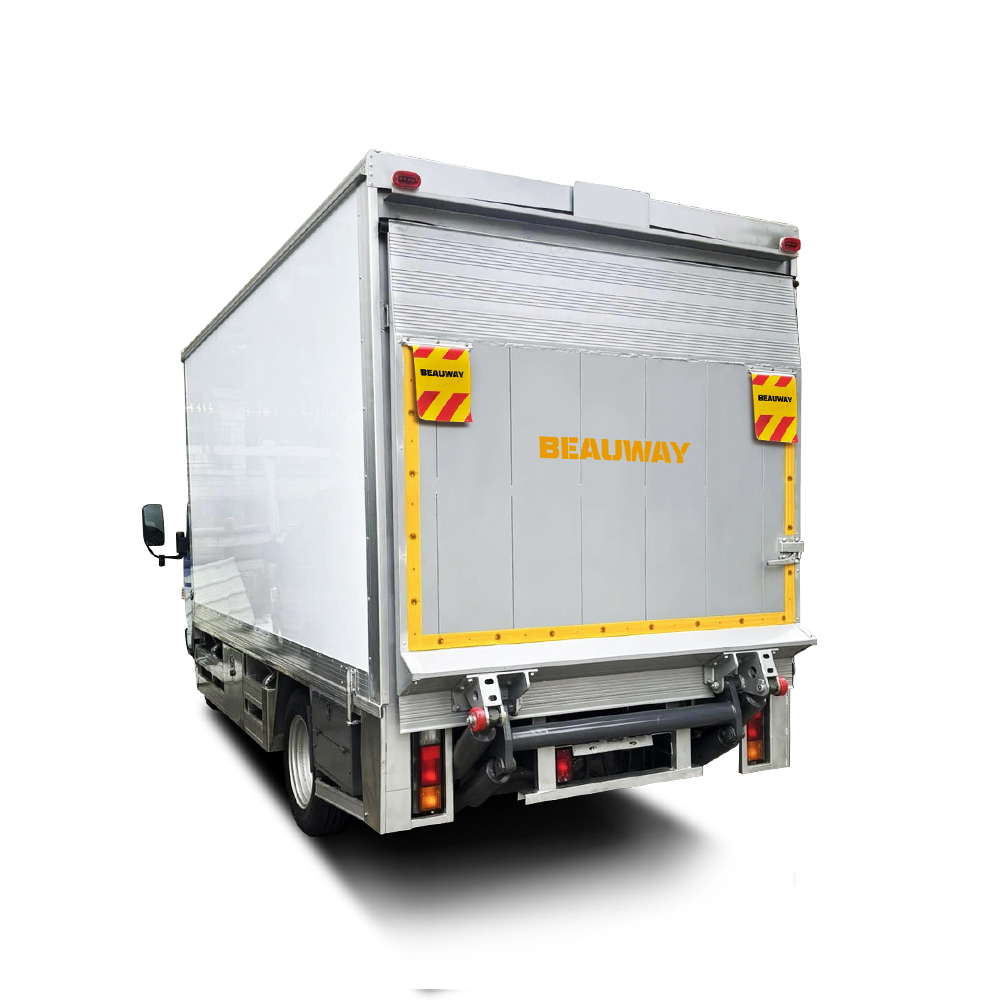
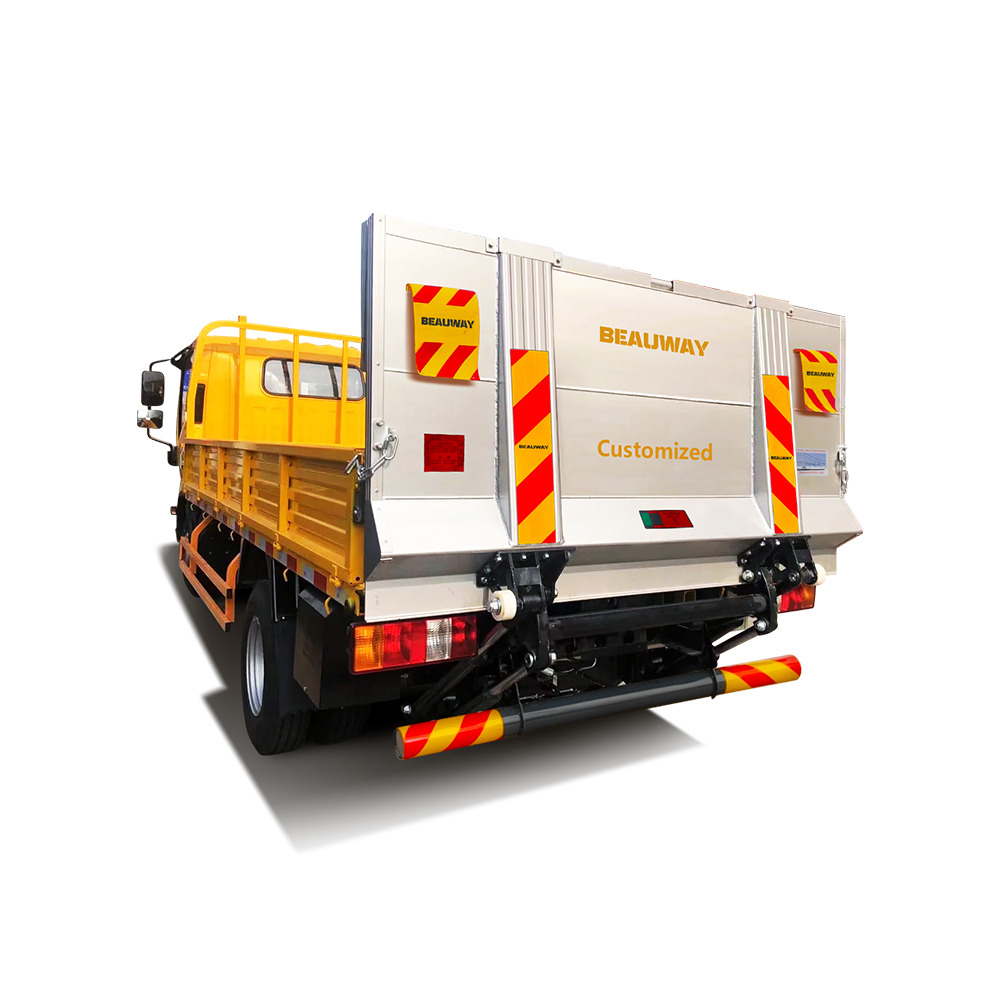
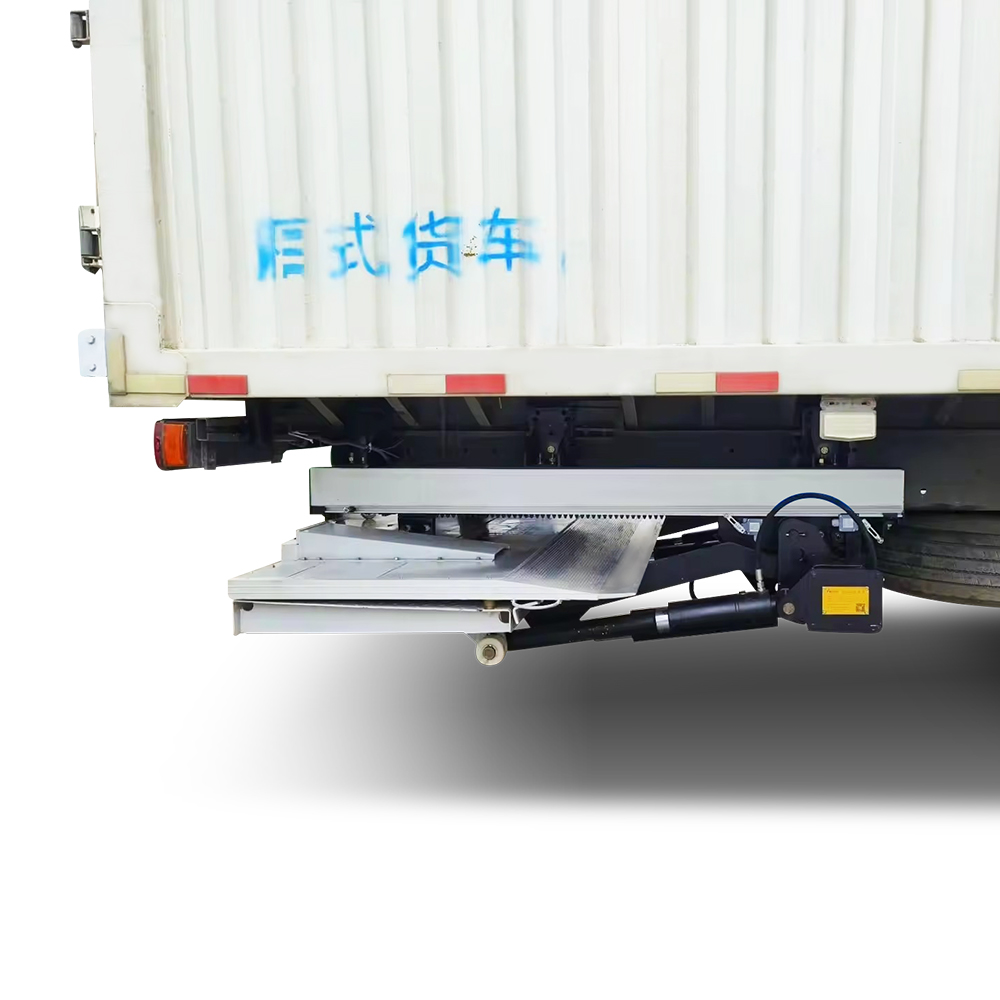
The three mainstream tail lift types differ significantly in structural design, and that directly affects both application fit and maintenance strategy:
- Cantilever Tail Lift — straightforward mechanism, smooth operation, the most common configuration for light-to-medium box trucks
- Concealed Tail Lift — retracts flush with the vehicle body, preferred where vehicle appearance matters
- Folding Tail Lift — folds the platform away when not in use, minimizing rear overhang, widely used in urban last-mile delivery
| Parameter | Cantilever Tail Lift | Concealed Tail Lift | Folding Tail Lift |
|---|---|---|---|
| Rated Load Capacity | 500–2,000 kg | 500–2,000 kg | 500–2,000 kg |
| Platform Size (500 kg) | H1,600–1,800 × W1,800–2,100 mm | H1,600–1,800 × W1,800–2,100 mm | H1,600–1,800 × W1,800–2,100 mm |
| Platform Size (1,000 kg+) | H1,600–1,800 × W1,800–2,500 mm | H1,600–1,800 × W1,800–2,500 mm | H1,600–1,800 × W1,800–2,500 mm |
| Safety Certification | EN 1756-1 / CE | EN 1756-1 / CE | EN 1756-1 / CE |
| Statutory Inspection Interval | Every 6 months (LOLER) | Every 6 months (LOLER) | Every 6 months (LOLER) |
Note: Under UK LOLER 1998 Regulation 9, all tail lifts in commercial use are legally required to undergo a thorough examination every six months. Under heavy-duty or harsh operating conditions, shortening that interval is strongly recommended.
Control Systems and Diagnostic Capability
Modern tail lift control systems increasingly support CAN bus communication, enabling integration with the vehicle’s OBD interface for real-time data on operating cycles, hydraulic fluid temperature, and fault codes. For fleet managers, that’s a fundamentally more reliable approach than waiting for a technician to visually inspect a problem. Relay-based control systems should be considered legacy architecture — factor the upgrade cost into your total cost of ownership calculation before signing.
Supplier Comparison Checklist: A Practical 3-Stage Workflow
When running a supplier evaluation, work in three stages — filtering out candidates at each step rather than waiting until the end to do a full comparison.
Stage 1 – Document Review (Remote, 1–2 Weeks)
☐ ISO 9001 certificate — verify on issuing body’s website, not from supplier PDF
☐ CE marking + EN 1756-1 type-test report
☐ Shipment records from at least 3 customers, past 12 months
☐ Export licensing confirmation
☐ Component traceability documents: pump, valve, cylinder — brand and model
☐ Installation and maintenance manual — check completeness and language availability
Stage 2 – Factory Audit (On-Site, 2–5 Days)
☐ Production floor walkthrough — observe line layout and work-in-progress volume
☐ Live hydraulic pressure test — record the data yourself
☐ Welding stations — WPS documents posted, quality records being maintained
☐ Direct QC personnel interview — ask about recent quality issues and how they were resolved
☐ Spare parts warehouse — confirm stock levels and response commitments
Stage 3 – Commercial Terms
☐ Warranty: 18–24 months full unit, 12 months hydraulic cylinders
☐ Spare parts: 48-hour response on critical wear items
☐ Late delivery penalty clauses in writing, not verbal assurances
☐ On-site training and remote diagnostic support terms clearly defined
A Real Case: What One Cross-Border Procurement Cost — and What Fixed It
August 2022. A fast-moving consumer goods distribution center on the outskirts of Hanoi, Vietnam. The fleet ran 42 box trucks, all fitted with tail lifts from a local Southeast Asian cargo handling equipment vendor — a folding-type unit rated at 1,500 kg.
Eight months in, failures started stacking up: hydraulic cylinder rod corrosion, seal leaks, and loose platform hinges — three distinct failure modes appearing across multiple vehicles simultaneously. The original supplier initially cited parts delays, then went quiet entirely.
Disassembly of the hydraulic cylinders revealed chrome plating on the piston rods measuring just 0.015–0.018 mm in thickness — well below the 0.025 mm minimum that’s standard in the industry. The seal material, confirmed by lab analysis, was standard NBR — a compound that hardens and degrades rapidly under the sustained 35–40°C heat and high humidity of the local climate. The hinge failures had a simpler explanation: Grade 4.8 plain carbon steel fasteners with no corrosion treatment whatsoever.
Remediation covered all 42 vehicles: hydraulic cylinder overhaul, FKM seal replacement, piston rod re-chroming to specification, and hinge bolt replacement with Grade 8.8 hot-dip galvanized hardware. Direct repair costs came to approximately RMB 380,000. Add in downtime losses, and the total impact exceeded RMB 600,000.
“If we had asked for a chrome plating thickness report at the selection stage, none of this would have happened.” — the fleet manager’s words, not mine.
They subsequently moved to an OEM hydraulic system supplier with in-house hydraulic component machining capability. Same lift type, same load rating — unit price was about 12% higher. Hydraulic-related failure rate over the following 18 months dropped by 73%.
Final Supplier Selection Framework
Supplier selection should follow a strict hierarchical decision model. Each step is a gate — not a score.
1. Manufacturing capability — non-negotiable first filter Only suppliers with verified in-house hydraulic system production and pressure testing capability should be considered. A supplier without traceable manufacturing credentials is a liability regardless of unit price.
2. Certification compliance — mandatory gate CE and EN 1756-1 compliance must be independently verified, not self-declared. Certificate numbers checked directly on the issuing body’s website. A PDF from the supplier proves nothing.
3. Proven delivery history — operational validation At least 12 months of verifiable shipment records must be available before qualification. If a supplier cannot produce documented delivery history, treat all capacity claims as unverified.
4. After-sales infrastructure — lifecycle cost determinant A supplier with no local service presence, no spare parts stock, and no defined response commitment will cost more over 36 months than a supplier priced 15–20% higher with full after-sales support. The Hanoi case in this article is the proof.
5. Commercial evaluation — final step only Price is evaluated only after steps 1–4 are confirmed. Price negotiation that happens before manufacturing verification is not procurement strategy — it is a gamble on variables you haven’t measured yet.
Suppliers failing any of steps 1–3 should be removed from consideration regardless of pricing advantage.
If you can only verify one thing — verify the hydraulic components. Chrome plating thickness, seal material specification, and cylinder machining tolerances are where procurement failures begin. Everything else is secondary.
Summary
The most common tail lift procurement failures share a pattern: decisions made on unit price and catalog specs, without verifying the manufacturing quality behind them. The Hanoi case in this article is not unusual — it’s representative.
Effective sourcing in this category comes down to three things: independent credential verification, structured on-site audit, and contractual after-sales commitments. A supplier 12% more expensive with traceable components and reliable parts support will consistently cost less over a 3-year fleet lifecycle than the lowest bidder.
Beauway specializes in logistics material handling equipment including tail lifts, dock levelers, and lifting platforms. For site-specific technical consultation, contact us here.
Trusted by Fleet Operators Across 60+ Countries
Stop Losing Time at the Loading Dock.
Get a Custom-Matched Tail Lift Quote in 24 Hours.
60
Countries Served
24h
Quote Turnaround
99.9
Field Uptime
5.0
Customer Rating
No Obligation
CE & UKCA Certified
Standard & Custom Builds
Worldwide Shipping