Having trouble submitting? Email us directly at nicole@beauway.com and we'll get back to you within 24 hours.











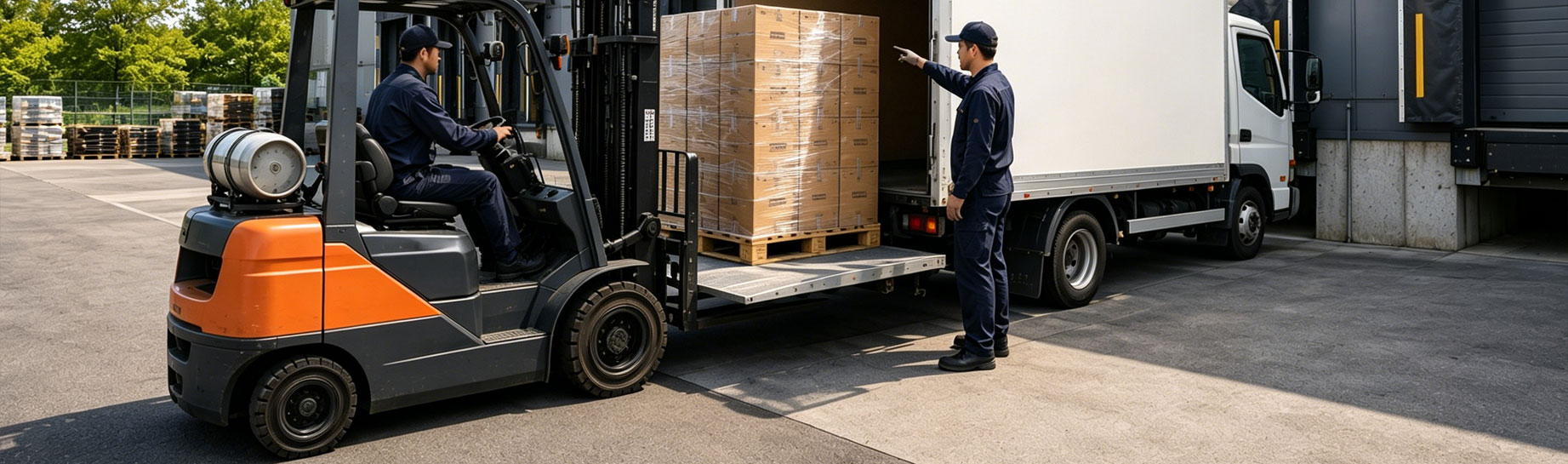
Mobile Yard Ramp: Build a Temporary Loading Dock
A mobile yard ramp helps businesses load and unload trucks and trailers when a permanent loading dock is unavailable. Whether you operate a leased warehouse, manage an open yard, or handle seasonal freight surges, a mobile yard ramp provides a flexible way to connect ground level with truck bed height without building a permanent concrete dock.
Without a dedicated dock, loading and unloading shipping containers and semi-trailers may require additional manual handling, liftgate operations, or specialized lifting equipment. These alternatives can increase labor costs, extend turnaround times, and create additional risks for workers and cargo.
A mobile yard ramp provides a practical solution by connecting ground level to the loading height of a truck or trailer. With the right configuration, businesses can establish a temporary loading area without constructing a permanent concrete dock.
This guide explains how to select and deploy a mobile yard ramp, covering key specifications, deck surface options, hydraulic height adjustment, and practical considerations for temporary loading operations.
Why Choose a Mobile Yard Ramp for Temporary Loading Sites?
Building a permanent concrete loading dock can involve significant construction costs, site modifications, and lengthy project timelines. For leased properties, temporary warehouses, and facilities with changing loading requirements, permanent construction may not be the most practical option.
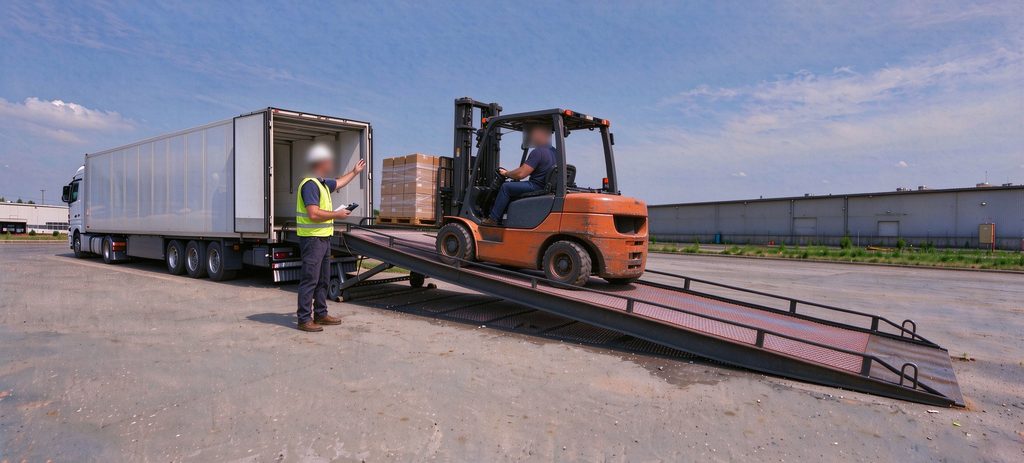
A mobile loading ramp provides an alternative by creating a bridge between ground level and a truck or trailer bed, allowing compatible forklifts to move cargo directly between the loading area and the vehicle.
Key Advantages
- Direct Ground-to-Trailer Access: Allows compatible forklifts to travel between ground level and the trailer, reducing the need for additional cargo transfers.
- Flexible Positioning: Equipped with suitable wheels and a towing arrangement, a portable yard ramp can be repositioned around a facility to accommodate changing loading requirements.
- Reduced Construction Costs: Avoids the need to build a permanent raised loading bay, making it suitable for businesses that need a temporary or relocatable solution.
- Reusable Equipment: If a business relocates or changes its warehouse layout, operators can move and reuse a portable loading ramp, subject to site conditions and equipment requirements.
These advantages make mobile yard ramps useful for temporary warehouses, distribution yards, seasonal operations, and facilities that need flexible loading arrangements.
Mobile Yard Ramp Specifications and Engineering Considerations
Selecting the right yard ramp involves more than checking its overall dimensions. Businesses should consider the available working space, truck bed height, forklift dimensions, combined operating loads, and frequency of use.
The following table presents an example configuration for a mobile loading ramp. Check the selected model’s specifications against the manufacturer’s documentation.
| Engineering Parameter | Example Specification | Practical Purpose |
|---|---|---|
| Total Length | 11.5 meters (m) | Provides the overall length required for the inclined section and level-off bridge |
| Outer Width | 2.0 meters (m) | Defines the available travel width for compatible forklifts |
| Level-Off Bridge Length | 2.5 meters (m) | Provides a level transition area before the forklift enters the trailer |
| Incline Ramp Section | 9.0 meters (m), approximately 8° | Defines the inclined travel section of the ramp |
| Side Safety Curbs | 300 mm height | Provide edge guidance and help reduce the risk of wheels moving beyond the platform edge |
| Elevation Range | 1.2 m base height with 500 mm of lift, as specified for the configuration | Allows the ramp height to match the required loading position |
| Lifting Mechanism | Electric-hydraulic system | Enables powered height adjustment |
| Load Capacity Options | 8 tons (t), 10 tons (t), or 12 tons (t) | Provides different rated capacity options for different operating requirements |
How Ramp Slope and Level-Off Length Affect Forklift Operations
Ramp slope
The slope of a dock ramp affects forklift traction, braking, ground clearance, and load stability. An approximately 8° incline represents a design characteristic of the configuration described above. Whether this slope suits a particular operation depends on the forklift manufacturer’s operating limits, the load being carried, tire condition, and surface traction.
Before selecting a ramp, check the forklift’s rated gradeability and the ramp manufacturer’s operating requirements. Do not assume that a ramp suits every forklift simply because its slope falls within a particular range.
Level-off bridge
The 2.5-meter level-off section provides a transition between the inclined ramp and the trailer floor. This helps the forklift approach the trailer on a level surface rather than entering directly from the incline.
Evaluate the available level-off length alongside the forklift’s overall dimensions, mast height, load dimensions, and trailer entrance geometry. These factors determine whether the forklift and its cargo can enter the trailer without interference.
Electric-Hydraulic Lifting System
An integrated electric-hydraulic lift allows operators to adjust the ramp height using powered controls rather than relying on a manual hand pump.
This feature proves particularly useful when different trucks arrive with different bed heights. Operators can adjust the ramp to the required loading position, reducing the manual effort involved in repositioning the equipment.
Check the specific model’s adjustment range and follow its operating procedure. Before use, confirm that the ramp accommodates the vehicle’s loading height and follow the manufacturer’s instructions for positioning and securing the equipment.
How to Select the Right Ramp Capacity
Choosing a mobile yard ramp requires consideration of the actual operating load, not just the nominal weight of the forklift.
When evaluating an 8-ton, 10-ton, or 12-ton model, check the manufacturer’s rated capacity and stated loading conditions. Account for the forklift’s operating weight, cargo weight, wheel loads, load distribution, and intended application.
The forklift’s rated lifting capacity and the ramp’s load capacity describe different things. Only use a ramp when the complete operating configuration falls within the manufacturer’s specified limits.
Decking Options: Expanded Steel Mesh vs. Steel Grating
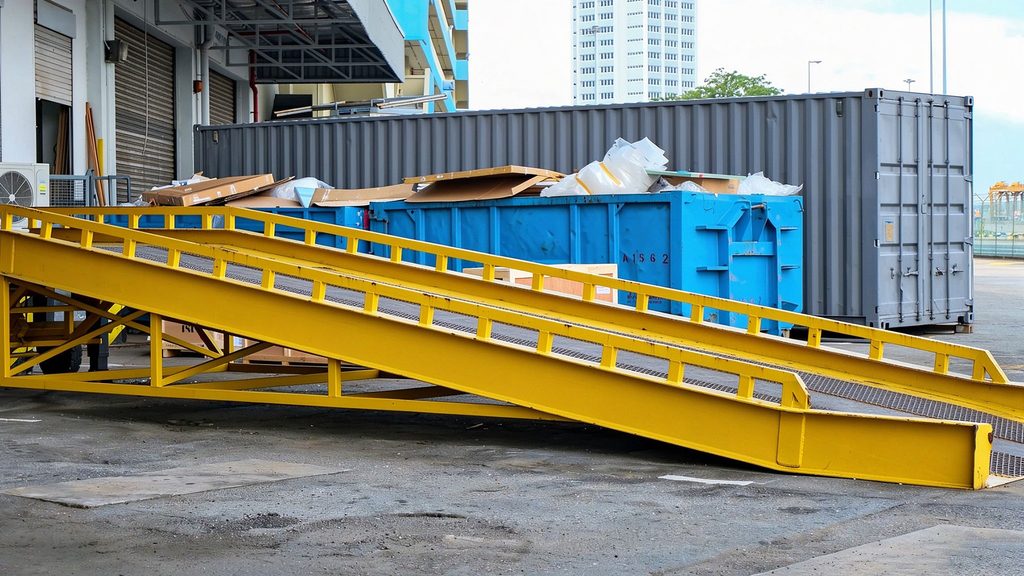
The deck surface of a container ramp faces repeated forklift traffic, concentrated wheel loads, moisture, and outdoor debris. Its design affects traction, drainage, maintenance, and long-term durability.
Choose a deck surface based on the operating environment, expected traffic, and the manufacturer’s specifications.
1. Expanded Steel Mesh
- Characteristics: Manufacturers create this surface by cutting and expanding steel sheet into a patterned, open structure.
- Advantages: The textured surface can provide traction for forklift tires, while the openings allow water and debris to pass through.
- Considerations: Surface geometry and opening size affect tire contact and debris retention. Coating condition and routine maintenance influence corrosion resistance.
Expanded steel mesh suits applications that require traction and drainage, provided the selected structure meets the required load ratings.
2. Composite Grating Plate
- Characteristics: Manufacturers produce composite grating from materials designed for specific environmental and loading requirements.
- Advantages: Depending on the material, composite grating can offer good resistance to corrosion and exposure to certain chemicals.
- Considerations: Load-bearing performance depends on the material, panel design, support spacing, and rated loading conditions. Evaluate initial cost and suitability against the intended application.
Composite surfaces may suit corrosive environments, but verify their suitability for forklift traffic against the manufacturer’s load ratings.
3. Serrated Steel Grating
- Characteristics: This surface uses load-bearing steel bars with a serrated upper surface to improve traction.
- Advantages: Properly designed steel grating provides structural strength and a textured contact surface. Its open-grid structure allows water and loose debris to drain through rather than collect entirely on the deck.
- Considerations: Steel grating adds structural weight, and its corrosion resistance depends on the steel grade, surface treatment, and maintenance. Drainage through the openings does not prevent ice from forming in cold conditions.
For outdoor applications, a steel yard ramp with an appropriately rated open-grid deck offers a practical option when drainage and traction are important.
An aluminum yard ramp may suit operations where reducing equipment weight is a priority. However, choose between steel, aluminum, and composite materials based on the complete ramp design, rated capacity, operating conditions, and maintenance requirements rather than material alone.
5 Steps to Deploy Your Temporary Loading Dock
After selecting a suitable mobile yard ramp, prepare the site and position the equipment correctly to support efficient loading operations.
Step 1: Prepare the Ground and Working Area
Choose a firm, stable, and sufficiently level surface that can support the ramp, forklift, and cargo loads. Concrete or suitable asphalt may work, depending on the site’s condition and load-bearing capacity.
Avoid soft ground, damaged pavement, or areas with significant unevenness. Check the available space for ramp placement, truck maneuvering, forklift turning, and pedestrian movement.
Determine the required clearance from the forklift’s turning radius, cargo dimensions, and site layout. Ensure that the working area provides enough room for the intended operation.
Step 2: Tow and Position the Ramp
Use the ramp’s designated towing connection or another manufacturer-approved handling arrangement to move the equipment into position. Do not assume that every ramp supports towing through its fork pockets.
Align the ramp with the intended truck or trailer loading position and ensure that the approach path suits the forklift.
Before proceeding, confirm that the ramp rests on stable ground and that operators follow the manufacturer’s instructions for its movement and adjustment mechanisms.
Step 3: Adjust the Height with the Electric-Hydraulic System
Use the electric-hydraulic controls to adjust the ramp to the required loading height within its rated operating range.
Position the truck or trailer according to the ramp manufacturer’s procedure. Ensure that the ramp’s transition plate or bridge engages the vehicle’s loading surface as designed, without creating an unsafe gap or unstable transition.
Do not assume that one height setting suits every truck. Verify the actual loading height and correct bridge position for each vehicle.
Step 4: Secure the Equipment and Vehicle
Before loading begins, secure the ramp and vehicle according to the applicable equipment instructions.
- Secure the Ramp: Engage the designated safety chains, restraints, or other approved securing devices at the specified attachment points.
- Secure the Vehicle: Apply the required vehicle immobilization measures, such as suitable wheel chocks or other approved restraints, in accordance with the site procedure and equipment manufacturer’s instructions.
- Check the Transition: Confirm that the ramp-to-trailer connection remains stable and that the loading path is clear.
These checks help reduce the risk of unwanted movement and separation between the ramp and vehicle during loading.
Step 5: Begin Loading Operations
Once the equipment is positioned and secured, begin loading with a compatible forklift in accordance with the ramp’s rated capacity and operating instructions.
Forklift operators should maintain a controlled speed, follow the manufacturer’s guidance for traveling on slopes, and keep loads stable throughout the operation. Avoid sudden turns, abrupt braking, and movements that could compromise stability.
The side curbs provide edge guidance, but they do not replace correct forklift operation or other required safety measures.
Inspect the deck, hydraulic system, moving components, restraints, and other critical parts regularly, following the manufacturer’s maintenance schedule.
Conclusion
A facility without a permanent loading dock can still establish a practical loading and unloading area by selecting a suitable mobile yard ramp. The right configuration depends on truck bed height, forklift compatibility, operating loads, available space, and frequency of use.
When evaluating a ramp, consider the following factors:
- Dimensions and slope: Confirm that the ramp geometry suits the forklift and the intended loading arrangement.
- Working height: Check that the available adjustment range accommodates the vehicles being served.
- Rated capacity: Verify that the ramp can support the actual operating configuration within its specified limits.
- Deck surface: Choose an appropriate surface based on traction, drainage, corrosion exposure, and maintenance requirements.
- Site preparation and securement: Ensure that the ground, vehicle positioning, and safety restraints meet the manufacturer’s operating requirements.
Whether a business chooses a heavy-duty steel yard ramp for demanding loading operations or evaluates an aluminum yard ramp where lower equipment weight is beneficial, base the final decision on verified specifications and the actual working environment.
With appropriate equipment selection, site preparation, and operating procedures, a mobile yard ramp can provide a flexible alternative to permanent loading dock construction.
Trusted by Fleet Operators Across 60+ Countries
Stop Losing Time at the Loading Dock.
Get a Custom-Matched Tail Lift Quote in 24 Hours.
60
Countries Served
24h
Quote Turnaround
99.9
Field Uptime
5.0
Customer Rating
No Obligation
CE & UKCA Certified
Standard & Custom Builds
Worldwide Shipping