Having trouble submitting? Email us directly at nicole@beaway.com and we'll get back to you within 24 hours.











Tail Lift Hydraulic Oil Change: Most Fleets Get the Timing Wrong
A slower lift. A jerky lower. A platform that hesitates before it moves. These symptoms show up only after the fluid has already passed its useful life. By then, degraded fluid has been quietly wearing down seals, valves, and the pump. Getting the timing right isn’t complicated. But it does require knowing what actually determines when the fluid needs attention — not guessing based on a calendar, and not waiting for a breakdown.
Why Tail Lift Hydraulic Oil Timing Matters
How Usage Intensity Changes Wear
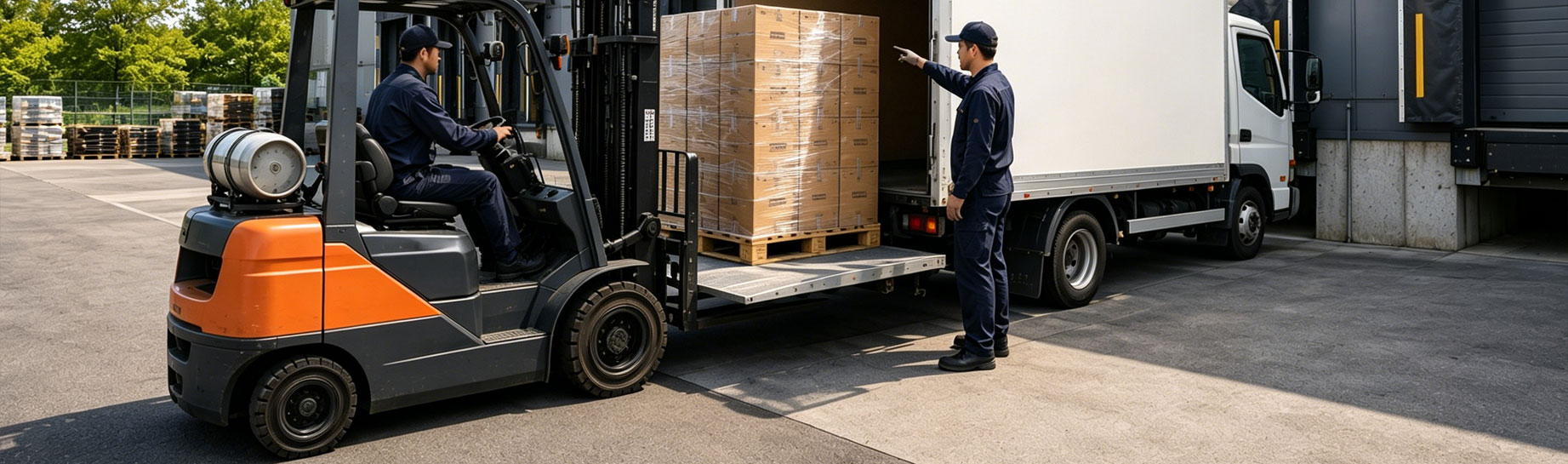
A common pattern shows up across fleets that run tail lifts daily versus fleets that use them occasionally. A vehicle cycling the lift dozens of times a day pushes tail lift hydraulic oil through far more heat and contamination cycles. This holds especially true in a mix of hot and cold weather. Compare that to a vehicle that lifts only a handful of loads a week. Two identical lifts installed the same year can need very different service timing, simply because of how hard each one works. Treating both the same way causes most of the avoidable wear — fleets either change the light-duty unit too often, or the heavy-duty one too rarely.
This mismatch between assumed and actual service needs is common. Fleets should treat it as a planning problem, not a one-off maintenance task. A fleet manager overseeing ten vehicles with tail lifts is really managing ten separate wear profiles, not one. Some vehicles run tight urban routes with dozens of short cycles a day; others make two or three drops on a long-haul route and sit idle the rest of the time. Applying a single blanket rule across the whole fleet inevitably under-services some vehicles and over-services others.
What the Fluid Actually Does
The fluid inside a tail lift’s hydraulic system does more than just transmit pressure from the pump to the cylinders. Good lubricants for tail lifts also protect internal surfaces from corrosion. They carry heat away from the pump and valve block, and keep moving parts running smoothly under repeated load cycles. When the fluid degrades — through heat, moisture, or particle contamination — all three of those functions weaken at the same time, not just one.
Tail lift oil that has broken down loses viscosity stability. It behaves differently in cold weather than it did when fresh. This often explains a platform that feels sluggish on a cold morning but works fine once the truck has been running a while. The oil simply isn’t performing the way it should until it warms up — a sign the fluid has aged past its ideal working condition, not a sign of a mechanical fault.
Moisture is a particularly common contaminant in hydraulic oil for tail lift systems that operate outdoors year-round. Condensation inside the reservoir, especially with daily temperature swings, introduces small amounts of water into the fluid over time. Water in hydraulic fluid reduces lubricity and can accelerate corrosion inside the pump housing and cylinder walls — damage that isn’t visible from the outside until it’s already affecting performance.
Particle contamination works differently but causes just as much long-term harm. Microscopic metal shavings from normal wear circulate through the fluid and act as an abrasive, gradually enlarging clearances the manufacturer originally machined to tight tolerances. Once those clearances widen beyond a certain point, fresh fluid alone can’t restore the original performance — the components themselves need replacing.
Warning Signs to Watch For
Certain symptoms point specifically toward fluid condition or pump wear rather than a general mechanical issue elsewhere in the lift:
- Jerky or hesitant movement during raise or lower cycles — often the first sign that fluid viscosity or cleanliness has degraded.
- Whining or straining pump noise under load — often a sign the hydraulic pump for tail lift systems is working harder than it should, due to degraded fluid or a restricted filter.
- Slower response time between pressing the control and the platform moving — a common symptom of air in the system, often following a fluid top-up that wasn’t fully bled.
- Visible discoloration or a burnt smell — a clear sign the oil has broken down from heat exposure and needs full replacement, not just topping off.
- Fluid level dropping steadily without a visible external leak — worth investigating for a slow internal seal bypass before it develops into a larger failure.
None of these signs guarantee the fluid is the root cause, but they’re common enough starting points that checking fluid condition first saves unnecessary diagnostic time. A useful habit is treating any two of these signs occurring together as a stronger signal than either one alone — a slower response paired with a burnt smell, for example, points much more clearly to fluid trouble than either symptom on its own.

Inspection and Replacement Schedule
There isn’t a single number that applies to every tail lift. A useful starting point is separating inspection from replacement when it comes to tail lift oil. How often should a tail lift be inspected for fluid condition is a different question from how often the fluid actually needs changing — treating them as the same task is where a lot of fleets fall behind.
A Practical Inspection Routine
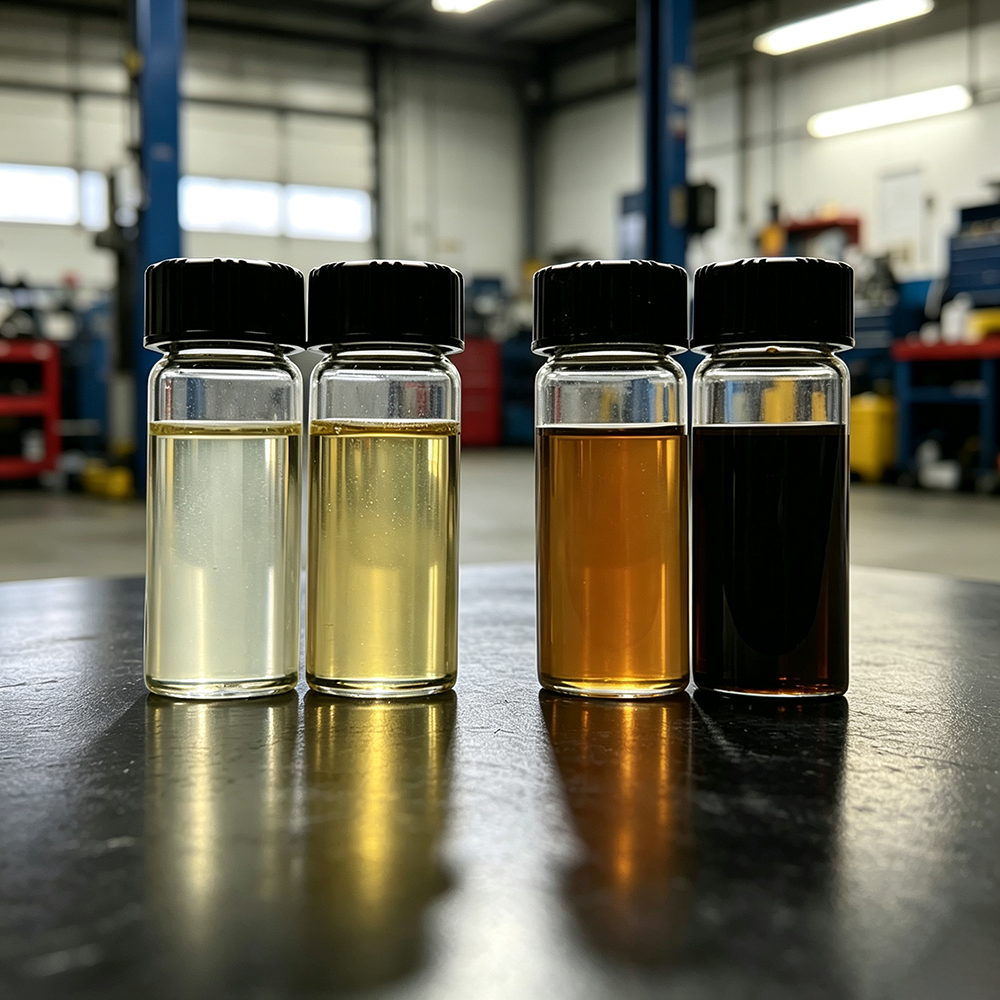
- Check fluid level and color at every pre-trip walkaround. Clear, honey-colored fluid is normal; cloudy or milky fluid suggests water contamination; dark, gritty fluid suggests particle buildup or breakdown.
- Log operating cycles weekly, especially for vehicles running multiple drops a day. Cycle count is a better predictor of fluid condition than the calendar date alone.
- Schedule a full fluid change on a fixed interval as a backstop, even if visual inspection looks fine, since some forms of degradation aren’t visible until they’re advanced.
As a general guideline, tail lifts used daily in demanding conditions — multiple drops, extreme temperatures, coastal or high-humidity environments — need fluid changes on a shorter cycle than lifts used a few times a week in a controlled environment. Fleets that only inspect once a year, and never adjust that interval based on usage intensity, risk a sudden performance drop that catches them off guard.
Seasonal Considerations
A tail lift that performed reliably through a mild summer can behave very differently once temperatures drop. The same fluid that was adequate in warm weather may already be too degraded to perform well; cold weather simply makes existing viscosity issues more obvious. A pre-winter inspection, in addition to whatever fixed schedule is already in place, tends to catch problems that a purely calendar-based approach would miss until they’d already caused a delay.
Who Should Inspect
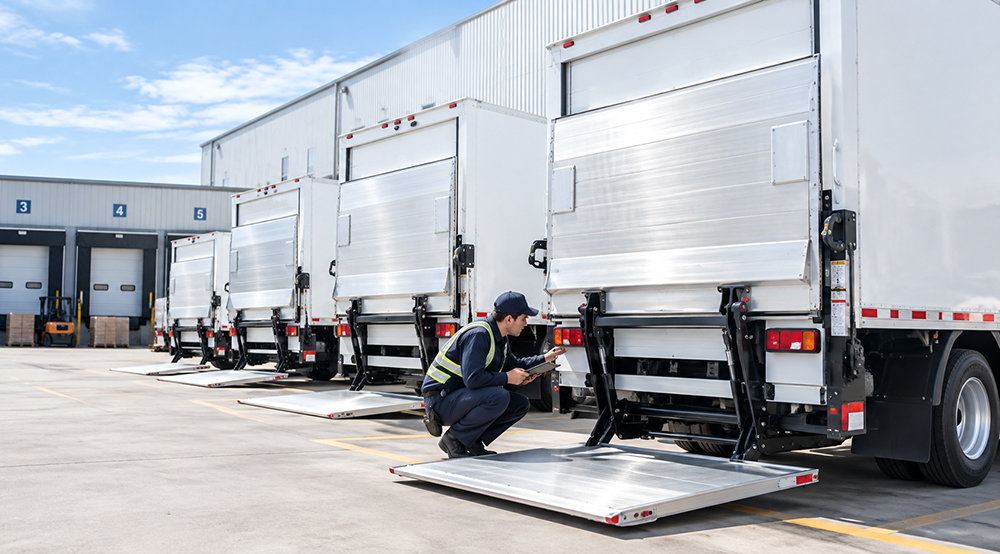
It also helps to separate how often a tail lift should be inspected from who should do the inspecting. A driver’s daily walkaround check is useful for catching obvious issues — low fluid, visible leaks, unusual sounds — but it can’t substitute for a more thorough periodic check by someone trained to evaluate fluid condition and pump performance in detail. Fleets that rely solely on driver-level checks tend to miss the slower, less obvious signs of degradation that a more thorough inspection would catch.
Choosing the Right Tail Lift Hydraulic Oil Type
Not all hydraulic fluid is interchangeable. Using the wrong one is a common — and often overlooked — reason a lift underperforms, even when the fluid itself is relatively fresh. The right tail lift hydraulic oil type depends mainly on two factors: ambient operating temperature range, and the manufacturer’s specified viscosity grade for the installed power pack.
Factors That Determine Oil Type
- Viscosity grade matters more than brand. Oil that’s too thick struggles to move quickly through narrow valve passages, making the lift feel sluggish, especially in cold weather. Oil that’s too thin can’t maintain proper film strength under load, accelerating wear on pump components.
- Climate should influence the choice. A lift operating primarily in cold climates benefits from a lower-viscosity fluid that stays fluid at low temperatures. In consistently warm climates, a slightly higher viscosity helps maintain proper lubrication without breaking down as quickly under heat.
- Consistency beats switching brands. Mixing different oil types or switching brands frequently, without fully flushing the system, can create inconsistent performance, since different formulations don’t always blend predictably.
Using the correct tail gate lift fluid for the specific power pack and climate isn’t a minor detail — it directly affects how smoothly the platform raises and lowers, how quickly the system responds to the control switch, and how long the pump and seals last before needing replacement.
When a Lift Changes Hands
It’s also worth checking the fluid type whenever a lift changes hands, whether through a used vehicle purchase or a fleet transfer between depots in different climates. A tail lift that spent its early service life in a cooler region and now operates somewhere warmer — or the reverse — may still run on fluid that was correct for its original conditions but is no longer the ideal choice for how the fleet uses it now. This is an easy detail to overlook, since the lift will usually keep working on the wrong fluid type for a while before the mismatch becomes obvious as reduced performance or accelerated wear.
Costs, Habits, and Common Questions
What Delayed Maintenance Costs
The practical cost of getting the timing wrong isn’t usually the price of the hydraulic oil itself — a full change is relatively inexpensive compared to almost every other line item in tail lift upkeep. The real cost shows up in what degraded fluid does to the components around it over time. A pump running on contaminated or oxidized fluid for months wears faster than one that receives fluid changes at the right interval, and pump replacement costs considerably more than a routine fluid service.
The Hidden Scheduling Cost
There’s also a scheduling cost that’s easy to underestimate. Planning a fluid change in advance takes a lift out of service for a short, predictable window — often during a slow period or overnight. A failure from neglected fluid tends to happen without warning, frequently mid-route, turning a routine service task into an emergency call-out and a missed delivery window. Fleets that have experienced both versions tend to stay most consistent about proactive fluid management afterward.
Building a Maintenance Habit
The fleets that avoid unplanned tail lift downtime tend to share one habit — they don’t wait for a single trigger to decide when service is due. A workable approach combines:
- A fixed backstop interval for full fluid changes, regardless of how the fluid looks.
- Ongoing visual and operational checks, adjusted to how hard each vehicle’s lift actually works.
- A simple log noting fluid color, unusual sounds, and approximate cycle count, to catch a developing problem before it turns into a stalled delivery.
Fleets running a mix of light and heavy-use vehicles benefit most from this approach — it prevents wasted early replacements on light-duty units and overdue replacements on heavily used ones.
Common Questions About Tail Lift Hydraulic Oil
Does every tail lift use the same hydraulic oil? No. The correct tail lift hydraulic oil type depends on the power pack manufacturer’s specification and the climate the vehicle operates in, so two lifts from different manufacturers — or even the same manufacturer installed years apart — may call for different lubricants for tail lifts.
Can low fluid cause a tail lift to move slowly without leaking? Yes. A slow lift doesn’t always mean a leak. Air introduced into the system during a fluid top-up can cause sluggish movement, as can fluid that has thickened due to cold weather — even when the reservoir looks adequately full.
Is it safe to mix different brands of tail lift oil? Best to avoid it where possible. Different formulations don’t always share identical additive packages, and mixing brands repeatedly can lead to inconsistent performance over time, even if no single top-up causes an obvious problem on its own.
What happens if tail gate lift fluid is never changed? Left unchanged long enough, tail gate lift fluid breaks down structurally, losing viscosity stability and picking up enough contamination to accelerate wear on the pump and cylinder seals. The lift typically still functions during this decline, with steadily worsening responsiveness, right up until a component finally fails.
Does a hydraulic pump for tail lift systems need separate maintenance from the fluid itself? The pump and the fluid are closely linked, but they aren’t the same maintenance item. A pump can wear out even with properly maintained fluid, simply from age and cycle count, while contaminated fluid can shorten even a well-built pump’s service life considerably faster than it would otherwise wear.
Quick Reference Checklist
- Confirm the correct tail lift hydraulic oil type for the installed power pack before assuming any generic fluid will do.
- Track cycle count, not just calendar time — usage intensity is the strongest predictor of when tail lift oil actually needs changing.
- Watch for cloudy, dark, or burnt-smelling fluid as an early sign that hydraulic oil for tail lift systems has already degraded past its useful life.
- Treat a noisy or straining hydraulic pump as a prompt to check fluid condition first, before assuming a mechanical failure.
- Use only the lubricants specified for the climate the vehicle actually operates in, and re-check that choice if the vehicle changes regions.
- Revisit how often a tail lift should be inspected whenever a vehicle’s route or duty cycle changes significantly.
- Don’t wait for a visible leak to justify checking tail gate lift fluid condition — by that point, contamination has usually already been affecting performance for a while.
Getting the Timing Right
There’s no universal number that fits every tail lift hydraulic oil situation. Usage intensity, climate, and fluid type all shift the ideal timing in one direction or another. The fleets that get this right aren’t the ones with the shortest or longest interval — they’re the ones actually watching fluid condition and cycle count, rather than defaulting to a single fixed number and hoping it holds up across every vehicle in the fleet.
Reviewing how a specific tail lift is used day to day — cycle frequency, climate, and load pattern — is a more reliable way to set a realistic service interval than copying a generic number from an unrelated piece of equipment.
Trusted by Fleet Operators Across 60+ Countries
Stop Losing Time at the Loading Dock.
Get a Custom-Matched Tail Lift Quote in 24 Hours.
60
Countries Served
24h
Quote Turnaround
99.9
Field Uptime
5.0
Customer Rating
No Obligation
CE & UKCA Certified
Standard & Custom Builds
Worldwide Shipping