Having trouble submitting? Email us directly at nicole@beaway.com and we'll get back to you within 24 hours.











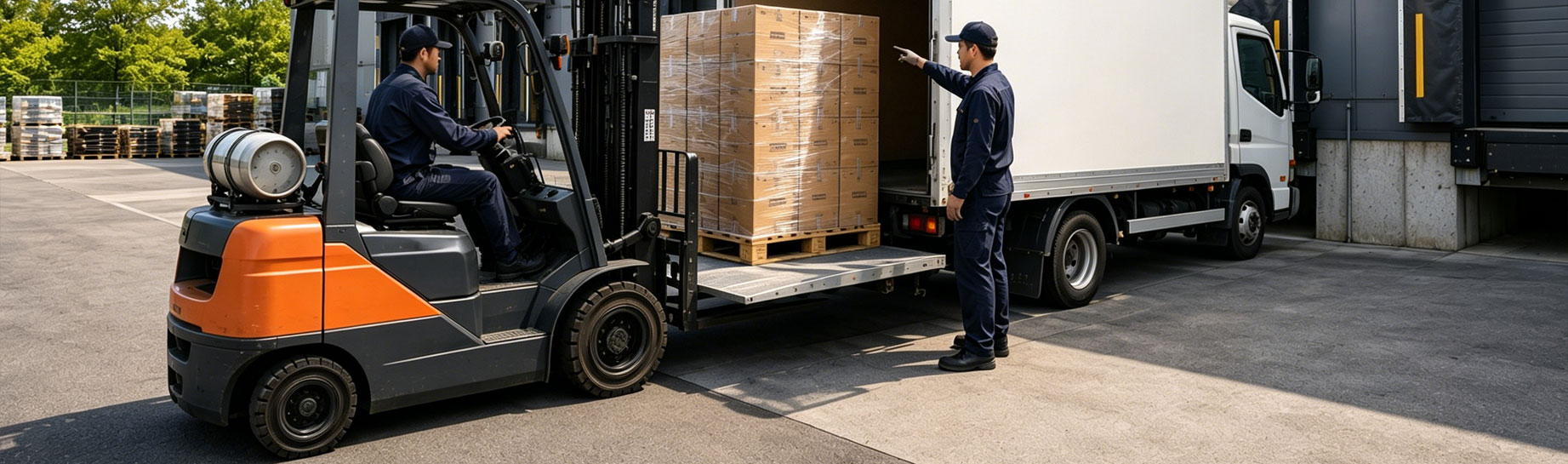
Tail Lift for Waste Management Trucks: Buyer’s Guide
Tail Lift for Waste Management Trucks: Buyer’s Guide 2026
A tail lift for waste management trucks is a hydraulic lifting platform mounted at the rear of refuse collection, sanitation, and industrial waste removal vehicles. Selecting the right hydraulic tail lift directly impacts operational efficiency, maintenance costs, and vehicle uptime. This guide covers everything fleet procurement managers and importers need to know before placing an order.
1. Why Waste Management Trucks Need a Specialized Tail Lift
Standard logistics tail lifts are not designed for the harsh conditions of waste management operations. A purpose-built truck tail lift for this sector must handle:
- Frequent daily cycles (80–150 lifts per day vs. 20–40 for standard logistics)
- Exposure to acidic liquids, chemical waste, and moisture
- Heavy and irregular loads from bins and waste containers
- Operation on unpaved roads and urban streets
Industry safety standards such as EN 1756-1 (European tail lift safety standard) and ANSI MH30.1 (US material handling equipment standard) set the baseline requirements for tail lifts used in commercial vehicle applications including waste management.
📎 Reference: EN 1756-1 Tail Lift Safety Standard – European Committee for Standardization
📎 Reference: OSHA Material Handling Safety Guidelines
📎 Reference: Global Waste Management Industry Overview – World Bank
2. Core Requirements for a Tail Lift for Waste Management Trucks
2.1 Load Capacity
Loads in waste management typically range from 500kg to 2,500kg. When selecting a hydraulic liftgate, allow at least 20% safety margin above your maximum operating load.
| Vehicle Type | Recommended Capacity |
|---|---|
| Light sanitation vehicle | 500kg – 1,000kg |
| Medium refuse collection truck | 1,000kg – 1,500kg |
| Heavy industrial waste vehicle | 1,500kg – 2,500kg |
2.2 Corrosion Resistance
Waste environments expose equipment to acids, chemicals, and moisture. A tail lift for waste management trucks should feature:
- Galvanized finish platform
- Aluminum alloy hydraulic arms
- Stainless steel hydraulic fittings
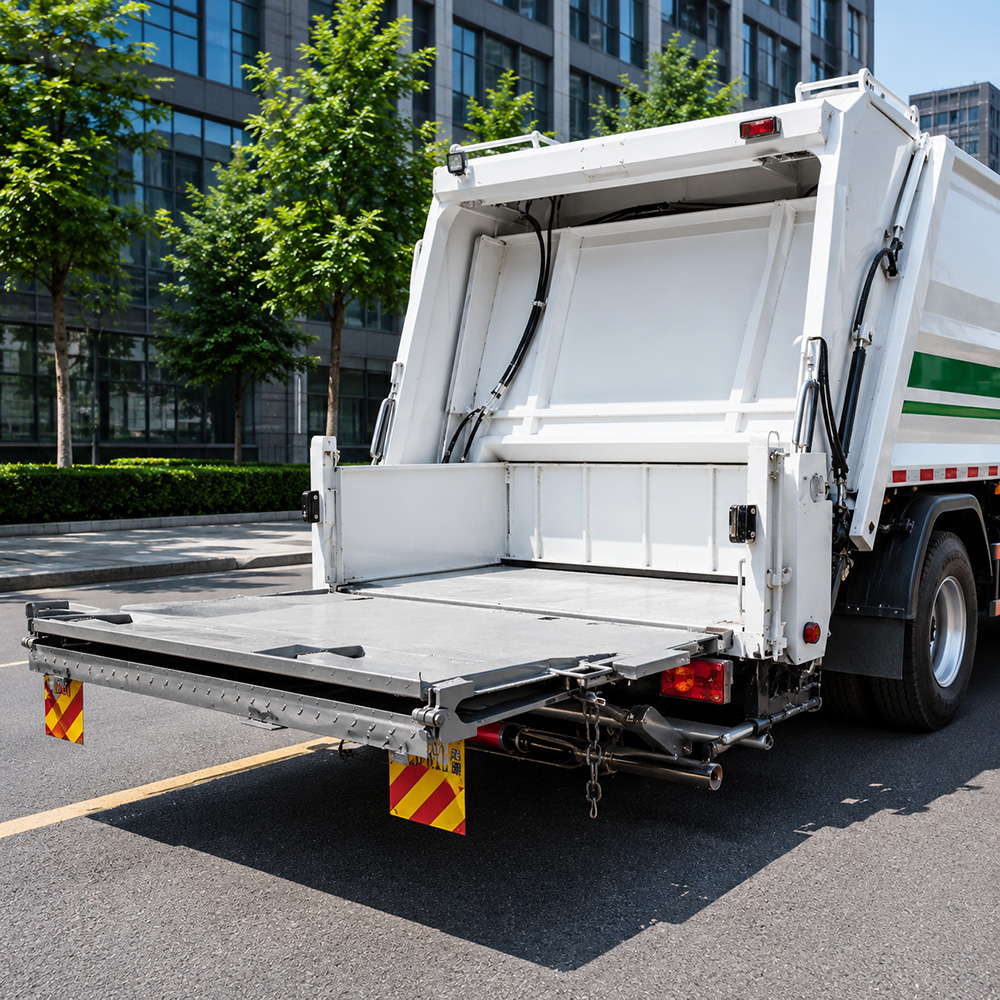
[Image: galvanized tail lift platform on refuse truck — alt: “tail lift for waste management trucks galvanized platform”]
2.3 Duty Cycle and Service Life
Municipal refuse trucks perform 80–150 lift cycles daily. Select a hydraulic tail lift with a rated service life of no less than 500,000 cycles. Key components to verify:
- Industrial-grade hydraulic pump
- Heavy-duty seals rated for high-frequency use
- Reinforced control unit housing
2.4 Platform Size and Ground Clearance
A folding tail lift is recommended for waste management vehicles — it folds flush against the vehicle body when stowed, maintaining adequate ground clearance for urban streets and uneven terrain.
[Image: folding tail lift stowed position on sanitation truck — alt: “folding hydraulic tail lift for waste management truck stowed position”]
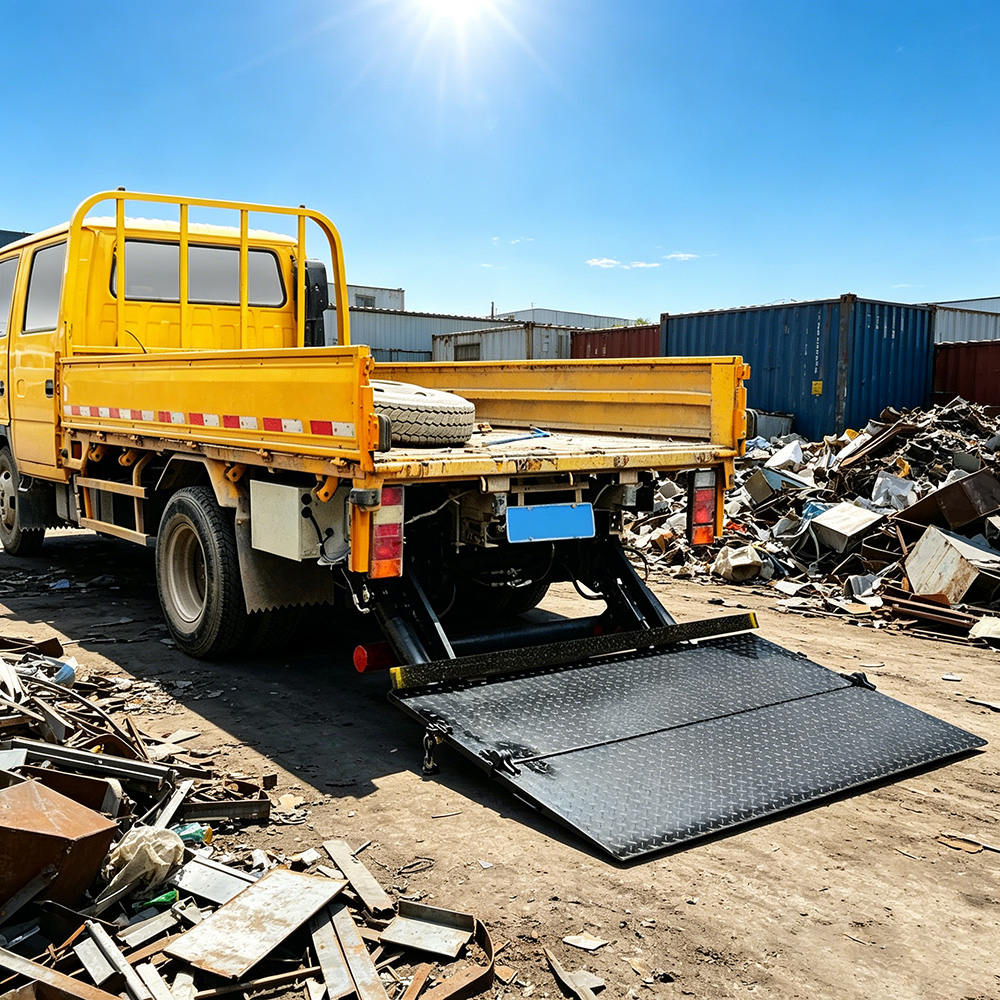
3. Tail Lift Types: Which Is Right for Your Fleet?
| Type | Best For | Pros | Cons |
|---|---|---|---|
| Folding Tail Lift | Urban sanitation, refuse collection | Compact stow, good clearance | Slightly longer deployment |
| Column Tail Lift | Industrial waste removal | High capacity, stable | Larger rear footprint |
| Cantilever Tail Lift | Large municipal vehicles | Wide platform, easy to operate | Heavier self-weight |
For most waste management truck fleets, the folding hydraulic tail lift offers the best combination of compactness, durability, and load capacity.
See also: Folding Tail Lift vs Concealed Tail Lift: Which One Is Right for Your Fleet?
See also: Heavy Duty Tail Lift: Hydraulic Truck Loading Solution
4. Sourcing a Tail Lift for Waste Management Trucks from China
4.1 Define Your Specifications
Before contacting a tail lift supplier, prepare:
- Vehicle model and rear frame dimensions
- Maximum load capacity (kg)
- Daily cycle frequency
- Target market certification (CE / DOT / UKCA)
- Annual purchase volume (MOQ reference)
4.2 Supplier Evaluation Criteria
Production Capacity: Prioritize factories with annual output of 5,000+ units to ensure supply stability for bulk orders.
Certifications: ISO 9001 is the baseline. CE certification for Europe; DOT/FMVSS for the US market.
OEM Customization: Confirm support for custom platform dimensions, load ratings, and surface treatments.
After-Sales Support: Parts lead time, multilingual technical documentation, and installation guidance.
See also: Tail Lift Supplier Evaluation: 6 Criteria & Decision Framework
4.3 Pricing and Trade Terms
Reference FOB China port prices:
| Product | FOB Price Range |
|---|---|
| 500kg folding tail lift | USD 800 – 1,200 / unit |
| 1,000kg cantilever tail lift | USD 1,500 – 2,200 / unit |
| 2,000kg column heavy-duty tail lift | USD 2,800 – 4,000 / unit |
Actual quotes vary by configuration, quantity, and customization. Contact factory directly for formal quotation.
4.4 Sample Order Process
For first-time procurement, order 1–3 sample units to verify:
- Product quality and finish
- Vehicle fitment compatibility
- Documentation completeness (test reports, CE certificate, installation manual)
5. Installation and Maintenance
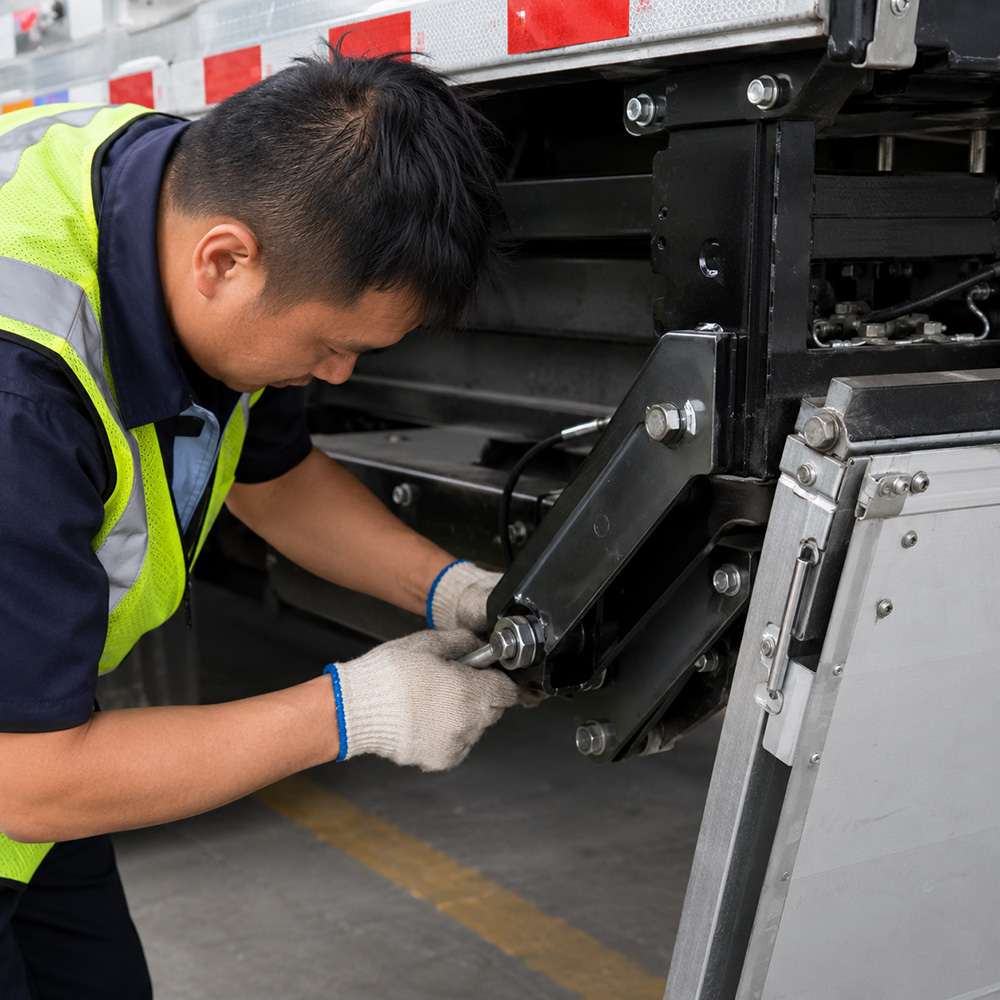
5.1 Installation
- Verify chassis compatibility with mounting bracket
- Hydraulic wiring must be done by a qualified technician
- Conduct full-load test post-installation
[Image: tail lift installation on waste truck chassis — alt: “hydraulic tail lift installation waste management truck”]
5.2 Routine Maintenance Schedule
| Frequency | Task |
|---|---|
| Weekly | Clean platform, remove corrosive residue |
| Monthly | Check hydraulic fluid level and seals |
| Quarterly | Lubricate all pivot points |
| Annually | Full professional inspection, replace worn seals |
See also: Tail Lift Maintenance Checklist: Monthly & Annual Inspection Tips
6. Frequently Asked Questions
Q: What is the MOQ for waste management tail lifts from China?
Most factories accept 1 unit for samples. Bulk orders from 5 units qualify for volume pricing.
Q: What is the typical lead time?
Standard products: 15–25 working days. Custom products: 30–45 working days.
Q: Is OEM branding available?
Yes. Most established factories support custom logos, colors, and specifications.
Q: How do I verify supplier credentials?
Request: business license, ISO certificate, CE/DOT certification documents, and recent export records.
7. Conclusion
Choosing the right tail lift for waste management trucks requires balancing load capacity, corrosion resistance, duty cycle durability, and supplier reliability. As global waste management infrastructure continues to expand, demand for purpose-built hydraulic liftgates in this sector will only grow.
Contact Beauway today for a product catalog and customized quotation. Our hydraulic tail lifts are exported to European, Southeast Asian, and Middle Eastern markets, with full OEM customization and bulk order support.
Trusted by Fleet Operators Across 60+ Countries
Stop Losing Time at the Loading Dock.
Get a Custom-Matched Tail Lift Quote in 24 Hours.
60
Countries Served
24h
Quote Turnaround
99.9
Field Uptime
5.0
Customer Rating
No Obligation
CE & UKCA Certified
Standard & Custom Builds
Worldwide Shipping