Having trouble submitting? Email us directly at nicole@beauway.com and we'll get back to you within 24 hours.











Tail Lift CE Certification Explained: EN 1756-1 & EU Compliance
Tail Lift CE Certification Explained: EN 1756-1 & EU Compliance
Meta Description: Understand tail lift CE certification and EN 1756-1 before you import — check the required documents now.
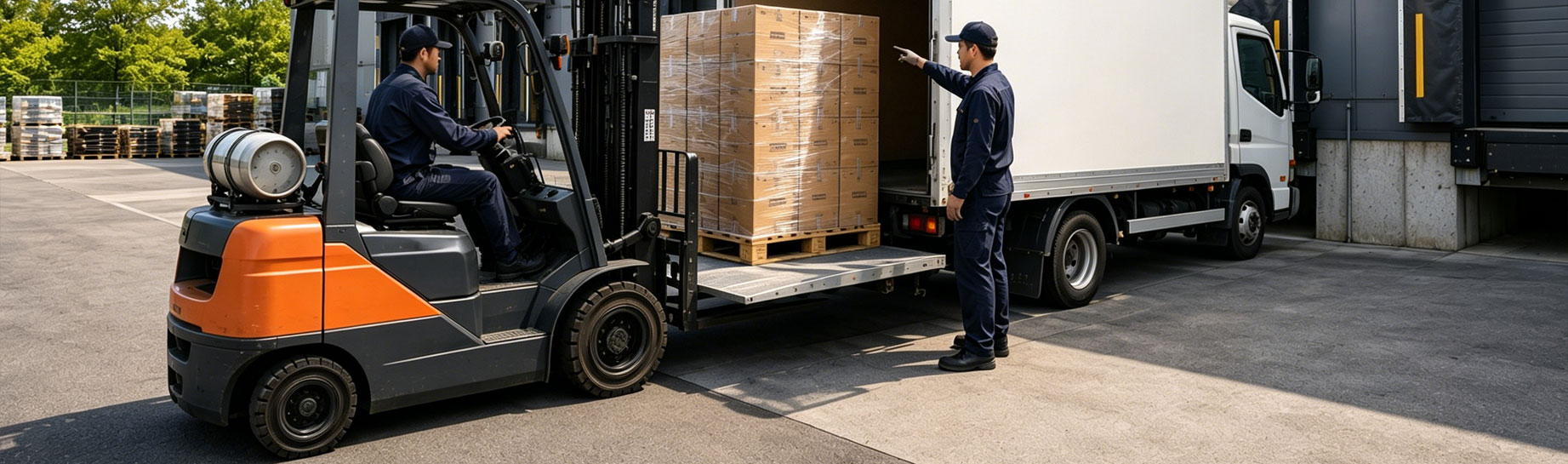
A tail lift is a powered platform mounted on the rear of a goods vehicle for loading and unloading cargo. Before entering the EU market, it must carry CE marking and comply with EN 1756-1. For international buyers, understanding these two requirements often decides whether a shipment clears customs smoothly or gets stuck at the port.
Terminology Across Europe
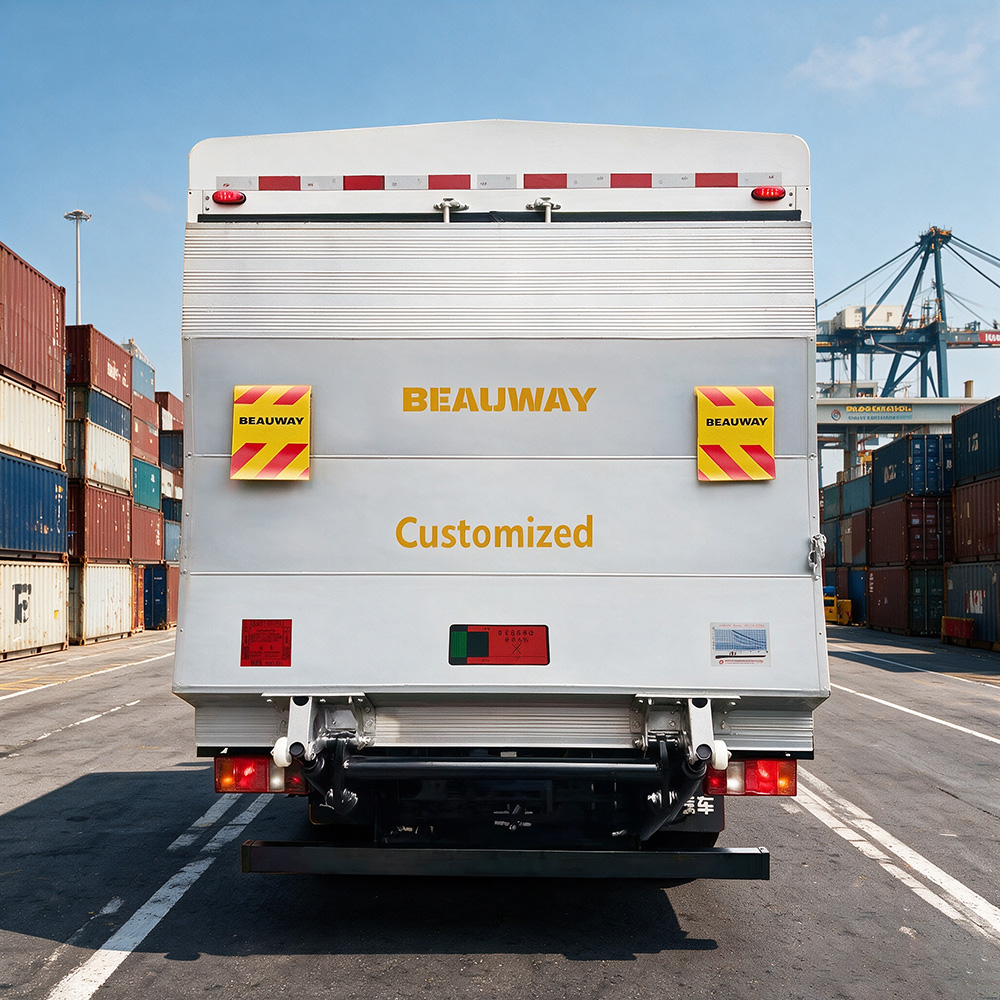
Different markets use different names for this equipment. Germany calls it a Hebebühne. Danish buyers may search for læsselift or læssebagsmæk. French-speaking markets use trappe de chargement, while Italian buyers refer to sponda montacarichi or sponda caricatrice. Regardless of the term used, any lift entering the EU market must comply with the EU Machinery Directive and meet EN 1756-1 safety requirements. This article explains exactly what that means.
A Common Scenario: When the Paperwork Goes Missing
Fleet operators and importers often report a similar scenario: a shipment arrives without a Declaration of Conformity. Customs officials request it before releasing the goods. The supplier cannot locate the document quickly, and the vehicle sits idle at the port. Delays like this rarely stem from a bad product. They usually come from a buyer who did not ask for tail lift export certification documents before placing the order. Knowing what to request in advance avoids this entirely.
What CE Marking Actually Means for a Tail Lift
Many buyers assume a third-party body awards CE marking, like a badge. In fact, the manufacturer makes this declaration after completing a conformity assessment, stating that the product meets the essential health and safety requirements of the relevant EU legislation. The manufacturer must complete that assessment, compile a Technical File, and issue a Declaration of Conformity before affixing the CE mark.
The exact assessment route varies by product and risk level, so buyers don’t need to trace the procedure step by step. What matters is simpler: without an assessment record, a Technical File, and a Declaration of Conformity behind it, a CE mark on its own proves very little.
EN 1756-1: The Core Safety Standard
Scope
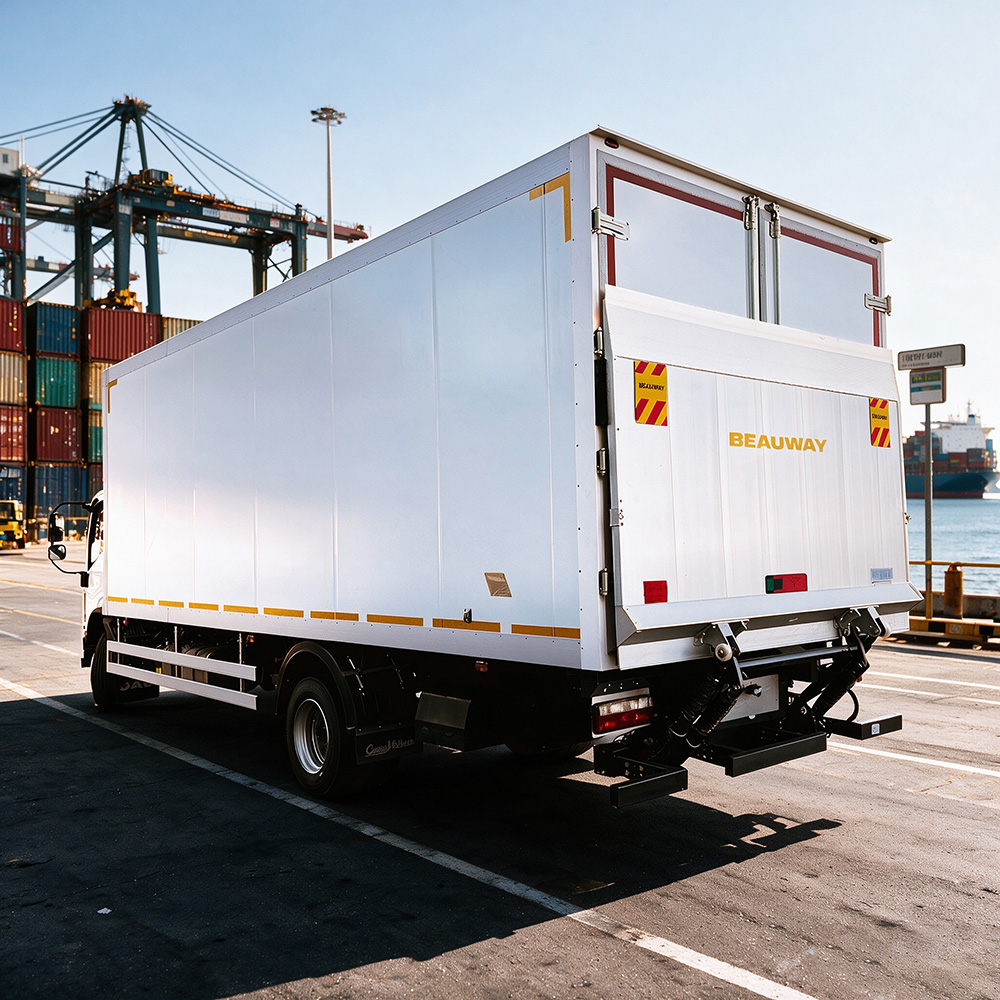
The current version of the standard is EN 1756-1:2021. It applies specifically to tail lifts for goods mounted on wheeled vehicles. This distinction matters because passenger and accessibility tail lifts fall under a separate standard, EN 1756-2. The two are not interchangeable, and a certificate issued against one does not cover the other.
What It Covers
EN 1756-1 starts from a hazard analysis and sets out corresponding safety requirements. These cover the working area design, manual effort limits, operating speeds (vertical lifting speed, stowing and deploying speed, tilting speed), load stability (tilt angle limits and stop devices), travel limitations, wiring and hose layout, and protection against unauthorized operation. Exact figures vary by model and rated load, so buyers can ask the supplier for a type test report specific to the model in question.
For the full technical scope, buyers can refer to the official standard catalogue on the CEN (European Committee for Standardization) website.
EU Machinery Directive and the Upcoming Change
The currently applicable law is the Machinery Directive 2006/42/EC, and EN 1756-1 is a harmonised standard under that directive. Worth noting: the EU has already published a new Machinery Regulation (EU) 2023/1230, and it will fully replace the current directive from 20 January 2027, with no overlapping transition period. Buyers placing orders in 2026–2027 should keep this changeover date in mind, as it may affect documentation requirements going forward. Tail lifts with electrical control systems must also meet the EMC Directive 2014/30/EU.
Documents International Buyers Should Ask For
| Document | Purpose | Issued By |
|---|---|---|
| Declaration of Conformity | Manufacturer’s formal legal statement of compliance | Manufacturer |
| Technical File | Records design, risk assessment, and test data | Manufacturer (kept on file) |
| Type Test Report | Evidence of testing against EN 1756-1 | Manufacturer or test lab |
| CE Marking on Nameplate | Visible compliance indicator on the product | Manufacturer |
How to Verify Compliance Before You Import
Before placing an order or accepting a shipment, buyers can take a few practical steps to reduce risk:
- Check the nameplate for the manufacturer’s name, model number, and a clearly visible CE mark.
- Request the Declaration of Conformity and type test report, and confirm the model number matches the actual product.
- Check that document issue dates align with the production batch being shipped.
These steps won’t eliminate every risk, but they significantly reduce the chance of customs delays or after-sales disputes. Options such as folding tail lift models are common on the market, and the same documentation applies no matter which configuration a buyer chooses.
CE Marking vs ISO Certification: Not the Same Thing
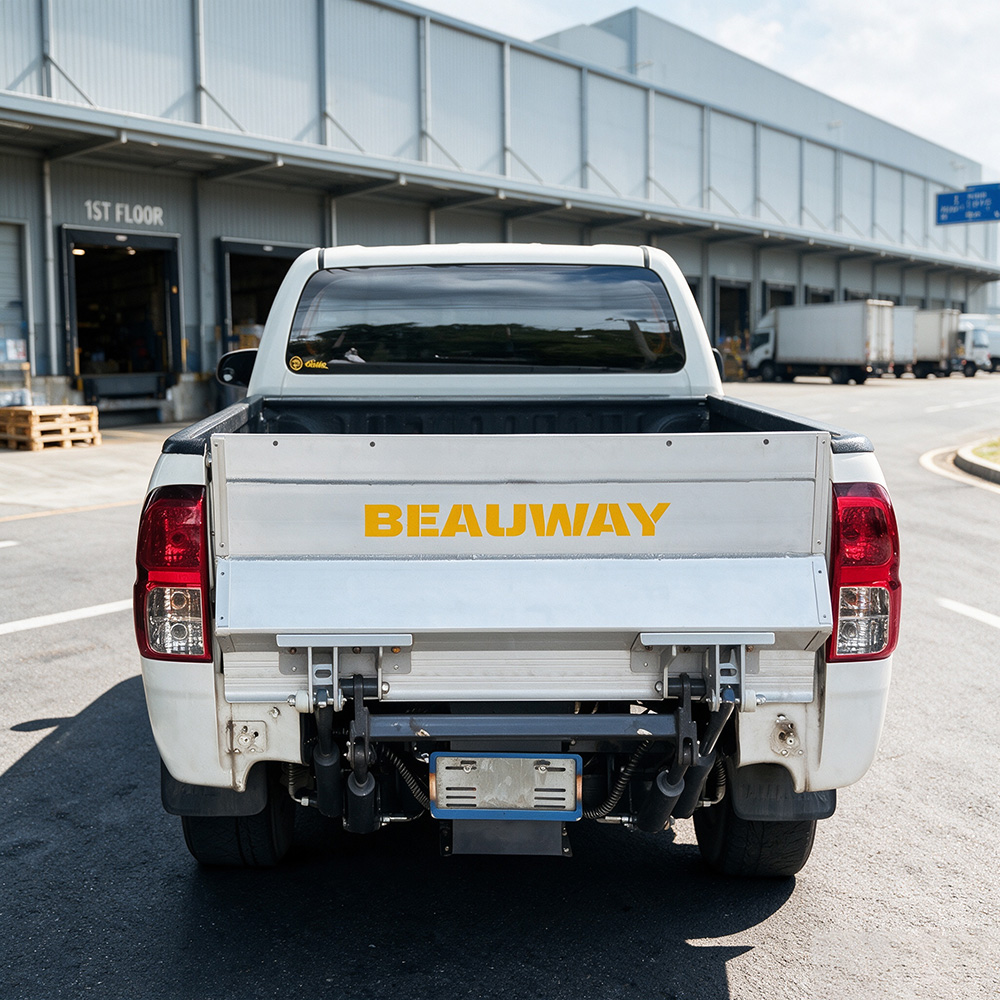
Buyers often conflate CE marking with ISO certification. CE marking is a mandatory, product-level declaration confirming that a specific tail lift meets EU safety law — it is a legal requirement for placing the product on the EU market. ISO certification (such as ISO 9001) applies to a manufacturer’s quality management system, confirming the factory follows a consistent production process. It is voluntary and does not substitute for CE marking. An ISO certificate alone does not prove that a specific product is CE compliant.
Frequently Asked Questions
What is EN 1756-1? EN 1756-1 is the EU safety standard for tail lifts used on goods vehicles. It sets design, testing, and safety information requirements and is a harmonised standard under the Machinery Directive.
Is CE marking mandatory for tail lifts sold in the EU? Yes. Any tail lift placed on the EU market must undergo a conformity assessment and carry CE marking. This is a legal requirement, not an optional add-on.
Does ISO certification replace CE marking? No. ISO certification covers a company’s management system, while CE marking covers whether a specific product meets EU safety law. The two serve different purposes and cannot substitute for one another.
What changes with the EU Machinery Regulation in 2027? Regulation (EU) 2023/1230 will replace the current Machinery Directive 2006/42/EC from 20 January 2027. Manufacturers may need to update technical documentation and declarations of conformity accordingly.
Trusted by Fleet Operators Across 60+ Countries
Stop Losing Time at the Loading Dock.
Get a Custom-Matched Tail Lift Quote in 24 Hours.
60
Countries Served
24h
Quote Turnaround
99.9
Field Uptime
5.0
Customer Rating
No Obligation
CE & UKCA Certified
Standard & Custom Builds
Worldwide Shipping