







Truck Tail Lift & Hydraulic Liftgate Procurement Guide: Selection to Installation
Many procurement managers, when first encountering a truck tail lift, make the same mistake—treating it as a generic accessory and only focusing on price, without considering operational compatibility.
I have over ten years of experience in logistics equipment procurement, having handled more than 200 hydraulic tail lift projects, serving industries such as cold chain delivery, construction transport, and e-commerce warehousing. In this article, I want to share real-world experience on how to choose, purchase, and use a good truck liftgate.
Contents
- First Understand: What Problem Does a Tail Lift Actually Solve
- Four Mainstream Tail Lift Structures: Choosing Wrong Costs You Three Years
- Load Rating Selection: These Four Numbers You Must Remember
- Hydraulic System: The Invisible Core That Is Most Often Overlooked
- Installation Compatibility: Wrong Purchase Means It Cannot Be Installed
- Certification and Compliance: These Documents Are Mandatory
- Supplier Evaluation: This Checklist Eliminates 70% of Candidates
- Total Cost of Ownership: Purchase Price Is Only the Beginning
- Maintenance Checklist: Recommended for Workshop Wall Posting
- Summary
- About Beauway Procurement Information
1. First Understand: What Problem Does a Tail Lift Actually Solve
Before entering the selection logic, let’s return to the most basic question.
The core value of a tail lift is eliminating the height difference between “ground and truck cargo compartment”, reducing loading and unloading losses.
A standard box truck typically has a cargo floor height of 950mm to 1350mm above the ground. Without a liftgate for truck, workers must rely on ramps, forklifts, or manual handling, which not only reduces efficiency but also significantly increases cargo damage rates and injury risks.
According to internal data from a cold-chain company in East China I worked with: before installing a hydraulic tail lift, their monthly cargo damage rate was 1.8%. After installing a cargo liftgate, it dropped to 0.4%, saving over 380,000 RMB annually in cargo loss costs.
These numbers are the “return on investment baseline” I recommend every procurement manager establish at the project initiation stage.
2. Four Mainstream Tail Lift Structures: Choosing Wrong Costs You Three Years
Common tail lift structures are divided into four categories, each with specific application scenarios. Misuse is one of the most common procurement mistakes.
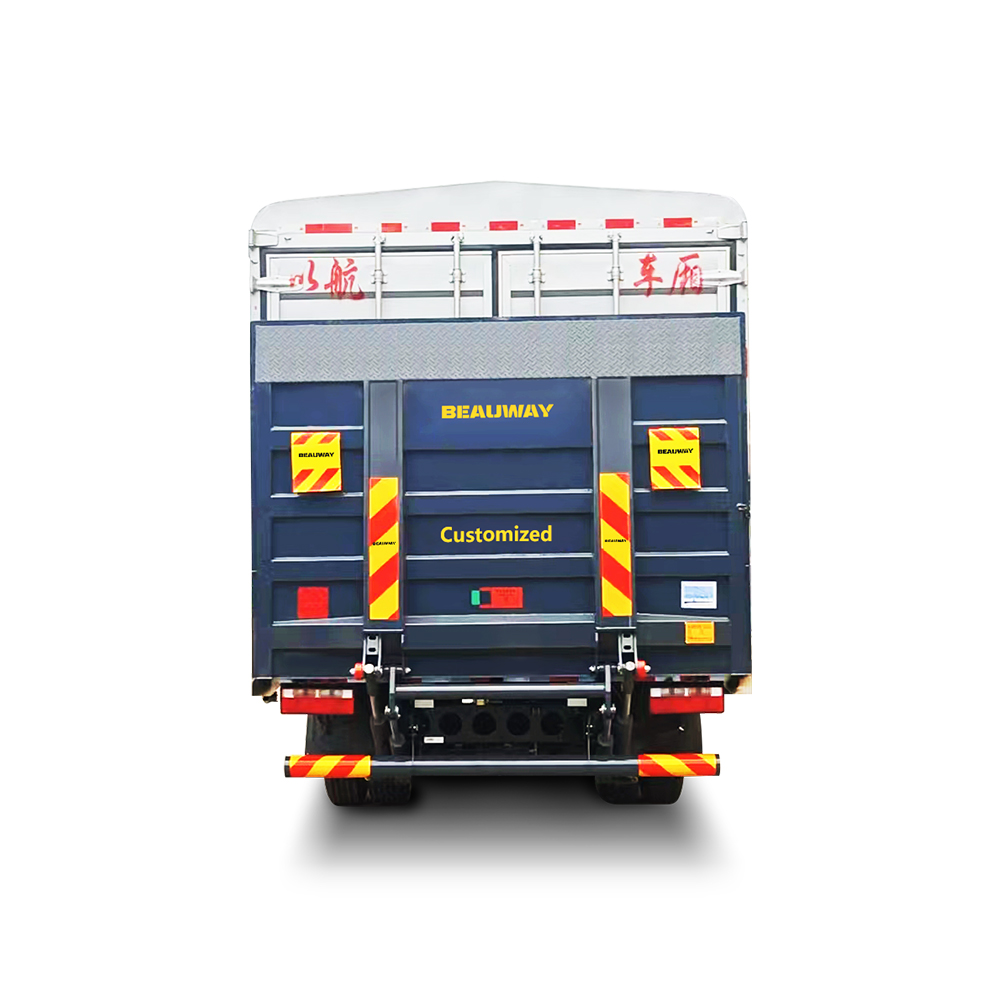
Folding Tail Lift
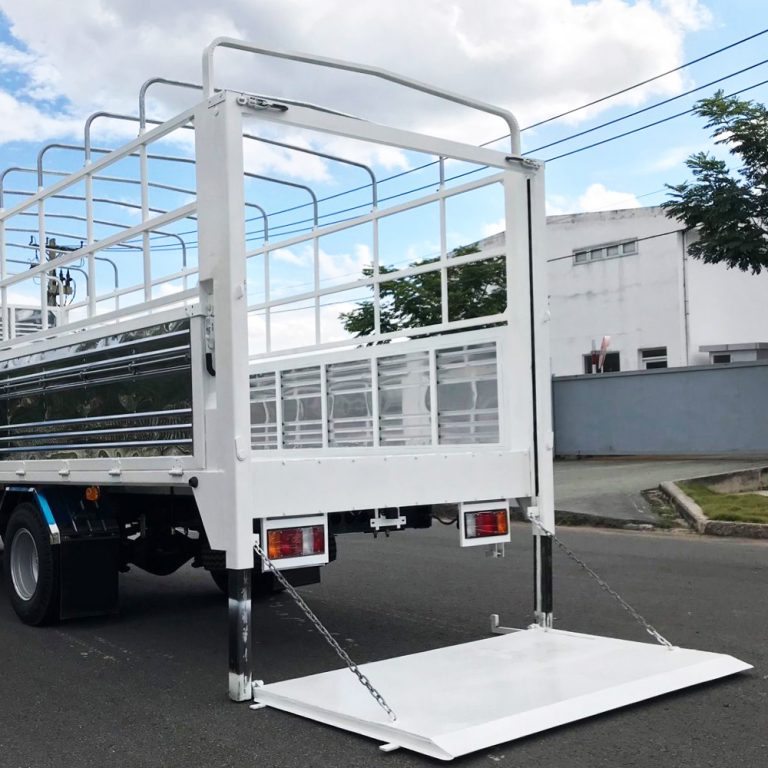
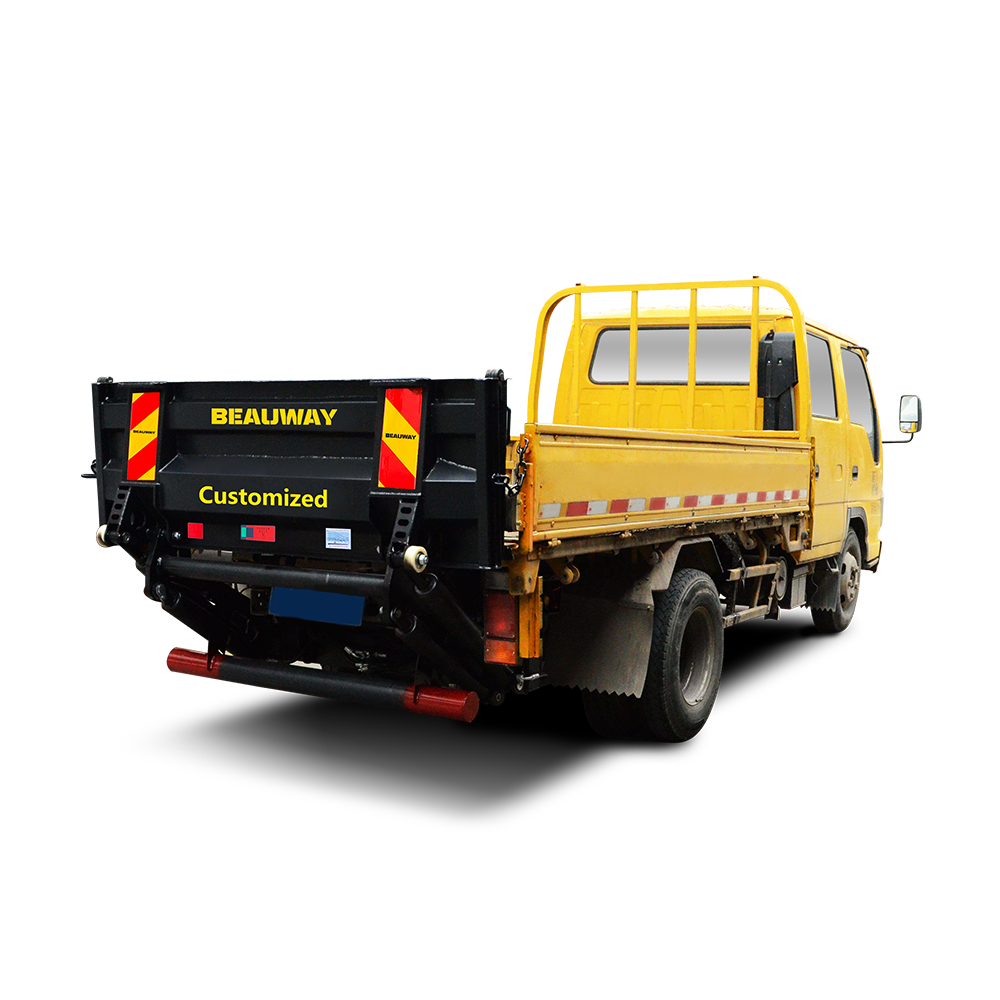
The folding tail lift is currently the most widely used type in the market. The platform consists of two hinged sections that fold inward, staying flush with the rear of the vehicle, minimizing impact on rear overhang.
- Application: Urban delivery, supermarket replenishment, last-mile logistics
- Advantages: Compact structure, light weight, minimal impact on vehicle length
- Disadvantages: Limited platform depth (typically ≤1600mm), not suitable for large pallets
Cantilever Tail Lift
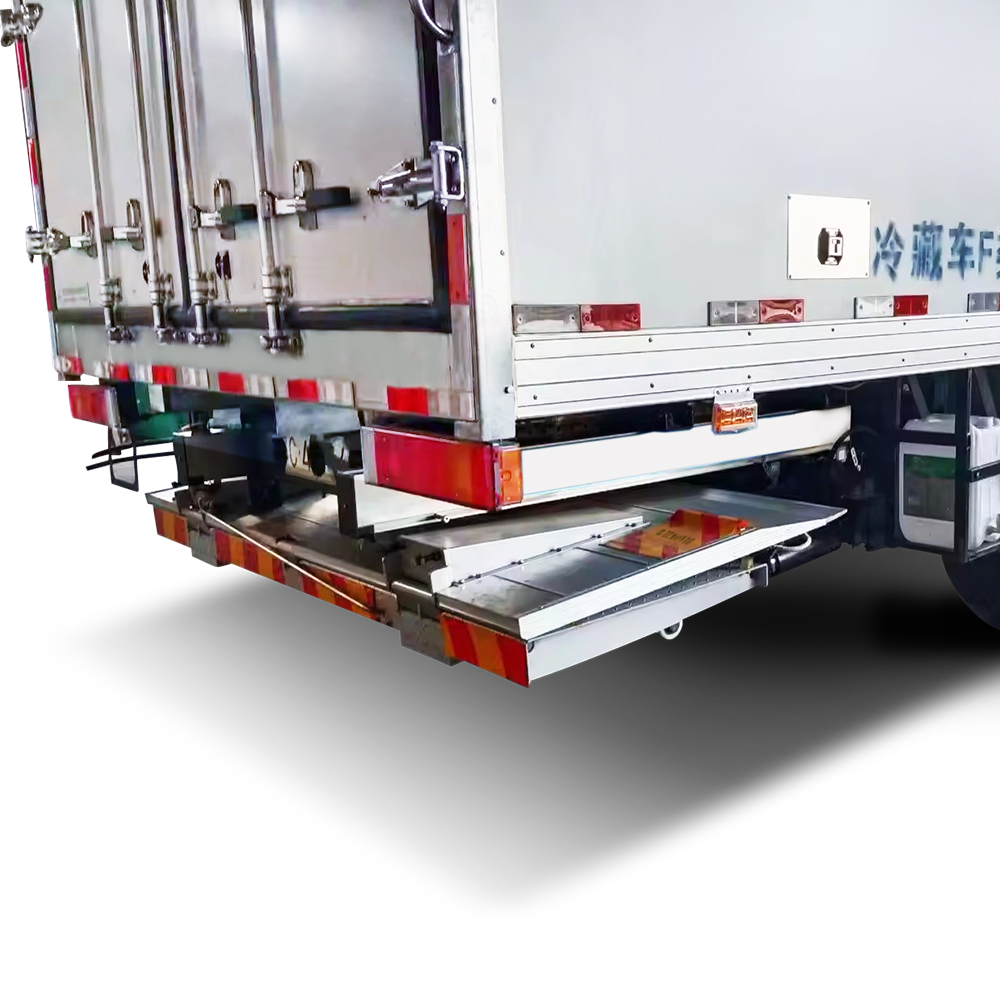
The cantilever tail lift extends the platform outward using a cantilever beam, maintaining level movement throughout lifting, offering better load stability.
- Application: Industrial equipment, heavy goods, construction materials
- Advantages: High load capacity, stable platform, suitable for forklift loading
- Disadvantages: Heavier structure, higher chassis requirements
Tuck Away Liftgate
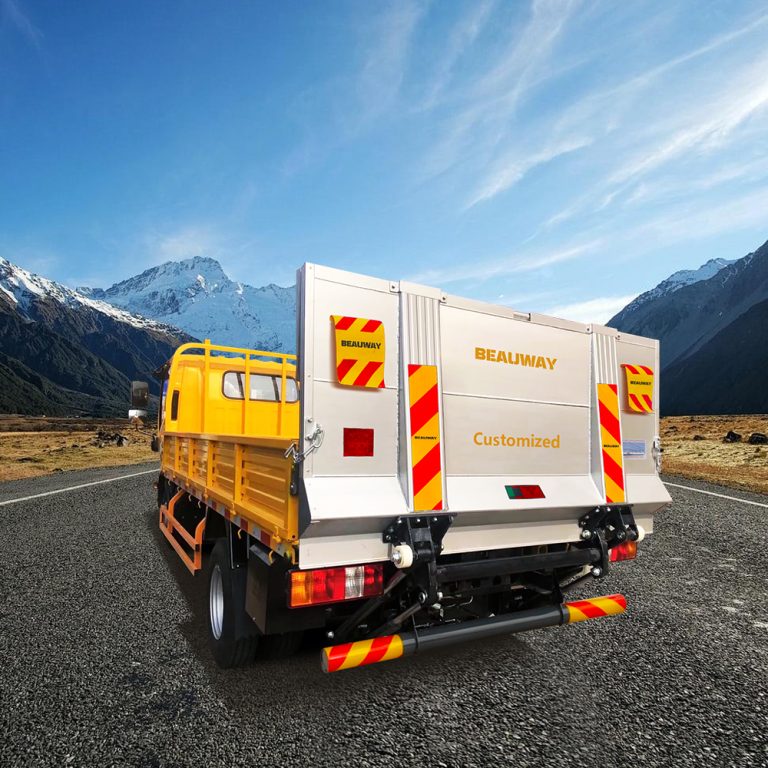
The tuck away liftgate features a platform that fully retracts under the vehicle body, not occupying rear space, ideal for vehicles frequently entering underground parking or height-restricted areas.
- Application: Urban logistics, height-restricted zones
- Advantages: Does not affect vehicle appearance, better clearance
- Disadvantages: Complex mechanism, higher maintenance cost
Hydraulic Liftgate
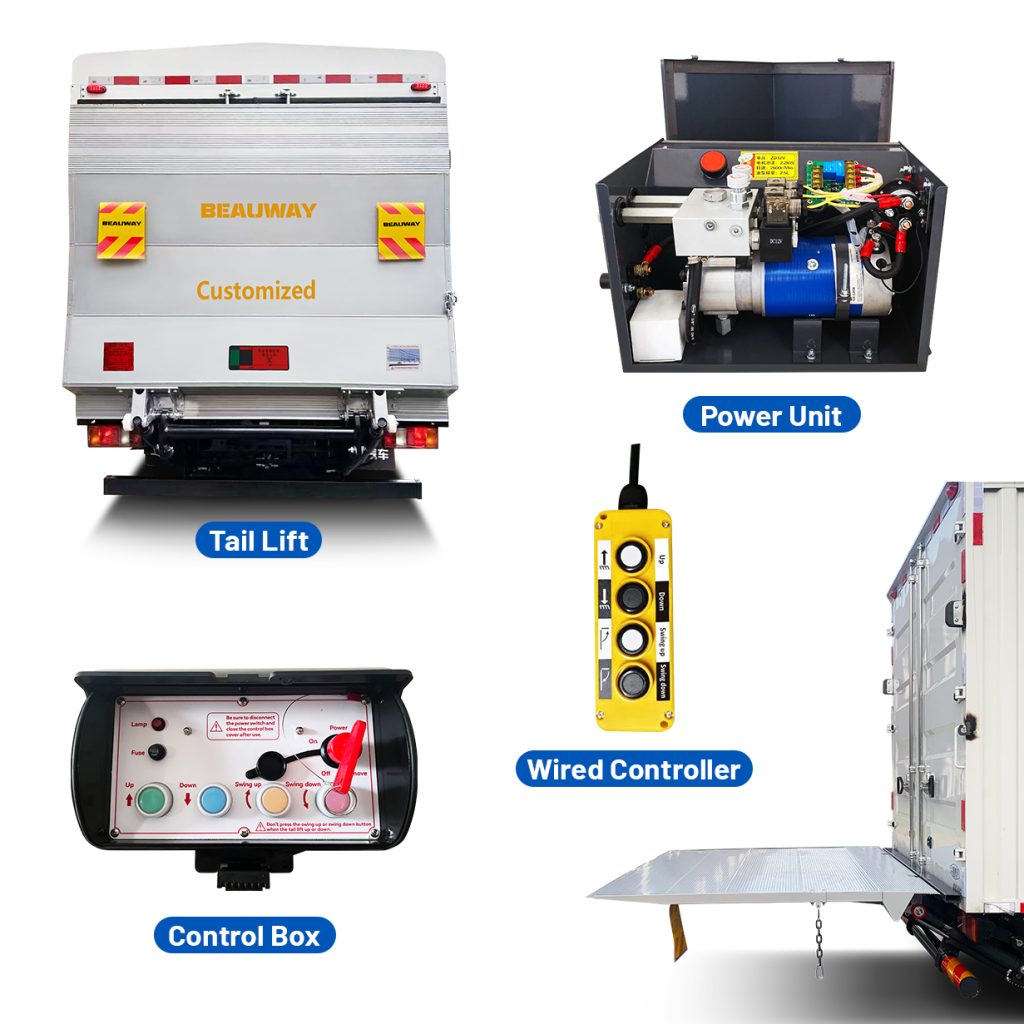
Strictly speaking, hydraulic liftgate refers to the drive system rather than a structural category. However, in procurement practice, it refers specifically to fully hydraulic tail lifts equipped with independent hydraulic pump stations and double-acting cylinders, distinguishing them from early electric direct-drive or pneumatic systems.
I strongly recommend: for vehicles over 3.5 tons or with more than 15 daily operations, a fully hydraulic system should be selected. Pneumatic systems degrade significantly in low temperatures, while electric direct-drive systems tend to overheat under high-frequency use.
3. Load Rating Selection: These Four Numbers You Must Remember
Selecting the rated load is the most technically demanding part of the procurement decision. Many buyers simply choose based on maximum cargo weight, which is correct but incomplete.
The correct selection logic should be:
- Calculate maximum single loading weight (including pallet or container)
- Add handling equipment weight (hand trolley approx. 80kg, electric pallet truck approx. 350kg)
- Multiply by dynamic load factor 1.25 (impact consideration)
- Add 20% margin to select rated capacity
The following table shows typical application scenarios:
| Load Rating | Vehicle Type | Industry | Recommended Daily Operations |
|---|---|---|---|
| truck tail lift 500kg | Light trucks (≤3.5t) | Last-mile delivery, retail distribution | Daily operation frequency is an empirical reference value, depending on motor duty cycle (S2/S3/S6), pump cooling capacity, and operating conditions; no unified industry standard exists |
| truck tail lift 1000kg | Medium trucks (5–8t) | Supermarket replenishment, medical logistics | Same as above |
| truck tail lift 1500kg | Heavy trucks (10–15t) | Cold chain, home appliances | Same as above |
| truck tail lift 2000kg | Semi-trailers, heavy trucks | Industrial equipment, construction materials | Same as above |
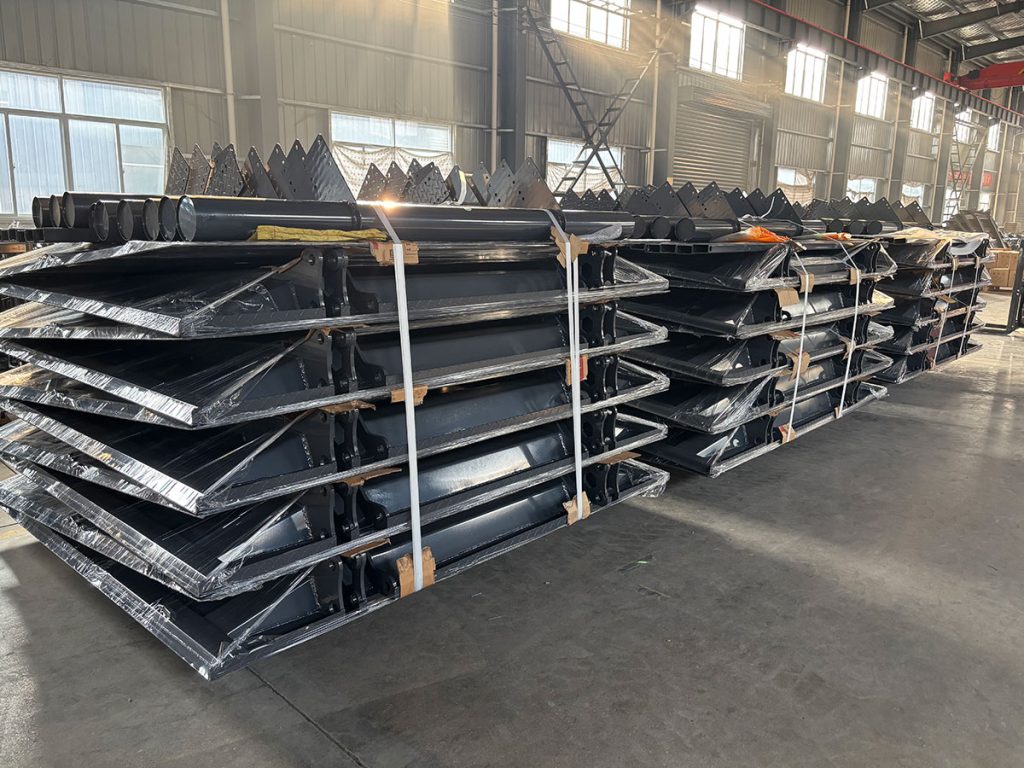
Special note: hydraulic tail lift 1000kg and hydraulic tail lift 1500kg are the two most in-demand specifications in the domestic logistics market with relatively stable supply cycles. For truck tail lift 2000kg and above heavy-duty models, it is recommended to place orders 4–6 weeks in advance, as some non-standard sizes require customization.
4. Hydraulic System: The Invisible Core That Is Most Often Overlooked
I have seen too many procurement teams evaluate tail lifts only based on platform size and rated load, ignoring the hydraulic system. This is a dangerous habit.
Hydraulic system parameters directly determine service life and failure rate.
Key hydraulic system indicators I must verify when evaluating hydraulic tail lift suppliers:
- Rated working pressure: Mainstream designs are around 160–220 bar, with high-end heavy-duty systems reaching up to 250 bar. System pressure must be evaluated together with flow rate, valve design, and safety margin; pressure alone is not the only reliability indicator.
- Hydraulic oil specification: Standard conditions recommend ISO VG 46 anti-wear hydraulic oil; in cold regions (≤-15°C), ISO VG 32 should be used to avoid cold-start issues.
- Anti-drop valve: This is mandatory, not optional. Heavy duty tail lift compliant with EN 1756-1 must include a balance valve to ensure platform descent speed does not exceed 0.5m/min in case of hydraulic hose rupture.
- Pump station protection rating: Minimum IP54 for urban delivery vehicles; IP65 or higher is recommended for high-humidity environments or frequent washing conditions.
- Motor voltage: 12V systems are suitable for light vehicles; 24V systems provide more stable power and are recommended for heavy-duty liftgate truck applications.
5. Installation Compatibility: Wrong Purchase Means It Cannot Be Installed
Many procurement contracts only reveal issues during installation—this is the worst scenario, as negotiation leverage is already lost.
Five vehicle parameters that must be verified before installation:
- Rear overhang length: After installing a tail lift for truck, rear overhang must not exceed 65% of wheelbase (domestic standard), otherwise it may affect stability and compliance.
- Cargo floor height: Determines lifting stroke requirements; typically should cover 0–1400mm range.
- Ground clearance of subframe: After installing a cantilever tail lift, the lowest point must not be lower than 200mm (unloaded).
- GVW margin: Tail lift weight typically ranges from 180–650kg; ensure total vehicle weight remains within legal limits after installation.
- Rear cross-member structure: Some vehicles require additional mounting brackets, increasing installation time by 3–7 working days; this must be confirmed in advance.
My recommendation: before signing the procurement contract, require the supplier to provide a vehicle-specific installation compatibility confirmation letter, clearly stating responsibility for any additional modification costs due to incompatibility.
6. Certification and Compliance: These Documents Are Mandatory
Tail lifts are vehicle safety devices and require mandatory certification in different markets. This is especially important for export or overseas operations.
Main market certification requirements:
| Market | Standard | Certification Body | Notes |
|---|---|---|---|
| EU | EN 1756-1:2001+A1:2008 | TÜV, Bureau Veritas, etc. | CE marking is a compliance label based on multiple EU directives |
| China | GB/T 19234-2003 | China Quality Certification Center | Industry recommended standard; some regions/projects may require compliance |
| Australia | AS 4735 | SAI Global | Typically requires type test reports and maintenance records |
| UK | LOLER 1998 | HSE-approved bodies | Usually requires periodic inspection every 6 months or based on risk assessment |
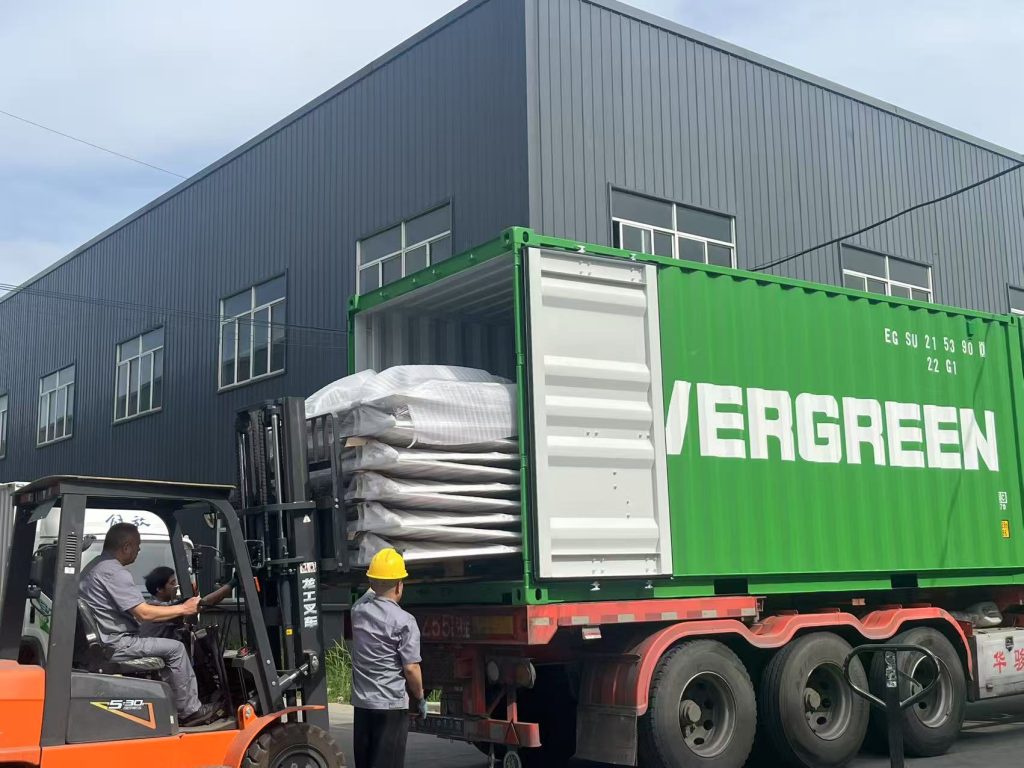
When evaluating a truck tail lift manufacturer, I require full original type test reports rather than just certificate numbers. Certificate numbers can be forged, but detailed test reports—including fatigue cycle counts and full-load drift data—are difficult to fake and reflect true product quality.
7. Supplier Evaluation: This Checklist Eliminates 70% of Candidates
Selecting a hydraulic liftgate supplier is the highest-risk stage of procurement. Price is only surface-level; real value lies in supplier capability.
My supplier evaluation checklist (priority order):
Mandatory (disqualification items)
- Valid certification for target market (CE / GB)
- At least 3 years of similar project references
- Local or regional authorized service network
- Spare parts (seals, hydraulic hoses) available within 5 working days
Bonus points
- ISO 9001 certification
- 24+ months full equipment warranty
- On-site installation and training support
- Dedicated R&D team for tail lifts
Warning signs
- No physical samples or factory visits allowed
- Vague technical responses, focusing only on price
- Excessive warranty exclusions
- Unrealistically short delivery time (<3 weeks for custom models)
8. Total Cost of Ownership: Purchase Price Is Only the Beginning
This is a concept I repeatedly emphasize when training procurement teams: the purchase price of a tail lift typically accounts for only 35%–45% of total lifecycle cost.
For a truck tail lift 1000kg, over an 8-year lifespan:
| Cost Component | Share | Notes |
|---|---|---|
| Equipment purchase | 38% | Includes installation |
| Maintenance | 22% | Hydraulic oil, grease, labor |
| Spare parts replacement | 18% | Seals, hoses, controllers |
| Unplanned downtime | 15% | Repair + logistics loss |
| Compliance inspection | 7% | Annual inspections and certification renewal |
Choosing equipment that is 15% more expensive initially but has lower maintenance costs and stable spare parts supply often saves significantly more in the long run. I have seen many companies spend three times the savings from purchase price on later repairs.
9. Maintenance Checklist: Recommended for Workshop Wall Posting
Proper maintenance is essential for lifespan and performance.
Daily inspection (before each trip, ~5 minutes)
- Check hydraulic lines for leaks
- Perform unloaded cycle test
- Verify platform locking mechanism
Monthly inspection (~30 minutes)
- Check and refill hydraulic oil
- Lubricate all pivot points with EP2 lithium grease
- Inspect wiring and connectors
- Check anti-slip surface wear
Annual inspection (professional service recommended)
- Replace hydraulic oil (ISO VG 46)
- Full weld inspection (focus on cantilever root)
- Full-load pressure test
- Anti-drop valve verification
Summary
This article covers the full procurement chain for tail lifts: structure selection, load matching, hydraulic system evaluation, installation compatibility, supplier screening, and total cost of ownership. The core principle is simple: make decisions using system thinking, not unit price comparison.
Key conclusions:
- Structure selection is more important than load rating
- Hydraulic system parameters define quality
- Installation compatibility must be verified before contract signing
- Certification must be verified via original test reports, not just numbers
- Total cost of ownership is more important than purchase price
About Beauway Procurement Information
If you are looking for a reliable truck tail lift manufacturer or hydraulic liftgate supplier for your fleet, Beauway is a solution worth serious consideration.
Beauway offers a full product range from truck tail lift 500kg to truck tail lift 2000kg, covering folding tail lift, cantilever tail lift, and tuck away liftgate. All products are CE certified and comply with EN 1756-1 standards, with hydraulic systems rated at 200 bar, standard anti-drop valves, and IP65-rated pump stations.
Business terms:
- Sample testing: Available for bulk buyers, including factory visits
- Customization: Non-standard platform sizes, voltages, and coatings available, delivery as fast as 3 weeks
- Payment terms: T/T, L/C, and staged payments negotiable
- After-sales support: 24-month warranty, spare parts shipped within 5 working days
- Technical support: English/Chinese manuals, video guidance, remote support, and on-site training available
You are welcome to submit an inquiry via the official contact page, providing vehicle details and operating conditions. Our technical team will respond with a selection recommendation within 1 working day.