Having trouble submitting? Email us directly at nicole@beauway.com and we'll get back to you within 24 hours.











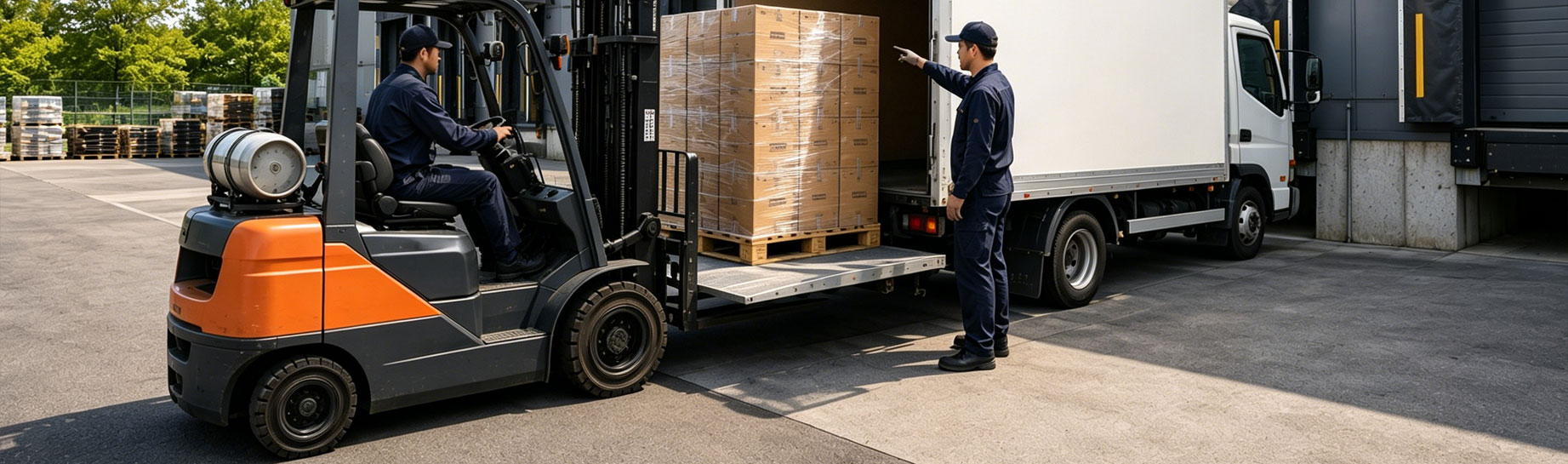
Tail Lift for Special Vehicles: Risks & Checklist
How to Evaluate a Tail Lift for Special Vehicle Integration
Fit the wrong tail lift for special vehicles and you cannot simply pull it off and start again. Special-purpose vehicles don’t work that way. The chassis is custom-built. The hydraulic liftgate is wired deep into the vehicle’s electrical system. The operating environment hits extremes a standard freight vehicle never sees. One mismatched specification and you’re not looking at a parts swap — you may be looking at a full reinstallation.
I’ve seen emergency rescue vehicles at the scene with a rear loading platform that wouldn’t deploy. I’ve dealt with engineering transport vehicles where a single overload event cracked the hydraulic cylinder mounting bracket clean through. Both were selection failures in hindsight. But the procurement teams involved didn’t know which questions to ask going in.
This checklist is pulled from real project experience. It’s a record of problems that have already cost people money, laid out for equipment procurement officers, fleet managers, and field maintenance engineers to use before they sign anything.
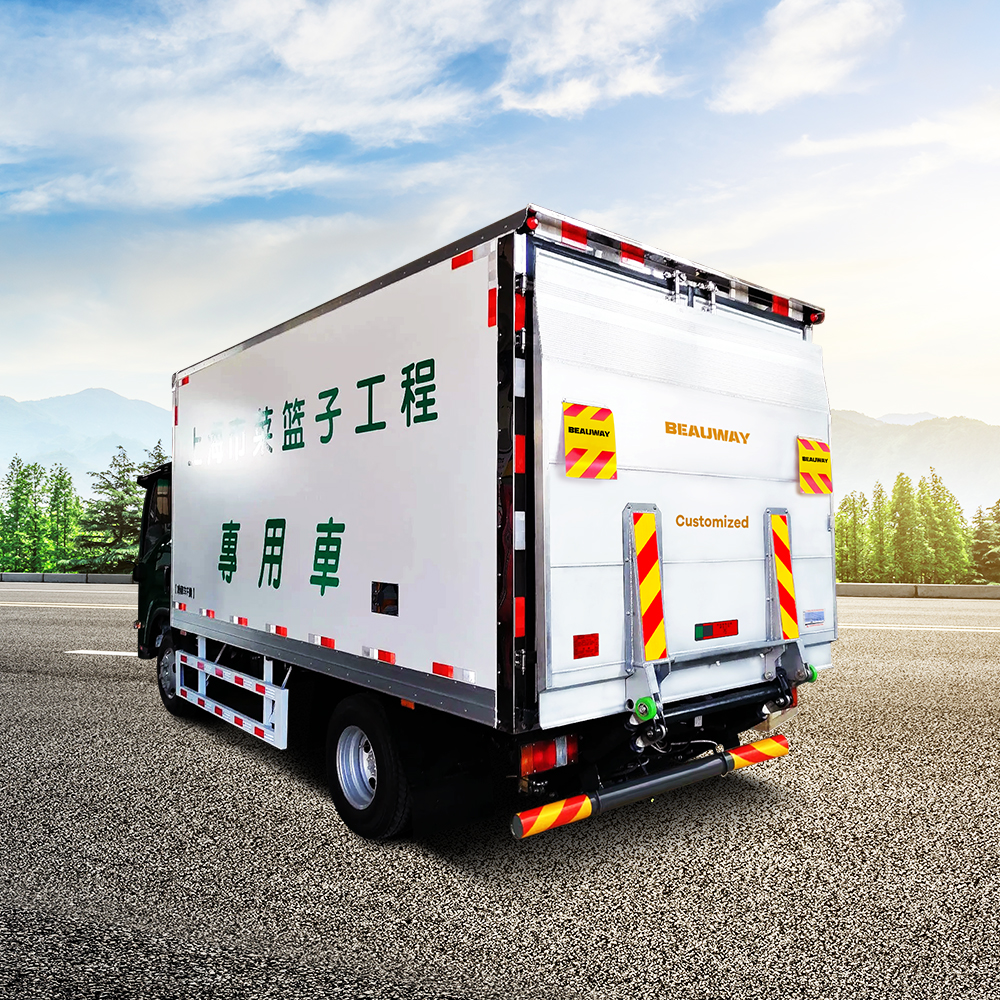
Three Application Types, Three Different Sets of Priorities
Integrating a hydraulic tail lift into a special-purpose vehicle covers three main application categories. The core priorities differ enough that a single evaluation standard cannot be applied across all three.
Emergency and Rescue Vehicles: Reliability Is a Baseline, Not a Feature
Emergency and rescue vehicles — fire response, disaster relief, medical support — cannot afford equipment failure at the scene. The vehicle tail lift operates at night, in rain, on uneven ground. The hydraulic system has to start reliably across temperature extremes. The platform has to deploy fast and hold steady. A slow cycle on a standard freight vehicle is inconvenient. On a rescue vehicle it is a different category of problem entirely. Requirements for hydraulic redundancy design and fault self-diagnostics sit at least one full tier above standard commercial vehicle specifications — not optional features, baseline requirements.
Engineering and Construction: Structural Fatigue Over Ease of Use
Engineering and construction transport vehicles — building materials, heavy equipment, municipal infrastructure — run the tail lift infrequently but at high individual loads every time. A heavy duty tail lift working on soft ground or on a slope deals with uneven load distribution across the platform. That puts concentrated stress on boom welds and cylinder mounting points that flat-ground operation does not generate. In this category, structural fatigue life matters more than ease of operation. It is an easy distinction to get backwards during procurement.
Logistics and Distribution: Cycle Frequency Changes Everything
Logistics and distribution vehicles — multi-stop urban delivery, cold-chain last mile — may cycle the truck tail lift more than thirty times in a working day. Hydraulic pump units, seals, and electrical control switches wear out fast under that frequency. Parts availability locally matters more in this application than in either of the other two. Zero parts interchangeability in a high-cycle urban fleet is a slow-motion operational failure.
Know which category applies before comparing anything else.
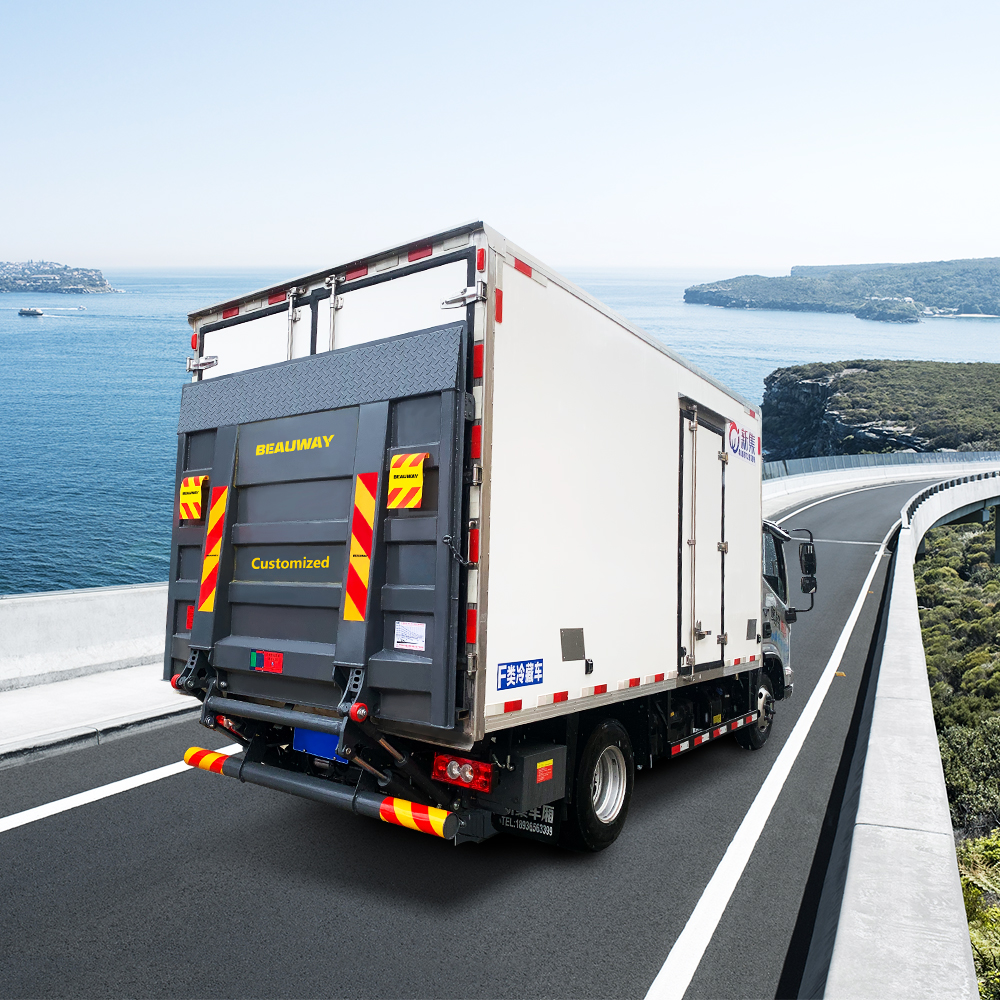
Supplier Qualification and Technical Solution Review
What to Actually Look For in Certification Documents
The liftgate system going onto a special-purpose vehicle must meet mandatory compliance requirements in any serious export market. These are not optional quality marks — they determine whether the equipment is legal to operate.
The EU requires truck tail lifts to comply with EN 1756-1, covering structural strength, hydraulic system safety, control protection, and stability testing, with defined deflection limits under rated load. Australia applies the AS 1418 series to commercial vehicle tail lifts. Parts of the Middle East require CE marking plus an independent third-party factory audit report for government procurement projects.
When the documents arrive, a few things are worth checking carefully.
The model scope listed on the certification. Some suppliers have completed full type testing on one product variant only. Other models are supplied on a reference-compliance basis — meaning they have not actually been independently tested. Special-vehicle projects frequently involve modified or customised configurations. The certification status of any modified product needs separate confirmation. Do not assume the base model certification carries over automatically.
Welding procedure qualification records. The load-bearing structure of a tail lift is entirely welded. Weld quality at the boom and mounting bracket joints determines service life directly. Any reputable supplier should produce WPS/PQR records — welding procedure specifications and procedure qualification records — without hesitation. If they cannot, take note of it.
Hydraulic component sourcing. Cylinders, pump units, and control valves are the core of any hydraulic loading platform. Whether these come from the factory’s own production, from named hydraulic component manufacturers, or from unbranded generic suppliers makes a significant difference to long-term parts traceability.
“Documents can be falsified. A weld cross-section cannot.” — A special-vehicle conversion engineer with over twenty years in the field.
Technical Parameters That Most Often Cause Problems
Specification sheets show peak performance figures. What matters in the field is fit with actual operating conditions. A few parameters come up repeatedly as sources of costly misunderstanding.
Rated load — which calculation basis. Some suppliers quote centre-point concentrated load rather than full-area uniformly distributed load. In construction transport, heavy equipment is loaded by forklift across the whole platform surface. The difference in actual load capacity between the two methods can reach 15 to 25 percent. Ask the question directly. Do not assume the number on the sheet means what you think it means.
Hydraulic working pressure matched to seal material. Standard tail lift system operating pressure runs 160 to 250 bar. Heavy duty tail lifts for high-load applications reach 280 bar. Nitrile rubber (NBR) seals running continuously above 250 bar carry a real degradation risk. Heavy-load applications should specify polyurethane (PU) or fluorocarbon rubber (FKM). This detail almost never appears in a quotation document. Request the hydraulic component specification sheet separately.
Electrical integration with the vehicle’s existing circuit architecture. Special-purpose vehicles often carry complex electrical systems — multi-channel CAN bus networks, dedicated control circuits, proprietary load management. Whether the truck loading system’s control module supports parallel connection with the vehicle’s existing wiring, and whether it incorporates interference isolation, has to be confirmed before installation. Finding a circuit conflict after fitment costs more to resolve than the equipment itself.
Platform dimensions against actual chassis measurements. Special-purpose vehicle chassis rear cross-member spacing, mounting point locations, and ground clearance regularly differ from standard freight vehicles. The rear cargo lift dimensions must be verified against measured data from the specific target chassis — not a generic dimension table. Request installation drawings specific to the target chassis model. No drawings means no verification.
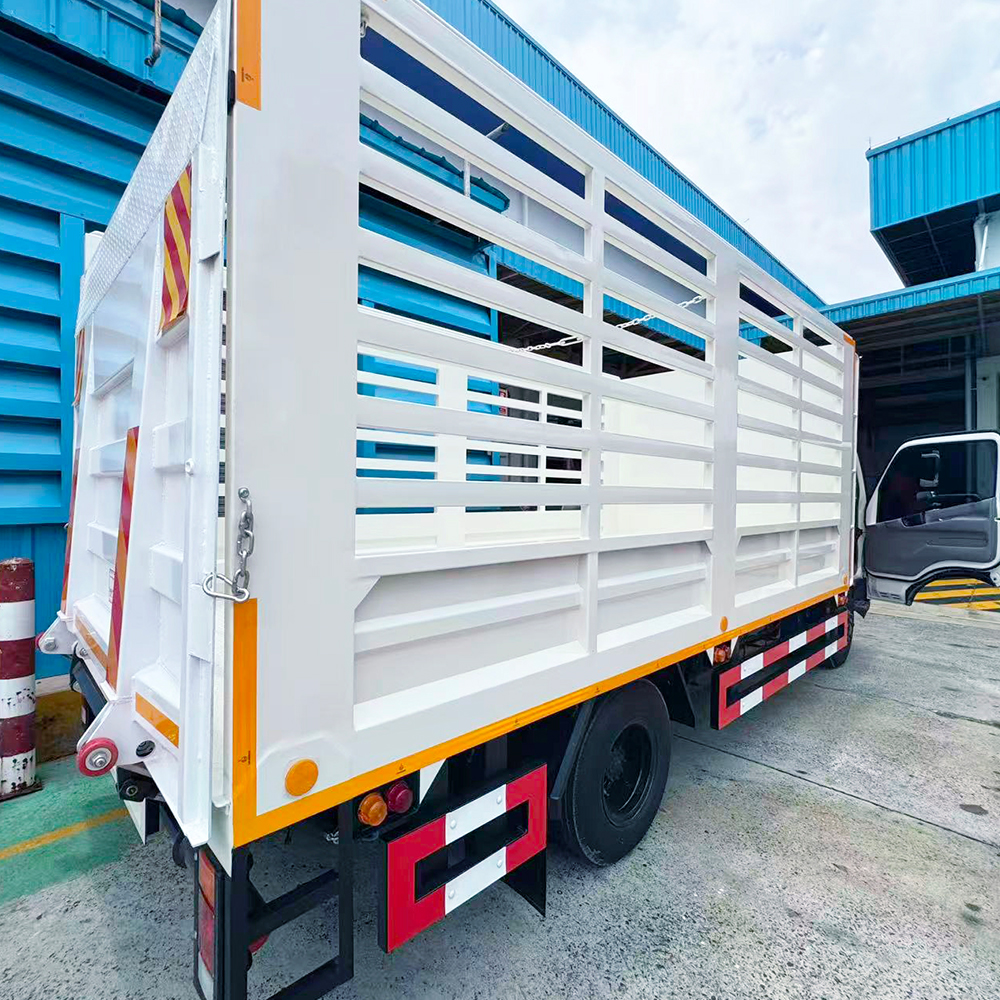
Procurement Evaluation, Risk Identification, and a Case Worth Reviewing
Supplier Evaluation Framework
Special-vehicle projects do not suit lowest-price selection logic. The following table reflects evaluation criteria applied in actual procurement projects.
| Evaluation Criterion | Weighting (Special Vehicles) | How to Verify | Typical Risk |
|---|---|---|---|
| Technical solution fit | ★★★★★ | Chassis-specific installation drawings, hydraulic schematic | Generic solution applied without actual chassis data |
| Certification and compliance | ★★★★★ | Third-party certification, type test reports | Certification scope excludes customised variants |
| Hydraulic component grade and source | ★★★★☆ | Component list, brand documentation | Unbranded components with no traceable spare parts chain |
| Parts interchangeability | ★★★★☆ | Seal and fitting specs, ISO standard verification | Proprietary non-standard parts unavailable locally |
| After-sales response and coverage | ★★★★☆ | Service network map, written response time commitment | No local service presence; all support via email |
| Lead time and production capacity | ★★★☆☆ | Factory capacity records, delivery history | Overstated lead times on custom items cause site delays |
| Purchase price | ★★★☆☆ | Full cost including tax and freight | Low headline price followed by separately billed parts and service |
| Technical documentation | ★★★☆☆ | Hydraulic schematic, wiring diagram, maintenance manual | No documentation supplied; repairs fully dependent on OEM |
In special-vehicle projects, technical solution fit and parts interchangeability should carry substantially more weight than purchase price. One day of unplanned downtime typically costs more than the savings from a 5 percent lower unit price.
The following situations warrant direct elimination or significant downgrading during supplier comparison:
- No installation drawings for the target chassis, and no record of fitting the same chassis type previously
- Hydraulic components supported only by the assembler’s own conformity declaration, with no brand documentation
- Refusal to provide hydraulic schematics or wiring diagrams, citing commercial confidentiality
- Lead time commitment well below the normal production range for custom truck loading system work (typically 45 to 90 days)
- After-sales terms with no defined response time commitment and no downtime compensation clause
A Case Worth Knowing Before You Sign
An infrastructure construction company operating in the Middle East consolidated procurement of a batch of cargo loading lifts for its engineering transport fleet. The supplier was price-competitive. Equipment performed normally after installation. Around nine months in, several vehicles started showing hydraulic cylinder rod seal leakage — concentrated at the interface between the piston rod and the guide bush.
Investigation confirmed the cylinder seals were proprietary non-standard dimensions, specific to the supplier’s dedicated component vendor. Nothing matching was available from local hydraulic parts distributors. The supplier quoted 45 to 60 days for original parts via sea freight and customs clearance. Affected vehicles had their vehicle loading equipment capability suspended. The site pulled in wheel loaders as temporary substitutes. Loading efficiency dropped roughly 35 percent, and several construction sequences slipped on schedule.
The interim fix involved locally machined adapter rings fitted with near-standard seals, held in place until original parts arrived. When the full accounting was done — downtime losses, interim solution costs, subsequent buffer stock procurement — the total exceeded 22 percent of the original per-unit tail lift purchase price.
The root cause was straightforward. Nobody during procurement had asked whether the cylinder seals conformed to ISO 6547 or DIN 3760 standard dimensions. Five minutes in the enquiry stage would have answered it. Parts interchangeability in a tail lift for special vehicles is never a minor detail.
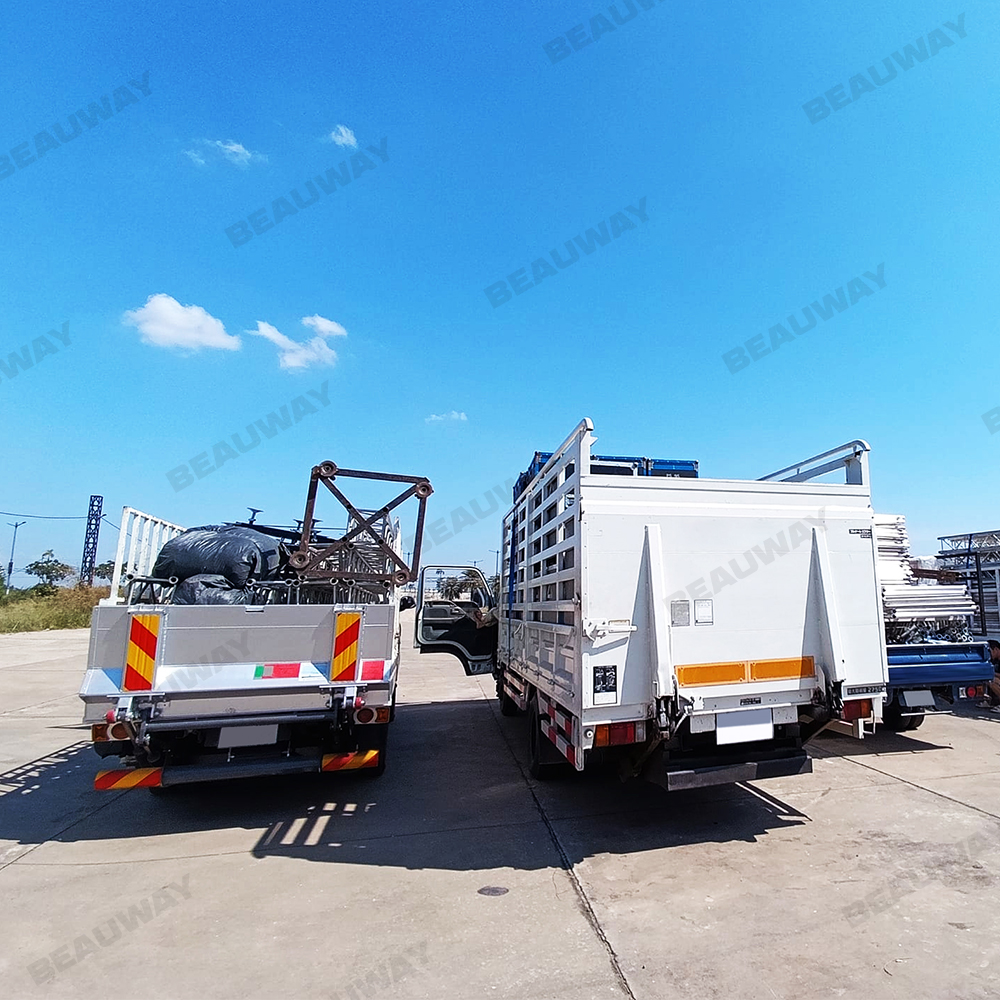
Safety Control Requirements and Full Procurement Execution
Safety Control on Special Vehicles Is Not the Same Standard as Freight
A hydraulic loading platform on a standard freight vehicle typically needs overload protection and travel limit switches. Special-vehicle integration is more involved. The following items need explicit confirmation with the supplier during procurement — not assumed.
Hold-pressure performance of the hydraulic lock system. Under rated load with the platform stationary, allowable platform drop is typically no more than 5 mm within a 30-minute hold period. This figure reflects the sealing quality of the hydraulic lock valve. Factory inspection reports should include actual measured values — not just a pass or fail notation.
Emergency stop and fault indication. On emergency rescue vehicles, operators need to halt platform movement quickly under urgent conditions. Whether the electrical control system has an independent emergency stop circuit, and whether fault conditions generate a visible or audible signal, are baseline requirements in rescue applications — not extras to negotiate away on price.
Anti-misoperation interlock logic. Engineering transport vehicles parked on slopes or unstable ground face real risk if operational sequencing goes wrong. Whether the control system includes interlock protection — for example, preventing tail lift deployment before the parking brake is confirmed engaged — needs to be defined in writing during the technical confirmation stage, not discovered after delivery.
Anti-slip surface treatment and load markings. The slip resistance of the vehicle loading equipment platform under wet or contaminated conditions, and the clarity of rated load markings, are mandatory inspection items in certain markets and represent a non-negotiable operational safety baseline everywhere else.
Complete Procurement Checklist
Application scoping: Define vehicle type (emergency / engineering / logistics), chassis model and actual rear installation measurements, daily operation cycle count, rated load requirement, and climate conditions in the target operating region.
Supplier initial screening: Collect certification documents and verify model scope coverage. Request welding procedure qualification records. Ask for export client references — prioritise contacts from comparable special-vehicle applications.
Technical solution confirmation: Request chassis-specific installation drawings, hydraulic system schematic, wiring diagram, hydraulic component brand and specification list, and written confirmation that seals conform to ISO standard dimensions.
Technical Verification and Testing Before Delivery
Parts interchangeability verification: Confirm seals and hydraulic fittings against ISO standards. Verify hydraulic component brands have authorised distributors in the target operating region. Check whether wear parts can be sourced independently from third parties.
Prototype or factory testing: Full-load lift stability, hydraulic system hold-pressure test (30-minute static hold), low-temperature start where applicable, emergency stop function — test and record each item separately.
After-sales terms negotiation: Main structural components warranty no less than 3 years, hydraulic system 1 to 2 years. Local service response time committed in writing. Technical documentation supplied with each unit. Downtime compensation clause explicitly stated in contract.
Batch delivery acceptance: Agree sampling criteria and test parameters before delivery arrives. Hold-pressure performance, platform levelness, and electrical function should be tested per unit or at a defined sampling rate. A factory conformity certificate is not a substitute for on-site acceptance testing.
The procurement decision for a tail lift for special vehicles is a balance between total lifecycle cost and operational risk. Parts interchangeability, hydraulic component grade, and after-sales service coverage — the three factors that never appear in the price column — are consistently what determines actual total cost of ownership.
Beauway has been focused on logistics loading equipment for many years, covering tail lifts, dock levellers, and lifting platforms across a full product range. For application-specific selection guidance or a technical consultation based on your vehicle type and operating conditions, enquiries are welcome.
Trusted by Fleet Operators Across 60+ Countries
Stop Losing Time at the Loading Dock.
Get a Custom-Matched Tail Lift Quote in 24 Hours.
60
Countries Served
24h
Quote Turnaround
99.9
Field Uptime
5.0
Customer Rating
No Obligation
CE & UKCA Certified
Standard & Custom Builds
Worldwide Shipping