Having trouble submitting? Email us directly at nicole@beauway.com and we'll get back to you within 24 hours.











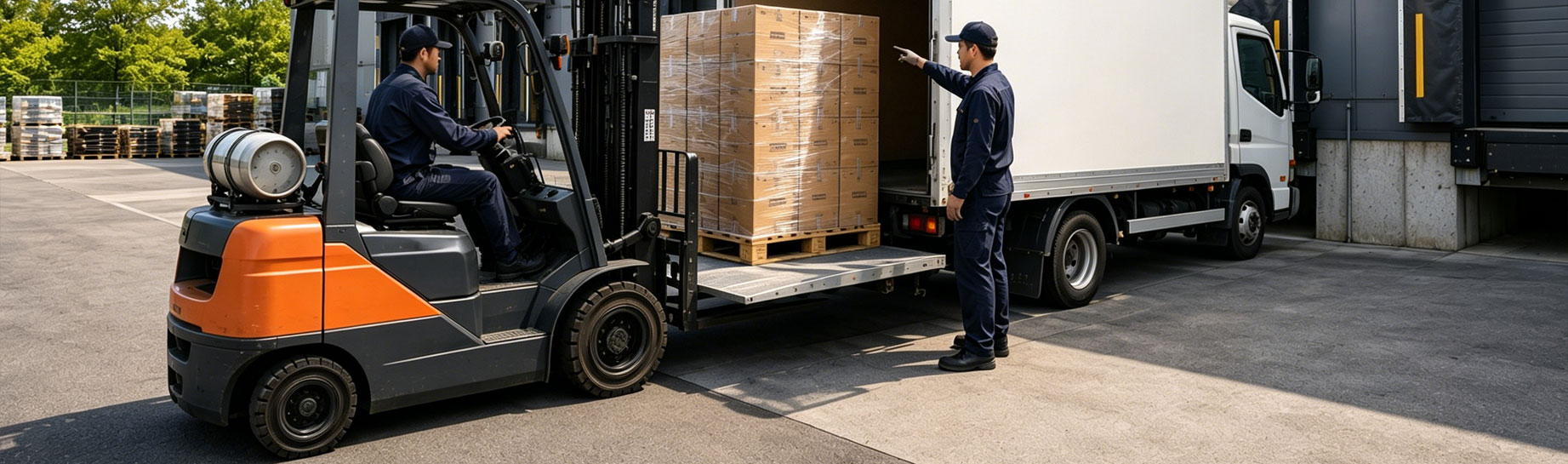
What Type of Tail Lift Is Best for Refrigerated Transport?
Introduction
For logistics operators running refrigerated transport routes, the choice of a tail lift is rarely straightforward. A standard truck tail lift that performs reliably in ambient conditions may fail under the repeated thermal stress and moisture exposure typical of cold chain operations. Whether equipping a single refrigerated van or a full fleet of reefer trucks, specifying the wrong truck liftgate creates real operational risk — slower unloading cycles, higher maintenance frequency, and increased cargo loss.
This guide focuses specifically on the demands of cold chain logistics and compares how different hydraulic tail lift configurations perform under low-temperature, high-humidity, and high-cycle conditions — providing an engineering-level reference for procurement decisions.
This article is written for fleet managers, logistics equipment buyers, and cold chain operators — not for general readers.
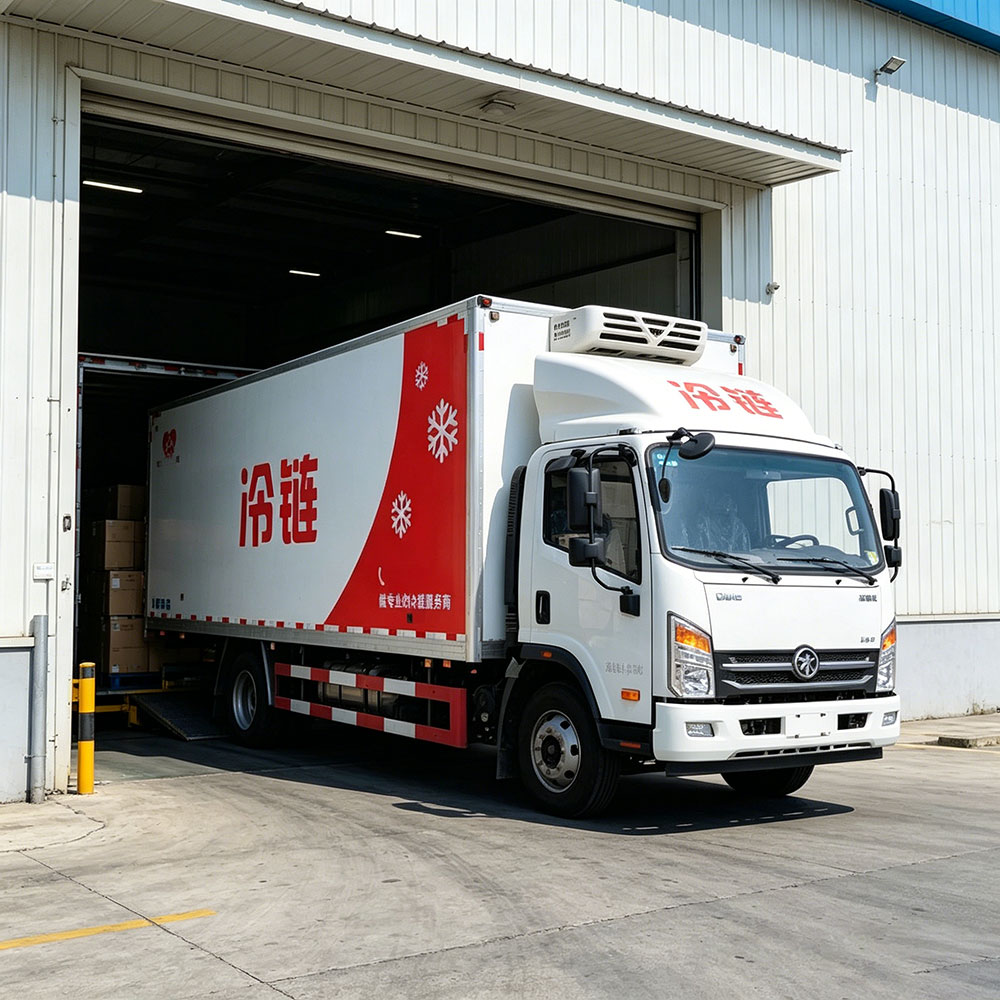
Why Refrigerated Transport Places Different Demands on a Tail Lift
A standard liftgate for trucks is designed for ambient loading environments and moderate cycle counts. Refrigerated transport changes several operating variables simultaneously.
1. Thermal Cycling Stress
Tail lifts on refrigerated trucks transition repeatedly between sub-zero cargo holds and ambient external temperatures. This thermal cycling accelerates metal fatigue and degrades hydraulic seals far faster than static-temperature environments.
2. Condensation and Corrosion
Cold surfaces attract condensation. A cargo lift gate operating under these conditions accumulates moisture at pivot points, cylinder housings, and control modules — areas that are easy to overlook in routine maintenance schedules, yet represent the highest concentration of corrosion damage.
3. High Daily Cycle Demands
Cold chain delivery routes — particularly last-mile distribution of fresh food and pharmaceuticals — place extreme daily cycle demands on the vehicle liftgate:
- Regional distribution vehicles: approximately 30 lift cycles per day
- Urban last-mile routes: approximately 45 lift cycles per day
- High-frequency retail replenishment routes: 60 or more lift cycles per day
In cold chain applications, a cycle-rated heavy duty tail lift is not an optional upgrade — it is a baseline specification requirement.
4. Cargo Sensitivity
Cold chain loads frequently include fragile or time-critical goods. A tail lift for refrigerated truck operations must deliver stable, level platform movement throughout the full lift cycle. Platform flex or hydraulic drift introduces unacceptable risk.
Main Tail Lift Types and Structural Characteristics
Three primary configurations are most commonly evaluated for refrigerated transport. Each has a distinct engineering logic and a different risk profile in cold chain conditions.
Cantilever Tail Lift
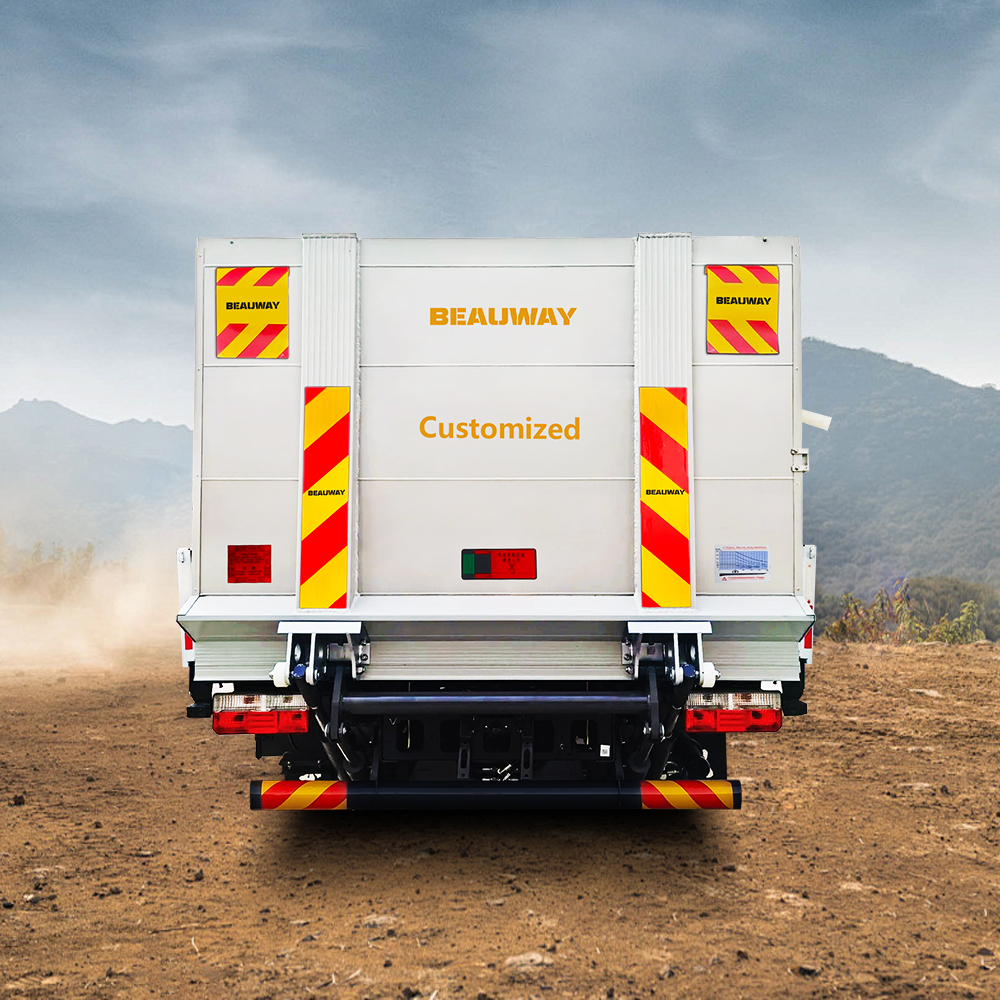
The cantilever tail lift is mounted at the rear of the vehicle body with a single-piece platform. When stowed, the platform stands vertically to form the rear wall of the cargo body. During operation, the hydraulic system drives the platform outward to a horizontal position, then lowers it to ground level. The entire process is hydraulic — no manual intervention is required. Deployment is fast, load capacity is high, and the configuration is well suited to heavy-duty cold chain and high-cycle distribution.
Key Limitations:
- When stowed, the platform forms the rear wall of the cargo body, preventing the vehicle from reversing directly against a refrigerated dock for sealed loading
- Single-cycle operation time is longer than folding configurations, making it better suited to routes with high per-stop volumes and fewer stops
Folding Tail Lift
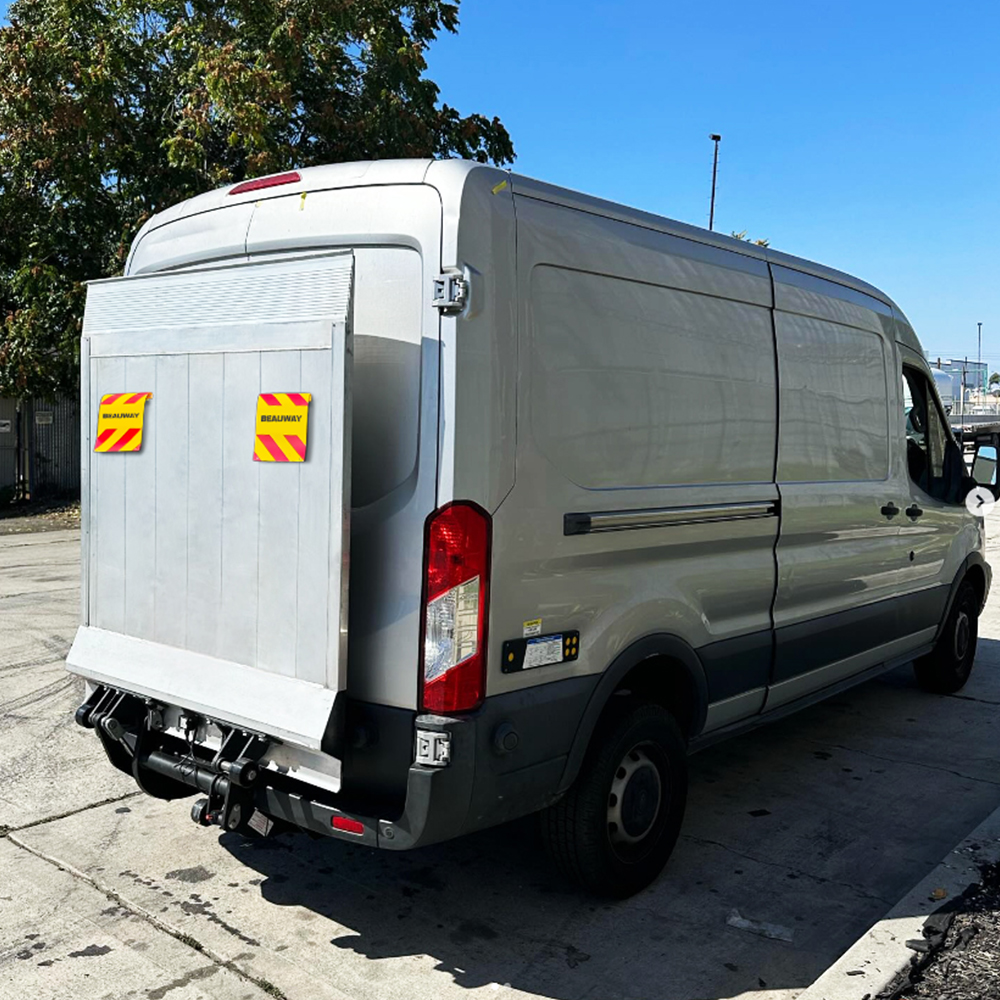
The folding tail lift is mounted at the rear of the vehicle body with a two-section hinged platform. When not in use, the platform folds and rests against the rear of the cargo body. During operation, the platform is manually unfolded to a horizontal position, then raised and lowered hydraulically. It is compatible with enclosed box trucks and refrigerated vehicles, and represents one of the most widely used configurations in cold chain transport.
Key Limitations:
- The platform requires manual unfolding, resulting in longer deployment time than cantilever configurations
- The higher number of pivot points requires strict lubrication and inspection discipline in low-temperature environments; under normal single-shift operating conditions, lubrication is recommended every 90 days or every 1,750 lift cycles — whichever comes first — with increased frequency for intensive multi-shift operations
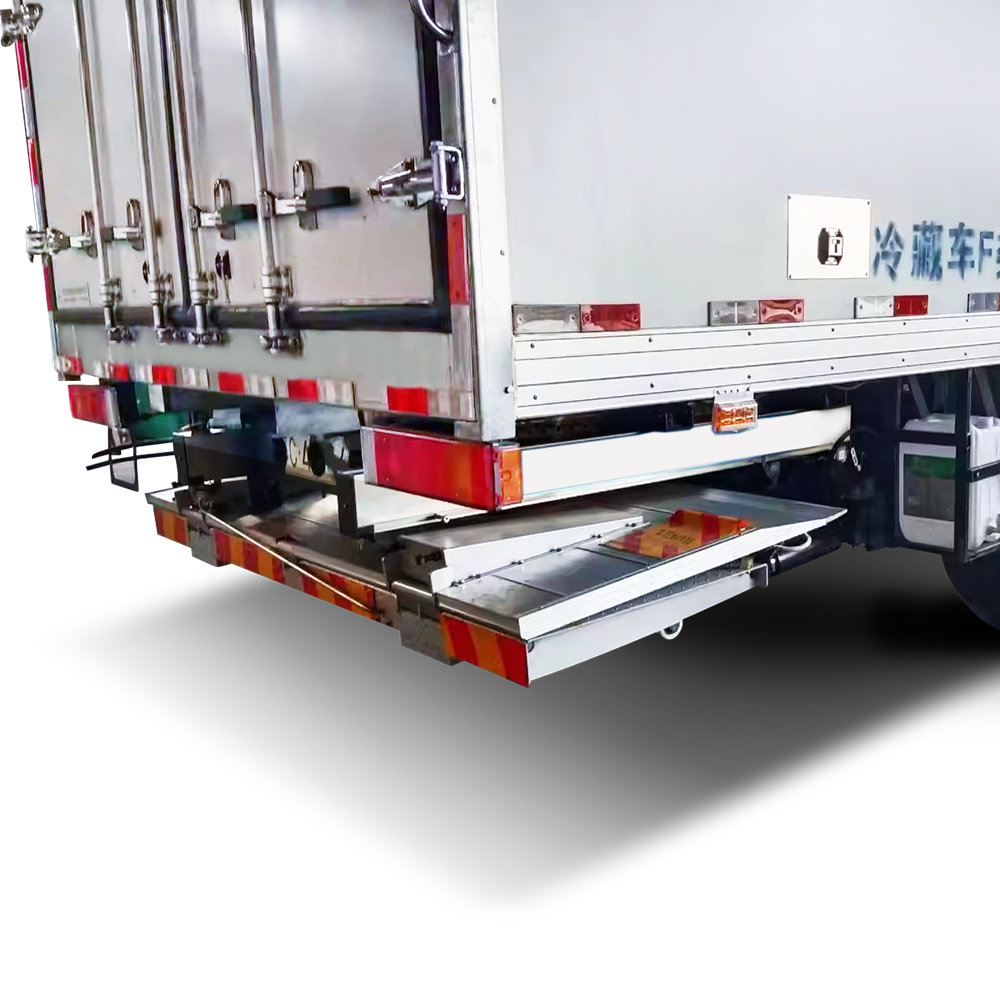
Concealed Tail Lift
The concealed tail lift stores the platform completely hidden beneath the vehicle body when not in use, leaving no exposed structure at the vehicle rear. During operation, the platform slides out from underneath and is raised and lowered hydraulically. The clean vehicle profile makes this configuration well suited to urban delivery operations and applications where rear clearance is a priority.
Key Limitations:
- Installation requires sufficient chassis ground clearance; some vehicle types require structural adaptation
- Service accessibility is lower than other configurations, requiring a disciplined scheduled maintenance programme
Comparative Assessment: Cold Chain Suitability
| Evaluation Criteria | Cantilever Tail Lift | Folding Tail Lift | Concealed Tail Lift |
|---|---|---|---|
| Platform Stability | ★★★★★ | ★★★★☆ | ★★★★☆ |
| Corrosion Resistance | ★★★★☆ | ★★★☆☆ | ★★★★☆ |
| Urban Manoeuvrability | ★★★☆☆ | ★★★★☆ | ★★★★★ |
| High-Cycle Durability | ★★★★★ | ★★★★☆ | ★★★★☆ |
| Low-Temperature Reliability | ★★★★★ | ★★★★☆ | ★★★★☆ |
| Vehicle Compatibility | ★★★★☆ | ★★★★☆ | ★★★★★ |
Ratings reflect general performance patterns in cold chain transport applications. Actual performance depends on specification, maintenance regime, and operating environment.
One-line positioning:
- Cantilever: First choice for heavy-duty cold chain — strongest stability and durability
- Folding: Balanced all-round solution for urban and warehouse distribution
- Concealed: Best urban manoeuvrability — optimised for light-to-medium high-frequency delivery
Best Option for Refrigerated Trucks
For most refrigerated truck applications, a cantilever tail lift specified with a cold-rated hydraulic system represents the most reliable long-term configuration. The reasons are structural:
- Level platform geometry reduces load shift risk during vertical travel — critical for temperature-sensitive cargo
- Fewer pivot joints means fewer failure points under thermal cycling
- Hydraulic systems from a qualified hydraulic tail lift manufacturer can be specified with cold chain-grade hydraulic fluid rated to −54°C
- Hot-dip galvanised frames with hard-chromed stainless steel cylinder rods directly address the corrosion exposure specific to refrigerated transport environments
For urban last-mile cold chain fleets where rear clearance and vehicle profile are a priority, the concealed tail lift is a credible alternative — provided the chassis specification allows fitment and the platform dimensions meet payload requirements. The folding tail lift suits routes where operational flexibility and broad vehicle compatibility are priorities and cycle patterns are relatively consistent.
Working directly with a tail lift manufacturer or tail lift supplier with documented cold chain references allows operators to validate performance data against real operating conditions rather than catalogue specifications alone.
A qualified hydraulic tail lift manufacturer should be able to provide cold-rated hydraulic fluid specifications, cycle life test data, and corrosion protection documentation on request — these are baseline technical documents, not optional extras.
Key Selection Parameters
Before issuing an RFQ to a truck liftgate supplier, operators should define the following parameters clearly.
Platform Material and Self-Weight
Platform material directly affects gross vehicle weight and long-term maintenance cost:
| Material | Tail Lift Self-Weight | Key Advantage | Recommended Application |
|---|---|---|---|
| Steel | 400–500 kg | Higher structural strength, lower cost | Heavy-duty cold chain, high-cycle regional distribution |
| Aluminium Alloy | 350–450 kg | 50–100 kg weight saving, better corrosion resistance | Urban delivery, payload-sensitive routes |
An aluminium alloy tail lift saves approximately 50–100 kg compared to a steel equivalent of the same rated capacity — a meaningful advantage on routes where payload optimisation directly affects operating cost.
Load Capacity and Vehicle Matching
The selection logic for cold chain tail lifts generally follows: 500 kg → urban last-mile delivery; 1,000 kg → standard regional logistics; 1,500 kg → wholesale and feeder transport; 2,000 kg → heavy industrial cold chain.
| Rated Capacity | Recommended Vehicle Class | Typical Cold Chain Application |
|---|---|---|
| 500 kg | Refrigerated van / light refrigerated truck under 3.5t GVW | Urban last-mile delivery, pharmaceutical cold chain, small-batch supermarket replenishment |
| 1,000 kg | 7.5–10t refrigerated truck | Regional fresh food distribution, chain store replenishment, standard warehouse-to-store routes |
| 1,500 kg | 10–16t refrigerated truck | Wholesale market distribution, cold chain trunk-to-feeder transfer |
| 2,000 kg | 16–26t heavy refrigerated truck | Heavy cold chain transport, food processing plant outbound, industrial refrigerated logistics |
Specify rated capacity at a minimum 20% above the maximum expected payload. Cold chain loads are frequently denser than volumetric estimates suggest.
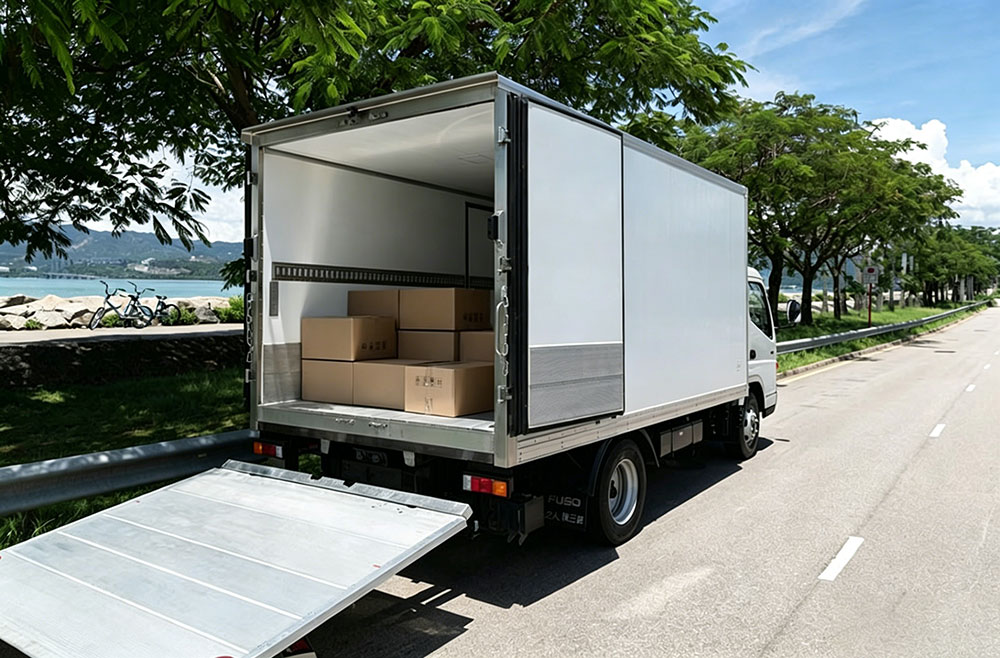
Hydraulic System and Low-Temperature Adaptation
The tail lift working principle relies on a pump-driven hydraulic cylinder extending and retracting under controlled pressure to raise and lower the platform. Two variables require specific attention in cold chain applications:
- Hydraulic fluid viscosity at low temperature: Standard hydraulic fluid has an operating lower limit of −20°C; below this threshold, fluid viscosity increases significantly, causing slow or failed lift cycles. Cold chain-grade hydraulic fluid — equivalent to AeroShell Fluid 41 specification — maintains reliable performance to −54°C and must be specified according to the lowest ambient temperature in the operating region
- Seal material compatibility: Standard nitrile rubber seals degrade under repeated freeze-thaw cycling; HNBR or polyurethane seal materials are recommended for cold chain applications
Environmental and Compliance Factors:
- Confirm the IP protection rating of control modules meets moisture resistance requirements
- Verify that gross vehicle weight remains within regulatory limits after tail lift installation
- For pharmaceutical cold chain, confirm whether the tail lift supplier can provide documentation supporting GDP (Good Distribution Practice) compliance
Conclusion
Selecting the right tail lift for refrigerated transport is an engineering and operational decision, not a purchasing one. Thermal cycling, moisture exposure, high cycle frequency, and cargo sensitivity combine to make a generic tail lift for truck specification inadequate without cold chain-specific adaptation.
The core conclusions are straightforward:
- Regional and long-haul refrigerated trucks: Specify a cantilever tail lift with cold-rated hydraulics and sealed corrosion protection as the primary configuration
- Urban last-mile refrigerated vans: Evaluate the concealed tail lift against chassis fitment constraints first; consider the folding tail lift where platform storage space is available
- Mixed fleets: Partner with a tail lift for van and tail lift for truck supplier capable of providing application-specific recommendations across vehicle types
Whether a tail lift delivers 8 years of reliable cold chain service or requires major overhaul at year 3 is almost always determined at the specification stage — not by brand.
For specification consultation or product quotation, contact our engineering team directly. As an experienced truck liftgate supplier and tail lift manufacturer, we support cold chain operators with documented technical data, installation guidance, and after-sales service across a full range of refrigerated transport configurations.
To submit a technical enquiry, fleet quotation request, or application-specific question, please use our RFQ form or contact our engineering team directly.
Trusted by Fleet Operators Across 60+ Countries
Stop Losing Time at the Loading Dock.
Get a Custom-Matched Tail Lift Quote in 24 Hours.
60
Countries Served
24h
Quote Turnaround
99.9
Field Uptime
5.0
Customer Rating
No Obligation
CE & UKCA Certified
Standard & Custom Builds
Worldwide Shipping