Having trouble submitting? Email us directly at nicole@beaway.com and we'll get back to you within 24 hours.











Warehouse Loading Dock Safety: 10 Common Mistakes to Avoid
Warehouse Loading Dock Safety: 10 Common Mistakes to Avoid
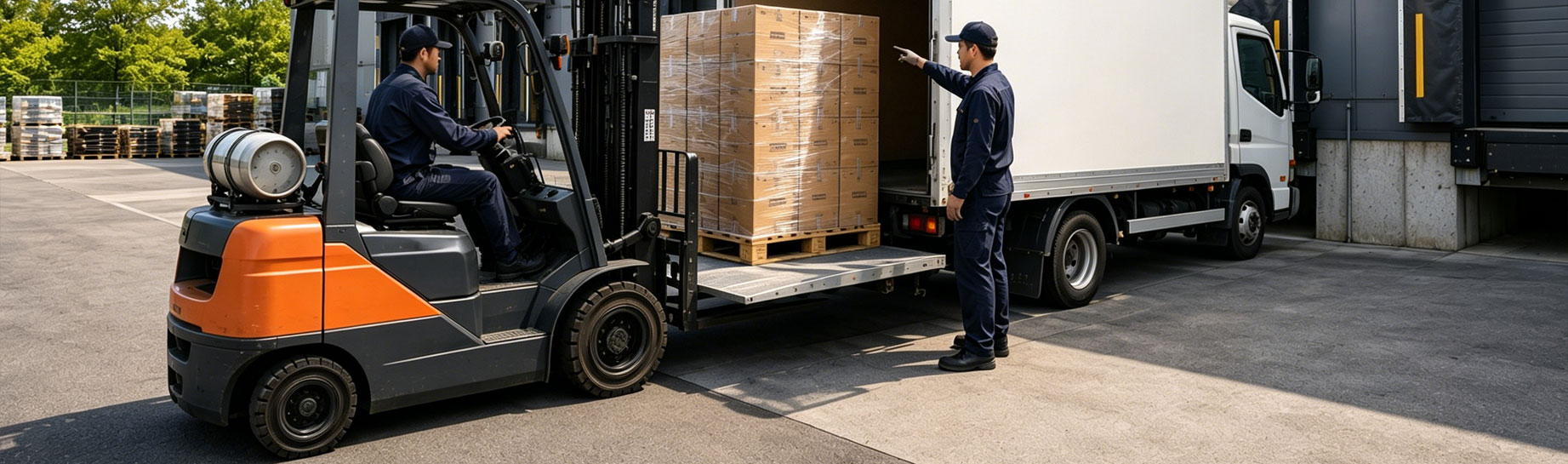
Warehouse loading dock safety is one of the most overlooked risks in modern logistics. According to OSHA, 25% of all warehouse accidents occur at the loading dock. For every recorded injury, there are approximately 600 near-misses. From 2004 to 2014, OSHA investigated 209 loading dock incidents — and nearly half were fatalities. If your facility handles daily loading and unloading, these numbers demand attention.
This guide covers 10 common mistakes that put workers at risk. It also helps procurement managers, facility directors, and logistics operators find the right dock safety equipment solutions for their operations.
Mistake 1: No Vehicle Restraint System at the Dock
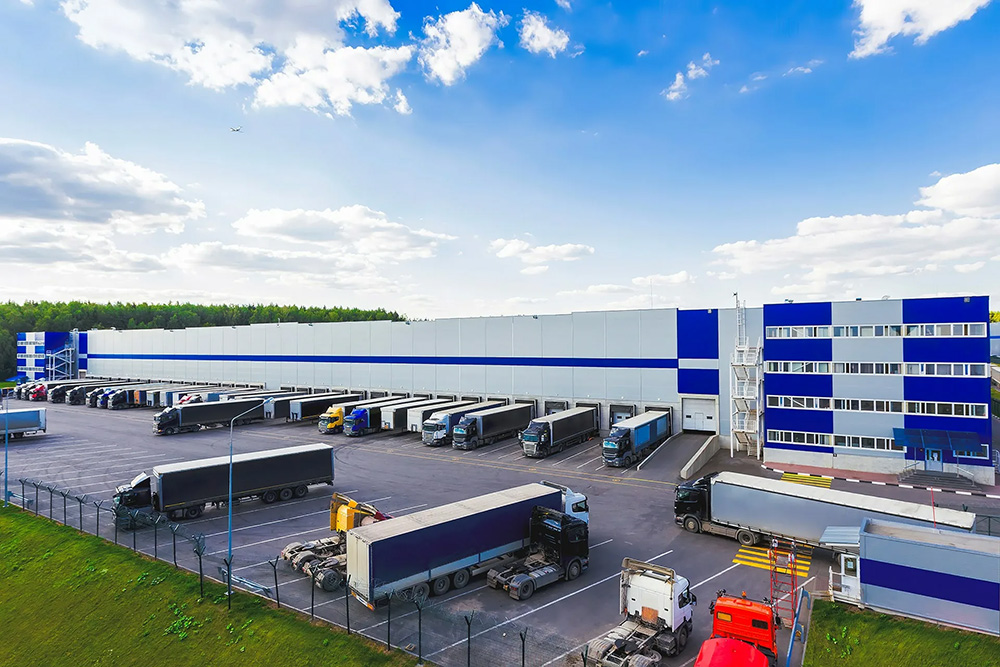
Unsecured trailers are the leading cause of fatal loading dock accidents. During active loading, trailers can slowly roll away from the dock. This is called trailer creep or dock walk. A study of 96 fatal truck loading incidents from 2002 to 2009 found that over 11% were directly caused by trailer creep.
OSHA standard 29 CFR 1910.178(k)(1) requires that trailers be secured before any powered industrial truck enters. Wheel chocks are the minimum requirement. However, mechanical vehicle restraint systems — which lock onto the trailer’s Rear Impact Guard (ICC bar) — provide far superior protection for high-traffic docks.
Therefore, every active dock position should have a certified vehicle restraint system installed and interlocked with the dock door and leveler controls. This prevents loading from starting until the trailer is fully secured.
Mistake 2: Missing Dock Safety Barriers at Open Dock Doors
An open dock door without a trailer present creates a vertical drop of approximately 4 feet (1.2 meters) to the ground below. OSHA standard 29 CFR 1910.28(b)(1)(i) requires fall protection at any open-sided edge with a drop of 4 feet or more.
Many facilities rely only on dock levelers or dock plates for gap coverage. These do not provide fall protection when no trailer is docked. The correct solution is a retractable dock safety barrier or dock safety gate that closes the opening automatically when the trailer departs.
For facilities sourcing dock safety barriers wholesale or in bulk, products should comply with ANSI MH30.1 standards for dock equipment performance and load ratings.
Mistake 3: Skipping Dock Leveler Maintenance
A dock leveler bridges the height difference between the dock floor and the trailer bed. It supports live forklift loads during every loading cycle. However, a leveler that drops unexpectedly under load is an immediate hazard — it can cause forklift tip-overs and serious injuries.
OSHA 1910.30 requires safe means of access and egress for powered industrial truck operations at docks. In addition, the US Bureau of Labor Statistics reports that loading dock incidents account for a disproportionate share of warehouse fatalities relative to floor area.
Maintenance schedules should include daily visual checks, weekly functional tests, and monthly hydraulic or mechanical inspections. A documented preventive maintenance program is non-negotiable for any compliant warehouse dock safety solution.
Mistake 4: Inadequate Dock Area Lighting
Poor lighting is a silent hazard at loading docks. The Illuminating Engineering Society (IES) recommends a minimum of 30 foot-candles (approximately 322 lux) for active dock work areas. Many facilities operate well below this level.
Low light conditions make it harder for forklift operators to spot dock edges, pedestrians, and barriers. They also increase error rates during trailer inspections and cargo checks. As a result, dock-related incidents spike during early morning and late-night shifts when natural light is absent.
LED dock lighting with motion activation is now the industry standard. Lighting should cover the dock approach, the pit area, and the trailer interior. Any comprehensive loading dock safety solution for logistics companies should include a lighting audit as part of the initial safety assessment.
Mistake 5: No Dock Safety Signage or Light Communication System
Signage is a low-cost, high-impact safety measure. Yet many docks operate without even basic warning systems. A red/green light interlock communication system is one of the most effective tools available. It displays the trailer restraint status to both the forklift operator inside and the truck driver outside simultaneously. This prevents premature truck departure.
For example, a green light inside the dock confirms the trailer is secured and loading can begin. A red light outside signals the driver not to move. Without this system, communication depends entirely on verbal coordination — which fails under noise, language barriers, and shift changes.
Dock safety signage should comply with ANSI Z535 standards. Signs should be rated for outdoor exposure and high-vibration dock environments. A qualified dock safety signage supplier can provide compliant, site-specific solutions.
Mistake 6: Insufficient Dock Worker Training
Equipment alone cannot prevent accidents. OSHA 29 CFR 1910.178(l) requires all forklift operators to be formally trained and certified. However, dock-specific safety training is often absent from standard onboarding programs.
Dock workers need training on trailer restraint confirmation procedures, pedestrian zone awareness, near-miss reporting, and emergency response protocols. In addition, training must be refreshed annually or after any incident occurs.
A qualified dock safety training service provider delivers site-specific programs. These cover equipment operation, hazard recognition, and step-by-step emergency procedures. Investing in training reduces both injury rates and OSHA citation risk significantly.
Mistake 7: Confusing Dock Plates with Dock Boards
Dock plates and dock boards are not interchangeable. Using the wrong equipment is a direct safety violation.
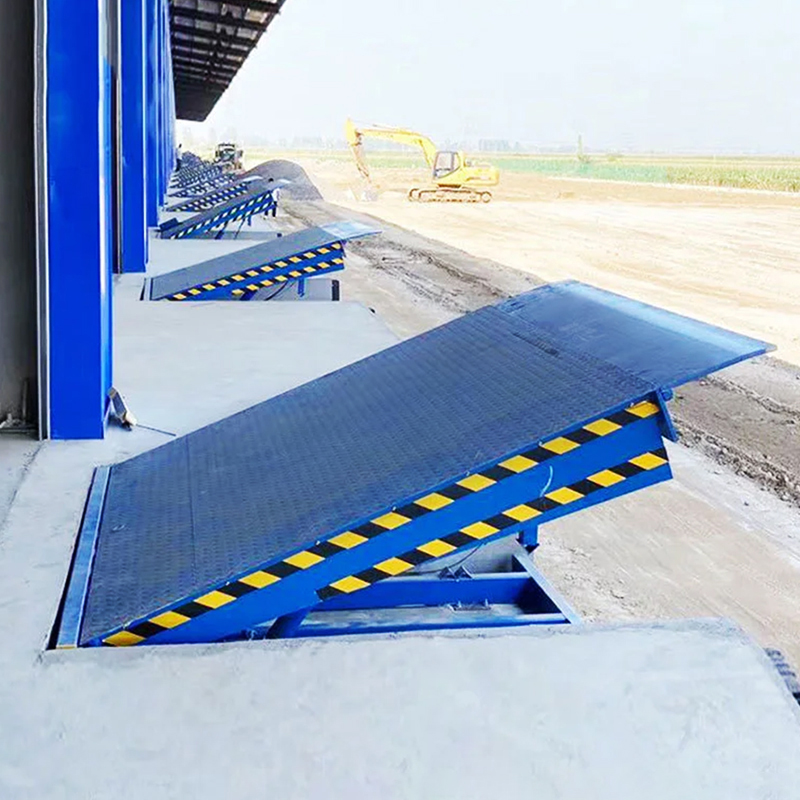
A dock plate is a flat aluminum or steel ramp designed for hand trucks and pallet jacks. It has no side curbs. A dock board is a heavier ramp with side curbs designed to safely support forklift traffic. Using a dock plate where a dock board is required causes sudden structural failure and tip-over incidents.
Load ratings differ significantly. Standard aluminum dock plates handle approximately 1,100 to 2,300 kg. Heavy-duty steel dock boards handle up to 36,000 kg or more. Procurement teams placing a dock safety equipment bulk order must verify that the rated capacity matches the actual use case at each dock position.
Mistake 8: No Separation Between Forklifts and Pedestrians
Mixing forklift traffic and foot traffic at the dock creates a deadly environment. OSHA and ANSI/ITSDF B56.1 both require clearly marked pedestrian pathways that are physically separated from vehicle lanes.
According to NIOSH, over 94,000 forklift-related injuries are reported in the United States each year. More than 7% of forklift fatalities involve a forklift falling off a loading dock. Pedestrian contact is among the top causes of forklift-related deaths.
Therefore, every dock bay should have painted floor markings, physical guardrails or bollards, and convex mirrors at all blind corners. Facilities developing a warehouse dock safety solution for B2B operations should include pedestrian separation infrastructure in every dock bay specification from the start.
Mistake 9: Ignoring Damaged Dock Seals and Shelters
A damaged dock seal or shelter is more than an energy efficiency problem. It is a direct safety hazard. When seals are torn or missing, exhaust fumes from idling trucks enter the warehouse freely.
Carbon monoxide (CO) is colorless and odorless. OSHA’s permissible exposure limit (PEL) for CO is 50 ppm over an 8-hour period. Short-term exposure above 200 ppm causes dizziness, confusion, and loss of consciousness. A single idling diesel truck can produce dangerous CO concentrations near a dock opening with a compromised seal.
As a result, dock seals and shelters should be inspected at every dock equipment maintenance cycle. Replacement should not be delayed. When requesting a dock safety equipment quote, include seal and shelter condition assessment in the scope of work.
Mistake 10: No Emergency Stop or Dock Control Interlock System
Many older facilities have no integrated emergency communication or shutdown system at the dock. If a trailer moves unexpectedly during loading, workers need to stop operations in seconds.
A modern dock control interlock system connects the vehicle restraint, overhead door, and dock leveler into a single safety sequence. The leveler cannot deploy until the restraint engages and shows a green confirmation light. The door cannot open until the system confirms safe conditions. This layered protection approach is now standard in new warehouse construction worldwide.
However, upgrading existing docks is equally important. Each dock position should have clearly marked emergency stop buttons, an intercom or radio system for dock-to-driver communication, and a posted emergency response procedure. Facilities evaluating loading dock safety equipment for import or large-scale procurement should prioritize integrated dock control as a core specification.
How to Source the Right Dock Safety Equipment
Choosing a reliable dock safety equipment manufacturer or supplier is as critical as the equipment itself. Whether you are placing a dock safety equipment sample order to evaluate quality, or negotiating a long-term dock safety product supplier agreement, the following criteria apply:
- Certifications: Confirm products meet ANSI MH30.1 or equivalent international standards
- Load ratings: Match rated capacity to your heaviest forklift and trailer combinations
- Customization: Ask whether the supplier offers dock safety equipment customization for non-standard dock dimensions
- After-sales support: Confirm availability of dock safety after-sales support, spare parts, and on-site service
- References: Request project references from comparable warehouse or logistics facilities
For B2B buyers managing multi-site procurement, working with a qualified dock safety product distributor or warehouse safety equipment wholesale partner streamlines specification alignment and reduces total cost. Companies issuing a loading dock safety equipment tender should include detailed technical specifications based on ANSI and OSHA requirements.
For current regulatory guidance, refer to the official OSHA Loading Dock Safety standards published by the U.S. Department of Labor.
Ready to Upgrade Your Dock Safety Setup?
Your workers deserve a safe loading dock. Your facility deserves a dock safety solution that holds up under daily operational pressure.
Contact us today to request a dock safety product catalog, submit a dock safety equipment quote request, or discuss a dock safety solution partnership for your warehouse or logistics operation. Our team supports bulk orders, OEM customization, and long-term supply agreements for buyers worldwide.
Trusted by Fleet Operators Across 60+ Countries
Stop Losing Time at the Loading Dock.
Get a Custom-Matched Tail Lift Quote in 24 Hours.
60
Countries Served
24h
Quote Turnaround
99.9
Field Uptime
5.0
Customer Rating
No Obligation
CE & UKCA Certified
Standard & Custom Builds
Worldwide Shipping