Having trouble submitting? Email us directly at nicole@beauway.com and we'll get back to you within 24 hours.











Wing Van Multi-Drop Delivery: Solving LIFO Challenges
1. Introduction to Wing Van Multi-Drop Delivery and Loading Logic
In regional logistics, a wing van multi-drop delivery route represents a complex fulfillment workflow. Fleet operators supplying retail clusters and distribution hubs must balance vehicle fill rates against strict delivery schedules. At the center of this balance is the cargo loading logic: Last In, First Out (LIFO).
Under ideal conditions, a Warehouse Management System (WMS) can help sequence cargo loading based on planned delivery stops. Goods for later stops sit deeper inside the vehicle. Goods for earlier stops stay closer to the unloading point. In practice, traffic congestion, changing delivery windows, or dynamic routing adjustments frequently disrupt the planned drop-off order.
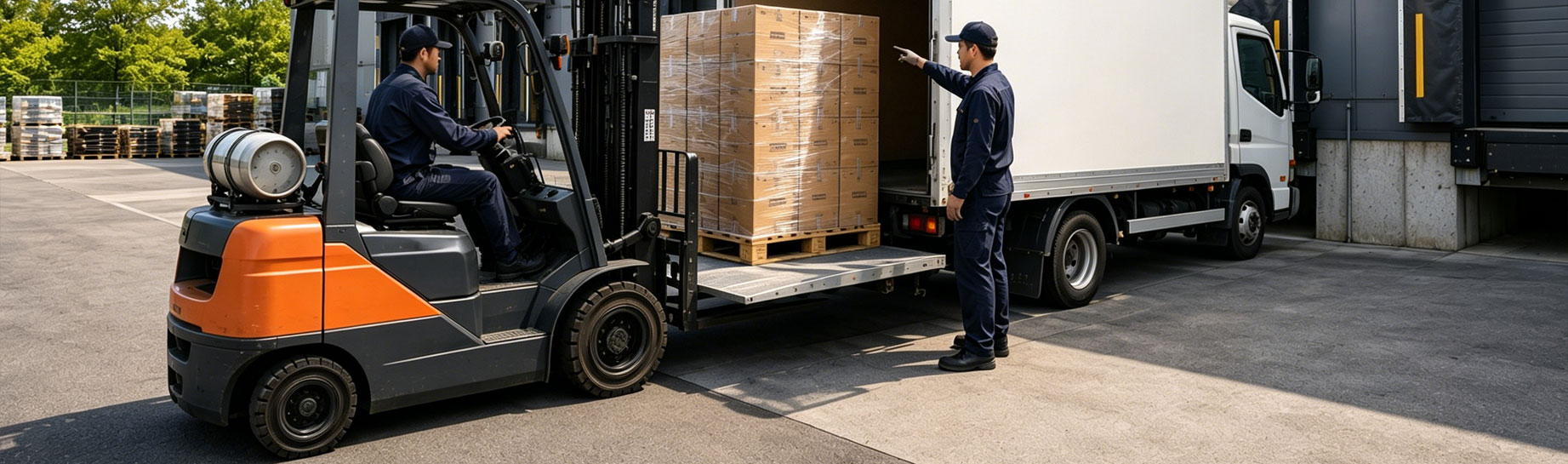
When a delivery route changes mid-trip, traditional rear-loading trailers present an immediate physical bottleneck. Accessing a pallet near the front bulkhead requires removing every pallet stored behind it. This single-point access constraint transforms a minor schedule change into a major delay.
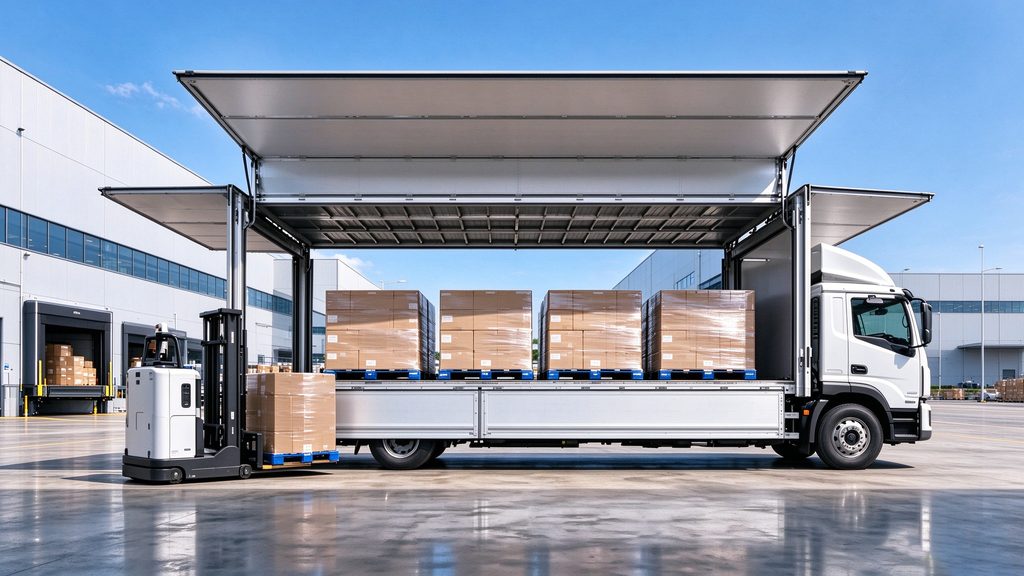
To address these spatial limitations, many fleet managers choose a Wing Body Truck as a structural solution. By incorporating hydraulic side-opening doors that elevate upward, the vehicle provides access to a large portion of the cargo area. While side access does not eliminate the need for a good loading strategy, it introduces significant flexibility for complex routes.
2. Root Causes of Cargo Reshuffling in Wing Van Multi-Drop Delivery
Distinguishing Loading Errors from Structural Limits
Operational inefficiencies caused by poor warehouse planning differ from those forced by trailer design. A poorly planned load is an operational WMS error. However, even with optimal planning, rear-loading vehicles remain highly vulnerable to external disruptions.
If an early receiver cannot accept a delivery, the driver cannot easily bypass the stop. In a standard rear-door enclosure, cargo for subsequent stops remains blocked by the un-offloaded shipment.
Analyzing Dwell Time and Reshuffling Sequences
When non-sequential unloading becomes unavoidable, cargo reshuffling generates substantial dwell time at the loading bay. In a standard rear-access trailer, reshuffling involves three main steps:
- Unloading Blocking Cargo: The operator pulls out multiple front-facing pallets and sets them on the dock.
- Accessing Target Cargo: The driver retrieves the specific pallet required for the active stop.
- Reloading Staging Cargo: The previously removed blocking pallets are reloaded and secured inside the trailer.
This process significantly increases turnaround time at the delivery site. Beyond direct delay, repeated handling increases product damage risks and pallet instability. Focus on Preventing Cargo Reshuffling in Wing Body Truck fleets is therefore a major objective for operations managers.
Managing Multi-Drop Routes for Wing Body Truck Deployment
In fleets operating fixed-sequence drop-offs, unexpected route modifications compromise daily vehicle utilization. Evaluating Multi-Drop Routes for Wing Body Truck fleets allows dispatchers to manage route variations more effectively. When a vehicle features full-length lateral openings, the driver can access specific load zones along the cargo bed. This flexibility plays a direct role in Reducing Truck Turnaround Time with Wing Body Truck operations across complex urban routes.
Key operational impacts of dynamic reshuffling:
- Increased Labor Overhead: Drivers spend time staging and reloading cargo rather than driving.
- Elevated Freight Claim Risks: Repeated cargo handling increases the risk of product damage, packaging failure, and pallet instability.
- Curbside Safety Hazards: Temporary pallet staging on busy roadways creates severe safety exposures.
3. Wing Body Truck Side-Loading Access & Operating Limits
Physical Mechanisms of Wing Body Truck Side-Loading Access
A defining feature of Wing Body Truck Side-Loading Access is the upward-opening side panels. Activated by hydraulics, the side doors lift above the roofline. They expose the lateral profile of the cargo floor. Unlike curtain-side trucks, a rigid wing body elevates automatically via hydraulic controls. This provides immediate clearance for material handling equipment.
Conditions for Direct Pallet Access in Wing Body Truck
While side-opening architecture expands cargo access, it does not guarantee complete access to every single pallet. Achieving true Direct Pallet Access in Wing Body Truck setups depends on several physical loading factors:
- Pallet Layout and Placement: In wide-body box trucks, pallets often sit two-abreast. The side opening provides direct access to the outer row. However, accessing an inner pallet may still require removing the adjacent outer pallet unless the load is staged with central clearance.
- Cargo Clearance and Gap Tolerances: Forklift tines require side-clearance to enter pallet pockets cleanly. Tight packing can limit side insertion unless workers maintain appropriate spacing during initial loading.
- Load Height and Overhead Clearance: The lifted wing door must clear overhead dock shelters, low-hanging tree branches, or facility trusses to elevate safely.
In practice, operational teams focused on Solving LIFO with Wing Body Truck operations must align cargo placement with vehicle dimensions to maximize lateral accessibility.
Operational Boundary: Lateral door elevation improves side access to load zones, but it does not substitute for basic loading logic. If target cargo is physically obstructed by adjacent pallets, partial reshuffling may still be required.
Constraints on Forklift Operations for Wing Body Truck
Executing safe Forklift Operations for Wing Body Truck units requires evaluating environmental and site-specific conditions:
- Aisle Space Assessment: Verify lateral staging area clearance alongside the truck. A counterbalanced forklift requires sufficient turning radius and aisle width determined by the specific forklift model, pallet dimensions, and steering angle to insert tines safely.
- Ground Stability Verification: Ensure the ground surface is paved, level, and rated for heavy forklift axle loads. Operating a heavy forklift on soft ground or steep slopes poses severe tipping hazards.
- Traffic Protocol Implementation: Establish safe boundaries when utilizing dual-side handling. Simultaneous loading or unloading on both sides requires strict traffic management protocols to prevent collisions and protect pedestrian safety.
4. Hardware Engineering: Hydraulic Opening System on Wing Body Truck
Actuation Principles and Configuration Choices
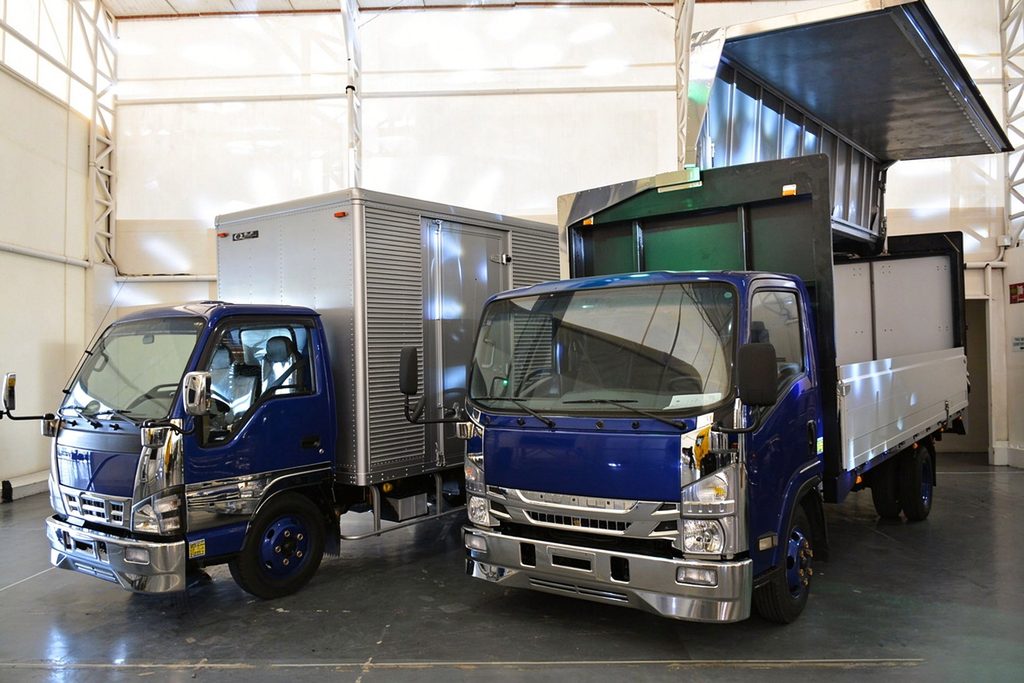
The operational efficiency of a side-access body depends on its actuation system. The Hydraulic Opening System on Wing Body Truck configurations varies based on functional requirements, structural geometry, and vehicle length:
- Single-Wing vs. Dual-Wing Configurations: Vehicles are engineered for either single-side elevation or dual-side elevation. Dual-wing setups may offer independent side operation or synchronized dual-side opening.
- Single-Acting vs. Double-Acting Actuation: Single-acting cylinders use hydraulic fluid to elevate the panel, relying on gravity, spring assistance, or structural mechanical load for lowering. Double-acting cylinders use pressurized fluid for both raising and lowering cycles. System selection depends on wing door weight, hinge geometry, and manufacturer preferences.
Hydraulic Actuation Geometry and Line Routing
For commercial box bodies, cylinder selection, mounting orientation, and hydraulic line routing are determined by body builder engineering specifications:
- Vertical Cylinder Mounting: Positioned within front and rear pillar enclosures. Cylinder stroke and bore size are selected based on the leverage required to raise the wing panel cleanly. Primary feed lines are routed along the subframe to the power unit.
- Horizontal Cylinder Mounting: Integrated into low-profile roof headers or upper crossmembers. This configuration optimizes space when pillar clearance is restricted, using specialized hose fittings to accommodate the tight pivot geometry.
Preventative Maintenance and Equipment Integrity
To prevent structural binding, pressure degradation, or fluid leakage, mechanics must follow strict maintenance procedures adhering to manufacturer guidelines:
- Visual and Hose Inspection: Check high-pressure hydraulic lines and fittings for abrasion, weeping, or outer jacket cracking prior to vehicle dispatch.
- Cylinder Synchronization and Alignment: Check that the wing panels move evenly and remain properly aligned during operation. Inspect the synchronization mechanism, hydraulic circuit, and cylinder mounting points according to the manufacturer’s maintenance procedures.
- Safety Valve and Mechanical Lock Inspection: Inspect and test the installed load-holding valves, mechanical locks, and other safety devices according to the manufacturer’s maintenance procedures.
- Fluid Maintenance: Perform hydraulic oil inspection, filtration, and replacement strictly according to the equipment manufacturer’s specified service intervals and fluid specifications.
Structural Application of Wing Body Truck Composite Sandwich Panels
Panel construction directly impacts vehicle tare weight, structural rigidity, and thermal insulation:
- Wing Body Truck Composite Sandwich Panels: Modern builds frequently feature composite sandwich panels using fiber-reinforced polymer (FRP) skins over honeycomb cores or foam insulation. These panels offer corrosion resistance and thermal insulation suitable for temperature-controlled freight.
- Aluminum Panel Configurations: Traditional aluminum sheet-and-post or extruded aluminum panel constructions provide robust impact resistance against internal mechanical contact. Relative weight and strength differences depend on specific material grades, sheet gauge, core density, and structural reinforcement designs.
- Frame Rigidity: The structural performance of a wing body depends on the chassis, subframe, pillars, roof headers, hinges, and panel-support system working together.
Dynamic Load Restraint and Safety Operations
In traditional box trailers, side walls provide continuous lateral containment. In a wing body, hinged doors serve primarily as weather enclosures rather than load-rated retention walls. Therefore, internal load restraint systems (such as floor-mounted tracks, shoring bars, and webbing straps) are critical to transportation safety.
Cargo Shift Inspection: Before opening a wing panel, inspect the cargo using an appropriate safe access point or inspection method specified by the vehicle manufacturer. If the load appears unstable or may fall outward when the panel opens, do not operate the wing until the hazard has been addressed safely.
5. Procurement and TCO Assessment for Wing Van Multi-Drop Delivery Fleets
Measuring Operational Metrics vs. Estimating Economic ROI
Evaluating a vehicle fleet investment requires distinguishing between measurable operational metrics and variable financial estimates. Fleet buyers should build an evaluation model based on site-specific operational data.
Direct Measurable Metrics:
- Door Actuation Speed: The timed duration required to fully elevate and lower the wing door compared to manually unlatching, opening, and securing rear container doors or curtain side straps.
- Unloading Time per Pallet: The measured time to identify, unstrap, and unload a target pallet from a side-exposed layout versus a rear-extracted reshuffle layout.
- Site Dwell Time: The total recorded duration from vehicle arrival and positioning to final departure at each delivery stop.
Estimated Economic Gains:
- Driver Labor Efficiency: Potential reductions in driver overtime hours resulting from reduced physical handling time at delivery stops.
- Route Capacity Adjustments: Assessing whether reduced average dwell time allows dispatchers to optimize daily route density within standard driver shift limits.
- Freight Claim Reductions: Potential decreases in damaged goods claims resulting from reduced double-handling of blocking cargo.
Expense and Offset Factors:
- Capital Expenditure Premium: The higher initial purchase cost of a specialized wing-body enclosure and hydraulic actuation system compared to a standard rigid box body.
- Maintenance and Operating Costs: Routine maintenance expenses for hydraulic fluid, seals, high-pressure hoses, and hinge mechanical hardware.
- Payload Capacity Adjustments: The added tare weight of hydraulic cylinders, power units, and subframe reinforcement must be calculated against net payload allowances.
Scenario Boundaries and Fleet Procurement Guidance
To optimize return on investment, fleet managers should follow a structured evaluation procedure when determining vehicle suitability:
- Audit Route Profiles: Identify routes with high stop density, frequent non-sequential drop-offs, and dynamic routing requirements.
- Inspect Site Infrastructure: Evaluate physical clearances, dock layout, aisle space, and ground conditions at primary customer delivery locations.
- Calculate Net Payload Demands: Compare cargo weight requirements against the added tare weight of hydraulic side-opening hardware.
- Conduct Total Cost Analysis: Balance the initial capital expenditure premium and routine hydraulic maintenance against measurable reductions in site dwell time and handling labor.
Applying a wing van multi-drop delivery fleet strategy works best on high-density routes with mixed-pallet freight, regional distribution requiring flexible mid-route access, and facilities equipped with adequate lateral operational space for forklift maneuvering.
6. Frequently Asked Questions (FAQ)
Q: What is a wing van multi-drop delivery workflow?
A: A wing van multi-drop delivery workflow uses trucks with hydraulically operated side panels to transport cargo across several destination stops. Unlike standard rear-door box trucks, this design exposes the lateral length of the cargo bed. This structure allows drivers and material handling equipment to reach specific load zones without removing non-target cargo.
Q: Does side-loading access eliminate all LIFO loading constraints?
A: No, side-access architecture does not fully replace basic warehouse loading strategy. If target cargo sits behind an outer pallet row or lacks lateral fork clearance, operators may still need to move adjacent items. However, side access reduces overall dwell time and lowers handling risks compared to rear-only access.
Q: What facility conditions are required for safe wing van side unloading?
A: Safe unloading requires level, paved ground rated for forklift axle loads. Facilities must provide clear lateral staging space for forklift turning radiuses. Operators must also verify adequate overhead clearance to avoid contact with electrical lines, dock shelters, or facility trusses when raising the side panels.
Q: What routine maintenance does a wing van hydraulic system require?
A: Mechanics must inspect high-pressure hydraulic hoses for abrasion, cracking, or fluid weeping. Routine care includes checking cylinder alignment, inspecting synchronization mechanisms, and testing safety load-holding valves. Fleet managers should also schedule hydraulic oil filtration and fluid changes according to manufacturer guidelines.
Q: How do composite sandwich panels compare to aluminum panels on wing body trucks?
A: Composite sandwich panels with fiber-reinforced polymer (FRP) skins offer high strength-to-weight ratios, corrosion resistance, and thermal insulation. Traditional aluminum panels provide strong local impact resistance against internal mechanical contact. Fleet buyers should choose panel materials based on payload limits, cargo profiles, and structural requirements.
Trusted by Fleet Operators Across 60+ Countries
Stop Losing Time at the Loading Dock.
Get a Custom-Matched Tail Lift Quote in 24 Hours.
60
Countries Served
24h
Quote Turnaround
99.9
Field Uptime
5.0
Customer Rating
No Obligation
CE & UKCA Certified
Standard & Custom Builds
Worldwide Shipping