Having trouble submitting? Email us directly at nicole@beaway.com and we'll get back to you within 24 hours.











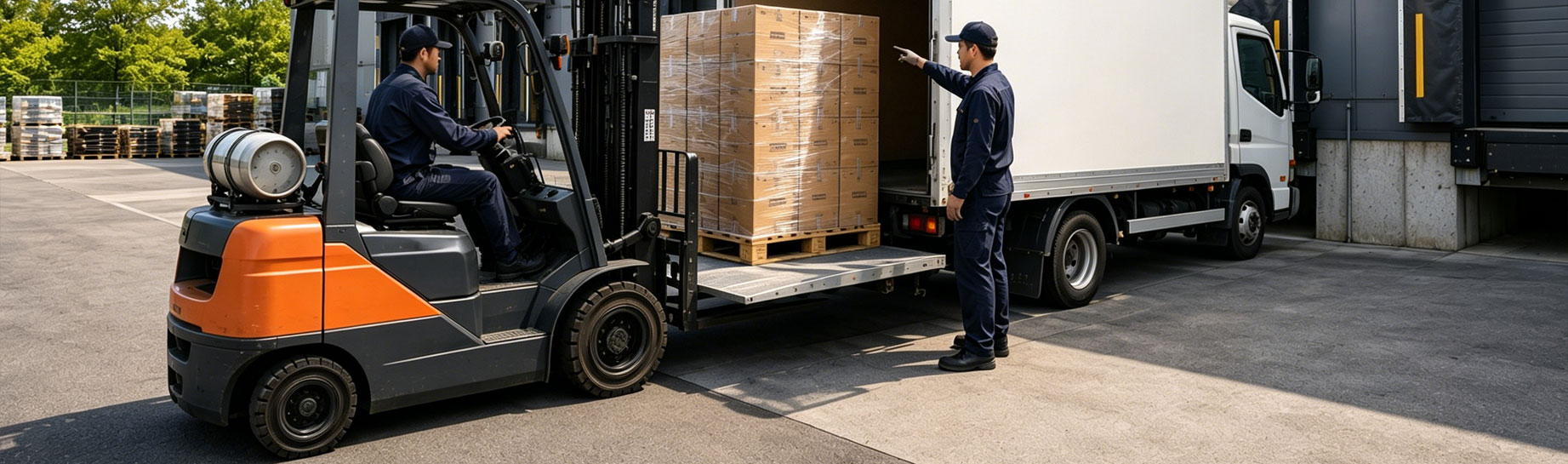
Moving Rebar, Cement and Bricks: What a Tail Lift Changes On-Site
Introduction
A construction site tail lift solves a problem every site crew knows well. Construction sites rarely offer a loading dock. Trucks pull up on gravel, half-finished pavement, or bare earth. Steel bars, cement bags, and brick pallets then have to travel from truck bed to ground level. There’s no ramp, no forklift, and no flat surface to work from. Crews improvise instead. A plank bridges the tailgate. Two or three workers pass bags hand to hand. Someone balances on the truck bed to push a rebar bundle toward the edge. This works, until it doesn’t. A bag slips, a back twists, a bundle rolls the wrong way.
This is exactly where a construction site tail lift earns its place in the fleet. It doesn’t remove the weight of what’s being moved. It changes who — or what — does the lifting. For a supplier running daily deliveries to active sites, the difference often comes down to this single piece of equipment. Not the truck pulling it. That difference is what separates a route that runs smoothly from one that stalls at every stop.
This article looks at what actually changes when crews add a construction site tail lift to a delivery vehicle. It uses real weights and real handling problems: rebar, cement, bricks. No general efficiency claims.
Why Construction Sites Test a Tail Lift Harder
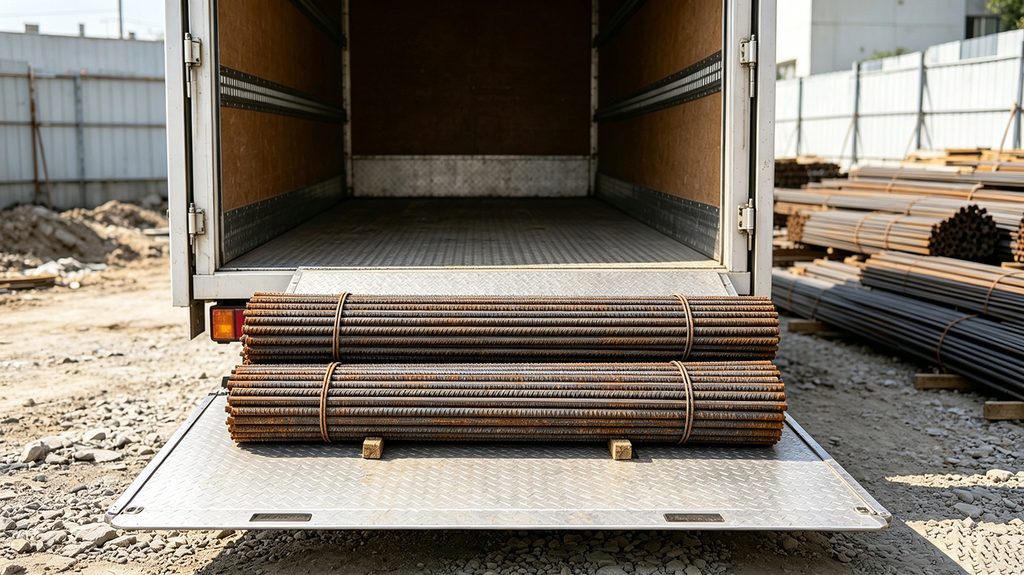
A construction site rarely gives a vehicle level, paved ground to work from. A warehouse dock or a retail route usually does. A heavy-duty tail lift built for this environment has to tolerate rough conditions. Lighter equipment, built for smoother routes, would wear down fast. The difference isn’t cosmetic. It shows up in cylinder wear, platform corrosion, and how often the unit needs servicing.
Typical stress factors on-site include:
- Uneven or unfinished ground. The vehicle may sit at a slight tilt during operation. This puts asymmetric load on the lift’s hydraulic cylinders.
- Dust and cement residue. This settles into joints and hinges. It speeds up corrosion on unprotected metal surfaces.
- Frequent stop-start cycles. Most site deliveries involve several partial unloads per visit. A single clean drop is rare.
- Irregular load shapes. Bundled rebar and stacked brick pallets don’t sit evenly on a flat platform. They can shift mid-lift.
- No fixed dock height. The lift must adjust to whatever floor height the vehicle is parked at. This varies from site to site.
These conditions explain why general-purpose lifting equipment often underperforms on construction routes. The wear patterns differ from retail or last-mile delivery work. This holds even when the rated capacity looks identical on paper. A platform that handles smooth urban routes well may not survive daily contact with aggregate, wet cement, and uneven ground.
The Real Weight Behind Rebar, Cement and Bricks
Knowing what’s actually being lifted matters before choosing any construction site tail lift. Site materials weigh more than most delivery teams assume. They also forgive less. Each material creates a different handling problem.
Rebar: Weight That Scales Fast
Rebar is priced and shipped by weight. That weight scales with the square of its diameter, not linearly. Use the standard formula: kg/m = D² ÷ 162, based on a steel density of 7,850 kg/m³.
- A 12mm bar weighs about 0.888 kg per meter
- A 16mm bar weighs about 1.578 kg per meter
- A 20mm bar weighs about 2.466 kg per meter
- A 25mm bar weighs about 3.853 kg per meter
Suppliers commonly ship rebar in 12-meter lengths. A single bundle of 25mm bars can easily exceed 500 kg before it even clears the truck bed. The real issue isn’t just weight. Rebar bundles are long and rigid. They bend easily if crews lower them unevenly or drag them across a tailgate edge. A bent bar isn’t just cosmetic. Depending on severity, it can fail quality checks. That turns a delivery delay into a full re-order.
Cement: Weight in Volume, Not Peak Load
Cement compounds the problem differently. It’s not the heaviest single item on a delivery, but it arrives in volume. A standard cement bag weighs 50 kg. A typical site delivery moves dozens of bags in a short window. Cumulative load and repetitive strain matter as much as any single lift. Moisture adds another risk. A cement bag that gets damp during a slow, multi-trip manual unload can partially set. It becomes unusable before it even reaches the mixer. A faster, single-motion unload shortens that exposure window.
Bricks: The Upper End of Routine Loads
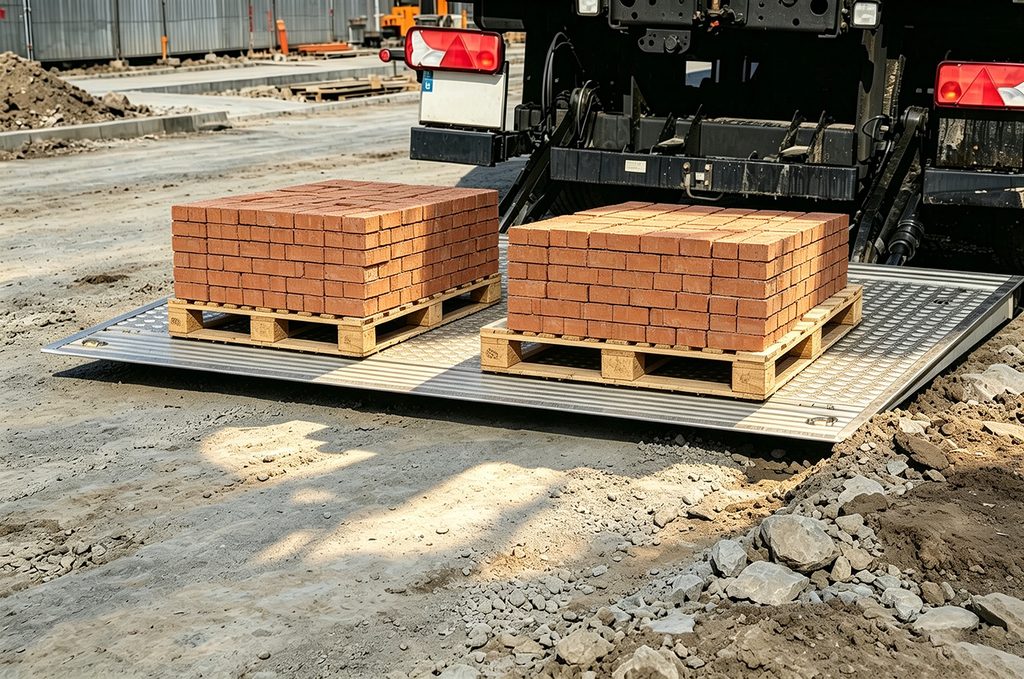
Bricks, delivered on pallets, sit at the upper end of what a site vehicle handles routinely. A standard full pallet carries a rating up to 1,200 kg. A typical pallet of 400–500 bricks commonly weighs 1,000–1,150 kg. That single pallet often approaches — or exceeds — the rated capacity of lighter-duty equipment. This is why capacity specification matters more on construction routes than on lighter parcel or retail work.
Industry safety standard EN 1756-1:2001+A1:2008 governs the design and verification of goods tail lifts. It requires manufacturers to demonstrate rated capacity under load testing. Platform size alone isn’t enough. This detail matters directly when a single brick pallet can approach a lift’s stated limit.
Why Duty Cycle Matters as Much as Rated Capacity
A number on a spec sheet only tells part of the story. Two units can share an identical tail lift capacity rating. They can still perform very differently on a construction route. One is built for occasional heavy lifts. The other is built for repeated heavy cycles across a full working day. Manufacturers typically build a heavy-duty tail lift for site work around a stronger hydraulic system. That means larger cylinders, a higher-output motor, and reinforced pivot points. It needs to repeat near-maximum lifts multiple times a day. Lighter-duty hydraulics lose performance under that kind of sustained load.
This is also why a hydraulic tail lift with a modest capacity margin tends to outlast one specified right at the edge of its rating. Rebar bundles and brick pallets rarely arrive at a perfectly average weight. Variability between individual pallets, moisture in cement, and bundling inconsistencies all push the realistic maximum higher. A supplier’s average delivery weight doesn’t capture that.
A Day on a Site Delivery Route
Picture a mid-sized building materials supplier running deliveries to three active sites in one day. One stop drops rebar bundles at a foundation-stage site. Another delivers two brick pallets to a site mid-wall-construction. A third brings a full load of cement bags to a site preparing for a pour. Handled manually, each stop typically needs two to three workers and a plank or ramp improvised on-site. Depending on ground conditions, unloading alone can take fifteen to thirty minutes per stop. That’s before any material handling on the ground even begins.
A properly specified tail lift changes the shape of these same three stops. One driver lowers each load to ground level in a single controlled motion. No site labor is needed to help with the truck-to-ground transition. The rebar bundle stays flat instead of getting angled off the tailgate by hand. That reduces bend risk. The brick pallets come down as a unit instead of getting broken apart and carried in batches. The cement bags spend less time exposed on an improvised ramp. That cuts moisture-related losses.
Total driving time doesn’t necessarily shrink. But the unloading portion — often the least predictable part of a delivery schedule — becomes consistent. Fleet operators tend to value that predictability more than raw speed. A delivery takes roughly the same time regardless of which site it’s headed to. It no longer depends on how many workers happen to be free that morning.
This consistency compounds over a full week. A supplier running the same three-site route five days a week doesn’t just save minutes per stop. They remove the single biggest source of schedule variance in the day. Drivers can commit to tighter delivery windows. Site managers can plan labor around a predictable arrival. Disputes over late or incomplete deliveries drop too. Unloading no longer depends on how many hands happen to be available on-site.
How a Construction Site Tail Lift Changes the Loading Process
Once the real weights are accounted for, the practical difference becomes clear. A two-or-three-person manual chain used to pass rebar bundles or cement bags hand to hand. Now one operator lowers a full load to ground level in a single controlled motion.
This shift changes several things at once:
- Fewer people per unload. The platform carries the weight instead of a human chain. That frees site labor for other tasks.
- Less bent or damaged rebar. Bundles come down flat instead of getting dragged or dropped off a tailgate edge.
- Fewer torn cement bags. Crews avoid the material loss and cleanup that manual handling causes on rough or wet ground.
- More predictable unloading time. This matters most on multi-drop routes, where a site receives several partial deliveries per day.
- Lower injury risk. Repeated lifting causes much of the lower-back strain reported in site logistics work.
Matching the Lift Type to the Load
Not every tail lift works the same way. The type matters more on a construction site than almost anywhere else. A cantilever tail lift generally suits rebar bundles and brick pallets best. Its structure carries concentrated, uneven loads without shifting during the lift cycle. A truck tail lift mounted on a larger rigid vehicle also tends to offer more capacity and platform size. Site deliveries need that, compared with lighter setups built for smaller parcels or retail cartons.
The platform surface matters as much as the lift mechanism. A serrated or anti-slip tail lift platform reduces the risk of bags or loose bricks sliding during the lowering motion. This is a common and underrated cause of on-site material loss. Corrosion-resistant platform materials, such as anodized aluminum, also hold up better. Dust, grit, and occasional standing water are common on active job sites.
What to Check Before Fitting a Construction Site Tail Lift
A few practical checks help crews avoid mismatched capacity or platform size. These problems cost far more to fix after installation than before it:
- Confirm the heaviest realistic single load, not the average. Use a full pallet of bricks or a bundled length of large-diameter rebar as the baseline.
- Check the floor height range the lift needs to cover. Site vehicles vary more in loading height than fixed-route delivery vans, especially across a mixed fleet.
- Match platform dimensions to pallet size. A standard 1.2-meter pallet shouldn’t overhang the platform edge during transit.
- Verify the power source. Most site-duty lifts run on 12V or 24V hydraulic systems. Undersized motors struggle with repeated heavy cycles across a working day.
- Account for duty cycle, not just capacity. A lift rated for occasional heavy loads may not survive the multiple-drop pattern typical of construction routes.
Getting these details right before installation avoids a costlier problem. A lift can be technically rated for the load on paper but still wasn’t specified for how construction sites actually use it day to day.
The Bottom Line
A single heavy lift doesn’t define construction material handling. Dozens of repeated, uneven, time-pressured unloads do, often across several sites in varying conditions. A properly specified construction site tail lift doesn’t just move weight from truck to ground. It removes the guesswork around whether today’s delivery fits within safe manual handling limits. It also removes the dependence on however many site workers happen to be free when the truck arrives.
None of this requires exotic equipment or a full fleet overhaul. It requires matching a lift’s rated capacity, duty cycle, and platform design to the materials actually being moved: rebar, cement, and bricks. Don’t just default to whatever unit the fleet originally specified for lighter, more forgiving delivery work. For site operators moving these materials daily, that difference shows up first in fewer injuries. Soon after, it shows up in fewer delays and less damaged material.
Frequently Asked Questions
Q: How much weight can a construction site tail lift handle?
A: Capacity varies by model, but site-duty units commonly range from 500 kg to 2,000 kg. A single brick pallet can weigh over 1,000 kg. Confirm rated capacity against your heaviest realistic load, not an average delivery weight.
Q: Is a cantilever tail lift better than other types for heavy materials?
A: For concentrated, uneven loads like rebar bundles or brick pallets, yes. A cantilever design generally holds the load more stably during the lift cycle. Lighter slider or tuck-away styles are built for smaller, evenly distributed parcels.
Q: Can cement dust or a wet job site damage a tail lift?
A: Repeated exposure to dust, grit, and moisture can speed up corrosion on unprotected metal components. Platforms using corrosion-resistant materials, such as anodized aluminum, handle this daily exposure better than untreated steel.
Q: Does a tail lift reduce the risk of bent or damaged rebar?
A: Yes, in most cases. Manual unloading often involves dragging or angling bundles off a tailgate edge. That’s a common cause of bending. A tail lift lowers the load flat and level, which reduces that risk.
Q: How do I know if my vehicle’s floor height works with a given tail lift?
A: Check floor height and lift range against the specific vehicle’s loading height. This varies between vehicles and even between loading conditions on uneven ground. Installers typically confirm this before installation rather than assume it.
Q: What’s the difference between a truck tail lift and a van tail lift for site work?
A: A truck tail lift is generally built for higher rated capacity and a larger platform. It matches the pallet sizes and bundle weights typical of construction material handling. Van-mounted units target lighter, smaller-volume deliveries. They’re usually undersized for daily rebar, cement, or brick pallet loads.
Q: Does the tail lift platform surface matter for wet or dusty conditions?
A: Yes. A serrated or anti-slip tail lift platform reduces the chance of loose materials sliding during the lowering motion. This becomes more likely once dust, cement residue, or moisture reduce surface grip.
Q: Is a construction site tail lift a bigger investment than a standard delivery lift?
A: Not necessarily in upfront cost, but the specification differs. A construction site tail lift typically needs a higher duty-cycle rating and more robust hydraulics. A standard delivery lift is built for lighter, more evenly distributed loads. It’s a spec difference more than a price one.
Trusted by Fleet Operators Across 60+ Countries
Stop Losing Time at the Loading Dock.
Get a Custom-Matched Tail Lift Quote in 24 Hours.
60
Countries Served
24h
Quote Turnaround
99.9
Field Uptime
5.0
Customer Rating
No Obligation
CE & UKCA Certified
Standard & Custom Builds
Worldwide Shipping