Having trouble submitting? Email us directly at nicole@beauway.com and we'll get back to you within 24 hours.











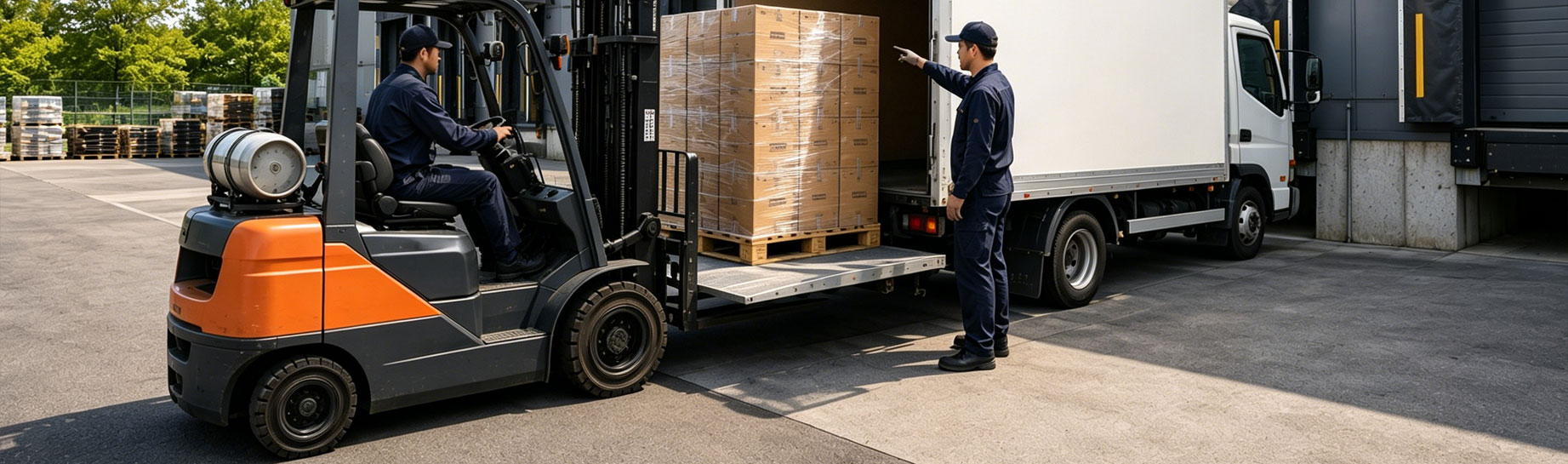
Fixed Dock Leveler Capacity Guide: How to Size Your Loading Bay
Fixed Dock Leveler Capacity Guide: How to Size for Your Loading Bay
Getting dock leveler capacity wrong is an expensive mistake. We’ve seen it happen more times than we’d like — a warehouse installs a fixed dock leveler, runs it for two years, then calls us because the platform is cracking under a forklift fleet it was never rated for. This guide exists to prevent that. Whether you’re speccing a single bay or fitting out an entire facility, dock leveler sizing done right the first time saves you serious money and downtime.
What Is a Fixed Dock Leveler?
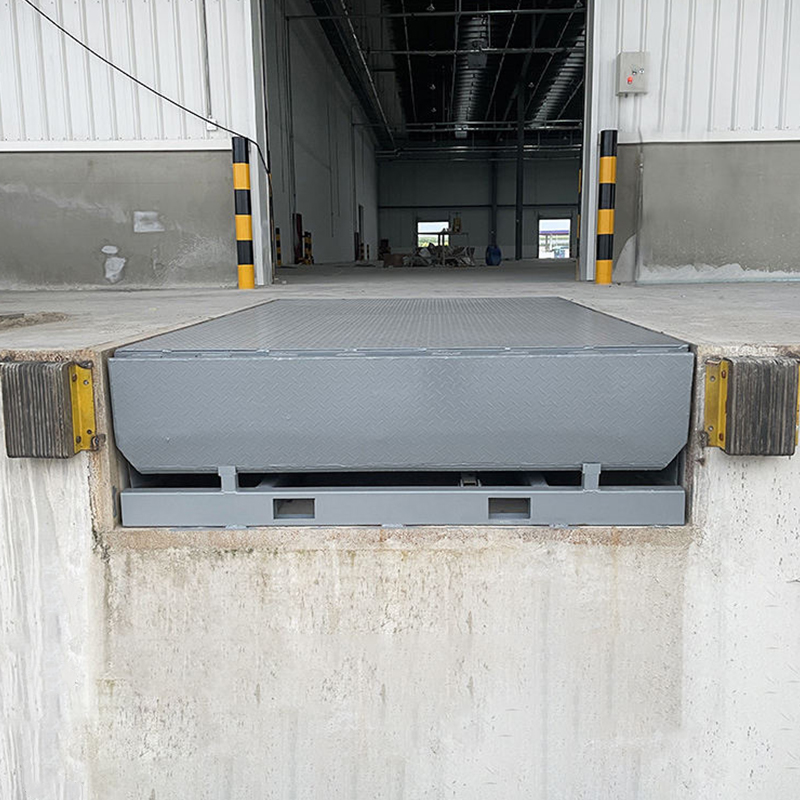
A fixed dock leveler — sometimes called a stationary dock leveler — is a hydraulic platform permanently set into a concrete pit at the edge of a loading bay. The bridge deck extends out to meet the trailer floor, and a hinged tongue plate (lip) drops onto the trailer bed so forklifts can cross. That’s the short version.
The full picture: the unit consists of a base frame, bridge deck, tongue plate, hydraulic cylinder, and power unit. Every one of those components takes a beating every time a loaded forklift crosses. Spec them right, and the leveler runs for 15 years without drama. Spec them wrong, and you’re looking at weld failures and hydraulic seal replacements inside five.
Static Load, Dynamic Load — and Why the Difference Matters
Here’s where a lot of buyers go wrong. They see dock leveler static load on the spec sheet — say, 10 tonnes — and think that’s the number to match against their forklift weight. It isn’t.
Dock leveler dynamic load is the real working figure. A standard fixed dock leveler with a 10-tonne static rating typically carries a dock leveler dynamic load rating of 6 tonnes. That’s the capacity that applies when a loaded forklift is actually moving across the platform.
Why the gap? Impact forces. A 4-tonne forklift carrying a 2-tonne load doesn’t simply put 6 tonnes on the deck as it crosses. Depending on crossing speed and deck angle, the actual impact load can be significantly higher. The dynamic rating already accounts for this — which is exactly why it’s lower than the static figure.
So when you’re checking dock leveler forklift weight against capacity: use the dynamic number, not the static one. If your heaviest loaded forklift weighs more than 6 tonnes gross, you need a heavier-duty unit. Full stop.
Fixed Dock Leveler Sizing: The Dimensions You Need Before You Pour Concrete
Fixed dock leveler sizing has to be locked down before the pit gets built. Changes afterward are painful and expensive.
Width options for a standard fixed dock leveler run at 1,830 mm (6 ft), 1,980 mm (6.5 ft), and 2,130 mm (7 ft). The 1,830 mm × 2,430 mm (6 × 8 ft) spec is what most freight docks actually use — it fits standard trailer widths and sits well in most existing pit configurations.
Closed length with the tongue plate folded is 2,280 mm. That’s the figure your civil contractor needs. Pit width should be the platform width plus 40 mm — so a 1,830 mm unit needs a 1,870 mm pit opening. Get this measurement wrong and the frame won’t seat correctly.
Closed height on a standard unit is 500 mm. Recommended loading bay floor height is 1,200 mm to 1,300 mm above ground level. That range covers the majority of standard trailer bed heights you’ll encounter in normal freight operations.
Dock Leveler Working Range: How Much Travel Do You Actually Need?
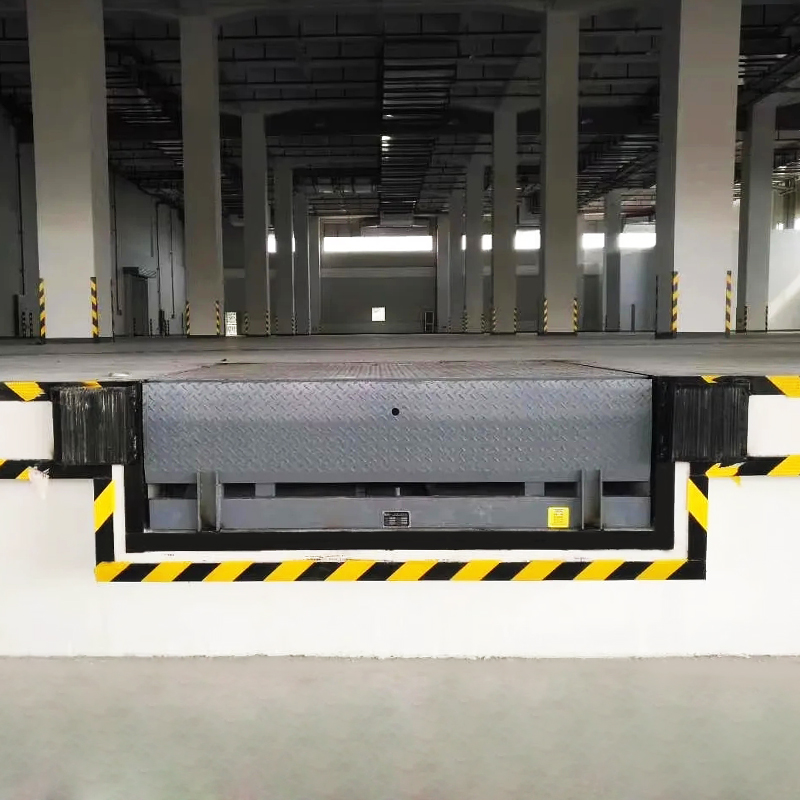
The dock leveler working range is the total vertical travel of the platform above and below dock floor level. For a standard fixed hydraulic dock leveler, that’s +400 mm above and −300 mm below floor level.
A lot of suppliers quote ±300 mm as their headline figure — and for many docks, that’s fine. But if your facility receives a mixed trailer fleet including low flatbeds and high refrigerated units, the full +400/−300 mm range gives you meaningful extra flexibility. It also keeps the platform angle shallower at the extremes, which matters for forklift stability and cargo safety on every single crossing.
Tongue Plate and Deck: The Parts That Take the Most Punishment
The dock leveler lip length — the reach of the tongue plate onto the trailer floor — directly affects how safe and smooth the forklift transition is. A short lip on a low trailer creates a steep angle that forklifts don’t like and loads don’t survive well.
On a standard fixed dock leveler, the tongue plate runs 14 mm thick. That’s not a random number — it’s the spec that handles repeated front axle impacts from a loaded counterbalance forklift without deforming over years of use. The bridge deck itself is 8 mm plate. Thinner than the tongue plate because the load distribution across the full deck is more forgiving than the concentrated impact at the lip.
If a supplier quotes you thinner plate on either — ask why.
Hydraulic Power Unit: What the Spec Sheet Should Show
A fixed hydraulic dock leveler runs on a small but critical power unit. Standard electrical specs:
- Voltage: 220V or 380V AC
- Motor: 0.75 kW
- Frequency: 50 Hz (60 Hz available for markets that require it)
The control box on a standard unit is plastic-housed. That’s adequate for most applications. For docks integrating vehicle restraints, dock lights, or access control systems, you’ll want an upgraded panel with emergency stop and interlock capability — spec this at the order stage, not as an afterthought.
The hydraulic system keeps the lip in contact with the trailer bed even when the truck shifts under load. That’s the key practical advantage over mechanical alternatives, and it’s the reason hydraulic dock leveler units dominate high-frequency freight docks globally.
Fixed Dock Leveler Installation: Pit Requirements That Actually Matter
Fixed dock leveler installation failures almost always trace back to the pit. The leveler is fine. The pit was built without the supplier’s drawing.
Don’t do that. Before any concrete gets poured, get the pit drawing from your leveler supplier and hand it directly to your civil contractor. The critical numbers:
- Pit width = platform width + 40 mm
- Pit depth = matched to 500 mm closed height plus anchor frame allowance
- Pit length = full deck length plus rear housing for the hydraulic unit
- Concrete spec = must handle transferred dynamic loads from the frame under full rated capacity
A pit that’s 20 mm too narrow means grinding or breaking concrete on installation day. Neither option is cheap or fast.
Dock Leveler Capacity Chart: Fixed Leveler Reference Specs
| Specification | Standard Fixed Dock Leveler |
|---|---|
| Platform size | 1,830 × 2,430 mm (6 × 8 ft) |
| Static capacity | 10 tonnes |
| Dynamic capacity | 6 tonnes |
| Working range | +400 mm / −300 mm |
| Closed height | 500 mm |
| Closed length | 2,280 mm |
| Bridge deck thickness | 8 mm |
| Tongue plate thickness | 14 mm |
| Motor | 0.75 kW, 220V / 380V |
| Recommended bay height | 1,200–1,300 mm above ground |
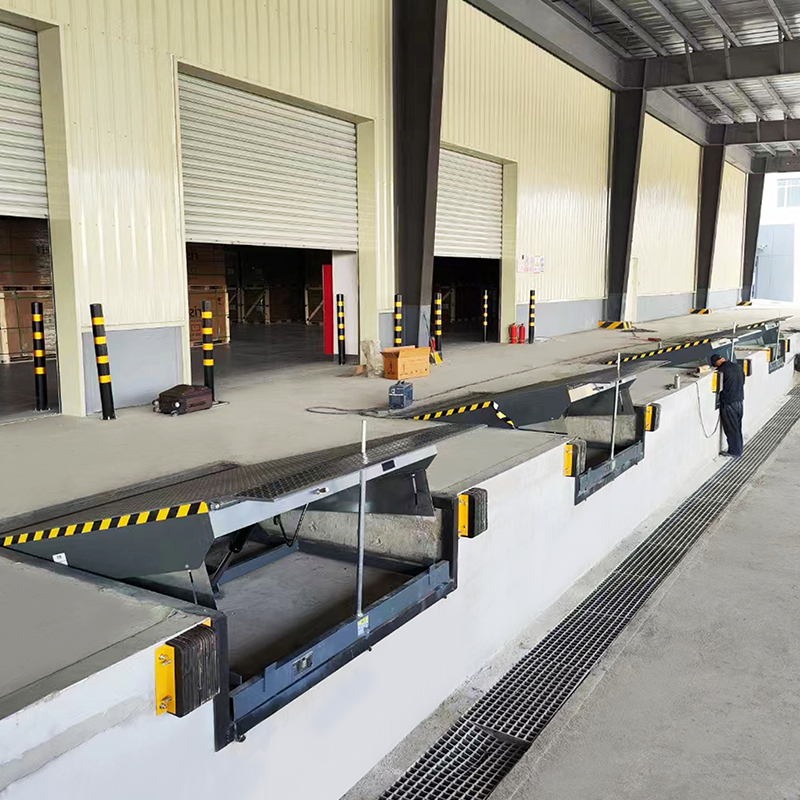
This dock leveler capacity chart covers the standard spec. Custom configurations — wider platforms, extended working range, non-standard voltages — are available on request.
Using a Dock Leveler Capacity Calculator: What Data You Need First
A dock leveler capacity calculator is only as good as the inputs you give it. Before you run the numbers, pull together:
- Heaviest forklift gross vehicle weight — machine plus maximum payload. This is your dock leveler forklift weight baseline.
- Front axle load as a percentage of gross vehicle weight — your forklift supplier can provide this.
- Forklift crossings per shift — this sets your dock leveler cycle frequency requirement.
- Trailer height range at your dock — this determines the working range you need.
- Shifts per day — critical for hydraulic duty cycle rating.
Any credible fixed dock leveler supplier will walk through these inputs with you before confirming the loading dock leveler specification. If they skip straight to quoting without asking these questions, that’s worth noting.
The European Logistics Association notes that standardising loading bay equipment specifications across a facility is one of the most effective steps for reducing dock incidents.
Fixed Dock Leveler vs. Mechanical: A Straightforward Comparison
For dock leveler for heavy loads — anything regularly exceeding 4,000 kg dynamic — a fixed hydraulic dock leveler is the right answer. Mechanical levelers are cheaper upfront and perfectly adequate for light, infrequent use. They are not the right tool for a busy freight dock.
The practical difference comes down to three things. First, push-button operation versus manual walk-down — relevant when operators are running 50+ cycles a shift. Second, consistent lip contact with the trailer under load shifts — mechanical lips can unseat when a truck moves. Third, integration with dock safety systems — hydraulic units connect cleanly to vehicle restraints and interlock controls; mechanical units generally don’t.
For dock leveler for loading bay environments running multiple shifts, the hydraulic option pays for the price difference within the first year of operation.
Working with a Fixed Dock Leveler Manufacturer
Beauway is a fixed dock leveler manufacturer with over ten years of OEM production experience. As a fixed dock leveler supplier, we provide complete technical documentation with every order — pit drawings, load calculation sheets, hydraulic system specs, and installation guidance.
Standard units ship in the most common global configurations. Custom specs for non-standard pit sizes, extended working ranges, and export voltage requirements are handled by our engineering team at the quotation stage. We supply dock leveler OEM supplier customers from single-dock projects through to large multi-bay distribution terminal fitouts.
Contact us for fixed dock leveler sizing support, pit drawing review, and volume pricing.
Frequently Asked Questions
What is a fixed dock leveler?
A fixed dock leveler is a hydraulic loading bay platform permanently installed in a concrete pit at the dock edge. It bridges the height gap between the warehouse floor and the truck trailer, allowing forklifts to cross safely. Unlike portable ramps, a stationary dock leveler is engineered for permanent installation and high-cycle industrial use.
What is the standard capacity of a fixed dock leveler?
Standard units carry a static load rating of 10 tonnes and a dynamic load rating of 6 tonnes. The dynamic rating applies during forklift crossing under load — always size to this figure, not the static one, when specifying dock leveler capacity.
What pit size do I need for a fixed dock leveler?
For a 1,830 mm wide unit, the pit width should be 1,870 mm. Pit depth must suit the 500 mm closed height plus anchor frame allowance. Get the supplier’s pit drawing before any concrete work starts — this single step prevents most installation problems.
What is the working range of a hydraulic dock leveler?
A standard fixed hydraulic dock leveler travels +400 mm above and −300 mm below dock floor level. For docks with extreme trailer height variation, confirm whether extended-range options are needed before ordering.
How do I calculate the right dock leveler capacity for my forklift?
Take the forklift’s gross vehicle weight including maximum payload. Apply a dynamic safety factor of 1.5. If the result exceeds the leveler’s dynamic load rating, step up to a heavier unit. Use a dock leveler capacity calculator or ask your supplier’s engineering team to confirm the correct loading dock leveler specification.
One Last Thing
A fixed dock leveler is infrastructure. It’s not the kind of purchase you want to revisit in three years because the spec was off. Get the dock leveler capacity, pit dimensions, and hydraulic duty cycle right at the start — and the unit runs quietly in the background for 15 years while everything else at your dock changes around it.
Questions about fixed dock leveler sizing for your specific bay? Contact Beauway for a capacity review and pit drawing. We’ll confirm the full loading dock leveler specification before anything goes into production.
Trusted by Fleet Operators Across 60+ Countries
Stop Losing Time at the Loading Dock.
Get a Custom-Matched Tail Lift Quote in 24 Hours.
60
Countries Served
24h
Quote Turnaround
99.9
Field Uptime
5.0
Customer Rating
No Obligation
CE & UKCA Certified
Standard & Custom Builds
Worldwide Shipping