Having trouble submitting? Email us directly at nicole@beauway.com and we'll get back to you within 24 hours.











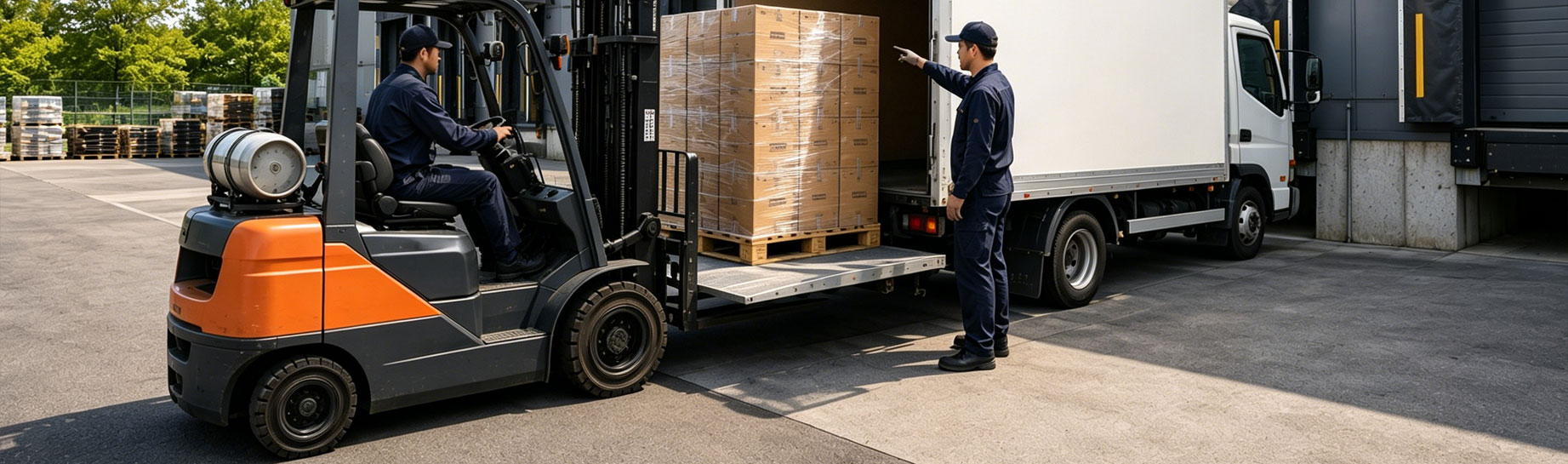
Tail Lift Cost Breakdown: A Complete 2026 Price Guide
Tail lift cost ranges from $1,200 to $18,000+ depending on type, load capacity, and material.
Tail lift cost ranges from $1,200 to $18,000+ depending on type, load capacity, and material. That’s a wide range — and the reason most procurement budgets go wrong isn’t supplier dishonesty, it’s picking the wrong spec before getting a quote.
This guide breaks down every cost factor with real price ranges, so you know what to expect before you contact a supplier.
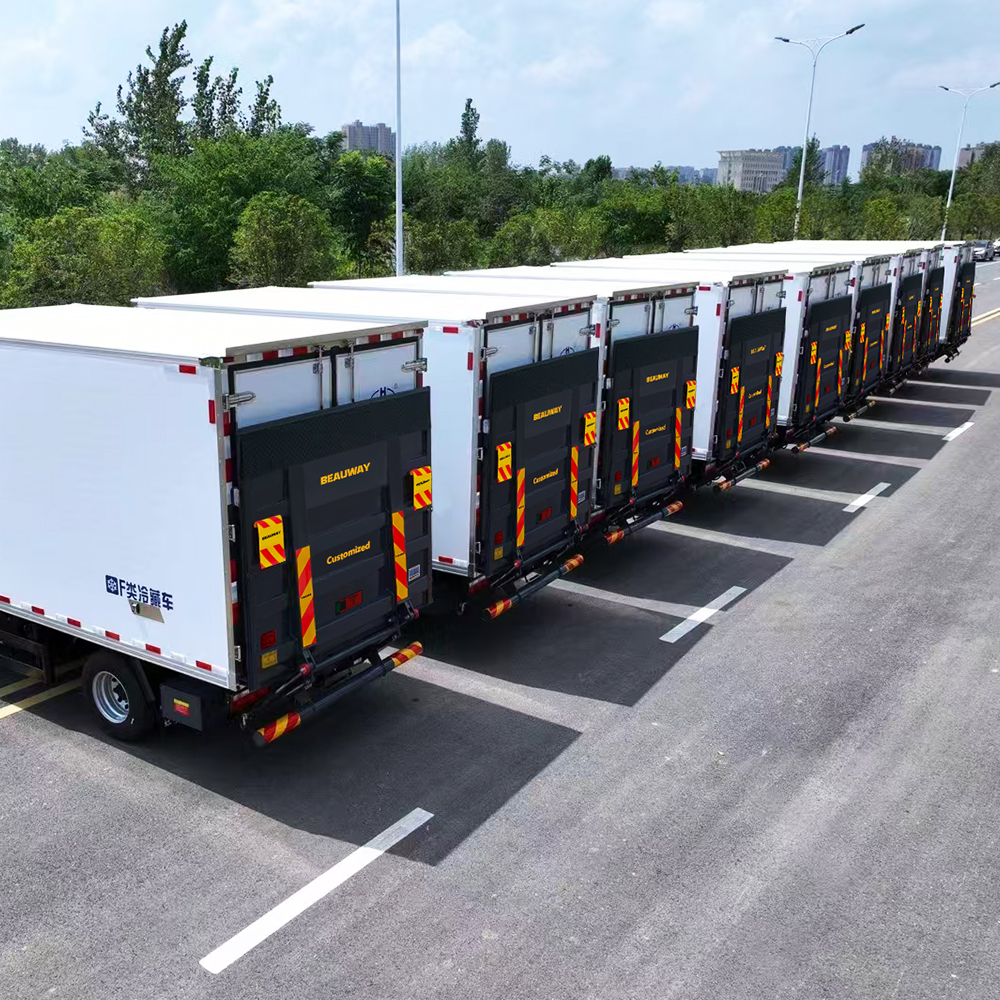
Tail Lift Price by Type: 2026 Overview
| Type | Typical Price Range | Best For |
|---|---|---|
| Cantilever | $1,200 – $4,500 | General freight, urban delivery |
| Folding | $2,500 – $6,500 | Space-restricted routes, city logistics |
| Built-in | $5,000 – $12,000 | Refrigerated trucks, custom fleet builds |
| Vertical | $3,000 – $7,500 | Fixed loading docks, warehouse operations |
| Concealed | $6,000 – $18,000 | Cold chain, branded retail, pharma |
Prices reflect unit cost excluding installation. Installation adds $300–$2,500 depending on type and vehicle.
The 3 Factors That Drive Tail Lift Cost
1. Material: Steel vs. Aluminum
Steel or aluminum — this decision alone shifts your cost by 20%–35%.
| Steel | Aluminum | |
|---|---|---|
| Unit cost | Lower | 20–35% higher |
| Weight | Heavier | Lighter (fuel saving) |
| Corrosion resistance | Lower | Significantly better |
| Long-term maintenance cost | Higher | Lower |
Steel makes sense for dry, indoor-heavy operations with predictable routes. Aluminum pays off within 2–3 years for fleets running coastal, port, or wet-climate routes. Pivot shaft corrosion and seal failures on steel units in those conditions stack up fast.
If an aluminum quote looks suspiciously low, check three things: hydraulic system brand, platform wall thickness, and seal material grade. That’s where corners get cut.
2. Load Capacity
Each step up in capacity isn’t just a bigger number — the hydraulic cylinder gets heavier duty, the platform steel thickens, and pivot points need more reinforcement.
| Capacity | Typical Price Premium | Common Vehicle | Industry |
|---|---|---|---|
| 500 kg | Base price | Light box van | Urban delivery, retail |
| 1,000 kg | +20–30% | Medium refrigerated truck | Food logistics, pharma |
| 1,500 kg | +45–60% | Heavy-duty truck | Industrial equipment, construction |
| 2,000 kg | +70–90% | Large specialist vehicle | Port operations, special transport |
Match capacity to the actual job. Oversizing adds cost without adding value. Undersizing creates safety risk and accelerates wear.
3. Structural Type
Van tail lift cost and heavy truck tail lift cost aren’t directly comparable — structure is a big reason why. A folding mechanism adds manufacturing complexity. A built-in design requires body integration. A simple cantilever arm is cheaper to build and cheaper to install.
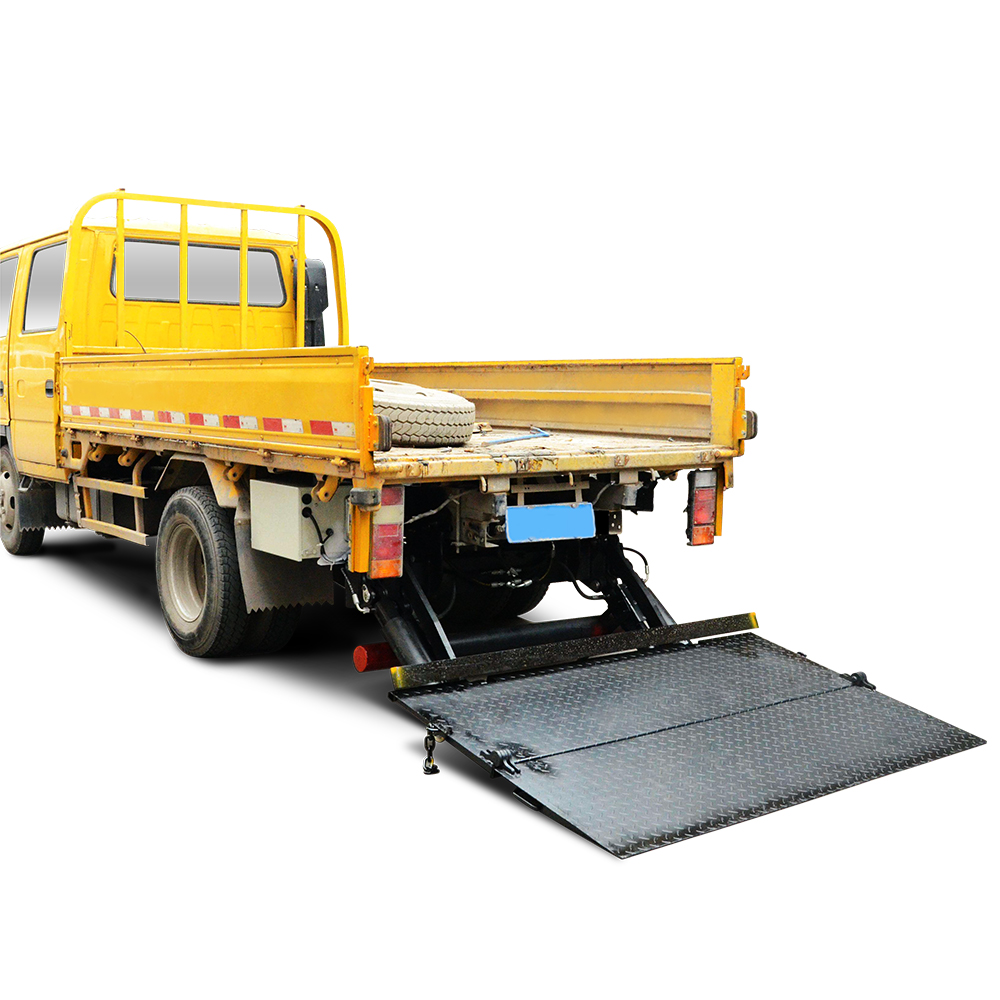
Tail Lift Cost by Type: Full Breakdown
Cantilever Tail Lift — $1,200 to $4,500
The workhorse. Arms on both sides, platform extends horizontally. Most parts are interchangeable across brands, so repair costs stay manageable — typically $150–$600 for common service jobs.
Watch the rear overhang. In tight loading bays or narrow urban streets, that extra length causes real operational problems.
Best for: general freight, smaller trucks, budget-conscious fleets.
Folding Tail Lift — $2,500 to $6,500
Folds flat against the rear when not in use. Critical in markets where total vehicle length is regulated — several European and US city logistics zones have length restrictions a non-folding lift can push you over.
Installation runs about 20% more than cantilever due to the more complex mechanism. Factor that into your total cost.
Best for: city delivery fleets, regulated urban routes, vehicles sharing docks with tight clearance.
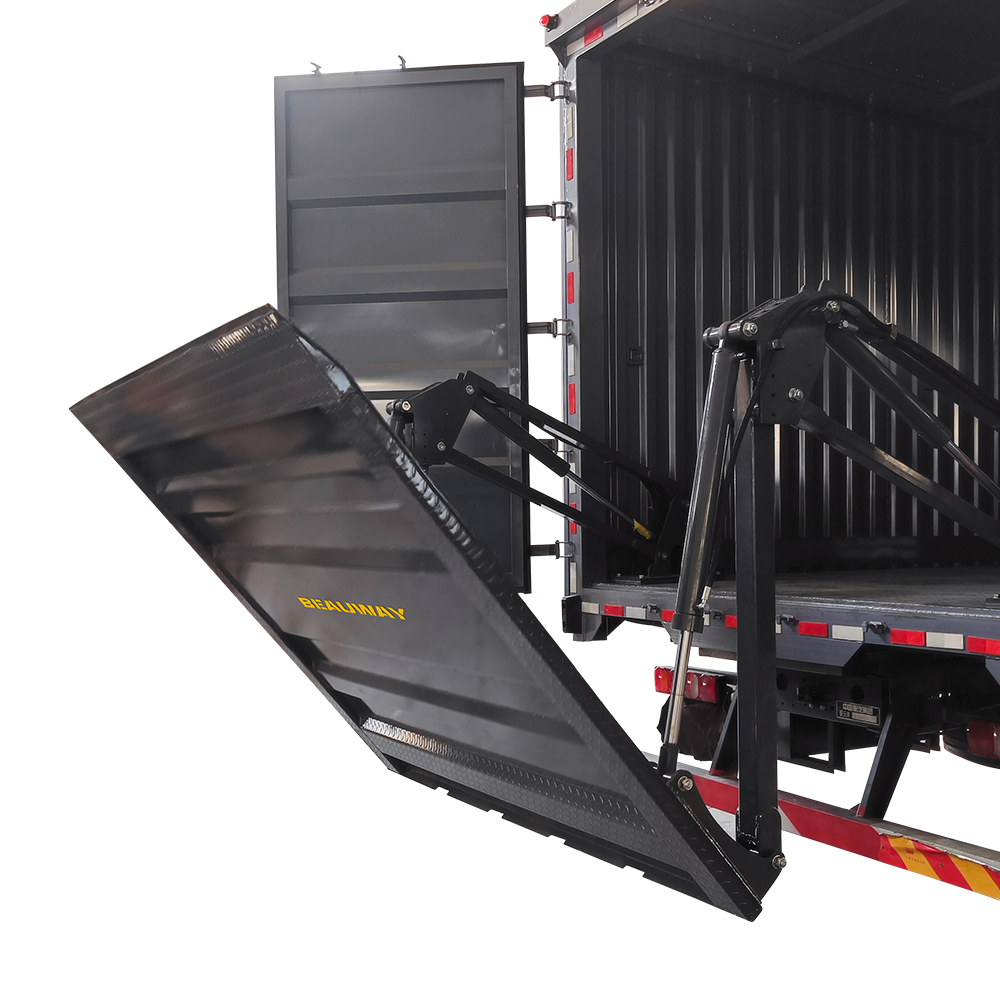
Built-in Tail Lift — $5,000 to $12,000
Integrates into the vehicle body itself. Clean look, no external components. Popular on refrigerated trucks and custom fleet builds.
The catch: this is best done at vehicle manufacturing stage. Retrofitting to an existing truck means body modification work, longer lead times, and noticeably higher installation cost — expect to add $1,500–$4,000 for a retrofit versus a factory-fit.
Best for: refrigerated trucks, branded fleet vehicles, aerodynamics-sensitive applications.
Vertical Tail Lift — $3,000 to $7,500
Straight up, straight down. No platform swing arc. Works well where dock height is close to vehicle floor level.
If your trucks work the same few loading points every day, vertical keeps the rear footprint tight and plays well with fixed dock layouts.
Best for: manufacturing plants, warehouse operations, fixed-point logistics.
Concealed Tail Lift — $6,000 to $18,000
Disappears completely when not in use — folds into the underframe or body. Cold chain operators favor this because it doesn’t interfere with rear door seals. No rear overhang also improves rearward visibility when reversing.
Higher price reflects the engineering complexity. Maintenance requires specialist technicians, so factor ongoing service costs into total ownership calculation.
Best for: cold chain logistics, pharma distribution, branded retail delivery.
Tail Lift Installation Cost
Installation is a separate line item most price guides skip over. Don’t.
| Type | Installation Cost Range |
|---|---|
| Cantilever | $300 – $800 |
| Folding | $600 – $1,200 |
| Vertical | $500 – $1,000 |
| Built-in (factory fit) | $800 – $1,500 |
| Built-in (retrofit) | $2,000 – $4,000 |
| Concealed | $1,000 – $2,500 |
Always confirm installation cost separately. Some suppliers bundle it; many don’t.
Tail Lift Maintenance Cost: What to Budget
Annual maintenance runs $200–$800 per unit depending on type, usage intensity, and whether you’re on a service contract.
Common repair costs:
- Hydraulic seal replacement: $150 – $400
- Pivot shaft repair (steel units, corrosion): $300 – $900
- Platform surface replacement: $400 – $1,200
- Control system fault (wiring, switches): $200 – $600
- Full hydraulic cylinder replacement: $800 – $2,500
Steel units in wet or coastal environments trend toward the higher end of repair frequency. Aluminum units cost more upfront but typically see 30–40% lower maintenance spend over a 3-year period.
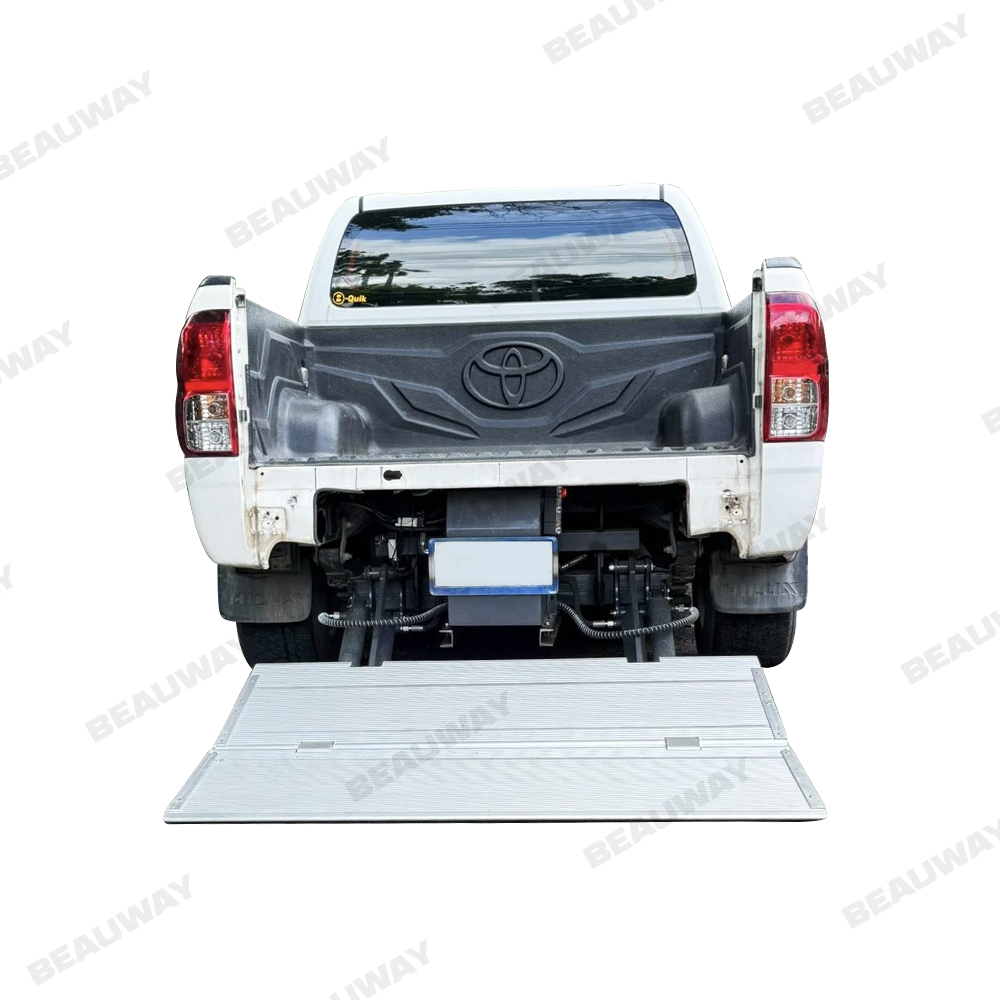
Second Hand Tail Lift: Is It Worth It?
Second hand tail lift prices typically land at 40%–60% of new — a real saving that’s genuinely tempting.
But used units carry unknowns. Before buying, get clear answers on:
- Any hydraulic leak history on record?
- Visible cracks or weld repairs on the platform steel?
- Is the control system wiring original factory spec or modified?
- Does it come with a current compliance inspection certificate?
No maintenance records? Walk away. The price discount doesn’t cover the risk of an unplanned failure mid-operation. A single breakdown event — truck off the road, missed deliveries, emergency repair — can easily erase the entire saving.
Real Cost Example: When a Cheaper Spec Costs More
A European cross-border logistics operator running 12 refrigerated trucks chose a steel cantilever model in 2024 to save money — about 20% cheaper per unit than the aluminum alternative they’d been quoted.
Fourteen months later, four trucks were showing the same problems: pivot shaft corrosion and hydraulic seal leaks, all on port-heavy routes. They pulled all four for repair simultaneously — four trucks off the road at once.
The repair bill from that single episode wiped out most of what they’d saved on purchase price. Factoring in downtime and missed delivery revenue, the real loss came to more than twice the original saving.
The second procurement round went all-aluminum. They also added a mandatory annual inspection clause to the supplier contract.
Tail lift cost isn’t just the invoice. It’s everything that follows the invoice.
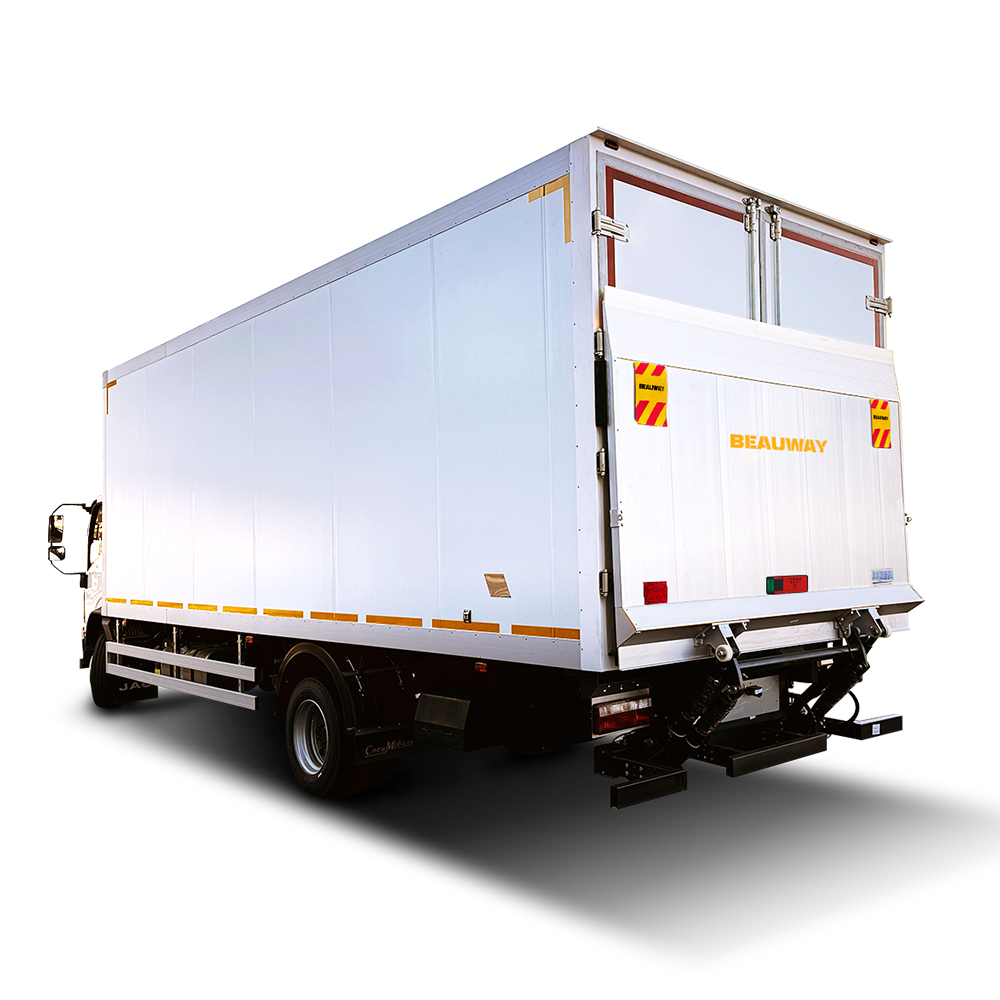
Compliance and Certification Costs
In the EU, tail lifts must meet EN 1756-1 — covering platform strength, travel limit protection, and hydraulic pressure relief valve requirements. Full standard available at eur-lex.europa.eu.
In the US, ANSI/ITSA standards apply for commercial vehicle tail lifts. Always confirm which certification is required for your target market.
Certification doesn’t always show up as a line item in the quoted price. Running a non-certified unit creates problems at annual vehicle inspection — that indirect cost tends to be far higher than whatever was saved upfront.
How to Benchmark a Tail Lift Quote
Divide purchase price by rated load capacity to get a cost-per-kg ratio. Compare that number across suppliers quoting the same type and capacity.
Example: Two cantilever 1,000kg quotes — $3,200 and $4,800. Divide both by 1,000. Ratios of $3.20/kg vs $4.80/kg. A 50% gap on the same spec warrants a direct question about what’s different.
Important: Only compare within the same structural type. Cantilever and concealed models involve completely different engineering — the ratio comparison breaks down across types.
Pre-Purchase Checklist
Before the purchase order goes in:
- Rear axle rated load plus tail lift self-weight — confirm it stays within GVW limits
- Ground gradient at operating site — check against the model’s rated tolerance
- Vehicle floor height versus tail lift deployment angle — confirm compatibility
- Target market certification requirement — confirmed in writing from supplier
- OEM hydraulic parts availability — get lead time commitment in writing
- Platform dimensions — load capacity and platform size both affect real-world throughput
- Installation timeline — folding and built-in types take longer; plan if the truck is needed fast
- Hydraulic fluid grade — must match OEM spec; mixing grades wears seals faster than most people expect
Do a full-load dynamic test after installation. Static load checks alone aren’t enough.
Frequently Asked Questions
How much does a tail lift cost? A tail lift costs between $1,200 and $18,000 depending on type, load capacity, and material. Cantilever models start around $1,200–$4,500. Concealed and built-in models run $6,000–$18,000. Installation is a separate cost of $300–$2,500.
What is the cheapest type of tail lift? Cantilever tail lifts are the most affordable, typically $1,200–$4,500 for the unit, with the lowest installation cost in the range. They’re also the easiest to maintain, which keeps long-term ownership cost low.
Is aluminum worth the extra cost over steel? For most commercial fleets, yes — especially in wet, coastal, or port environments. Aluminum costs 20–35% more upfront but typically reduces maintenance spend by 30–40% over three years. The payback period is usually 18–30 months depending on operating conditions.
How much does tail lift installation cost? Installation ranges from $300 for a basic cantilever to $2,500+ for a concealed model. Retrofitting a built-in tail lift to an existing truck can cost $2,000–$4,000 due to required body modification work.
What does tail lift maintenance cost per year? Annual maintenance typically runs $200–$800 per unit. Steel units in harsh environments trend higher. A service contract with a supplier usually covers annual inspections and priority scheduling for $250–$500/year.
Should I buy a second hand tail lift? Only if it comes with full maintenance records and a current compliance certificate. Second hand prices are 40–60% of new, but without documentation, the risk of unplanned failure outweighs the saving. No records — walk away.
What is the load capacity I need? Match capacity to your actual maximum load, not your average load. 500kg suits light vans and retail delivery. 1,000kg covers most refrigerated truck applications. 1,500–2,000kg is for industrial or port operations.
Have a specific vehicle spec or capacity requirement? Contact a supplier with your vehicle dimensions, floor height, and load requirements to get a meaningful quote.
Trusted by Fleet Operators Across 60+ Countries
Stop Losing Time at the Loading Dock.
Get a Custom-Matched Tail Lift Quote in 24 Hours.
60
Countries Served
24h
Quote Turnaround
99.9
Field Uptime
5.0
Customer Rating
No Obligation
CE & UKCA Certified
Standard & Custom Builds
Worldwide Shipping