Having trouble submitting? Email us directly at nicole@beauway.com and we'll get back to you within 24 hours.











Truck Liftgate Safety: One 3-Second Mistake, One Death Trap
Truck liftgate safety starts with two preventable causes. The first: the hydraulic system stays powered on while someone stands on the platform. The second: cargo exceeds the liftgate’s true working weight once you account for the driver, pallet jack, and load together. Isolate power before stepping onto the platform, and center loads within the rated capacity. These two habits prevent the large majority of these incidents.
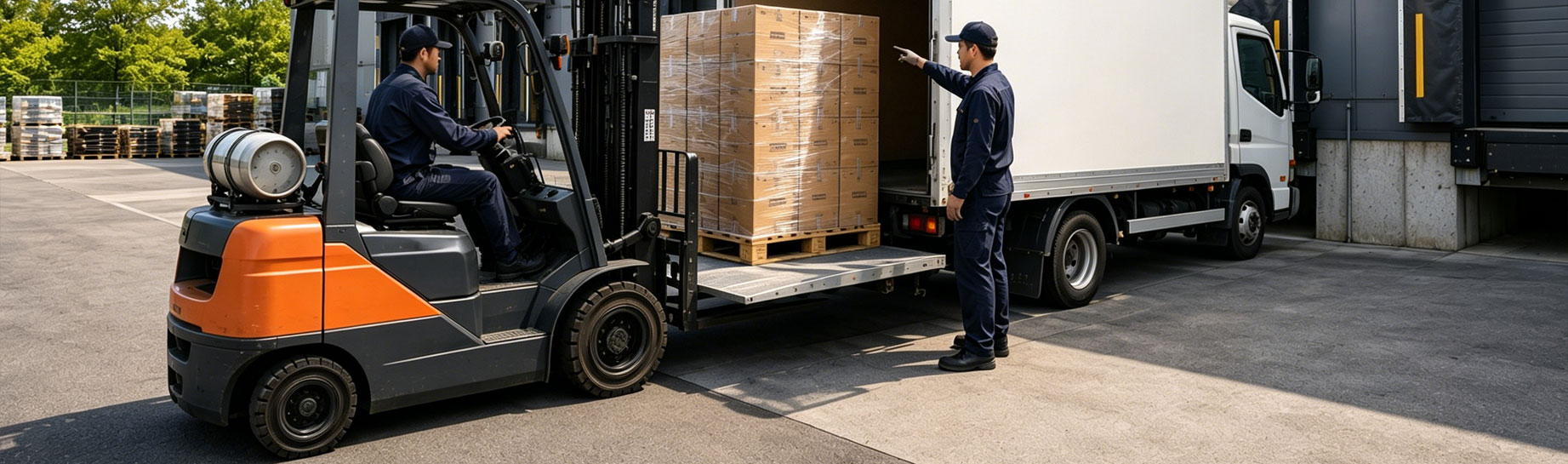
A few weeks ago, footage started circulating on social media that made a lot of fleet managers stop scrolling. In the clip, two warehouse workers reposition a pallet on a liftgate when the platform suddenly lurches upward. For a second, the rising deck traps both men against the cargo above it. Nobody suffered serious injury in the clip — but it’s easy to see how that could have gone differently.
The cause wasn’t a mechanical defect. It wasn’t a worn part or a failed weld. The liftgate’s hydraulic system simply stayed powered on while the crew worked on the platform. Somewhere during loading, someone bumped a control switch mounted on the truck’s side. That’s the entire chain of events that nearly ended in a crushing injury.
At Beauway, we design and manufacture tail lifts and liftgates for commercial fleets. Incidents like this one are exactly the failure modes our engineering team tracks and designs against. This article breaks down what actually causes liftgate injuries, what the safety data says, and what a fleet operator or driver can do about it today — no new equipment required.

The 3 Seconds That Matter Most
Here’s what actually happens in an incident like this. A driver raises the liftgate to loading height so the crew can move cargo on or off the truck bed. At that point, the job isn’t done. Someone still has to walk onto the platform, shift a pallet, reposition a hand truck, or adjust a load sitting off-center. That’s the moment the liftgate switch becomes a hazard instead of a tool.
Safety trainers call the gap between the platform and the truck body a pinch point — a space where a moving part can trap a hand, a foot, or an entire body against a fixed surface. If the hydraulic system stays live, any contact with the control can send the platform moving again with someone standing in the wrong place. That contact might be a knee bumping a side-mounted switch, or a foot pressing a floor-level pedal.
The fix is almost embarrassingly simple: once the liftgate reaches working height, power liftgate switch off before anyone steps onto the platform. Turn power back on only once everyone is clear. It’s a three-second habit. It’s also the single most effective thing a crew can do to prevent this exact type of injury.
The problem is that it’s easy to skip. A delivery might be running behind schedule, or a driver might have done the same job a thousand times without incident. That’s usually the moment complacency turns a routine stop into a near-miss — or worse.
Truck Liftgate Safety: Why This Isn’t a Freak Occurrence
It’s tempting to write off a viral video as an outlier. Industry safety data says otherwise.
Workplace injury analysts cite warehouse safety research showing that roughly a quarter of all warehouse accidents happen at the loading dock. For every injury someone actually reports, several hundred near-misses go undocumented. That means incidents like the one in that video happen far more often than the ones that make it onto camera.
The historical record backs this up. UK Health and Safety Executive research into “falls from vehicle” incidents — a category that includes a large share of tail lift and liftgate injuries — estimated the human and economic cost of these events at over £36 million in a single research period. Separately, Ireland’s Health and Safety Authority documented a 2016 case where a liftgate on a commercial vehicle collapsed mid-use. Investigators traced the failure to two corroded mounting bolts that had quietly given way under normal working loads. No one bumped a switch that time. The equipment simply failed, and an employee got hurt as a result.
Put those two categories side by side — operator-related incidents like accidental reactivation, and equipment-related incidents like structural failure. Together they show why truck liftgate safety keeps showing up in accident reports. It’s rarely one dramatic cause. Instead, small, preventable gaps stack up until conditions align badly.
The Overload Problem Nobody Talks About
There’s a second hazard that gets far less attention than the pinch-point issue, and it’s arguably just as dangerous: overloading.
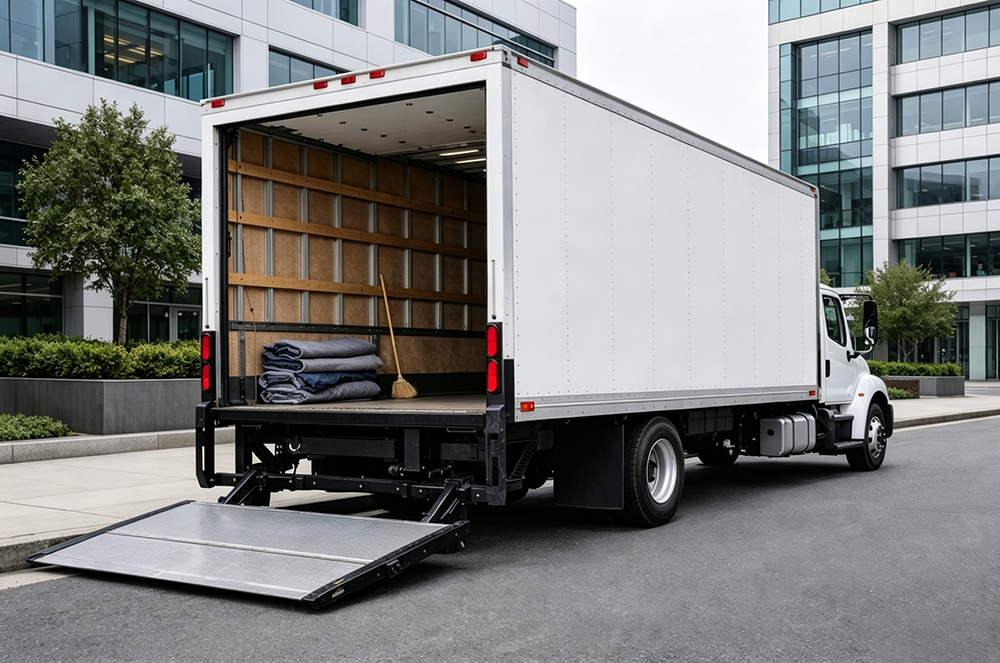
Every liftgate has a rated truck liftgate weight capacity, and most operators know the number stamped on the equipment. Far fewer people account for everything else that ends up on that platform along with the cargo. A pallet of goods might sit well within the rated limit on its own. But add a driver standing on the deck, a pallet jack, and the hand truck used to move it, and the real load can climb significantly higher than what anyone actually calculated. A single electric pallet jack alone can weigh several hundred pounds before anyone loads a single box onto it.
Positioning makes the problem worse. Manufacturers rate most liftgates assuming the load sits centered on the platform, roughly two feet from the inner edge. When cargo gets pushed out toward the tip of the gate instead — often to make room for a driver or a second pallet — the effective stress on the hydraulic cylinders can roughly double. A load that sits safely centered on the deck can overwhelm the system at the edge. That can cause the platform to flex, the relief valve to bypass, or the lift to fail outright.
The fix here isn’t complicated: know the full weight of everything that touches the platform, not just the cargo, and keep loads centered rather than pushed toward the edge.
Truck Liftgate Safety by Vehicle Type
Not every liftgate operation carries the same risk. Treating a van liftgate the same way you’d treat a semi truck liftgate misses some important differences.
A van liftgate typically handles smaller, more frequent loads — last-mile deliveries, multiple stops per day, drivers working largely on their own. The risk here concentrates around repetition and time pressure. A driver who has operated the same lift gate for truck deliveries dozens of times a day is statistically more likely to skip the power-isolation habit, simply because nothing has gone wrong yet.
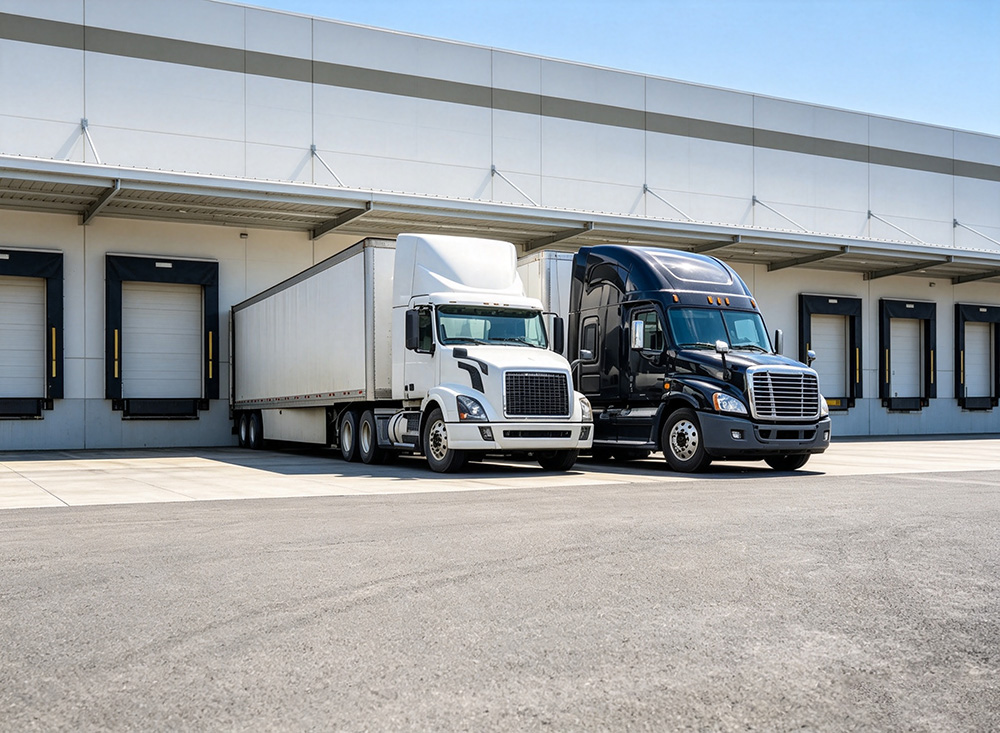
A semi truck liftgate, by contrast, usually handles heavier, bulkier freight, often with a second worker involved. The risk profile shifts toward overload and uneven weight distribution, because larger platforms invite larger, less carefully centered loads. Ground conditions matter more here too. An uneven yard or sloped delivery site can turn a stable load into an unstable one the moment the platform starts moving.
For fleet operators managing a mixed group of vehicles, this matters at the procurement stage. A commercial truck liftgate spec’d for urban delivery work should prioritize a fast, simple power-isolation workflow, plus anti-slip platform surfaces for high-frequency stops. A liftgate built for heavier commercial routes needs evenly distributed hydraulic support. It also needs a rated capacity that accounts for real-world conditions — not just a manufacturer’s best-case number on a spec sheet.
Liftgate Maintenance: A 5-Point Check Most Crews Skip
A meaningful share of liftgate failures don’t happen without warning. They happen after someone misses the warning. This is the core of truck liftgate safety, and it takes a few minutes per shift:
- Check hydraulic fluid levels on a fixed schedule — not only when something already feels off.
- Watch for “creep,” where a loaded platform slowly sinks on its own after you raise it. This signals the hydraulic system is losing its ability to hold rated weight safely, and it gets worse over time, not better.
- Inspect mounting hardware, hinges, and welds for corrosion, particularly on vehicles running cold-chain or coastal routes. Corrosion caused the 2016 collapse case above, and a proper inspection is often the only way to catch it.
- Test the platform under a rated load periodically, not just when it’s convenient.
- Pull the vehicle from service at the first sign of unusual noise, hesitation, or drift — don’t note it and revisit later.
Frequently Asked Questions
Q: What causes most liftgate accidents?
A: The two leading causes are the hydraulic system staying powered while someone is on the platform, which creates a crush risk if someone bumps the control, and overloading. Overloading means exceeding the rated weight or loading cargo off-center, which multiplies stress on the hydraulic cylinders.
Q: How do I prevent a liftgate pinch-point injury?
A: Isolate power at the cab once the liftgate reaches working height, and only restore power after everyone has stepped clear of the platform. This single habit prevents the majority of reactivation-related injuries.
Q: How much weight can a liftgate actually hold?
A: Less than the rated number suggests once you factor in everything beyond the cargo — the driver, a pallet jack, and any loading equipment. A manual pallet jack alone can weigh 120–150 lbs, and an electric one 350–500 lbs, so the true working load is often higher than the cargo weight alone.
Q: What’s the difference between van liftgate and semi truck liftgate risks?
A: Van liftgates see more frequent, repetitive use, so risk concentrates around operator complacency. Semi truck liftgates handle heavier loads with larger platforms, so risk concentrates around overload and uneven weight distribution.
Q: How often should a liftgate be inspected?
A: Check hydraulic fluid and hardware on a fixed schedule rather than reactively, and perform a full load test periodically — see the 5-point checklist above.
Beauway engineers tail lifts and liftgates around these exact failure points — hydraulic support distributed across multiple cylinders, standard roll-stop and anti-slip platform surfaces, and load ratings built for real working conditions. Truck liftgate safety is built into every stage of that process. ISO 9001 and CE certify our products, and SGS and TÜV Rheinland test them. Talk to our team about matching the right liftgate configuration to your fleet.
Trusted by Fleet Operators Across 60+ Countries
Stop Losing Time at the Loading Dock.
Get a Custom-Matched Tail Lift Quote in 24 Hours.
60
Countries Served
24h
Quote Turnaround
99.9
Field Uptime
5.0
Customer Rating
No Obligation
CE & UKCA Certified
Standard & Custom Builds
Worldwide Shipping