Having trouble submitting? Email us directly at nicole@beaway.com and we'll get back to you within 24 hours.











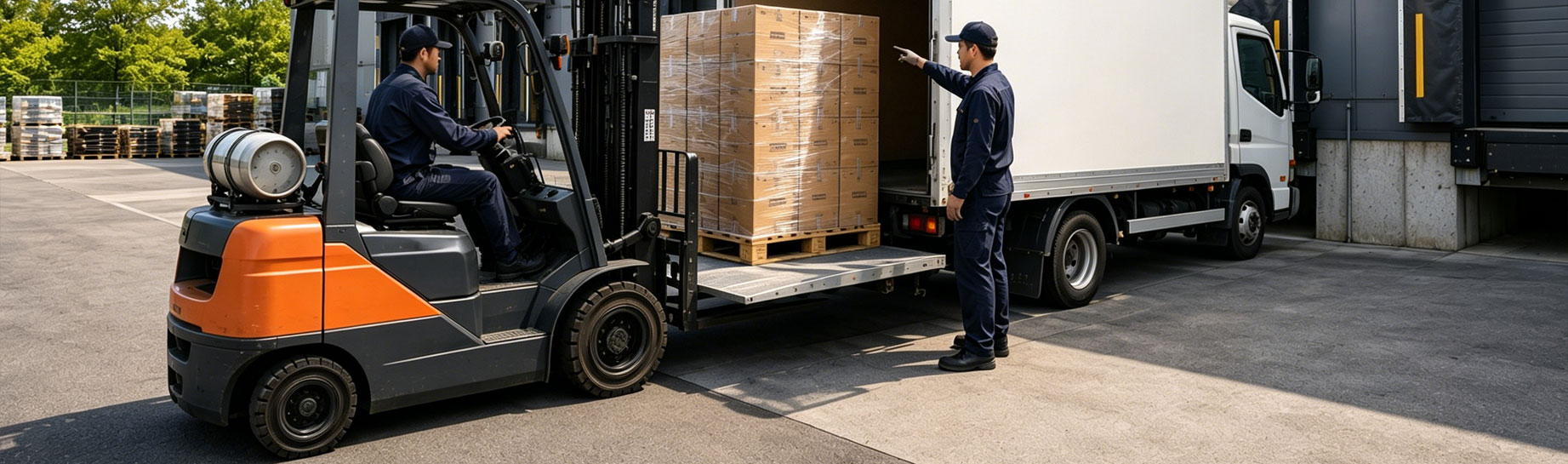
The Small Parts That Keep Furniture From Getting Damaged on the Lift
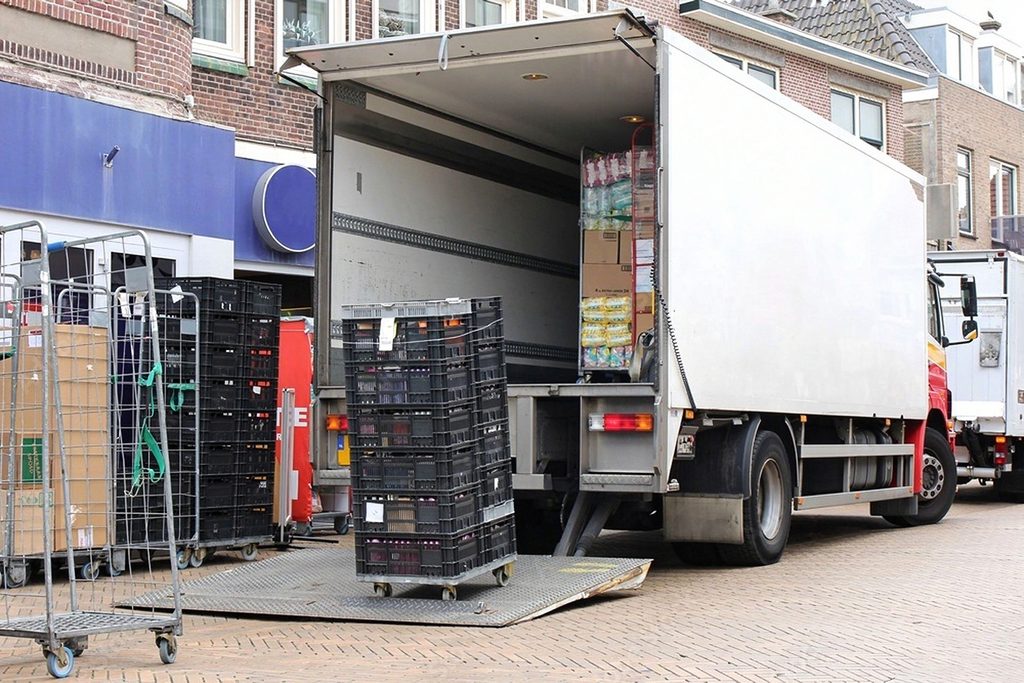
Most furniture and appliance damage doesn’t happen on the road. It happens in the thirty seconds it takes to move a sofa, a fridge, or a washing machine from the truck bed to the ground. A heavy, awkward item sits on a moving platform. Gravity and friction are the only things holding it in place. Tail lift furniture delivery is a different job from moving pallets or boxes. A platform that handles it well is built around specific details, not just raw lifting capacity.
Drivers who deliver furniture and appliances every day will tell you the same thing. The equipment rarely fails in dramatic ways. It fails in small ones — a scratch, a dent, a wheel that rolls an inch too far. This article looks at the platform parts that quietly prevent those small failures. Each section covers one detail that shows up again and again in real tail lift furniture delivery work. The cargo might be a single sofa going to a third-floor walk-up. It might be a full appliance set going into a new kitchen. Either way, the same details decide whether it arrives intact.
Why Tail Lift Furniture Delivery Needs Extra Care
A standard pallet is low, square, and stays where it’s put. Furniture and large appliances rarely behave that way. That’s exactly why tail lift for appliance delivery work gets treated differently from general freight in route planning and vehicle spec sheets.
A few things make this category of cargo harder to handle than ordinary boxed freight:
- High center of gravity — wardrobes, upright fridges, and tall cabinets are more likely to tip or rock during lifting
- Caster wheels — washing machines, dryers, and rolling furniture pieces can move on their own the moment the platform tilts
- Finished, visible surfaces — a scratch or dent on a sofa arm or appliance panel is a failed delivery, even if the item still works
- Irregular shapes — mattress sets, dining tables, and sectional sofas don’t sit flat or centered like boxed freight
- Single-item deliveries — there’s often nothing strapping the item down once it’s on the platform
- Limited handling room — furniture is frequently too large for one person to reposition quickly if it shifts
A bigger motor won’t fix any of these problems. Neither will a higher weight rating on its own. The fix is in the details built into the platform itself — the parts that touch the load directly. That’s the gap between a platform simply rated for the weight and one genuinely suited to daily tail lift furniture delivery work.
Roll Stops: Stopping Furniture From Sliding Off the Lift
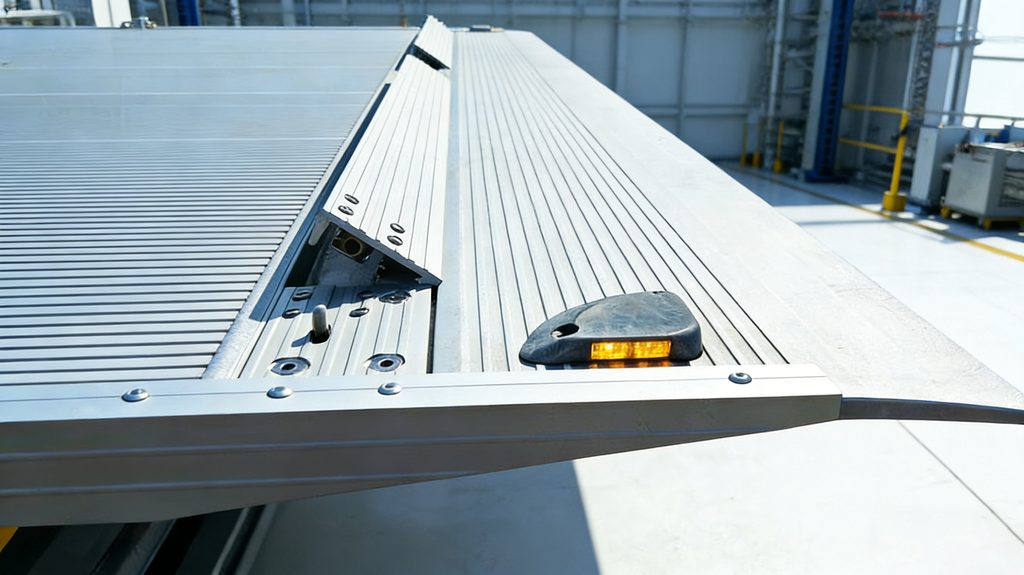
Picture a washing machine starting to roll toward the edge of a platform mid-lift. Anyone who has seen it happen will tell you it’s an unsettling moment. Tail lift roll stops exist specifically to prevent that.
A roll stop is a raised edge or folding barrier built into the platform’s outer rim. It sits flush with the deck during loading. Once the platform starts to move, it blocks the path of any wheeled or rolling item. The function is simple. The consequences of skipping it are not. Here’s how the failure usually unfolds without one:
- The platform begins to rise or tilt slightly as it lifts off the ground
- A wheeled appliance or rolling cart starts to drift toward the lowest point of the tilt
- Without a barrier at the edge, momentum carries the item past the platform’s rim
- The item falls, and anyone standing nearby is at risk of being struck
Roll stops don’t just protect the cargo. They protect the person operating the lift, who is usually standing on the same platform as the load. Experienced fleet buyers treat tail lift roll stops as a baseline requirement, not an optional extra. That’s especially true on routes that regularly involve appliances, rolling carts, or dollies. A platform without them can still lift the same weight. It just does so with no margin for a wheel finding the wrong angle.
Industry practice in furniture and appliance logistics generally treats roll-off protection as a baseline requirement for any platform handling wheeled loads — not an upgrade reserved for heavier-duty models.
Roll stops earn their keep on the way down as much as the way up. Loading is usually done carefully, with the item positioned on purpose. Unloading, especially late in a shift, is where fatigue works against careful positioning. That’s exactly when a barrier at the edge matters most.
Grip That Works: Serrated Platforms for Furniture Delivery
A flat metal platform sounds simple enough — until it rains. Or someone tracks oil onto it. Or a delivery happens at six in the morning with frost on the ground. A serrated platform tail lift design addresses exactly this problem.
The serrated pattern — small raised ridges cut or pressed into the surface — does two jobs at once:
- Increases friction under the cargo itself, so a heavy item doesn’t creep or shift as the platform angles slightly
- Gives the operator’s boots something to grip, which matters more than it sounds when someone is holding one end of a dresser on a moving platform
- Keeps working when wet, unlike a smooth surface that loses most of its grip the moment it’s damp
A smooth platform can look identical to a serrated one in a photo. The difference shows up the first time conditions turn wet or greasy. This detail is easy to overlook when comparing a tail lift on paper. It rarely appears as a headline specification, but it shows up constantly in daily use.
A well-built serrated platform tail lift also holds its grip longer than a coated or painted surface. The texture is worked into the metal, not sitting on top of it as a layer that can wear away. For fleets running the same routes hundreds of times a year, that difference adds up.
Steady Lifting: How Hydraulic Balance Protects Furniture
Every tail lift uses hydraulic cylinders to raise and lower the platform. Not every setup lifts the same way. A hydraulic tail lift furniture application benefits specifically from a balanced, multi-point lifting structure. Uneven lifting translates directly into cargo movement.
Here’s why balance matters more with furniture than with boxed freight:
- A platform lifted unevenly on one side will tilt, even slightly, during the motion
- A rigid, low-profile pallet barely notices that tilt
- A tall wardrobe or a loosely packed mattress set does notice — it shifts, leans, or knocks into whatever sits nearby
- Small shifts over dozens of deliveries a week add up to scuffed corners and loosened joints
- Over months of use, uneven lifting also wears the platform’s own mechanical parts unevenly
A platform with multiple hydraulic cylinders working together spreads the load more evenly than a single central lift point. In a well-built hydraulic tail lift furniture setup, that even distribution keeps the platform level through the full range of motion — not just at the top and bottom.
The practical result is less side-to-side motion during the lift. For furniture and appliances, that’s often the difference between an item arriving intact and one that arrives with a story attached. It’s a detail nobody notices when it’s working — and everybody notices when it isn’t.
Aluminum or Steel: Choosing a Platform for Furniture Delivery
This is usually the first real decision a buyer faces. It deserves its own section because it’s a trade-off, not a simple upgrade.
An aluminum tail lift platform is typically built around anodized aluminum, a treated surface that resists corrosion. It holds up well against repeated exposure to weather. For fleets running daily routes in wet or coastal climates, that matters. A platform free of rust and pitting keeps its serrated grip and roll-stop mechanisms working properly for longer. An aluminum tail lift platform is also lighter overall, which can mean marginally better fuel efficiency and easier handling for the vehicle.
A steel platform tail lift trades some of that weight advantage for raw strength. Steel generally offers a higher strength-to-thickness ratio. That matters most on the heavier end of the furniture category — commercial refrigeration units, stacked washer-dryer sets, or oversized sectional furniture that concentrates weight in a small footprint.
A rough way to think about the choice:
- Choose an aluminum tail lift platform for high-frequency routes, wet or corrosive climates, and standard household loads
- Choose a steel platform tail lift for heavier, bulkier cargo, or operations where durability outweighs weight savings
- Weigh route conditions as much as cargo weight — a lighter platform on a salt-heavy coastal route may not outlast a heavier one
Neither material is universally better. The right one depends on what’s actually going on the platform, day after day.
Load Capacity: Sizing a Tail Lift for Furniture Delivery
Tail lift load capacity is the number most buyers look at first, and understandably so. It’s also the number most often misjudged, in both directions.
A few reference points help put common furniture and appliance weights into perspective:
- A three-seat sofa typically weighs 40–90 kg
- A standard upright refrigerator weighs roughly 60–120 kg
- A washing machine or dryer generally falls between 60–100 kg
- A queen or king mattress set can weigh 50–80 kg
- A dining table with chairs, moved together, can easily exceed 100 kg
- A stacked washer-dryer unit or large sectional sofa can push past 150 kg as a single load
The mistake isn’t usually choosing a platform too weak for a single item. It’s underestimating what a combined load looks like. Several pieces might go out on the same stop. A crew might stack more onto the platform than planned to save a trip. A platform rated close to the expected maximum, with no buffer, is the equipment equivalent of driving on a near-empty tank — fine until the day it isn’t.
A practical rule fleet operators use when thinking through tail lift load capacity:
- Estimate the heaviest realistic combined load for a single lift, not just the heaviest item
- Add a working buffer rather than matching rated capacity exactly to the expected load
- Choose a platform rated comfortably above that combined figure
- Revisit the estimate as delivery patterns change over time
Getting tail lift load capacity right at the start avoids two costly mistakes later. One is overspending on capacity that never gets used. The other is underspending and finding the gap on a delivery that matters.
Folding Tail Lift Design for Tight Delivery Spaces
Not every stop on a tail lift furniture delivery route ends at a loading dock. Many drops happen at residential addresses, small retail storefronts, or apartment complexes with tight parking. These places have no dock, no forklift, and little room to maneuver. This is where a folding tail lift earns its keep.
A folding platform tucks up and out of the way when it’s not in use, rather than hanging fixed at the rear of the vehicle. The practical benefits show up in ordinary, unglamorous moments:
- The driver can back into a tight driveway without the platform scraping the ground or a curb
- The rear doors of the vehicle can still open and close normally between stops
- Loading at the next stop isn’t slowed down by a platform that’s always in the way
- Parking in a narrow street or alley becomes less of a daily negotiation
For routes built around household deliveries, a folding tail lift often matters more day-to-day than any single spec on the data sheet. It shapes almost every stop on a residential route, even though it rarely shows up in a side-by-side comparison of lifting capacity.
One Person, One Tail Lift: Solo Furniture Delivery
Furniture and appliance delivery is expensive to staff two people to a truck. Plenty of operations run lean by necessity. A tail lift designed for one person tail lift operation makes that arrangement realistic instead of risky.
Solo operation isn’t enabled by a single feature. It’s the combination of everything already covered in this article:
- Roll stops mean a rolling appliance won’t need a second person physically blocking it by hand
- A serrated, grippy surface means the driver isn’t relying on a helper for extra stability underfoot
- Balanced hydraulic lifting means less unexpected shifting for a second set of hands to correct
- Simple, accessible controls mean the platform can be raised and lowered without someone else managing the switch
Together, these details shift the job from “needs two people to be safe” to “one person, operating carefully, can manage it.” That difference matters directly to labor costs. A second crew member on every truck adds up fast across a full week of deliveries. It also matters to safety in a less obvious way. Fewer people standing near a moving platform generally means fewer chances for something to go wrong — not more risk concentrated on one person.
One person tail lift operation doesn’t mean cutting corners on a delivery that genuinely needs two sets of hands, like an oversized appliance going up a flight of stairs. It means the platform itself isn’t the reason a second person becomes necessary for an otherwise standard drop-off.
Small Parts, Safer Tail Lift Furniture Delivery
Roll stops, surface grip, balanced hydraulics, platform material, load capacity, folding design, solo-operation friendliness — none of these is dramatic on its own. On a spec sheet, it’s easy to treat them as minor add-ons next to the headline number for maximum lifting weight.
In practice, they’re the opposite of minor. They’re the difference between a fleet that delivers furniture and appliances without complaints and one that spends its afternoons on damage claims and injury reports. Good tail lift furniture delivery equipment isn’t defined by one big number. It’s defined by whether all of these small parts were actually thought through — together, for the way furniture and appliances actually mov
Trusted by Fleet Operators Across 60+ Countries
Stop Losing Time at the Loading Dock.
Get a Custom-Matched Tail Lift Quote in 24 Hours.
60
Countries Served
24h
Quote Turnaround
99.9
Field Uptime
5.0
Customer Rating
No Obligation
CE & UKCA Certified
Standard & Custom Builds
Worldwide Shipping