Having trouble submitting? Email us directly at nicole@beauway.com and we'll get back to you within 24 hours.











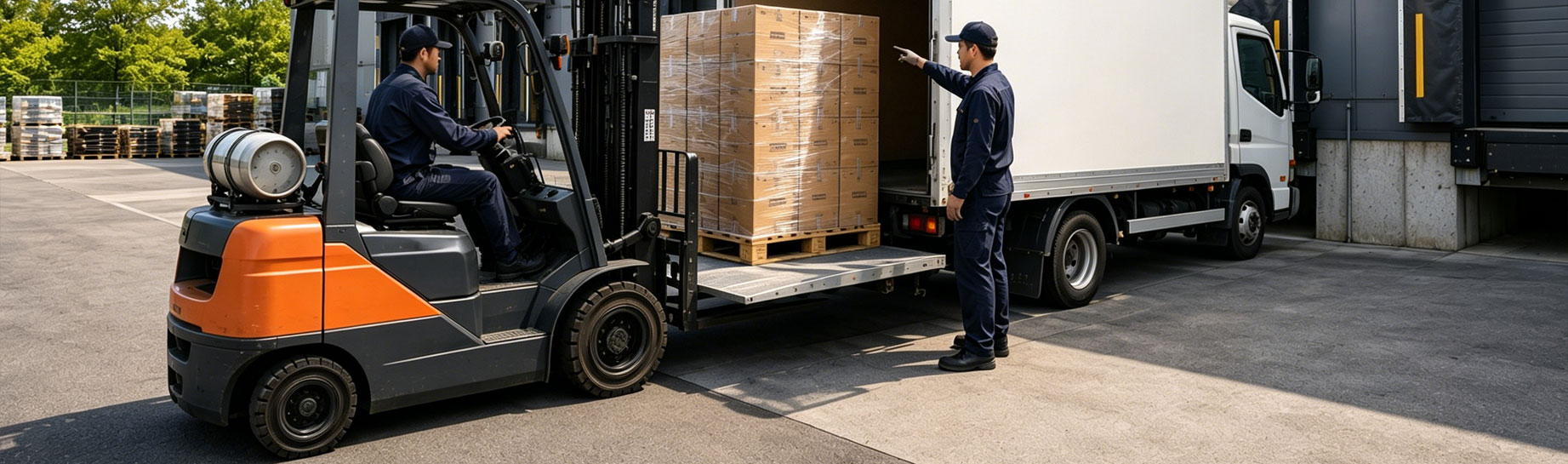
Dock Leveler Pit Drainage: What Standing Water Slowly Does to the Frame and Hinges
Dock leveler pit drainage is the least glamorous part of a loading dock and one of the most expensive to ignore. The pit sits below floor level, out of sight, and collects whatever rain, meltwater, wash-down runoff and grit the dock lets in. When that water has nowhere to go, it works on the steel for months before anyone notices a symptom.
Quick answer: standing water in a dock leveler pit corrodes the frame and curb angles, seizes hinge pins and lip mechanisms, and puts moisture next to the hydraulic components. The fix has three parts: a floor drain at the lowest point, a pit floor that slopes toward it, and an inspection routine that keeps the drain open.
This guide covers where the water comes from, what it damages, how to design a pit that drains, and how to inspect one safely. It applies to any pit style dock leveler, whether mechanical, air-powered or hydraulic. The examples lean toward hydraulic units because their power unit sits inside the pit. Where a figure comes from outside Beauway, the source is named. Treat it as a companion to your regular dock leveler maintenance plan, not a replacement for your manufacturer’s manual.
Why Dock Leveler Pit Drainage Matters: How Water Gets In
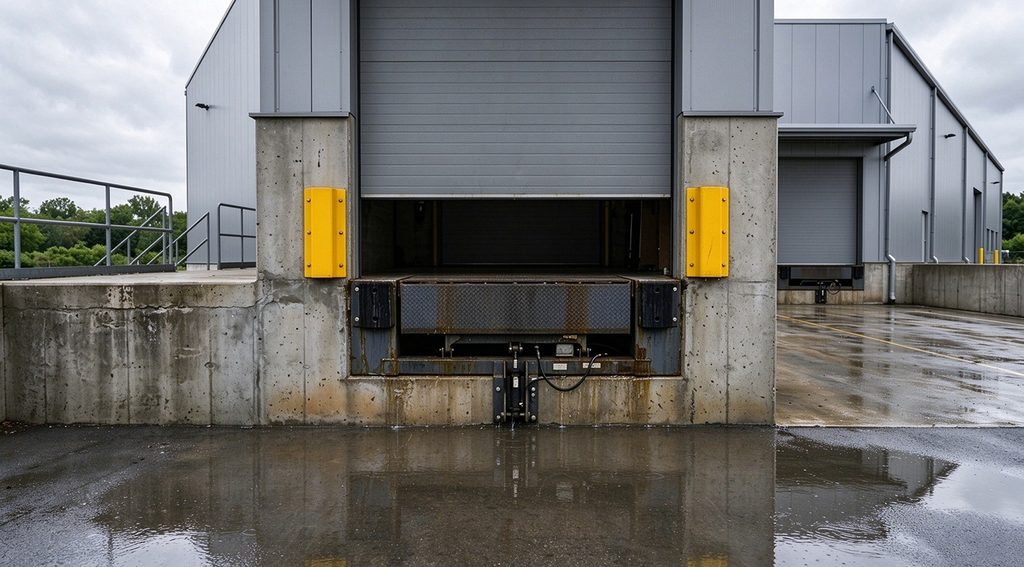
A leveler pit is a concrete box below the dock floor, and it is the lowest point on the dock by design. Anything that runs across the apron or through a gap at the door tends to end up there, which makes dock leveler pit drainage a design question, not an afterthought. This is true of every pit style dock leveler, regardless of brand or power type. Good dock leveler pit drainage is what decides whether that water leaves or stays.
Common Water Sources
- Rain and blown water that reaches the apron and travels under or around the door.
- Meltwater and slush carried in on truck tires and forklift wheels during winter.
- Wash-down water in food, beverage and pharmaceutical facilities.
- Gaps at the frame perimeter, where surface water finds a path between the leveler frame and the concrete.
Some drainage specialists also recommend a trench drain just inside the door, beneath where the leveler pivots, to catch water that bypasses the leveler seal. That is a sensible second line of defense, but it does not replace a working drain inside the dock leveler pit itself.
Why the Pit Holds Water
Two things make a pit a moisture trap. First, it is a low point with steel on every side. Second, it collects debris: pallet splinters, shrink wrap, dust and gravel from the apron. Debris slows drainage, holds water against the steel and blocks the drain outlet.
Design guidance is consistent on this point. A pit style dock leveler needs a formed concrete pit with proper reinforcement and drainage, and the pit needs a drain or sump to handle rainwater infiltration. One construction guide calls a clogged pit drain among the most common maintenance headaches at loading docks, and recommends a drain design that is easy to clean. Facility guidance for food plants adds another reason to keep the pit dry: standing water and organic debris can attract rodents and insects.
Most of these problems are slow. Water that sits for a week does little visible harm. Water that sits, dries, and returns every rainy season is what removes steel. Weak dock leveler pit drainage turns a one-time puddle into a recurring one inside the dock leveler pit, and the rest of this guide is about stopping that cycle.
How Poor Dock Leveler Pit Drainage Damages the Frame, Hinges and Hydraulics
Water rarely causes a sudden failure, which is why it is so often left out of dock leveler maintenance schedules. It causes gradual dock leveler problems that look unrelated at first: a lip that hesitates, a deck that sits slightly off level, a power unit that fails early. The damage falls into four areas.
Frame and Curb Angles
Show Image
Corrosion needs moisture. That is the simple rule behind every rust problem in a dock leveler pit. A pit that drains and dries between uses gives the steel a chance to stay dry. A pit that stays damp does not.
Road salt makes the situation worse. According to corrosion specialists, de-icing chlorides are hygroscopic, meaning they pull moisture from the air. Sodium chloride becomes continuously corrosive above about 10°C (50°F) and 76 percent relative humidity, while calcium and magnesium chlorides are corrosive at about 0°C (32°F) and 45 to 50 percent humidity. Where roads are salted, meltwater from trucks and aprons can carry chlorides into the pit, and a damp pit keeps them active.
The dock leveler frame is the main casualty. Factory paint protects it: Manufacturer guide specifications, for example, call for a direct-to-metal paint with built-in rust inhibitors. But paint does not survive constant immersion, chipping from debris, or repeated wet and dry cycles at weld seams and corners. Once the coating breaks, rust spreads under it. A corroded dock leveler frame loses stiffness where the deck flexes, which is why frame rust is never only cosmetic.
The embedded curb angles matter just as much. They anchor the leveler to the concrete. One installation guide advises inspecting them for rusted-out sections and loose anchors before installing a replacement leveler, because a leveler is only as strong as the concrete and steel holding it.
Hinge Pins and the Lip Mechanism
Hinge pins are steel-on-steel wear points, and damp conditions plus grit make them wear faster. Rust on a hinge pin does not usually stop the lip outright. It makes the lip slow to extend, slow to retract, or noisy in between.
A spring inspection guide from an industrial supplier gives a useful test: the lip should extend fully and retract cleanly, with no hesitation or grinding, and the hinge points deserve a long look. Regular dock leveler lubrication is part of any dock leveler maintenance plan and helps, but follow the manufacturer’s lubricant and interval. Over-greasing attracts grit, which grinds the pin and defeats the purpose. Good dock leveler lubrication protects a hinge that is already dry; it cannot rescue one that sits in water.
Hydraulic Components and Fluid
On a hydraulic unit, the power unit and cylinders are mounted in the pit. Water can corrode fittings and cylinder rods from the outside, and it can enter the fluid through worn seals.
Water in hydraulic oil is a well-studied problem. Lubrication specialists explain that surface corrosion is directly linked to free water, and that highly refined mineral oils with few additives hold only about 100 parts per million of dissolved water at 70°F before becoming saturated. Past that point the fluid turns cloudy. The same source cites a classic bearing study in which fatigue life increased by a factor of five when dissolved water dropped from 400 ppm to 25 ppm. That study concerned rolling bearings, not dock levelers, but it shows how sensitive metal surfaces are to even small amounts of water.
Beauway’s installation guidance says the same thing in dock terms: a clean, free-draining pit floor extends maintenance intervals and protects the power unit from moisture damage.
Winter Freezing
Cold adds a mechanical risk on top of corrosion. Standing water that freezes beneath the platform can jam the mechanism and, in a hydraulic unit, damage lines. Dock service companies see the same pattern: water gets into the mechanism, freezes, and the leveler will not extend or retract properly. In cold-climate warehouses, drainage has to be designed with freezing in mind, not just rainfall.
All of this shortens dock leveler life expectancy. A leveler that would otherwise serve a decade or more can need frame repairs or replacement years early if the pit stays wet. Anyone who plans around dock leveler life expectancy should count the condition of the dock leveler pit as a real input, alongside duty cycle and capacity.
How to Design and Maintain Dock Leveler Pit Drainage
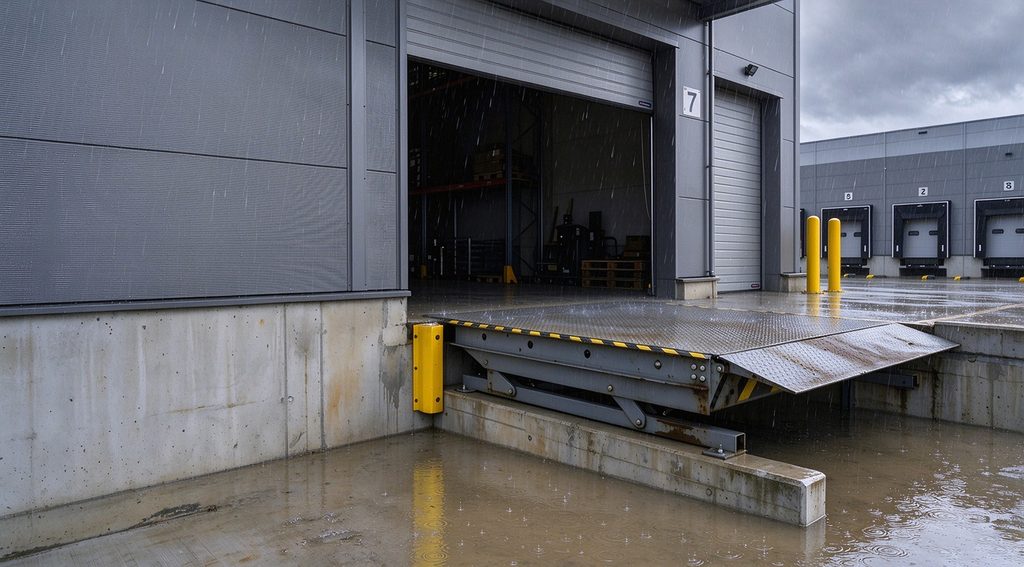
Good drainage starts before the leveler arrives. Dock leveler preventive maintenance cannot fix a pit that was built without drainage, and retrofitting a drain into a finished pit is disruptive and expensive, as Beauway’s earlier installation guide notes: without drainage provision, the first heavy rain fills the pit.
Dock Leveler Pit Drainage Design Requirements for New Pits
Always follow the pit detail drawing for your specific leveler model. For dock leveler pit drainage, these are the features to confirm within that drawing:
- A floor drain at the lowest point of the pit, connected to the facility drainage system.
- A sloped dock leveler pit floor. Some manufacturer pit details and several installation guides describe a pitch of about half an inch from rear to front. Confirm the exact figure with your manufacturer, because the leveler must be designed to accept that slope.
- Waterproof coating on all internal pit surfaces before the leveler is installed.
- Sealant around the frame perimeter after the frame is set, to keep surface water out.
- Electrical conduit entering through the rear wall, not the floor, to reduce water damage and crushing risk.
- A drain outlet that does not concentrate debris. A drain that clogs every month is worse than no drain, because people stop trusting it.
Beauway supplies installation drawing packages in DWG and PDF format with metric dimensions, so contractors can build the drainage details into the pit before the leveler ships. The power unit position and the pit floor level should be confirmed against the drawing before concrete is poured. A dock leveler pit floor poured flat, or sloped the wrong way, cannot be corrected by the leveler installer later.
A Safe Dock Leveler Pit Drainage Inspection Routine
A dock leveler inspection checklist for the pit takes less than an hour per position. Do it in this order, and put safety first.
- Secure the leveler. Lock out power and install the maintenance strut. One major manufacturer notes that a leveler weighs more than 1,000 pounds and can fall about three feet if it is not serviced properly, so never work under a leveler that is relying on its normal mechanism alone.
- Barricade the area. Place cones or tape at the dock face and on the driveway side so no truck backs into the bay while the pit is open.
- Clear the debris. Remove loose material by hand or with a shop vacuum. Look at what you remove: rust flakes, packing material and gravel each tell you something.
- Test the drain. Pour a bucket of water toward the drain and watch it. It should clear steadily. If it backs up, clear the drain line before doing anything else.
- Inspect the steel. Check the frame, curb angles and weld seams for scaling, blistered paint and pitting. Mark suspect spots with a paint pen so you can compare them at the next visit.
- Check hinges and lip. Cycle the lip through its full travel. Listen for grinding and watch for hesitation.
- Inspect the hydraulic unit. Look for leaks at fittings, damp residue on the power unit, and cloudy or milky oil in the reservoir.
- Touch up and record. Repair coating damage, lubricate according to the manual, and log what you found. A written history shows whether corrosion is progressing.
Write the results on the same dock leveler inspection checklist you use for the rest of your dock leveler maintenance routine, so pit condition is tracked together with deck, lip and hydraulic checks. Consistent dock leveler maintenance is what keeps a pit inspection from becoming a one-off event.
How Often to Inspect
Manufacturer guidance states that leveler service is typically needed semi-annually or quarterly. A construction guide lists clearing pit drains seasonally as part of a dock maintenance plan. Beauway’s recommendation, based on that guidance, is a full pit inspection at least twice a year, once before winter and once in spring, with extra checks after storms, wash-down cycles or any period of heavy salt use.
Facilities with heavy traffic, corrosive atmospheres or coastal exposure should shorten the interval of their dock leveler maintenance. Consistent dock leveler preventive maintenance costs far less than replacing a corroded frame, and it can be scheduled around dock traffic instead of forced by a breakdown. Effective dock leveler preventive maintenance for a hydraulic unit always includes a fluid condition check.
Warning Signs, Standards and When to Call for Help
Signs Your Dock Leveler Pit Drainage Is Failing
Use this list for dock leveler troubleshooting before a small issue becomes a repair bill. Each item is one of the common dock leveler problems that trace back to a wet pit:
- Water marks or a tide line on the pit walls.
- Rust-colored streaks below the hinge points.
- A lip that hesitates, drags or makes a grinding noise.
- A deck that no longer sits flush with the dock floor.
- A drain that gurgles, backs up or drains slowly after rain.
- Cloudy or milky hydraulic oil.
- Musty odor or pest activity near the pit in food facilities.
Any two of these dock leveler problems together deserve a technician visit. Do not wait for the leveler to stop working, because a corroded hinge or frame can fail under load. Good dock leveler troubleshooting starts with the pit, because the pit is where the cause usually is.
What the Standards Say
Two standards frame leveler safety. In North America, ANSI MH30.1 defines performance and testing requirements for dock leveling devices and promotes understanding of the responsibilities of manufacturers, installers, owners and users. In Europe, EN 1398 specifies safety requirements for the design, construction, installation, maintenance and testing of dock levellers.
ANSI’s summary of MH30.1 covers “design, use, and maintenance of dock leveling devices.”
Neither standard replaces your manufacturer’s pit drawing and manual, which set the practical drainage and maintenance details for a specific model. The 2015 edition of MH30.1 also describes itself as voluntary and advisory in its foreword. A documented pit inspection is good evidence that you are maintaining the equipment responsibly.
For British and European teams, the same routine applies to dock leveller maintenance under EN 1398: the drainage, frame and hinge checks are identical, and a written dock leveller maintenance record is easy to audit. Every dock leveller pit should be inspected at the same interval as the rest of the equipment.
Frequently Asked Questions
How often should a dock leveler pit be cleaned? At least twice a year, before winter and in spring, and after any event that floods the pit. Heavy-duty or coastal sites should clean more often.
Can I retrofit a drain into an existing pit? Often yes, but it means cutting concrete and coordinating with the manufacturer. It is far cheaper to include a drain when the pit is first formed.
Is a little water in the pit acceptable? A brief puddle after a storm that clears within a day is not alarming. Water that remains for days, or returns every rain, needs a drainage fix.
When should I call a technician? Call one when you find corroded frame welds, a leaking hydraulic unit, milky oil, or a lip that no longer moves cleanly.
Key Takeaways for Dock Leveler Pit Drainage
- Drain, slope and seal every pit before the leveler is installed.
- Inspect twice a year, and after storms or heavy salt use.
- Use the maintenance strut for any work under the deck.
- Watch the hinges and the oil, because they show water damage first.
- Keep records, so corrosion trends are visible early.
If you are planning a new dock or replacing an aging leveler, send your pit drawings to Beauway before concrete is poured. Getting dock leveler pit drainage right at the design stage is the cheapest fix available.
Trusted by Fleet Operators Across 60+ Countries
Stop Losing Time at the Loading Dock.
Get a Custom-Matched Tail Lift Quote in 24 Hours.
60
Countries Served
24h
Quote Turnaround
99.9
Field Uptime
5.0
Customer Rating
No Obligation
CE & UKCA Certified
Standard & Custom Builds
Worldwide Shipping