Having trouble submitting? Email us directly at nicole@beauway.com and we'll get back to you within 24 hours.











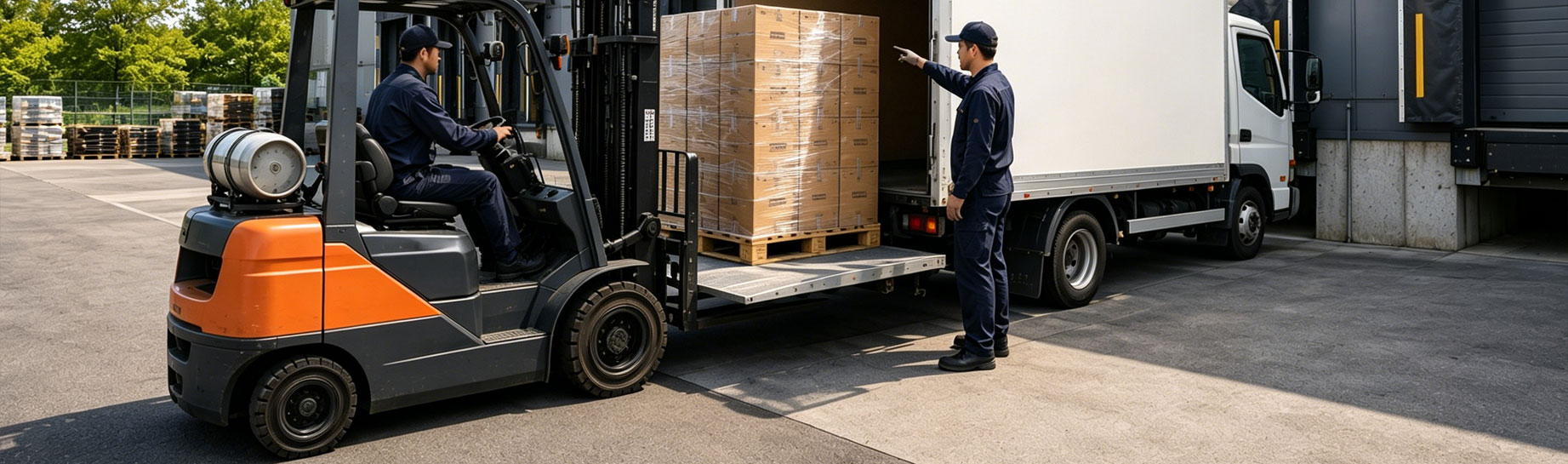
Choosing the Right Truck Liftgate: Does a Column Tail Lift Fit Your Fleet?
Ask five fleet managers about a column tail lift. At least three will say the same thing: “it’s the affordable one.” That reputation isn’t wrong, but it’s incomplete. Price is one part of the decision, not the whole of it. We’ve spent years working through truck liftgate specifications with fleet operators across very different industries. One pattern keeps repeating: satisfied fleets chose this configuration because it matched how they actually load and unload. They didn’t just pick the lowest line on a quote. Disappointed fleets usually skipped that step and worked backward from price alone.
This isn’t a spec sheet. It doesn’t rank tail lift types against each other either. It asks one narrower, practical question: does your fleet’s daily reality match what a column tail lift does? That’s different from “what’s the cheapest option” or “what looks strongest on paper.” It’s the question that actually determines whether the investment pays off over the life of the vehicle.
How a Column Tail Lift Actually Works
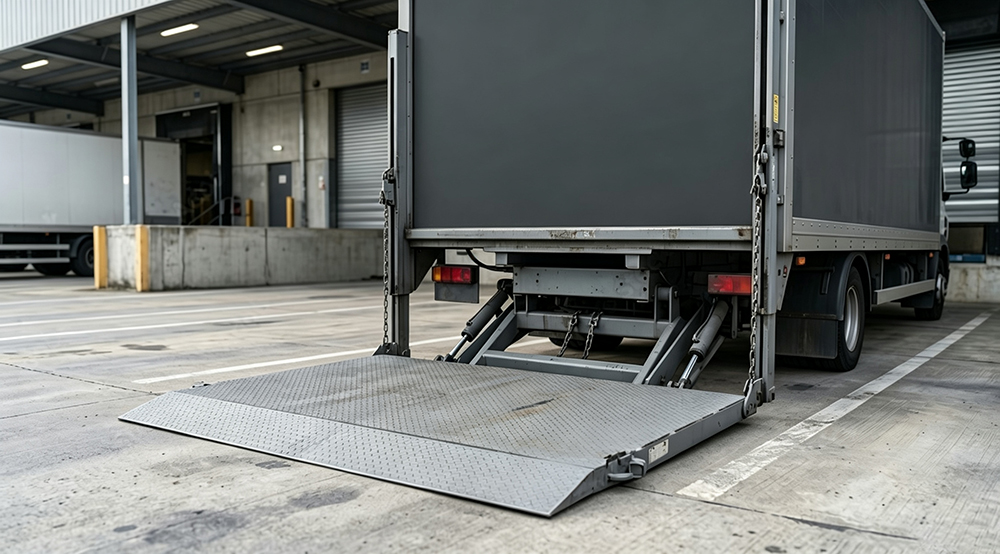
Strip away the branding, and a column tail lift is a straightforward mechanical idea that works well. It’s one of the simplest truck liftgate designs on the market. Two vertical columns mount to either side of the vehicle’s rear opening. Inside each column, a hydraulic cylinder drives a chain or cable system that pulls a slider up and down. The platform attaches to both sliders. Two sides guide it symmetrically, instead of a single arm swinging it outward. That symmetry gives this kind of platform its characteristic smoothness. Side-to-side sway stays minimal, and the ride feels stable even with an uneven load sitting off-center on the deck.
There’s a safety detail worth flagging here. It reveals how the whole system works, not just how it looks in a brochure. On a properly built unit, each slider carries its own load safety device. It’s typically a ratchet-style lock that jams the slider against the column if a chain ever breaks. We point this out to every fleet manager cross-shopping tail lift types. That’s a large part of why this design has stayed a trusted, long-running segment of the market. It hasn’t faded into a niche product line.
None of this tells you, on its own, whether a column tail lift suits your fleet. That depends on five practical factors:
- what you’re lifting
- how often and how precisely you need to lift it
- what vehicle body it’s going on
- where your drivers actually load and unload
- what your maintenance operation looks like day to day
Each one deserves an honest, specific look before you commit to a fleet-wide order.
Liftgate Load and Weight Profile
A column tail lift built to a proper commercial standard typically covers 500 kg to 2,000 kg. The lower end suits light parcel and retail work. The upper end handles heavier pallets, appliances, and industrial goods. Push past 2,000 kg, and you’re into custom engineering territory. That means reinforced platforms, heavier-duty cylinders, and mounting the supplier adjusts to your specific vehicle — not an off-the-shelf configuration.
That 500–2,000 kg band covers a large share of real-world freight — parcels, retail goods, restocking pallets, appliances, and general palletized cargo. None of that demands a fully custom heavy-duty build. If your fleet’s daily manifest sits comfortably within that range, a column tail lift does exactly the job it’s meant for. You won’t pay for capacity you’ll never use.
One planning habit worth adopting: size the lift to your heaviest recurring load, not your average one. A fleet that occasionally handles a 1,800 kg pallet needs to plan its spec around that occasion. Don’t plan around the 600 kg average that makes up the rest of the week’s stops. Underspecifying capacity is the single most common mistake we see in early-stage procurement conversations. It’s an easy one to avoid: audit your heaviest routine loads, not your typical ones, before you request a quote. If your operation regularly exceeds 2,000 kg per lift cycle, say so upfront. A reputable supplier will walk you through customization options rather than squeezing your load profile into a range that doesn’t fit.
Loading Frequency and Precision Needs
This is where a column tail lift earns its keep. The two columns drive the platform symmetrically, instead of swinging it outward on an arm. That means it can stop cleanly at intermediate heights — not just ground level and truck-bed level, but anywhere in between. That precision matters in specific use cases:
- loading livestock in multi-tier arrangements
- positioning vehicles on transporter decks
- servicing removal and furniture vans, where the platform needs to line up with a mezzanine shelf or a specific storage height — not just the deck of the truck
If none of that describes your operation, that multi-level precision is a nice-to-have, not a deciding factor. Maybe your loading pattern is simply ground to truck bed, every stop, all day long. In that scenario, the real value shifts elsewhere. Mechanical simplicity, a lower unit cost relative to more complex designs, and a long track record as a dependable truck liftgate. Logistics companies and rental fleets have leaned on it for decades of daily use.
As a rough guide, fleets running high-frequency, single-stop delivery routes don’t typically need multi-level stopping. Classic last-mile parcel work is the obvious example. Fleets running mixed cargo profiles, where pallets one day give way to staged, multi-height loads the next, get noticeably more value out of it. Know which category your routes fall into before you spec the lift. That saves you from paying for precision you’ll never use, or from choosing a mechanism that can’t keep up with what your routes demand.
Truck Liftgate and Body Compatibility
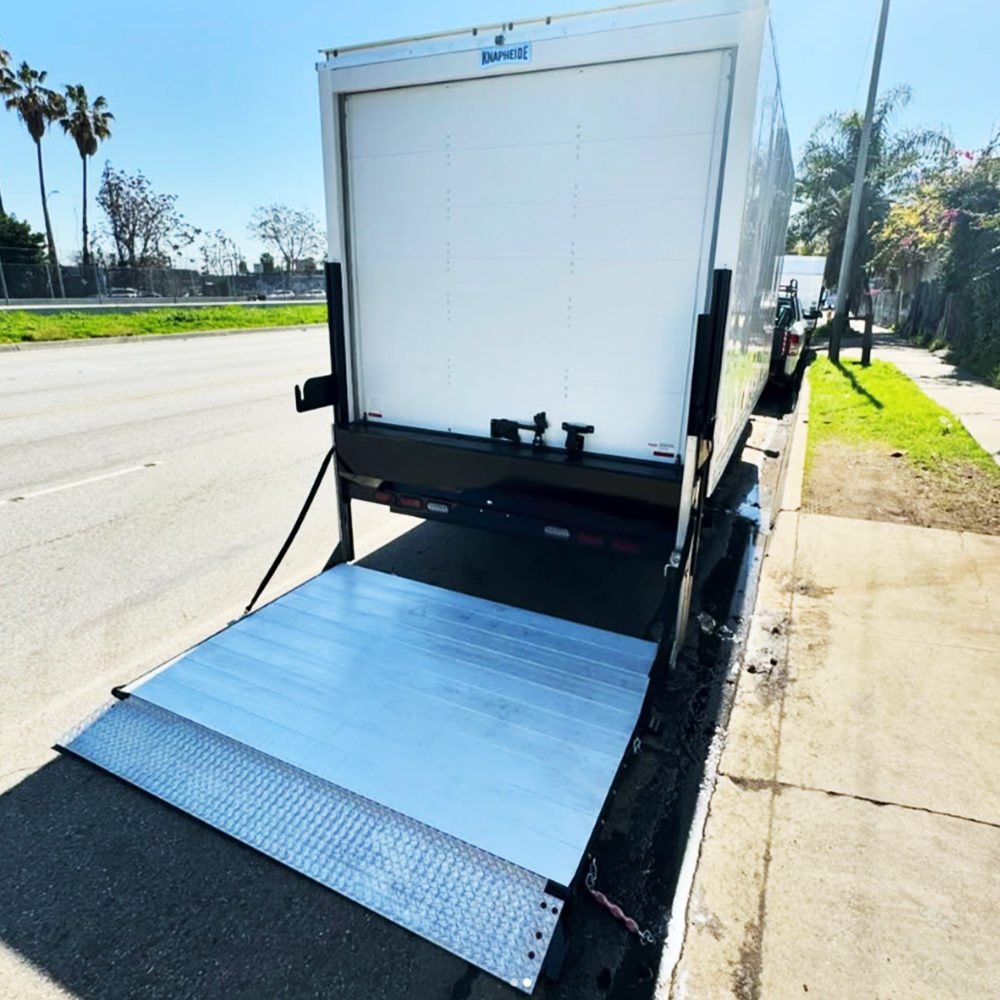
Fleets skip this part most often, and it causes the most installation headaches afterward. A column tail lift assumes a specific body type: a box body with a flat rear face. In practice, that closure needs to be a roller shutter door, or a door with hinges built for column mounting brackets. Standard hinged doors on many van and light truck configurations don’t line up cleanly with this setup. Forcing a fit anyway can compromise both the door seal and the mounting’s structural integrity over time. It’s a detail that trips up more first-time buyers than any other single spec on this list.
In practical terms: if your fleet runs box trucks or panel vans with a flat-backed body, a column tail lift fits naturally onto that platform. It needs no major modification. If your fleet runs curtainsiders, flatbeds, or custom body configurations without that flat rear structure, you’re looking at a different type of tail lift altogether. Or a body modification that adds cost and lead time you likely haven’t budgeted for.
This compatibility check belongs at the very start of the conversation with your supplier, not at the end of it. A liftgate that’s mechanically perfect for your load profile but mismatched to your body style is still the wrong choice for your fleet. That’s true no matter how attractive the price looks on paper.
Liftgate Operating Environment
Where your drivers actually load and unload matters just as much as what they’re loading. This configuration carries one well-known trade-off. At a fixed loading dock, the driver generally needs to lower the platform before the vehicle can reverse into position. It doesn’t fold flush against the body the way some other designs do. For fleets that load primarily at ground level, this simply isn’t a factor worth weighing. Think retail deliveries, residential drop-offs, construction sites without a fixed dock, and general route distribution. For fleets that route a significant share of volume through dock-to-dock transfers, it’s worth timing that extra step first. Run a short trial period before committing an entire fleet to the spec. A few extra seconds per stop compounds quickly across a full day’s schedule.
Climate and exposure matter too, though this applies broadly across nearly every truck liftgate, not just this one. Chains and slider mechanisms that run without adequate lubrication corrode more easily. This shows up most on coastal routes, in winter road-salt conditions, or in operations with frequent pressure-wash cycles. This isn’t a reason to avoid a column tail lift specifically. It’s a reason to build proper lubrication into your standing maintenance routine. Don’t treat it as an optional extra that crews skip when the schedule is tight.
Truck Liftgate Total Cost of Ownership
The upfront price advantage of this truck liftgate design — the column tail lift — is real. Fleets across the industry count on it. It’s a mechanically simpler build than a cantilever tail lift or a folding one, and that simplicity shows up directly in the purchase quote. The real question is what happens over the following five to ten years of daily use, not what the invoice says on day one.
Units in this category generally have fewer moving parts than more complex platform designs. Fewer moving parts tend to mean fewer things that can go wrong. But the parts they do have — chains, sliders, the load safety ratchet — need a disciplined lubrication and inspection schedule. That’s what gets them to their expected service life. That means using correctly specified chain lubricant, not general-purpose grease, which attracts dirt and accelerates wear. Apply it on a defined regular schedule, and check the safety lock mechanism and the electrical control components routinely.
The fleets that get the strongest return from a column tail lift tend to fall into one of two camps. The first has an in-house maintenance team that can absorb a straightforward, predictable service routine. The second has a reliable ongoing relationship with an experienced tail lift manufacturer who can handle maintenance on contract or supply parts quickly. Fleets without either arrangement usually run the lift hard and only address it once something breaks. They typically see the upfront savings erode faster than the purchase price suggested — usually through unplanned downtime, not the repair bill itself.
A Quick Self-Check
Before you finalize a spec with any supplier, run your fleet honestly through these questions:
- Does your heaviest recurring load per lift cycle sit comfortably within 500–2,000 kg, or does it consistently push beyond it into custom territory?
- Do you regularly need the platform to stop at more than two fixed heights, not just ground and deck level?
- Does your vehicle have a box body with a flat rear that closes with a roller shutter or a compatible hinged door?
- Do you do most of your loading at ground level rather than at a fixed dock?
- Do you have the maintenance capacity — in-house or contracted — to keep up with a chain-based lubrication schedule?
If most of your answers land on yes, a column tail lift is very likely a sound match for your fleet. If two or more answers land on no — particularly around load weight or body compatibility — have a direct conversation about your options first. You’ll be living with this spec for years.
Common Questions
Which fleets should choose a column tail lift as their truck liftgate? Fleets whose heaviest recurring loads sit within 500–2,000 kg, and whose vehicles run box bodies with a flat rear. Add ground-level loading and the maintenance capacity for a basic chain lubrication schedule, and you have a good match. Run through the self-check above to see where your fleet lands.
Is a column tail lift the cheapest truck liftgate for my fleet? Usually the lowest upfront cost, yes. But only fleets matching the load, body, and maintenance profile above keep that advantage over the vehicle’s lifetime. Otherwise downtime eats it away.
What if my fleet’s loads or body type don’t match a column tail lift? That’s useful to know before you order, not after. Fleets running curtainsiders, flatbeds, or loads consistently above 2,000 kg usually do better with a different tail lift configuration or a custom build.
Closing Thoughts
A column tail lift isn’t the right truck liftgate for every fleet, and it never claims to be. It suits a specific, common operational profile: loads in the 500–2,000 kg range, box-bodied vehicles with a flat rear, and mostly ground-level loading. Add a maintenance program that keeps a chain-driven mechanism properly lubricated over the long run. Fleets matching that profile — parcel and retail distribution, rental operations, general regional logistics — have relied on this category for decades. It does that specific job reliably, at a meaningfully lower entry cost than more complex tail lift types.
If your operation genuinely fits that pattern, this is a proven, low-risk choice with a long service history behind it. If it doesn’t — say your typical loads consistently exceed 2,000 kg, your body style doesn’t suit a flat rear closure, or your routes depend heavily on dock-level loading — that’s useful to know upfront. Better before you mount a lift on the truck than after. We work directly with fleet operators to match load profiles, vehicle bodies, and daily duty cycles to the right liftgate configuration. That includes fully customized builds above the standard 2,000 kg range. Reach out with your specifications. We’ll help you confirm whether a column tail lift is genuinely the right fit for your fleet, or point you toward the configuration that is.
Trusted by Fleet Operators Across 60+ Countries
Stop Losing Time at the Loading Dock.
Get a Custom-Matched Tail Lift Quote in 24 Hours.
60
Countries Served
24h
Quote Turnaround
99.9
Field Uptime
5.0
Customer Rating
No Obligation
CE & UKCA Certified
Standard & Custom Builds
Worldwide Shipping