Having trouble submitting? Email us directly at nicole@beauway.com and we'll get back to you within 24 hours.











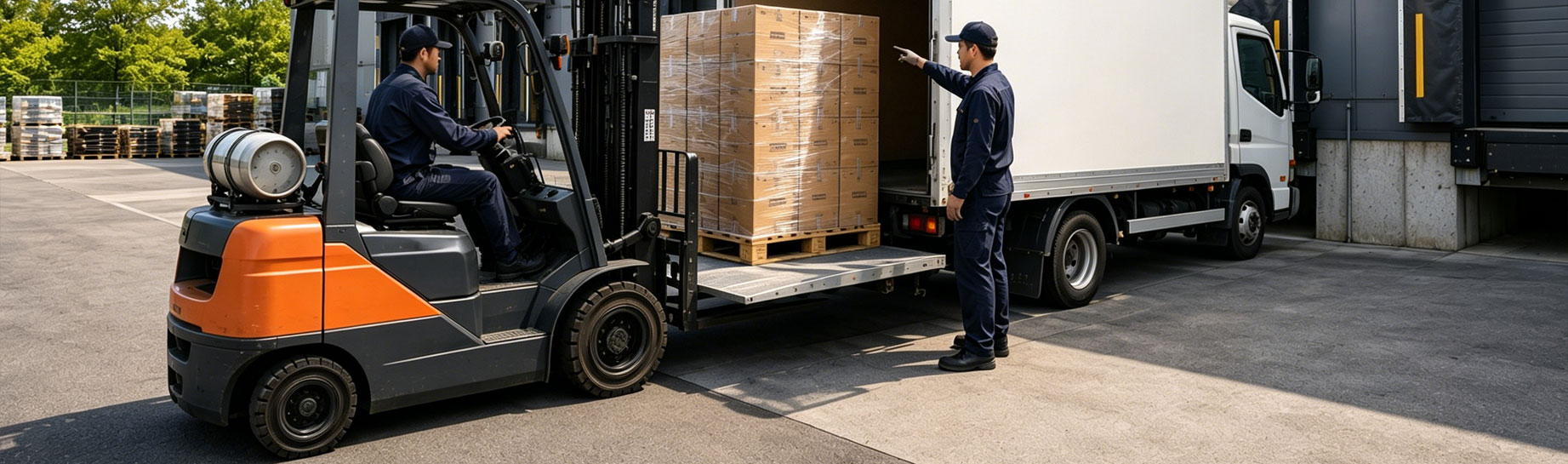
Blind-Side Loading Accidents: Causes and How Tail Lifts Prevent Them
Blind-Side Loading Accidents: Causes and How Tail Lifts Prevent Them
Blind-side loading remains one of the most persistent causes of yard and dock injuries in road freight. A driver or loader who cannot see the space behind or beside a vehicle will misjudge distances. Small misjudgments turn into crushed limbs, dropped pallets, or reversing collisions. A properly specified tail lift changes the geometry of the job. It often removes the blind zone altogether.
What Happened in Rotterdam — March 2023
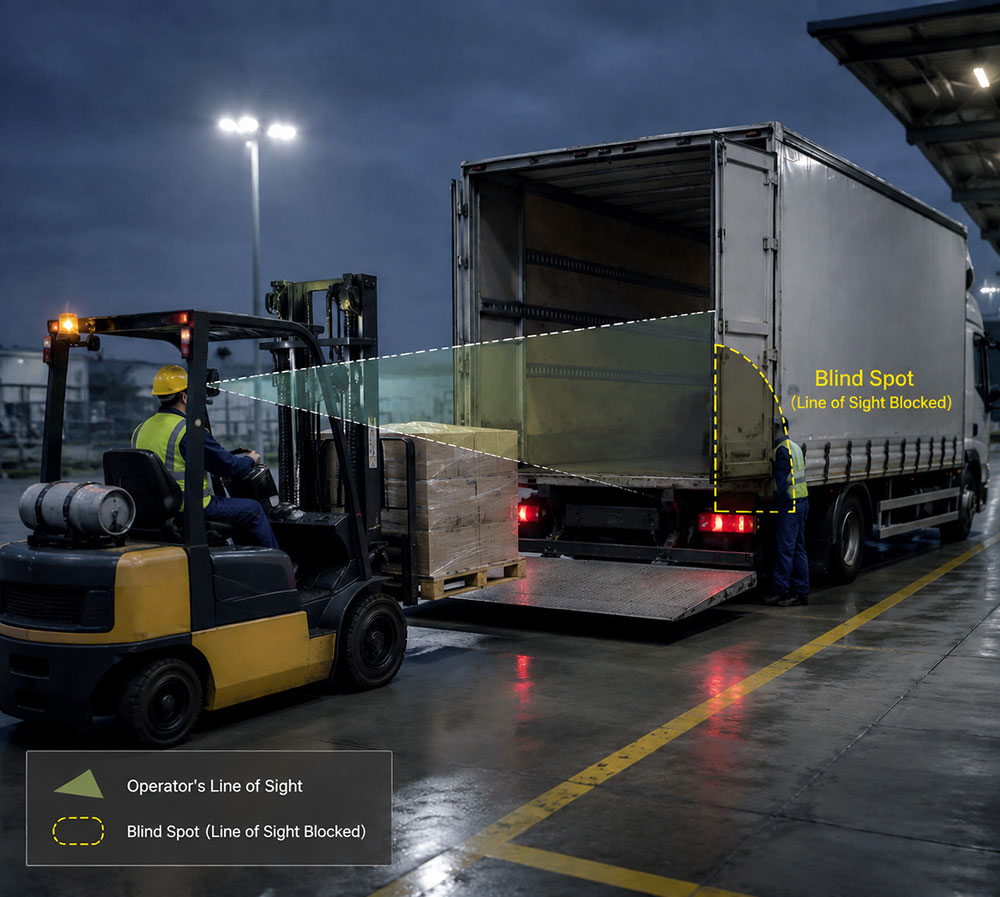
A distribution yard near the Rotterdam port logged a blind-side loading incident during a night shift changeover. A forklift operator was moving a pallet toward the rear of a curtain-sider that lacked a working tail lift platform. Workers had improvised the loading ramp from a portable dock board angled at roughly 12 degrees. The operator lost sight of a second worker standing at the vehicle’s blind corner. The pallet’s leading edge struck the worker’s leg at low speed and caused a fracture.
A site audit afterward found a deeper problem. The truck’s original hydraulic tail lift had been out of service for six weeks. Staff had logged the fault but never fixed it. Investigators noted that a working platform would have removed the need for the angled dock board. That platform, rated for 1,000 kg, could lower flush with the yard surface. It would have restored a clear sightline between the two workers. The yard pulled the vehicle from rotation. Technicians then repaired the internal leakage, caused by wear on the tail lift’s cylinder piston rod plating.
Why Blind-Side Loading Happens
A single failure rarely causes blind-side loading. It usually results from a mix of vehicle layout, workplace pressure, and equipment that isn’t pulling its weight. On a standard tail lift truck, the driver’s natural sightlines run along the sides and through the mirrors. The zone directly behind the rear axle, often 1.5 to 2 metres deep, falls outside direct vision. Loading docks without a level, powered platform force workers to compensate with makeshift ramps, hand signals, or guesswork. Each of those workarounds narrows the margin for error a little further.
Three conditions tend to appear together in incident reports:
- A loading height mismatch between the vehicle bed and the dock, requiring manual bridging
- A tail lift platform that is faulty, undersized, or simply absent, pushing loaders into improvised positions
- Time pressure that shortens the pause a driver takes to check the blind corner before reversing or lowering a load
Fleet operators researching folding tail lift options for smaller box trucks often find a simpler fix. A compact platform resolves the height-mismatch problem on its own. It brings the load down to ground level without a ramp.
How the Platform Removes the Blind Corner
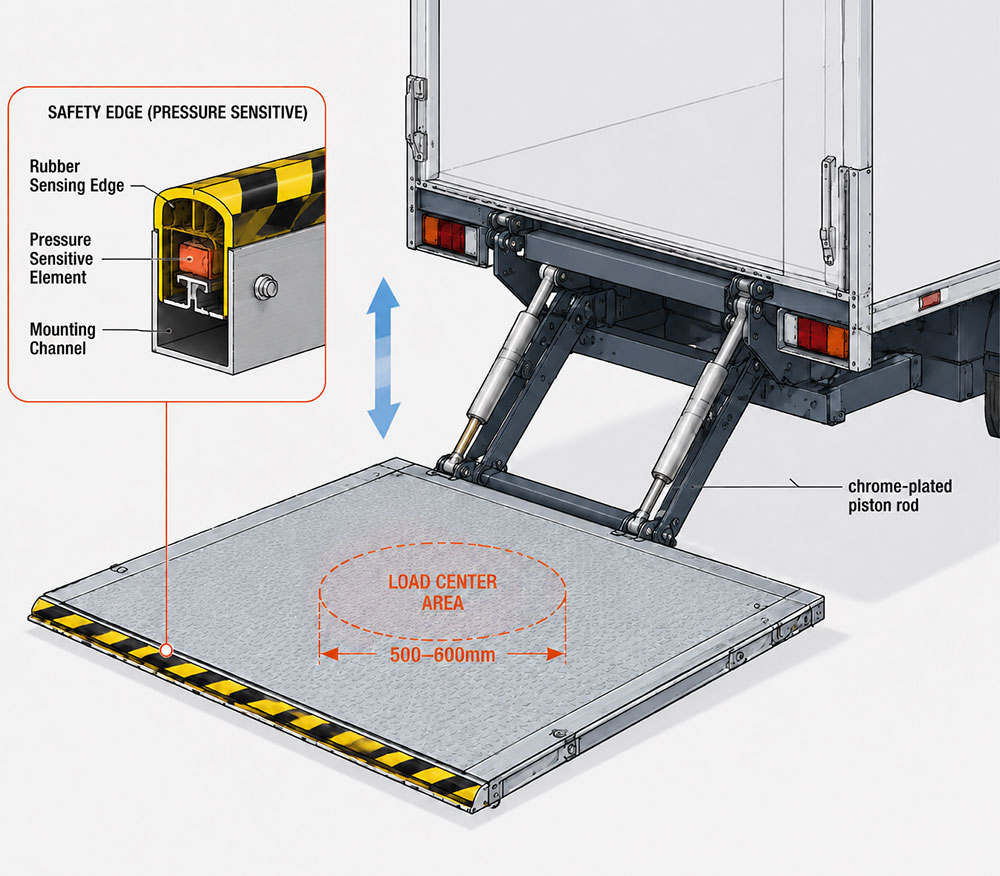
A hydraulic tail lift does two things that directly cut blind-side loading risk. First, it brings the load to a fixed, level position at the rear of the vehicle. This removes the need for a loader to walk into the vehicle’s blind quadrant to push freight up a ramp. Second, most modern platforms include a safety edge or barrier bar. This typically triggers at a contact pressure below 150 N. It stops the platform’s descent when it senses a limb or object — the failure mode that caused the Rotterdam incident. EN 1756-1 is the European standard for tail lifts on wheeled goods vehicles. It sets out the design and safety requirements for this class of equipment. Fleet managers in France and Italy call the same equipment a hayon élévateur or a sponda idraulica. The terminology differs by market, but the platform and its safety features stay the same.
Matching Load Capacity to the Job
Hydraulic tail lift platforms carry ratings across a range of load tiers. Matching the rating to the freight helps prevent blind-side loading incidents. It isn’t just a maintenance formality. A well-maintained platform holds a consistent average lift and descent speed of around 80 mm/s across the 500–2,000 kg range. That consistency keeps the exposure window at the blind corner predictable:
| Load Capacity | Average Lift/Descent Speed | Recommended Inspection Interval |
|---|---|---|
| 500 kg | 80 mm/s | Every 3 months |
| 1,000 kg | 80 mm/s | Every 3 months |
| 1,500 kg | 80 mm/s | Every 3 months |
| 2,000 kg | 80 mm/s | Every 3 months |
These ratings assume the load’s centre of mass stays within roughly 500–600 mm of the platform’s outer edge. Most manufacturers specify that limit on the platform’s data plate. Loading a pallet further out than that reduces the safe capacity, even if the total weight matches the rated figure. Workers make that judgment call constantly when they can’t see the platform clearly from a blind corner. Keeping load placement visible is therefore as much a capacity issue as a visibility one.
Operators can compare these categories in more depth via our guide to choosing a hydraulic tail lift by vehicle class. It breaks down capacity selection against typical pallet weights.
Common Fault-to-Risk Table
The table below maps the mechanical symptoms that most often link back to blind-side loading events. It draws on field inspection patterns for a mid-tonnage tail lift truck.
| Symptom | Likely Cause | Corrective Action |
|---|---|---|
| Platform drifts down under load | Wear or scoring on the lift cylinder’s chrome-plated piston rod, allowing internal leakage past the seal | Inspect piston rod plating and seals; replace seal kit or cylinder assembly if the plating is damaged; retest at rated system pressure (typically 16–18 MPa, roughly 160–180 bar) |
| Uneven platform descent | Flow imbalance between the two lift cylinders — a sticking synchronising valve or partial blockage in one oil line | Inspect and adjust the flow-synchronising valve; flush the affected line |
| Safety edge fails to trigger | Sensor wiring corrosion or a loose connector raising contact resistance | Inspect wiring loom and connectors; replace the sensor or repair the wiring if resistance is abnormally high |
| Platform stops short of ground level | Hydraulic fluid low or air in the line | Bleed system; top up with the specified anti-wear hydraulic oil to correct level |
| Motor cuts out or won’t restart under load | Motor thermal protection trips after prolonged overload or poor ventilation (cutoff typically around 120°C) | Let the motor cool, check ventilation and duty cycle, and reduce load if cutoffs recur |
Fleets that keep to this checklist, alongside the standard 3-month inspection interval, consistently report fewer blind-side loading near-misses. Fleets relying on annual-only servicing see more.
Operational Practices That Reduce Blind-Side Loading Risk
Equipment alone does not solve the problem; procedure matters just as much. Yards with the strongest safety records for tail lift truck operations tend to apply a few consistent rules. Safety teams develop these rules through repeated audits of near-miss reports, then adjust them after each serious event:
- A second worker never stands in the platform’s descent path once the operator has initiated lowering
- Loading only proceeds once a worker visually confirms the tail lift for palletised freight is level and locked
- Drivers complete a walk-around check of the blind corner before any reversing manoeuvre, independent of mirror checks
- Staff log tail lift maintenance for high-frequency delivery routes and cross-check it against the 3-month interval. They don’t defer it to the next scheduled service
- Supervisors rotate loaders off blind-corner positions every 90 minutes on high-volume shifts. Fatigue is a recurring factor in the incident data
These steps cost little in time compared with the downtime and liability that follow an incident. They work best when the underlying hydraulic tail lift is already in good mechanical order. Depot managers weighing a fleet-wide upgrade often start with our comparison of tail lift maintenance for high-frequency delivery fleets. They review it before committing to a retrofit schedule.
Closing Note
Most of these incidents are preventable, and the pattern is consistent across the cases reviewed here. A tail lift that is missing, undersized, or out of service forces workers into positions where visibility fails. Matching platform capacity to load, keeping to the inspection intervals above, and enforcing positioning rules close most of the gap. Fleets that have not audited their tail lift truck inventory against the fault table above should start there. Twelve months is a reasonable review cycle.
Trusted by Fleet Operators Across 60+ Countries
Stop Losing Time at the Loading Dock.
Get a Custom-Matched Tail Lift Quote in 24 Hours.
60
Countries Served
24h
Quote Turnaround
99.9
Field Uptime
5.0
Customer Rating
No Obligation
CE & UKCA Certified
Standard & Custom Builds
Worldwide Shipping