







Folding Tail Lift vs Concealed Tail Lift: Engineer’s Field Guide to Selection & Cost
Spent years doing on-site support for loading equipment across different markets. And the number of times I’ve watched a fleet swap out perfectly functional tail lifts six months after installation — because nobody thought through the application properly — honestly stopped surprising me a long time ago. The cost isn’t just the unit. It’s the removal, the reinstall, the downtime, sometimes a chassis repair if the original install was botched. A folding tail lift supplier will sell you what you ask for. So will a concealed tail lift supplier. Neither one is going to tell you that you’re asking for the wrong thing.
That’s what this article is for.
Two Completely Different Machines
Folding Tail Lifts — What’s Actually Going On Mechanically
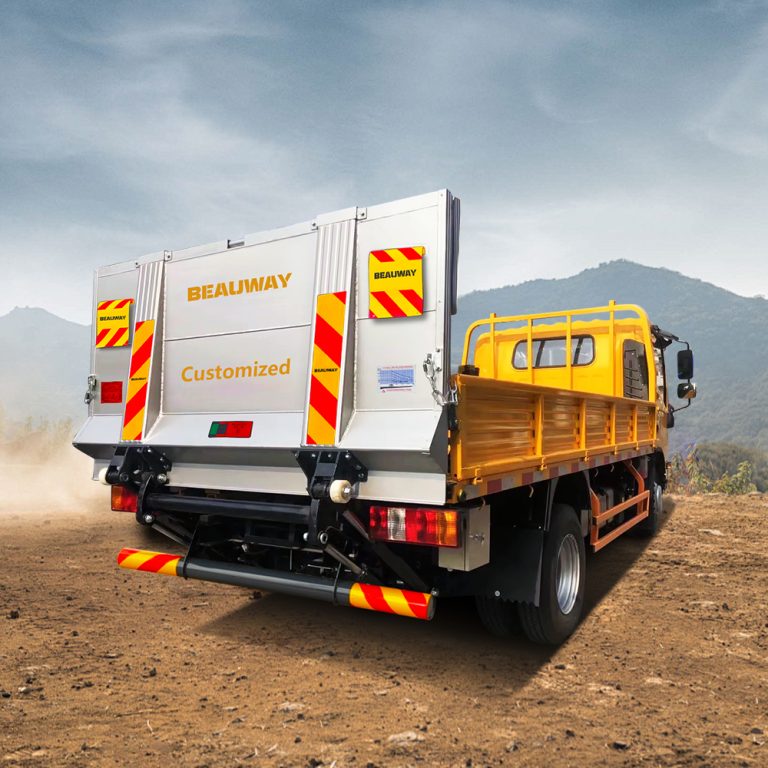
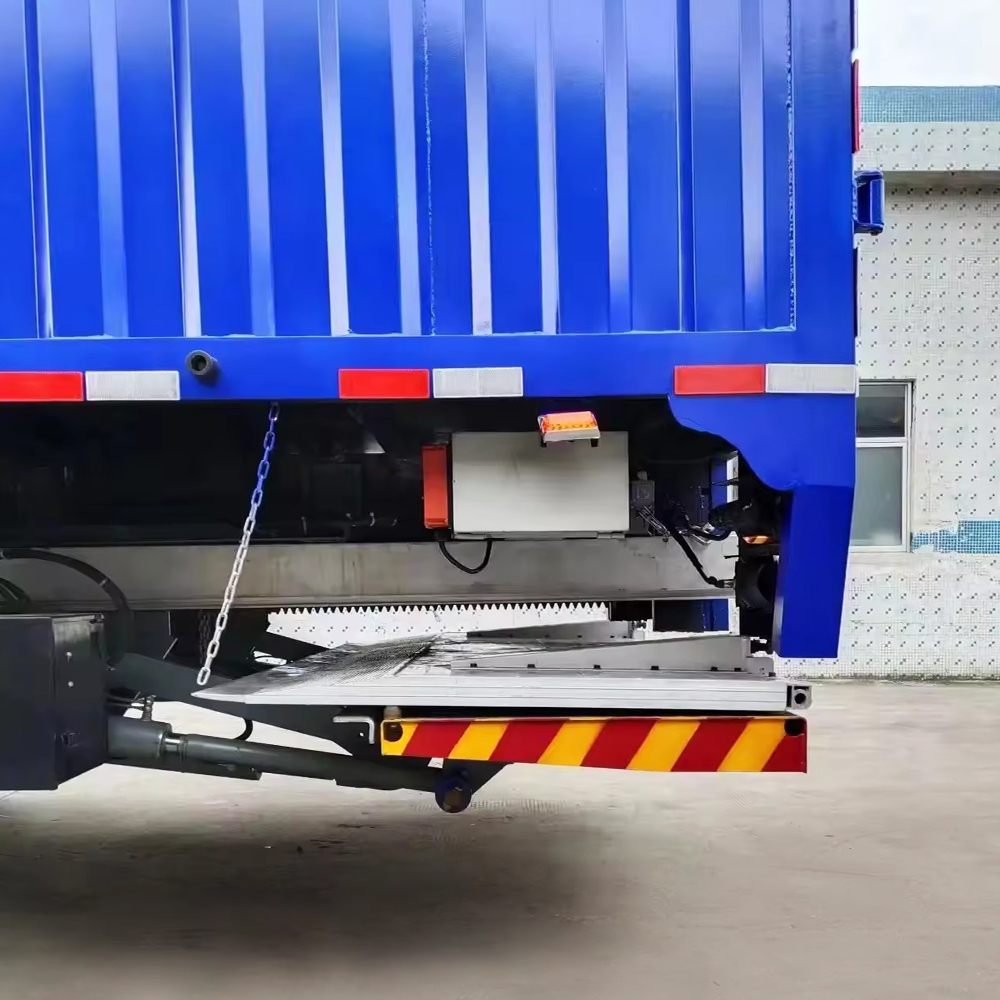
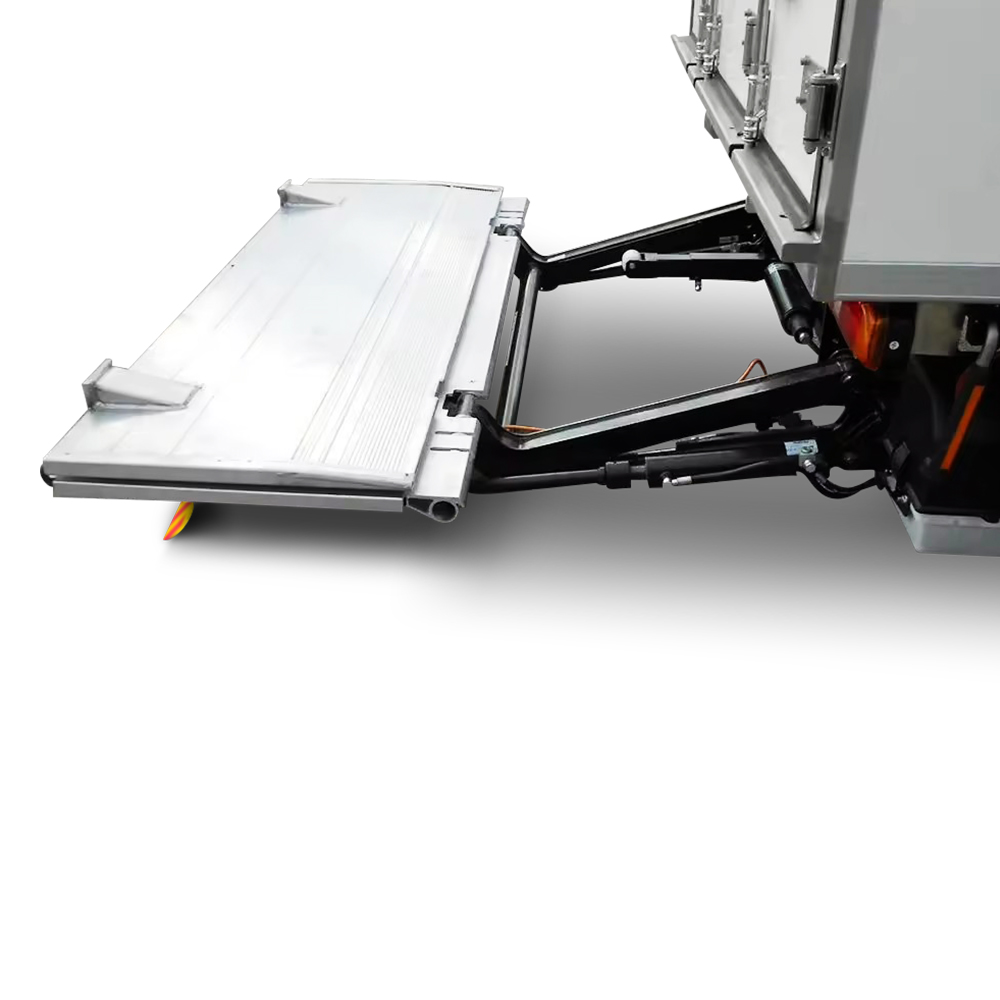
The platform is two hinged sections. Stowed, they fold up against the vehicle rear. Deployed, they drop flat and form a full working surface. Sounds simple. The hydraulics drive the main arm, the fold is mechanically linked — when the arm moves, the hinge moves with it.
Main components you’re actually working with day to day:
- The folding platform itself — aluminium alloy or steel, anti-slip surface
- Primary hydraulic cylinder — single or twin configuration, stroke length determines your lift height
- The hinge assembly — this is where wear shows up first, consistently
- Control valve block — handheld pendant or side-panel switch
- Travel lock — stops the platform from shaking loose in transit
On city delivery vehicles running high daily cycles, hinge bushing wear accelerates noticeably. That’s not a product defect — it’s what happens when a mechanical joint absorbs thousands of fold-unfold cycles a year.
Standard rated load range from established folding tail lift manufacturers sits between 500kg and 2,000kg for most commercial truck applications. Platform deployed dimensions typically run 1,200mm×1,600mm to 1,600mm×2,200mm, depending on vehicle body width and chassis spec.
Concealed Tail Lifts — Why They’re More Complicated Than They Look
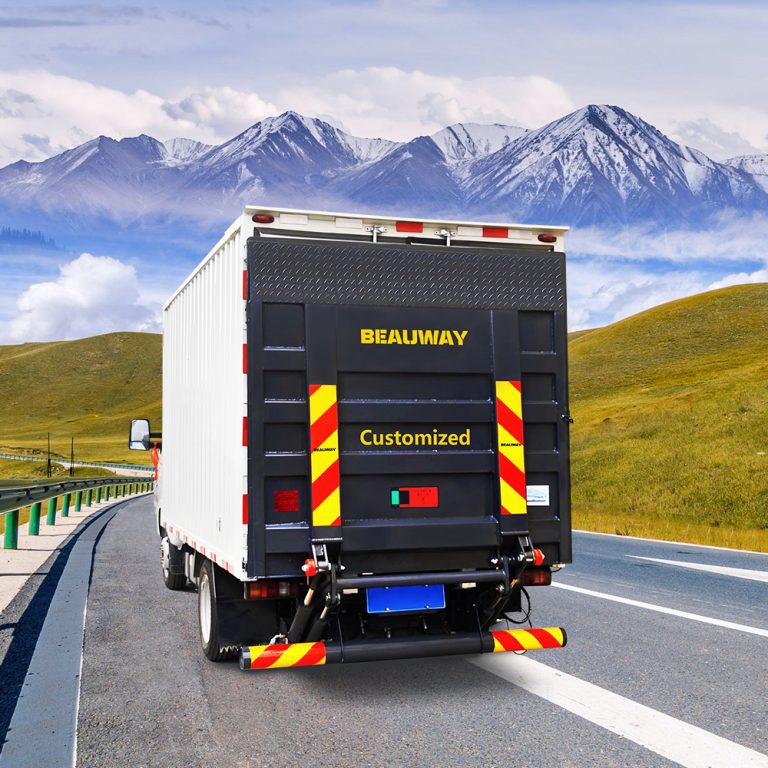
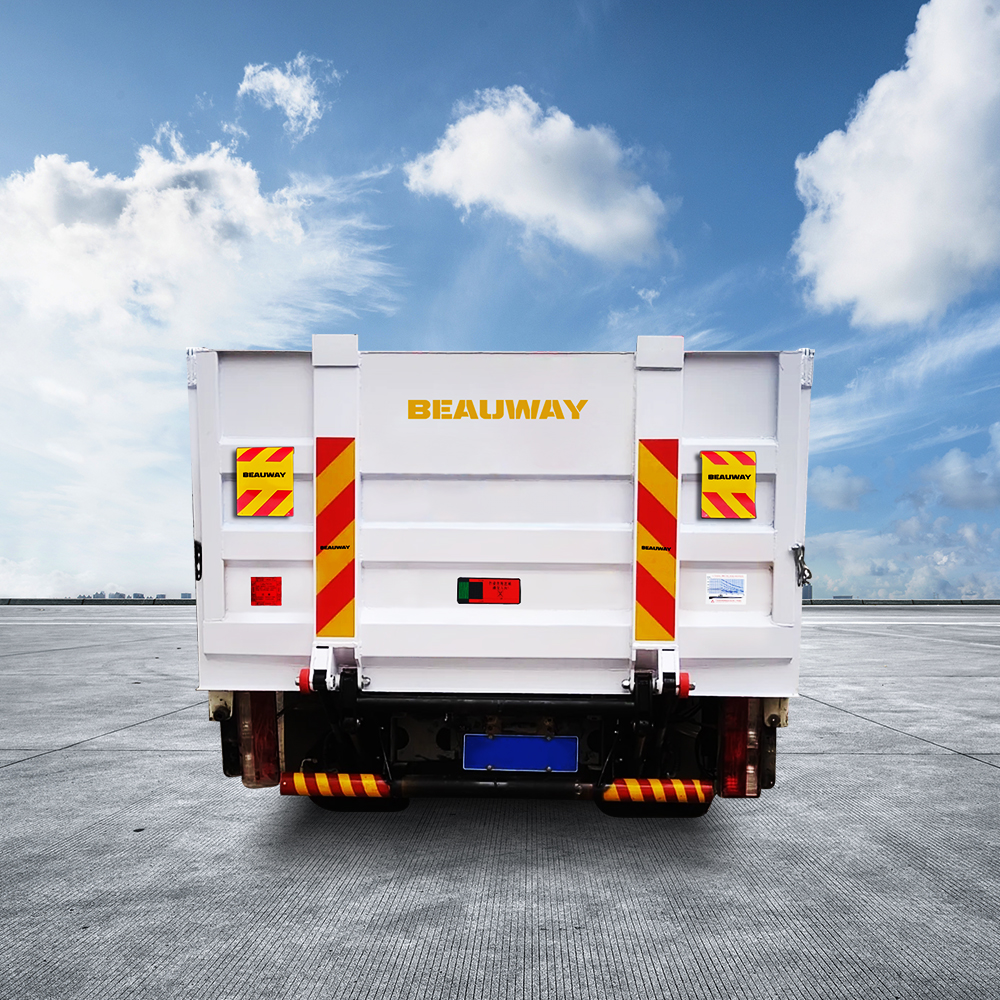
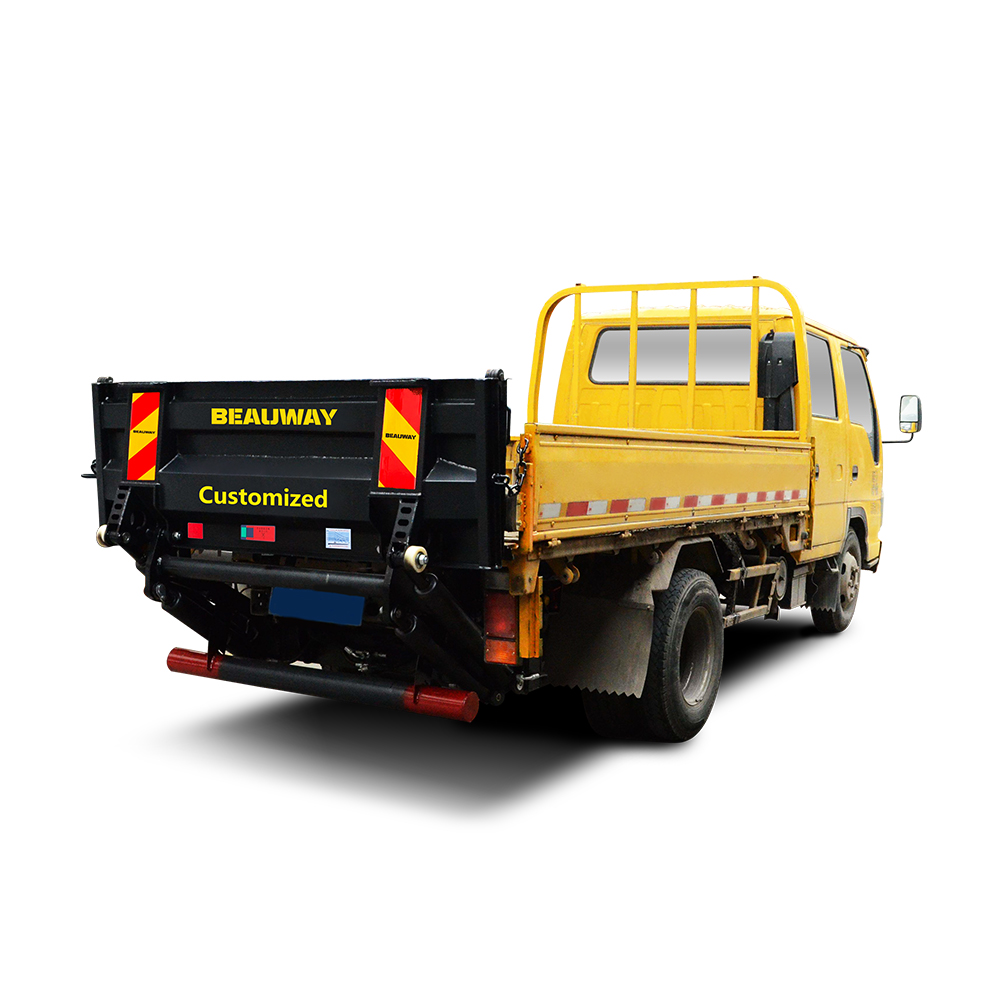
Goes by a few names. Concealed tail lift, tuckaway tail lift, hidden liftgate. Whatever you call it, the principle is the same: when stowed, the platform disappears completely into the chassis underframe. Walk around the back of the truck — you’d never know it was there.
Getting it in and out is a two-step motion. Platform slides horizontally out from the underframe, then pivots down into position. Most products from established tuckaway tail lift suppliers integrate the hydraulic power unit inside the underframe to keep external lines to a minimum. Cleaner install, fewer exposure points.
What makes it genuinely harder to engineer: the folded platform has to fit inside the available chassis clearance gap. Low-floor box trucks offer limited ground clearance — sometimes well under 400mm. The folded platform has to live in that envelope. Tolerances get tight fast, and not every concealed tail lift manufacturer handles this equally. The difference between good and poor engineering shows up years down the line, in how things wear.
The Numbers Side by Side
| Folding Tail Lift | Concealed Tail Lift | |
|---|---|---|
| Stowed appearance | Platform visible at vehicle rear | Fully hidden within underframe |
| Suitable vehicle types | Flatbed, box truck, reefer | Box truck, last-mile delivery vehicle |
| Rated load capacity | 500 – 2,000kg | 500 – 2,000kg |
| Cycle time | Varies by model and load | Longer than folding — two-motion deployment |
| Installation complexity | Moderate | High — chassis modification and reinforcement required |
| Primary wear points | Hinge bushings, cylinder seals | Slide rails, guide channels, perimeter seals |
| Folding tail lift price — steel platform | USD 965 – 1,170 | — |
| Folding tail lift price — aluminium platform | USD 1,380 – 1,520 | — |
| Concealed tail lift price — steel platform | — | USD 2,210 |
| Concealed tail lift price — aluminium platform | — | USD 2,900 |
| Rear door operation impact | Minor obstruction possible | Negligible |
| High-frequency use suitability | Strong | Manageable — guide rail lubrication is non-negotiable |
Pricing based on Beauway 2025–2026 export quotes. Steel and aluminium configurations listed separately. Freight and local installation not included. Contact us directly for current pricing on your specific vehicle spec.
What Went Wrong in Rotterdam — A Case That Stuck With Me
When: Late 2022 into early 2023 Where: Rotterdam, Netherlands — mid-size third-party logistics operator, 28 box trucks Equipment: European-brand concealed tail lift, 800kg rated, carbon steel guide channels, IP54 protection rating
This operator had been running folding tail lift for sale units from the same supplier for years without major issues. New contracts pushed them toward a cleaner brand presentation — the customer required it, actually. So the fleet went to concealed tail lift for sale units across the board. Made sense on paper.
Rotterdam port environment. Salt air. Diesel particulate. Constant humidity cycling as trucks move between outdoor yard and temperature-controlled warehouses. The carbon steel guide channels started oxidising faster than anyone had anticipated.
Month five — operators noticed resistance on retraction. The platform wouldn’t seat fully without a manual push. By month six, elevated motor current readings were showing on multiple units. One vehicle’s guide roller had developed lateral play from uneven channel wear.
Fault symptoms observed:
- Channel surface corrosion narrowing slide clearance, increasing friction load on the hydraulic motor
- Motor current on affected units running significantly above design spec, with motor casings running hot during continuous operation
- Roller bearings on two vehicles showing early fatigue signs — a result of running misaligned under load
Steps taken to resolve:
- Full fleet inspection across all 28 vehicles — 11 confirmed with guide channel corrosion at varying severity levels, 3 rated serious
- Warranty claim filed with the original hydraulic tail lift supplier — rejected on grounds that salt-spray exposure exceeded the product’s design environment. Partial parts credit offered only
- Vehicles with light corrosion: channel cleaning and stainless steel protective sleeve retrofit — repair cost per vehicle in the low hundreds of euros
- Vehicles with severe corrosion: full slide rail and guide channel assembly replacement — significantly higher per-vehicle cost when labour and two days of downtime per truck are factored in
- A mandatory maintenance protocol introduced going forward: fortnightly channel inspection, monthly lubrication, quarterly corrosion treatment through winter months
The takeaway: The operator wasn’t poorly run. The procurement decision wasn’t irrational. What went wrong was not tying the specification to the operating environment. Port-adjacent operation, salt exposure, daily humidity cycling — that combination demands IP65 minimum and stainless steel or hot-dip galvanised guide channels, confirmed in writing in the purchase contract. Neither was in the original spec. The concealed tail lift manufacturer offered them as upgrades. They weren’t selected because nobody flagged them as necessary for that site.
How to Actually Decide
Cases Where Folding Makes More Sense
Across the fleet accounts we’ve supported as a commercial truck tail lift supplier, folding tail lifts consistently outperform in specific conditions:
- Daily cycle counts are high — urban delivery, parcel distribution hubs, grocery multi-drop routes
- Load requirements exceed 1,500kg — heavy box trucks, flatbeds, mixed cargo vehicles
- Operations involve regular exposure to outdoor environments, dust, rain, or low temperatures
- Smaller or mid-size fleets where parts commonality, quick turnaround, and straightforward repair logic matter
Maintenance reasoning is also simpler. Hinge worn — replace the bushing. Seal gone — swap it. Most truck folding tail lift suppliers carry the common wear items in stock. For operators running vehicles across multiple countries, short lead times on parts aren’t a minor consideration.
Cases Where Concealed Makes More Sense
Customers of established tuckaway liftgate manufacturers share one consistent requirement: the rear of the vehicle cannot look like it’s carrying a tail lift. Sometimes that’s a brand livery standard. Sometimes it’s regulatory — several European city centres restrict vehicles with external rear appendages in pedestrian and low-emission zones. Sometimes it’s just the practicality of parking in tight urban environments.
Where concealed units genuinely earn their place:
- Brand fleet operations where vehicle advertising coverage must remain unobstructed
- Urban core delivery where vehicle envelope and length restrictions apply
- E-commerce fulfilment and retail replenishment with loads under 1,500kg and moderate daily cycles
- Routes where rear clearance is limited and a folded platform creates a physical obstruction problem
One point that cannot be skipped: installation requires opening the chassis longitudinal frame to create the platform cavity, with structural reinforcement added. This must be carried out by a tail lift manufacturer authorised installer — not a general fabrication shop. In most European markets, non-authorised structural chassis modification creates immediate roadworthiness problems at annual vehicle inspection.
Before You Contact Any Supplier
Whether approaching a folding tail lift manufacturer or a concealed tail lift manufacturer, having the following ready avoids a slow, inaccurate quote:
- Vehicle make, model, and chassis specification
- Maximum operating load — goods plus pallet weight combined, not goods net weight only
- Average daily cycle count and typical single-use duration
- Operating environment — indoor/outdoor, coastal proximity, dust, temperature range
- Measured floor height from ground to vehicle bed — not estimated, actually measured
- Required certifications — CE for EU, UKCA for UK, AS/NZS for Australia, or applicable local standard
Floor height is the parameter that gets missed most often. The consequence is a lift that either falls short at full extension or overshoots and angles the platform — both scenarios have been seen in real installations.
Keeping Them Running
Folding tail lift — maintenance priorities:
- Weekly: hinge bushing play — any looseness, address it before it becomes noise, then damage
- Monthly: hydraulic cylinder rod surface — exposed steel corrodes, especially near coasts or in winter salt conditions
- Every 1,500 operating hours or 12 months (whichever comes first): hydraulic oil and filter change. High-cycle vehicles — shorten this interval
- Ongoing: anti-slip surface wear depth — below usable threshold, repair or replace
Most truck tail lift manufacturers write the hydraulic oil change interval into warranty conditions, not just maintenance guidance. Skipping it creates grounds for warranty rejection on hydraulic component failures.
Concealed tail lift — where things tend to slip:
- Every two weeks: clean guide channels. Remove debris and moisture, reapply lithium-based grease. This is the single most important interval on a concealed unit — skip it repeatedly and you’re building toward a Rotterdam situation
- Monthly: guide roller condition check — uneven wear indicates misalignment developing
- Quarterly: perimeter seal inspection on the underframe opening — a cracked seal is an open path for water ingress
- Every six months: all hydraulic line fittings, with focus on bends and flex points where micro-fatigue initiates before any visible damage appears
Wrapping Up
Folding or concealed — neither is universally correct. Operating environment, daily cycle count, load requirement, vehicle type, and local regulations together determine which one actually belongs on your fleet. Get those wrong and the equipment will make the correction for you, at a cost that’s usually higher than the original price difference between the two options.
Beauway has been working in logistics loading equipment for many years, covering tail lifts, dock levellers, loading ramps, and lifting platforms across international markets. If your operation has specific site conditions, vehicle specifications, or compliance requirements worth talking through, our engineering team is available for a direct technical consultation.