Having trouble submitting? Email us directly at nicole@beauway.com and we'll get back to you within 24 hours.











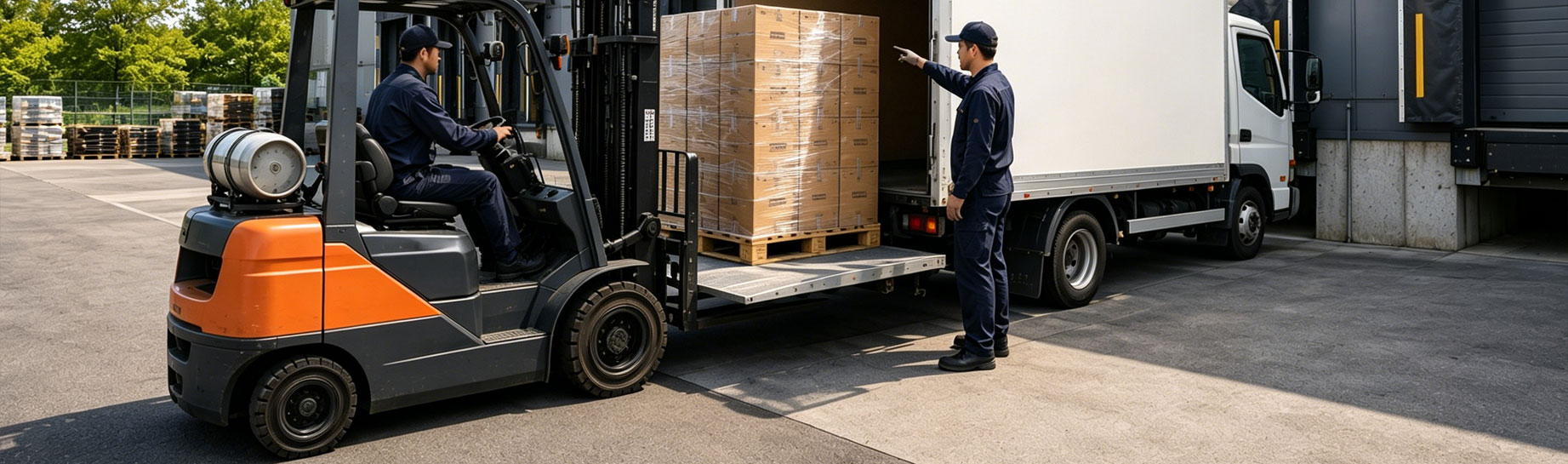
Truck Tail Lift for Chile Construction Sites: Safety, Efficiency & Buyer’s Guide
Truck Tail Lift for Chile Construction Sites: Buyer’s Guide
A procurement guide for fleet operators, logistics managers, and construction companies working in Chile’s mixed-terrain environments
The $32 Billion Market With a Last-Mile Problem
A truck tail lift is reshaping construction logistics across Chile. According to GlobalData’s Chile Construction Market Report, the country’s construction market reached USD 32.1 billion in 2024. It is projected to grow at 5% annually through 2034, approaching USD 49.8 billion. Infrastructure spending is accelerating. New metro lines are being approved in Santiago. Mining expansion in the Atacama Desert continues at pace.
All of this means more materials moving to more sites. However, many of those sites are remote. Many lack basic unloading infrastructure.
Here is the problem nobody puts in a procurement brief. A truck can arrive on time, fully loaded, with a driver ready to work. It can still sit idle for two to three hours. The reason is simple: no forklift on-site, shared equipment committed elsewhere, or terrain that makes conventional unloading impossible.
This is not a fringe scenario. In Chile’s construction and mining logistics environment, it is routine. Therefore, the adoption of vehicle-mounted truck tail lift systems has become the direct operational response to this problem. Not a workaround. A fundamental shift in how Chilean fleets approach delivery independence.
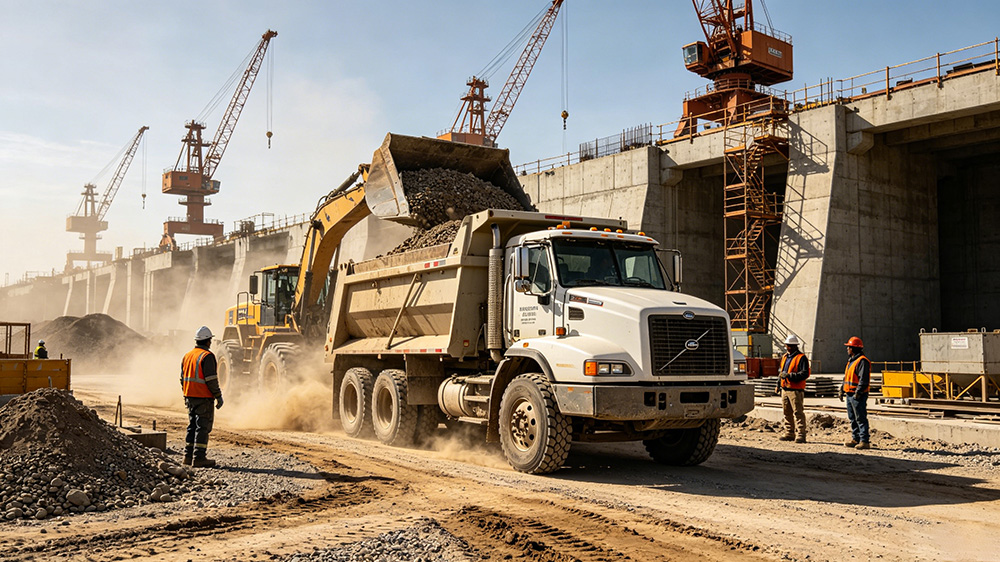
What Is Actually Happening on Chilean Construction Sites
To understand why a truck tail lift matters specifically in Chile, you have to understand the geography.
Chile’s major copper mines operate at elevations between 3,000 and 4,800 metres above sea level. At those altitudes, reduced atmospheric pressure affects equipment performance, worker physiology, and logistics planning. As a result, assumptions about infrastructure availability simply do not hold.
Building facilities at high altitude results in a 20–30% increase in construction costs compared to lower elevations. That cost premium extends to logistics operations. Equipment is harder to source. Shared forklifts serve multiple contractors. Remote access roads are unpaved and seasonally degraded.
In addition, Chile is one of the most seismically active countries in the world. It experiences over 1,000 earthquakes a year. This shapes both construction methods and site conditions, creating additional delivery complications.
Scenario 1 — The Mining Supply Corridor
A logistics company is transporting compressor units and generator sets to a copper mine in the Antofagasta region. The site sits at 4,200 metres above sea level. The access road is unpaved and slopes at irregular gradients. One forklift serves three contractors, and it is committed to a precast concrete installation until mid-afternoon.
Without a heavy duty tail lift system, the delivery truck waits. Three hours of driver time, fuel cost, and delivery schedule disruption — on a single drop.
With a cantilever truck tail lift rated for the load weight, however, the driver operates independently. The truck unloads on an uneven surface, without a forklift, without a loading dock, without waiting.
Scenario 2 — Urban Commercial Construction in Santiago
A materials supplier is delivering palletized cement, steel pipes, and prefabricated wall panels to a commercial build in the Providencia district. The site has a 45-minute unloading window before road access restrictions apply.
Manual unloading takes 70–80 minutes for a full truck. A folding truck tail lift completes the same operation in under 45 minutes. Miss the window, and the truck either waits for the next available slot or takes a penalty charge.
Scenario 3 — Remote Renewable Energy Infrastructure
Chile’s government has committed to sourcing 70% of electricity from renewable sources by 2030. This means solar and wind installations in coastal and desert regions. These areas have coastal corrosion exposure, extreme temperature variation, and near-zero fixed infrastructure.
Fleets servicing these sites carry electrical components, steel structural elements, and heavy equipment. There is no loading dock. There is no forklift. In many cases, there is no paved surface within five kilometres of the installation point.
In this environment, a construction truck tail lift is not optional. It is the only viable unloading mechanism.
The Real Cost of Not Upgrading
Procurement decisions are often framed around purchase price. The more relevant calculation, however, is the total cost of inaction.
Consider a fleet of 10 trucks operating construction and mining logistics routes in northern Chile. Each truck averages two deliveries per day to sites where unloading infrastructure is unavailable.
- Unloading delay per delivery: 90 minutes
- Driver cost per hour: CLP 8,000–12,000
- Fuel idle cost per hour: CLP 4,000–6,000
- Per-truck daily delay cost: CLP 36,000–54,000
- Fleet-wide annual cost: CLP 131–197 million
This calculation does not include cargo damage from improvised manual unloading. It does not include penalty clauses from missed delivery windows. And it does not include insurance exposure from manual handling injuries.
A single operator using a truck tail lift can manage heavy loads quickly and safely. There is no need to wait for forklifts or coordinate team lifts. As a result, drivers complete more drops per day and delivery schedules become predictable.
The investment in a truck tail lift system is not competing with the status quo. It is competing with the ongoing, measurable cost of the status quo.
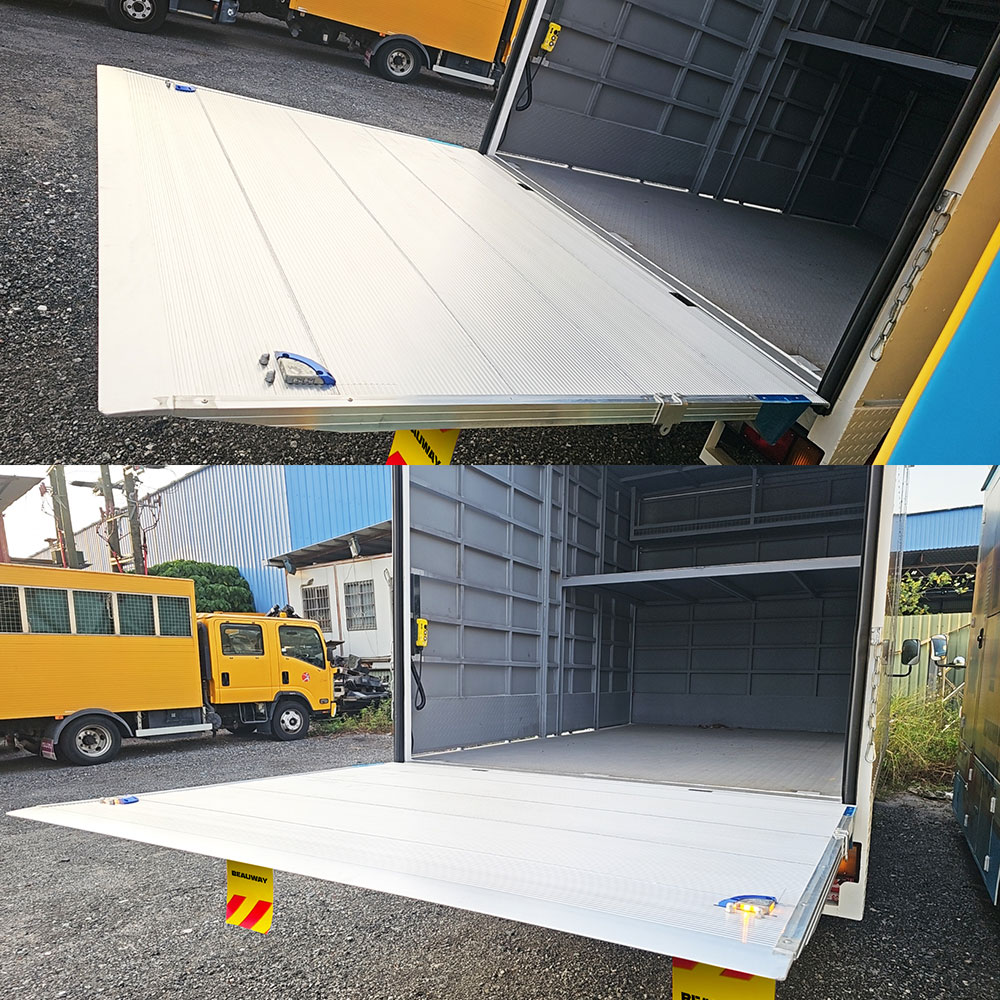
Which Truck Tail Lift Type Is Right for Chilean Conditions?
Not all tail lifts are interchangeable. The wrong system creates exactly the reliability problems operators are trying to solve. For example, a lift designed for flat urban roads will fail quickly on unpaved mountain terrain. Here is a practical comparison based on actual Chilean operating conditions.
Cantilever Tail Lift — Best for Remote and Off-Road Environments
The cantilever design extends outward from the truck’s rear frame. It does not require contact with the ground surface. This makes it uniquely suited to sloped terrain, unstable ground, and remote sites where a level unloading surface cannot be guaranteed.
For fleets servicing mining sites and renewable energy installations in northern Chile, this is typically the correct configuration. It handles steel structural components, generator sets, and heavy equipment without requiring the truck to be on a prepared surface.
Key check: Rated load capacity must be verified against the heaviest single item in the manifest — not the average load weight.
Folding Tail Lift — Best for Urban and Mixed-Route Fleets
The folding configuration stores compactly when not in use. It maintains rear access to the cargo compartment and allows the truck to reverse into standard loading bays without modification.
For fleets operating in Santiago or Valparaíso, where deliveries mix construction sites with conventional logistics stops, the folding truck tail lift provides flexibility without compromising urban usability.
Key check: Verify that folded dimensions are compatible with specific truck models in your fleet before finalizing specification.
Vertical Tail Lift — Best for High-Volume Heavy Construction
The vertical platform lift operates on a straight vertical path. It is well-suited to precast concrete handling, heavy structural components, and scenarios where consistent vertical stability under maximum load is the priority.
This configuration is common in fleets dedicated to precast component delivery — a growing category as Chilean construction increasingly uses modular building systems.
Key check: Verify cycle rate under continuous use, as hydraulic fatigue is the primary failure mode for high-frequency vertical lift operations.
Concealed Tail Lift — Best for Urban Fleets With Appearance Requirements
The concealed system retracts fully beneath the vehicle chassis when not in use. This suits urban fleets where road authority regulations or client requirements impose restrictions on rear vehicle overhangs.
For construction material suppliers also operating general urban delivery routes, the concealed system allows a single vehicle to serve both functions.
Side-by-Side Comparison for Chilean Buyers
| Cantilever | Folding | Vertical | Concealed | |
|---|---|---|---|---|
| Best terrain | Uneven/remote | Urban/mixed | Level/dock | Urban |
| Typical load | 500–2,500 kg | 500–1,500 kg | 1,000–3,000 kg | 300–1,000 kg |
| Urban compatibility | Low | High | Medium | High |
| Ideal use case | Mining, energy sites | Multi-purpose fleet | Precast, structural | Mixed logistics |
| Maintenance priority | Structural joints, seals | Hinge mechanism, seals | Hydraulic cylinder, seals | Retraction mechanism |
The most overlooked procurement variable: Vehicle payload capacity and truck tail lift rated load are separate engineering systems. A truck with a 5,000 kg payload and a 2,000 kg rated tail lift cannot safely lift a 2,500 kg load — even though the truck itself could carry it. Misalignment between these two parameters is one of the primary causes of premature equipment failure in Chilean fleet operations.
Why Chile’s Environment Demands More Than Standard Specification
A tail lift that performs reliably in a temperate European environment will not necessarily perform the same way in northern Chile. This is not a theoretical concern. It is a documented operational reality.
Coastal corrosion zones: Salt-laden air at ports and coastal logistics hubs degrades hydraulic systems and structural joints rapidly. Without corrosion-resistant coatings, component degradation accelerates significantly.
Atacama dust exposure: Fine particulate matter infiltrates hydraulic seals through microscopic gaps. Dust intrusion is the leading cause of hydraulic fluid contamination in mining logistics fleets. Therefore, standard sealing specifications are not sufficient.
High-altitude temperature cycling: Equipment at 3,000–4,500 metres experiences temperature swings of 25–35°C within a single operating day. Hydraulic fluid viscosity changes across this range, affecting lift speed and seal integrity.
Seismic activity: Chile experiences over 1,000 earthquakes per year. Vibration accumulation over time affects joint integrity in ways that standard lifecycle projections do not capture.
When evaluating a heavy duty truck tail lift for Chilean deployment, procurement teams should request documentation on three things: coating specification for the intended environment, seal material rating for dust exposure at the relevant altitude, and hydraulic fluid specification for the operating temperature range.
Maintenance Strategy: Where Fleet ROI Is Actually Decided
The purchase price of a truck tail lift is a one-time event. The maintenance cost, however, is a continuous variable. It determines whether the investment delivers its expected return.
In Chilean construction logistics, the most expensive maintenance failure is not a major component replacement. It is unplanned downtime during a delivery operation. A tail lift failure on a remote site can mean a 4–6 hour wait for a service response.
Weekly Checks (High-Dust Environments)
- Hydraulic system visual inspection for early leakage
- Seal condition check at primary and secondary contact points
- Platform surface inspection for structural fatigue indicators
Monthly Checks
- Hydraulic oil sample testing for contamination and viscosity
- Load-bearing joint lubrication with environment-appropriate compound
- Safety interlock and overload prevention system functional test
- Frame and structural weld inspection
Quarterly Checks
- Full hydraulic system pressure test
- Corrosion coating inspection and touch-up in affected areas
- Cylinder seal replacement assessment based on cycle count
The key principle: high-dust, high-altitude environments require shorter inspection intervals than standard schedules. A maintenance program designed for European conditions will under-serve Chilean mining and remote construction deployments.
Choosing a Truck Tail Lift Supplier: 6 Questions to Ask
Chilean fleet operators should treat supplier selection as a lifecycle decision, not a product purchase. The equipment itself is only part of the equation.
- What is the coating specification, and is it rated for salt exposure at my primary deployment sites?
- What hydraulic seal materials are used, and are they rated for high-altitude temperature ranges and particulate exposure?
- What is the emergency service response time to northern Chile specifically?
- What is the availability of spare parts in-country, and what is the lead time for critical components?
- Can you provide documentation of installations in comparable environments — desert, high-altitude, or coastal corrosion zones?
- What operator training does the installation include, and is it available in Spanish?
A supplier that cannot answer questions 1–3 with documentation is selling equipment designed for different operating conditions. In Chilean logistics, this is a procurement risk, not a minor detail.
The Decision That Is Already Being Made
Chilean fleet operators are not waiting for a ROI calculation to push them toward truck tail lift adoption. The decision is already being made — by the accumulation of daily costs currently treated as normal: delayed deliveries, idle driver time, cargo handling incidents, and manual labor dependency on sites where labor is increasingly expensive.
Chile’s construction industry is expected to grow at 4.6% annually between 2027 and 2030. Mining, renewable energy, and transport infrastructure are all expanding simultaneously. Therefore, the logistics demands on Chilean fleets are not decreasing.
The question for procurement teams is not whether to equip fleets with truck tail lift systems. It is whether to begin deployment before the next project cycle — or after it.
Beuaway provides truck tail lift selection, installation, and lifecycle maintenance services for engineering and construction fleets operating in Chilean conditions. The procurement process begins with a site-specific deployment assessment — not a product catalogue.
Trusted by Fleet Operators Across 60+ Countries
Stop Losing Time at the Loading Dock.
Get a Custom-Matched Tail Lift Quote in 24 Hours.
60
Countries Served
24h
Quote Turnaround
99.9
Field Uptime
5.0
Customer Rating
No Obligation
CE & UKCA Certified
Standard & Custom Builds
Worldwide Shipping