Thank You for Your Inquiry!
We've received your message and truly appreciate your interest. Our team will get back to you within 24 hours.
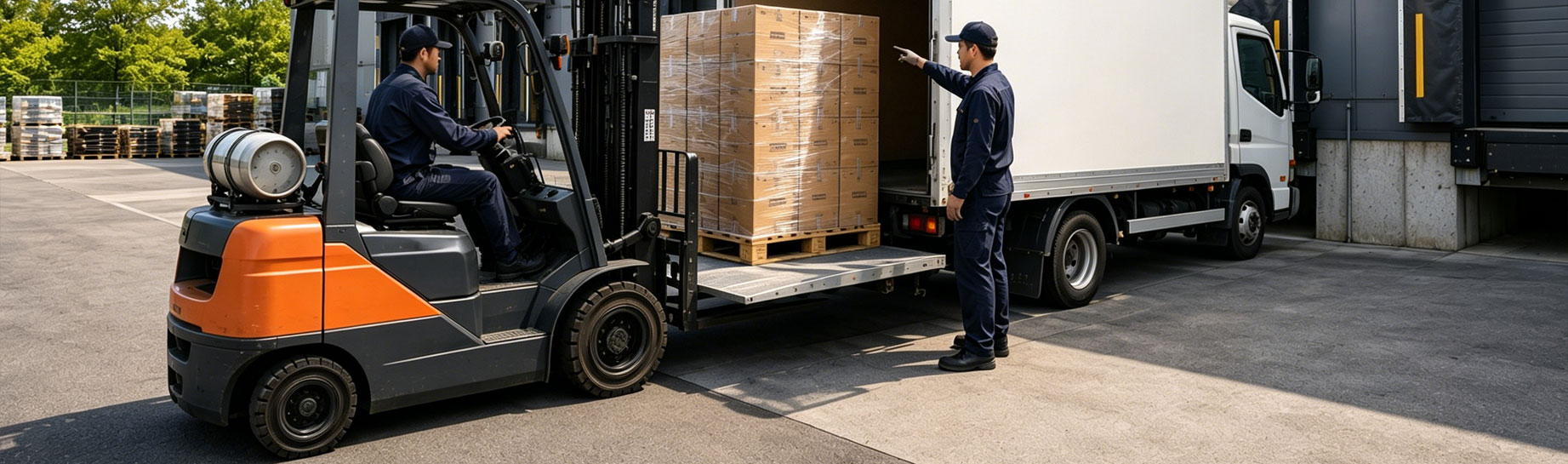
A column tail lift, sometimes called a truck liftgate in North America, is a hydraulic loading platform. It moves vertically along two fixed guide tracks mounted to the rear of a truck body. The platform stays level throughout the entire lift cycle. Installers often cite this as the most stable option among tail lift types. A cantilever tail lift, by contrast, swings out on arms. This single mechanical difference decides which cargo types and operating scenarios suit the column design best. It also shows where the column design falls short.
Fleet operators running a truck tail lift on multi-drop delivery routes often report a common scenario. Stacked appliances or beverage crates can shift if the platform is not stable. If a column hydraulic lift’s platform tilts even slightly during the lift cycle, loose stacks can shift. They can shift before the driver even reaches the ground. This kind of issue changes what operators ask. The question moves from “can the tail lift platform lift the load” to something more specific: does the platform stay level, with no unwanted vertical movement, while it does so?
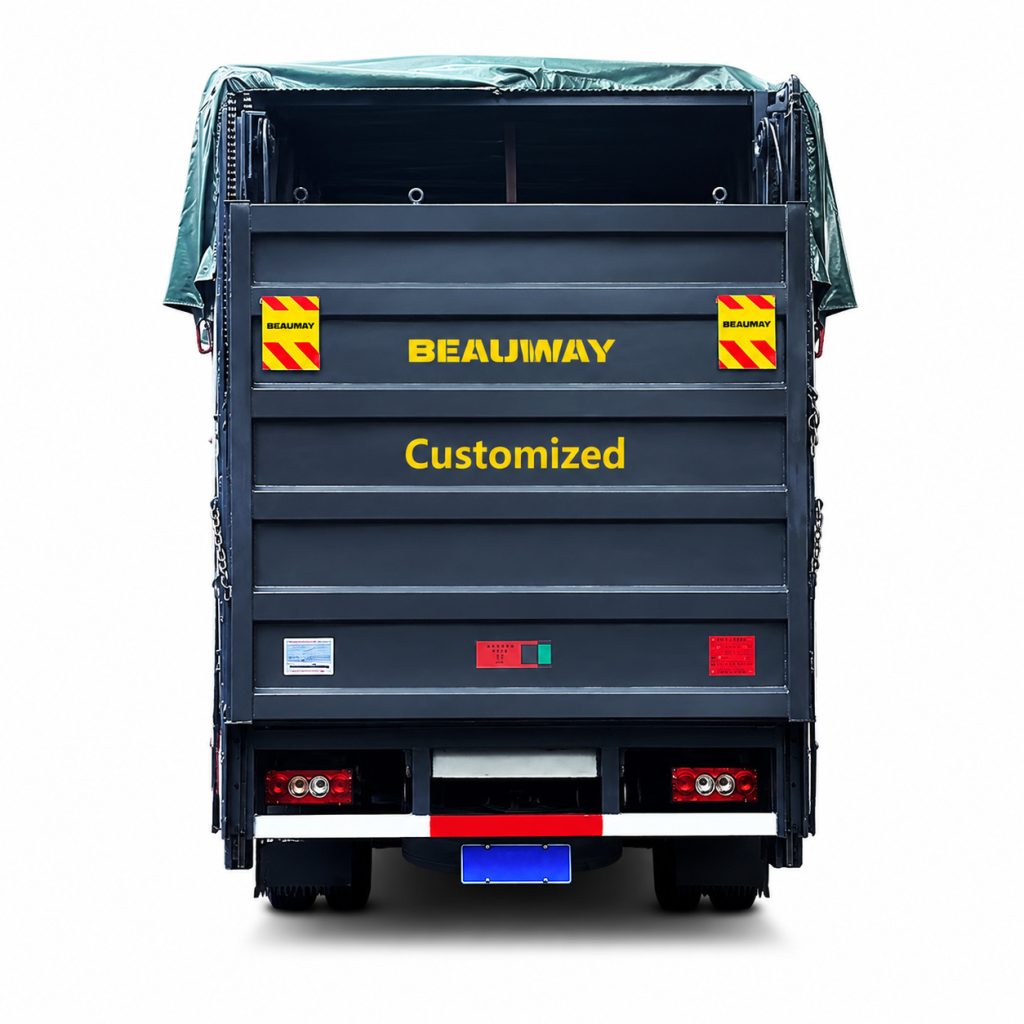
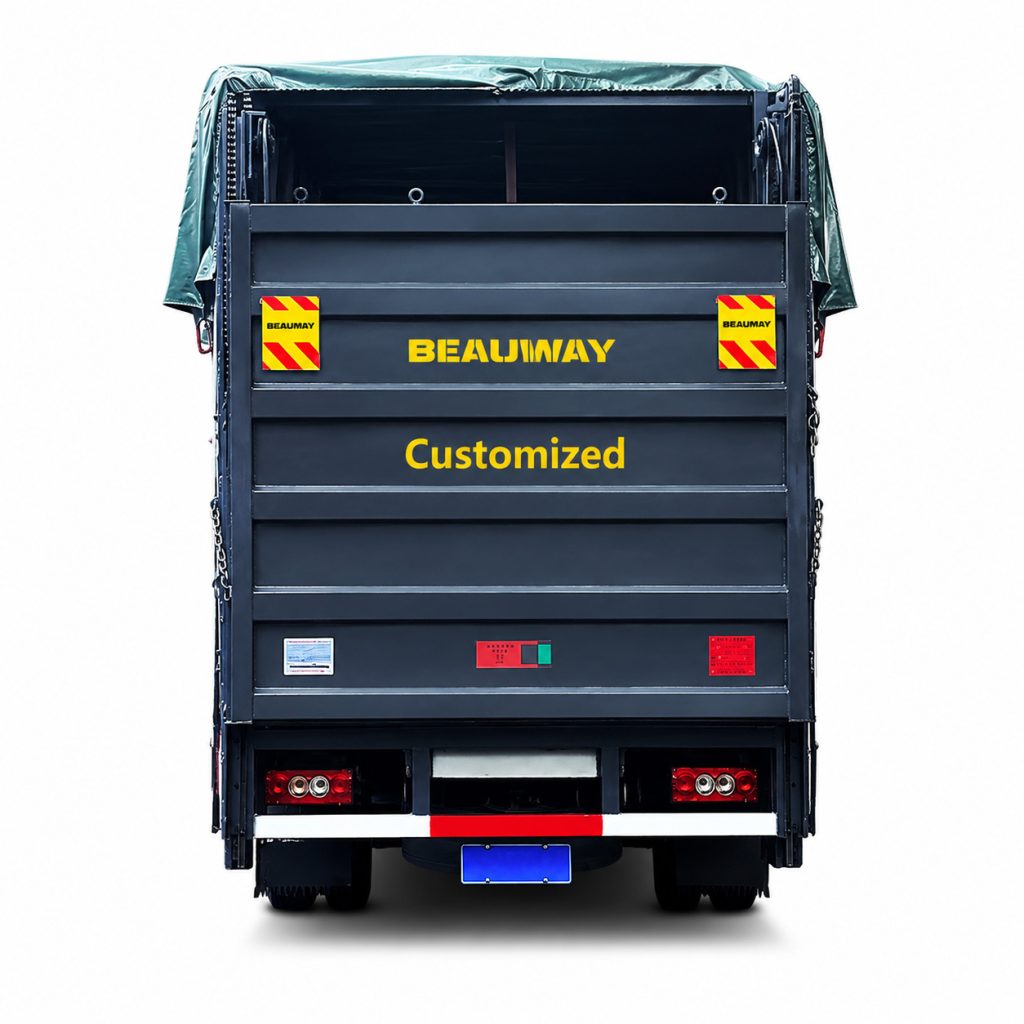
Understanding the column lift’s working principle starts with its dual rail layout. A vertical column lift, or column lifting system, uses two vertical rails bolted to the chassis. Inside each rail, a hydraulic cylinder drives a carriage. The platform mounts to that carriage. As the cylinder extends, the carriage travels straight up the rail in a vertical line. It does not sweep through an arc the way a cantilever arm does. Both rails move in sync during this process. This dual rail column lift design is sometimes described as a rail lift platform or column platform lift. It is what keeps the platform level. It also gives the lift the stability operators rely on for awkward or top-heavy loads.
This category uses two common drive methods, a detail many overview guides skip. A direct hydraulic cylinder system pushes the carriage using cylinder pressure alone. This gives a simpler mechanical path with fewer wear points. It also means generally lower long-term maintenance cost. But the cylinder length has to cover the full travel distance, and that length grows with taller vehicle bodies. A chain-driven system works differently. It uses a hydraulic cylinder to drive a chain loop connected to the carriage. This lets a shorter cylinder stroke produce a longer platform travel distance. That’s why chain-driven designs suit trucks with taller load beds better, where a direct cylinder would need an impractical length. The drive method you choose also determines what gets added to the maintenance checklist later.
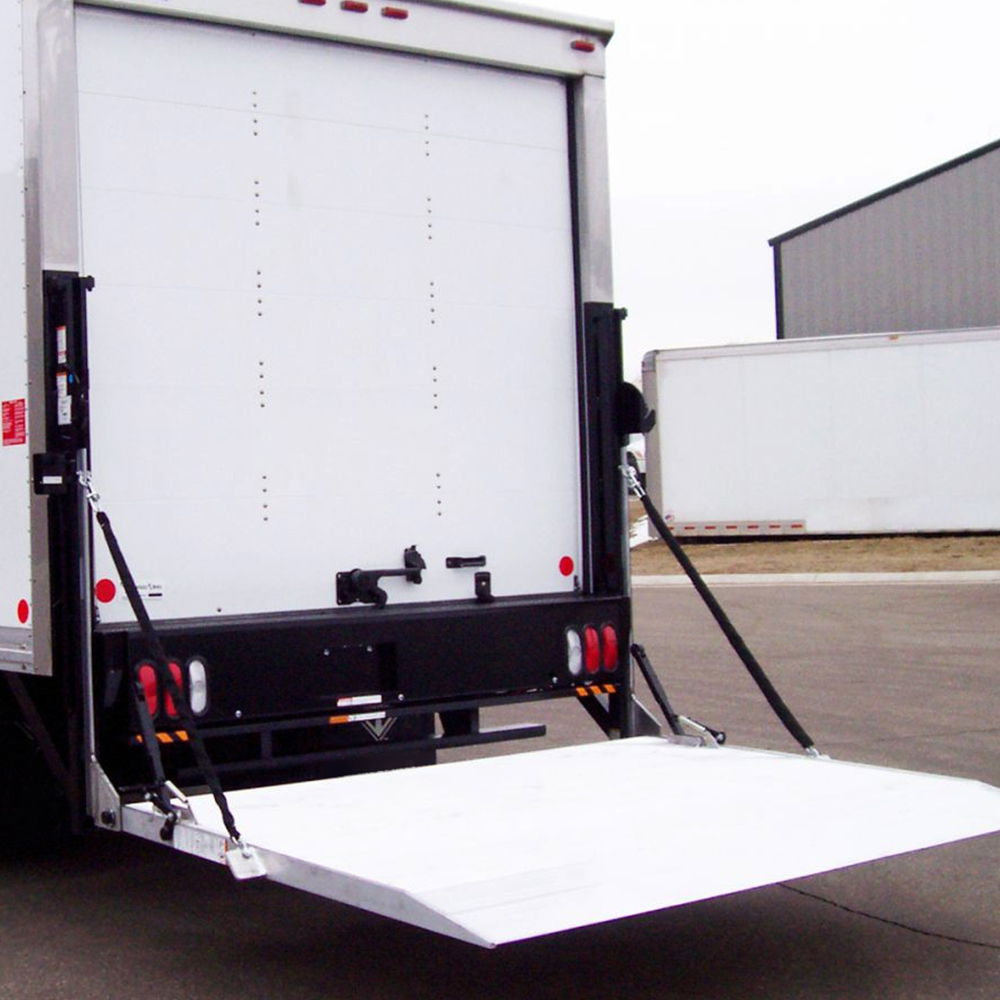
Because the rails bolt directly to the chassis, the vehicle needs adequate frame strength. It also needs enough mounting depth behind the cab. A cantilever unit, by contrast, relies mainly on the rear bumper area. Whether this affects rear door clearance depends on the vehicle configuration. Some vehicles have no rear doors at all. On these, installers can fit a column lift directly with no door clearance issue to consider. On vehicles that do keep rear doors, installers need to confirm one thing before the build: whether the rails will restrict how far the doors can open. This matters because it can interfere with forklift access or wide pallet loading at the depot.
One point deserves correction here, since general overview content often oversimplifies it. Whether a column lift is easy to retrofit does not have a single fixed answer. It depends on whether the specific vehicle’s chassis strength and mounting depth meet requirements. A vehicle with insufficient chassis rigidity can actually make a column retrofit more complex than a cantilever or folding retrofit. This happens because the column’s fixing points carry a sustained vertical load. That load places higher demands on frame stiffness. Confirm this with a body builder during the specification stage, not on installation day.
Column lift capacity typically ranges from around 500 kg on light box trucks to 2,000 kg or more on heavy-duty chassis. The exact figure always depends on the manufacturer’s rated specification for that model. This capacity range is one reason the column design suits heavy cargo well. The platform travels on a fixed vertical path instead of swinging on an arm. Because of this, it distributes load more predictably across the rails, even near the platform’s rated limit.
That same trait makes column lifts a common choice for furniture delivery. Large, awkwardly shaped items often sit off-center on the platform during these deliveries. A cantilever arm under an off-center load can flex slightly at full extension. A column lift’s rail-guided carriage does not have that failure mode. It tends to hold its level position more consistently under uneven weight distribution. For box truck operators running mixed loads, from appliances to stacked crates, this predictability often becomes the deciding factor over a lighter folding lift.
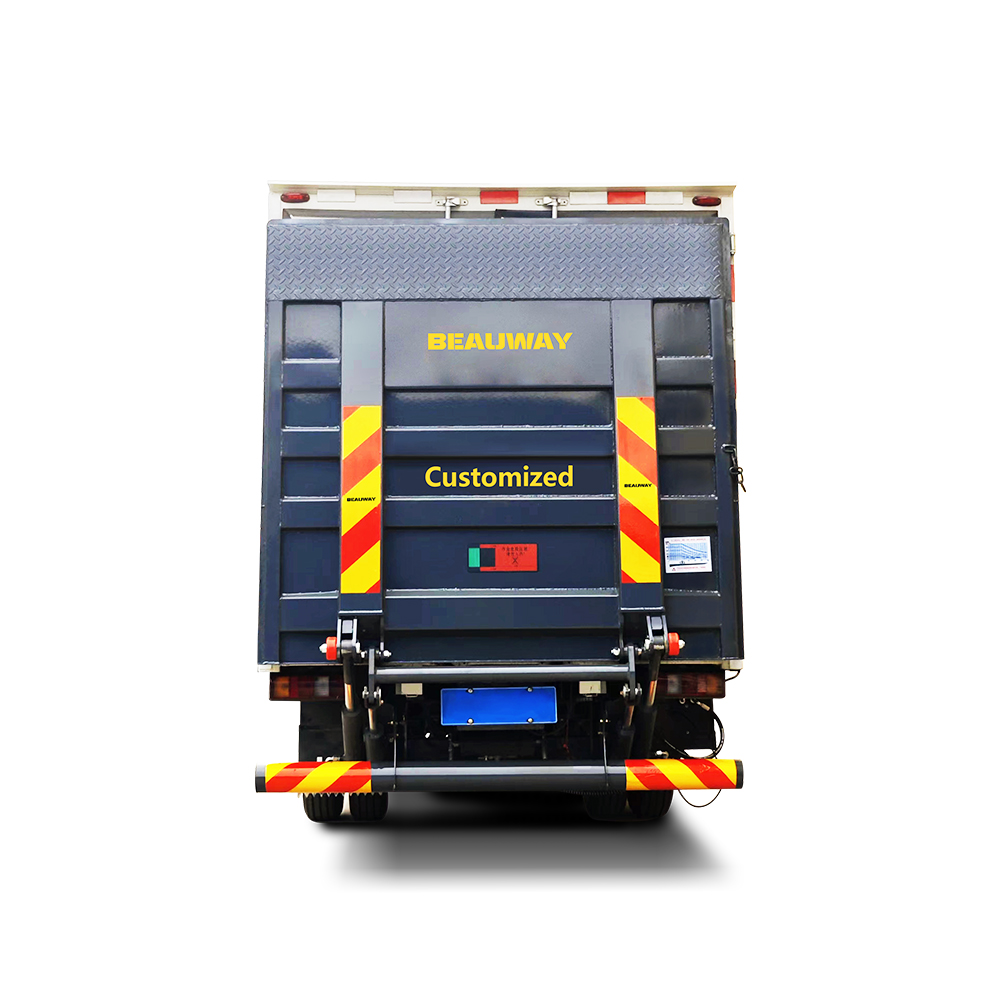
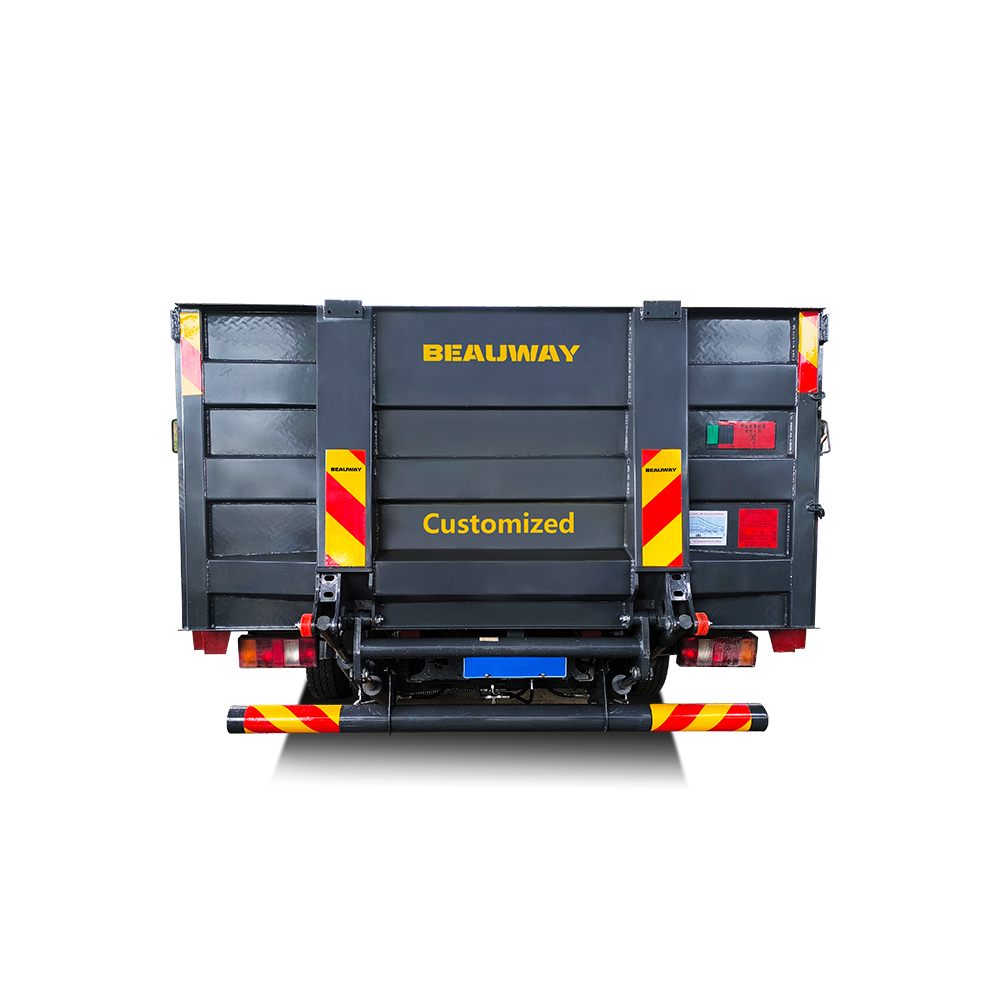
| Feature | Column | Cantilever | Folding |
|---|---|---|---|
| Chassis mounting requirement | Needs strong frame rigidity and mounting depth | Relies mainly on the rear bumper area, lower requirement | Depends on body structure, moderate requirement |
| Rear door impact | Depends on vehicle configuration: no impact on doorless vehicles; may restrict opening angle on vehicles with rear doors, needs confirming in advance | Minimal impact | Platform folds flat, largely unaffected |
| Main maintenance focus | Rail lubrication and carriage inspection; chain-driven models also need chain tension checks | Hydraulic arm pivot inspection | Folding mechanism and hinge inspection |
| Typical vehicle fit | Mainly medium and heavy trucks | Covers small to heavy vehicles | Vehicles with limited space, light-duty use |
This table shows the column design’s main advantage: a level platform throughout the cycle. But that advantage comes with installation conditions attached. It is not a universal fit simply because installers can install it. General selection guidance most often leaves out that condition.
Some vehicles have insufficient chassis strength and also need frequent access to underground parking or height-restricted areas. These usually do better with a folding or tuck-under design instead. Folding designs place lower demands on the chassis mounting points. Once folded, they largely avoid taking up ground clearance.
Cost is also worth raising early. A fixed column system installation requires a chassis strength assessment. This can mean a longer fitting time than a cantilever unit. In some cases, it also means a higher upfront installation cost. Operators should weigh this cost against the level-platform benefit. Base the decision on how often unstable or top-heavy loads actually occur on your routes, rather than on a single worst-case delivery.
Maintenance follows a similar rhythm to other hydraulic tail lift types. This includes a daily visual check before the first use of the shift, plus a weekly no-load function test. Hydraulic fluid checks happen at the interval the manufacturer sets. Chain-driven column variants add one more item: periodic chain tension and lubrication checks. The chain stretches slightly over time under sustained load, which is why this check matters. This item does not apply to direct cylinder models.
A column tail lift is a hydraulic loading platform. It rises and falls along vertical rails fixed to a truck’s chassis, and it stays level throughout the entire lift cycle.
Not necessarily. This depends on whether the vehicle’s chassis strength and mounting depth meet requirements. A vehicle with insufficient rigidity can make a column retrofit more complex than a cantilever one.
It depends on the vehicle. Some vehicles have no rear doors at all, so installers can fit a column lift with no clearance issue. On vehicles that keep rear doors, the rails may limit how far the doors open. Confirm this against the body plan beforehand.
Daily visual checks and weekly no-load function tests are standard, in line with other hydraulic tail lift types. Chain-driven models also need periodic chain tension and lubrication checks.
A chain drive lets a shorter hydraulic cylinder stroke produce a longer platform travel distance. This suits trucks with taller load beds, where a direct cylinder would need an impractical length.
Column lift capacity generally runs from about 500 kg on light box trucks to 2,000 kg or more on heavy-duty chassis. Always check the manufacturer’s rated specification for the exact model, since capacity varies by design and vehicle class.
Body builders or vehicle outfitters usually make this kind of specification decision together with the operator. They confirm chassis strength, mounting depth, and rear door clearance before placing an order. This matters more than relying on load capacity figures alone. Operators commonly compare column and cantilever tail lifts side by side at this stage. They weigh cargo type, door clearance needs, and daily duty cycle. Some operations also handle dock-to-vehicle transfers on the same route. For these, check that a dock leveler’s capacity matches the tail lift at the same time. A mismatch between the two can create a bottleneck at the loading bay.
Once the specification is settled, the choice of manufacturer matters almost as much as the design itself. Reputable tail lift manufacturers build their column, cantilever, and folding ranges to meet EN 1756. This is the European standard covering lifting platforms fitted to goods vehicles. A supplier who can point to this compliance on request is generally a safer bet than one who cannot. It also pays to ask a prospective supplier or OEM partner three practical questions. How long have they supplied column lifts for your vehicle class? What warranty and spare-parts lead time do they offer? Can they provide references from fleets running similar duty cycles? An installer who has fitted the same column lift model across a comparable fleet brings real value. They will usually spot chassis or rear-door conflicts before those become a costly change order. That kind of hands-on experience is worth confirming before signing off on a supplier.