Having trouble submitting? Email us directly at nicole@beauway.com and we'll get back to you within 24 hours.











How Much Range Does a Liftgate Really Cost Your Electric Van?
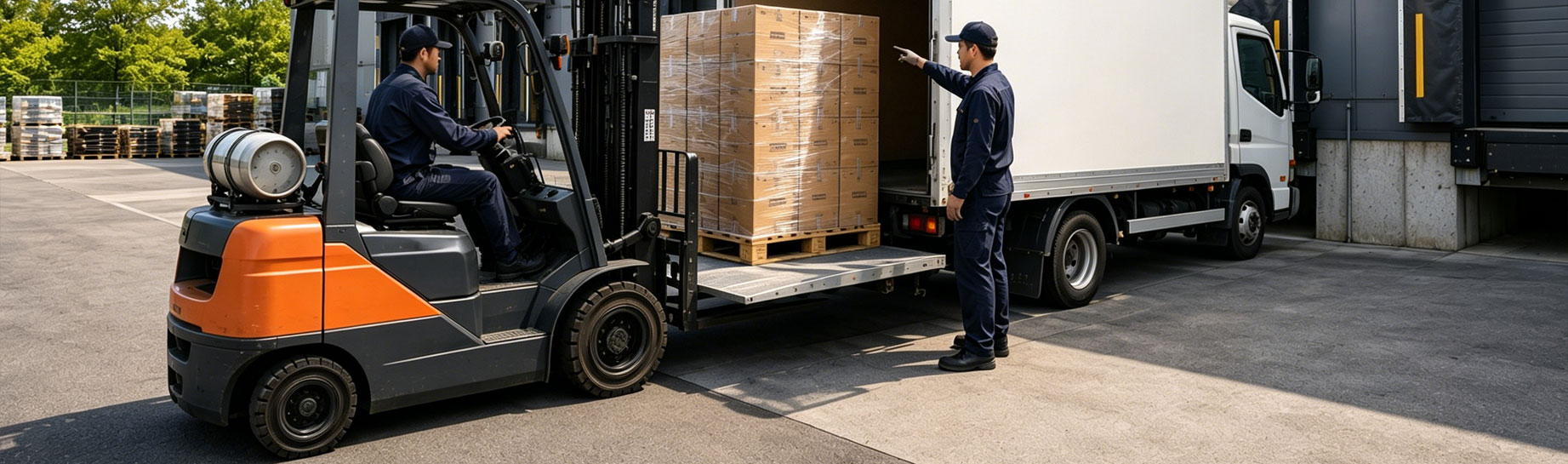
Fleet managers switching to electric vans are learning a new rule. Diesel operators never had to think about it: every kilogram costs something. A van liftgate used to be a simple line item. Pick the capacity you need, bolt it on, move on. Fuel economy took a small hit. Nobody noticed. Nobody cared.
Electric vans changed that math. Battery-powered vans are already 200–400 kg heavier than diesel equivalents before a single box goes in the back. The battery pack itself is dead weight the engine never had to carry. Add a van liftgate on top of that, and you’re stacking one weight penalty on another. The question almost nobody asked five years ago is simple: how much range does your van liftgate actually cost you?
This isn’t a theoretical concern. It’s showing up in fleet planning spreadsheets right now. Delivery, retail distribution, and last-mile logistics operators are all converting diesel routes to battery power. Unlike fuel savings or charging infrastructure, a van liftgate is one variable fleet managers can control almost entirely. That control happens at the procurement stage, before the vehicle ever hits the road.
Most conversations about electric fleet conversion focus on the big, visible variables. Battery size, charging speed, and total cost of ownership get the attention. Those are the right questions. But they crowd out a quieter one. It only becomes obvious once vehicles are on the road and drivers report that routes feel tighter than the spec sheet promised. A van liftgate used to be a fixed, unremarkable spec. Now it’s part of the range equation, whether anyone budgeted for that or not.
Why a Van Liftgate Costs More Range on Electric Vans Than Diesel
The Physics of Extra Weight
The physics is straightforward, even if the consequences aren’t. A diesel engine loses some efficiency when hauling extra weight, but the loss is modest. A commonly cited figure is 6–8% more fuel burned per 1,000 kg of added load. Electric motors don’t get that same partial-throttle grace. Every additional kilogram requires proportionally more energy to accelerate. There’s no efficiency curve to hide behind. Regenerative braking recovers some energy on deceleration. But it never fully offsets the extra draw needed to get the mass moving in the first place.
What Real Fleet Data Shows
Industry fleet testing puts the electric-side penalty at roughly 5–8% of range lost for every 100 kg of added weight. That’s under normal driving conditions. The loss is worse on stop-start urban routes. It’s worse again in cold weather, when battery chemistry itself becomes less efficient on top of the added mass. This figure is most reliable for a smaller, fixed-weight change, which is exactly what a van liftgate represents. It doesn’t scale in a straight line up to a full cargo payload. Aerodynamics, duty cycle, and battery buffering behave differently at higher loads.
That distinction matters. One widely reported real-world example shows why. A Mercedes-Benz eSprinter with a 113 kWh battery drops from roughly 260 miles unladen to approximately 180 miles once loaded with 1,200 kg of cargo. That’s a 31% reduction. It’s a dramatic number, but it reflects a near-maximum payload. It isn’t the fixed, much smaller weight of equipment like a van liftgate. It’s still useful context. It shows how seriously electric vans respond to mass, even if the percentage doesn’t translate directly to the 100 kg comparisons that matter for equipment specification.
Winter Makes It Worse
Below roughly 5°C, battery chemistry becomes measurably less efficient. Cabin heating alone can draw several kilowatts of continuous power. A diesel van simply gets that heat as a byproduct of the engine. Fleet operators moving from diesel to electric routinely report a pattern. A van rated for around 217 miles in mild weather can deliver closer to 140 miles in January conditions under a full load. Every kilogram of unnecessary dead weight compounds that seasonal loss, rather than sitting neutral on top of it.
Here’s the part that matters for anyone speccing equipment: a van liftgate isn’t cargo. It’s dead weight that rides on the van every single day, on every single route. That’s true whether the van is fully loaded or running empty back to the depot. Unlike the goods being delivered, it never comes off between stops. Every gram of it is a permanent tax on range, applied on every trip for the vehicle’s entire service life.
The core number: electric vans lose roughly 5–8% of range for every 100 kg of added weight — a penalty diesel vans barely feel, and one that applies to a van liftgate on every single trip for the life of the vehicle.
How Much Does a Van Liftgate Actually Weigh?
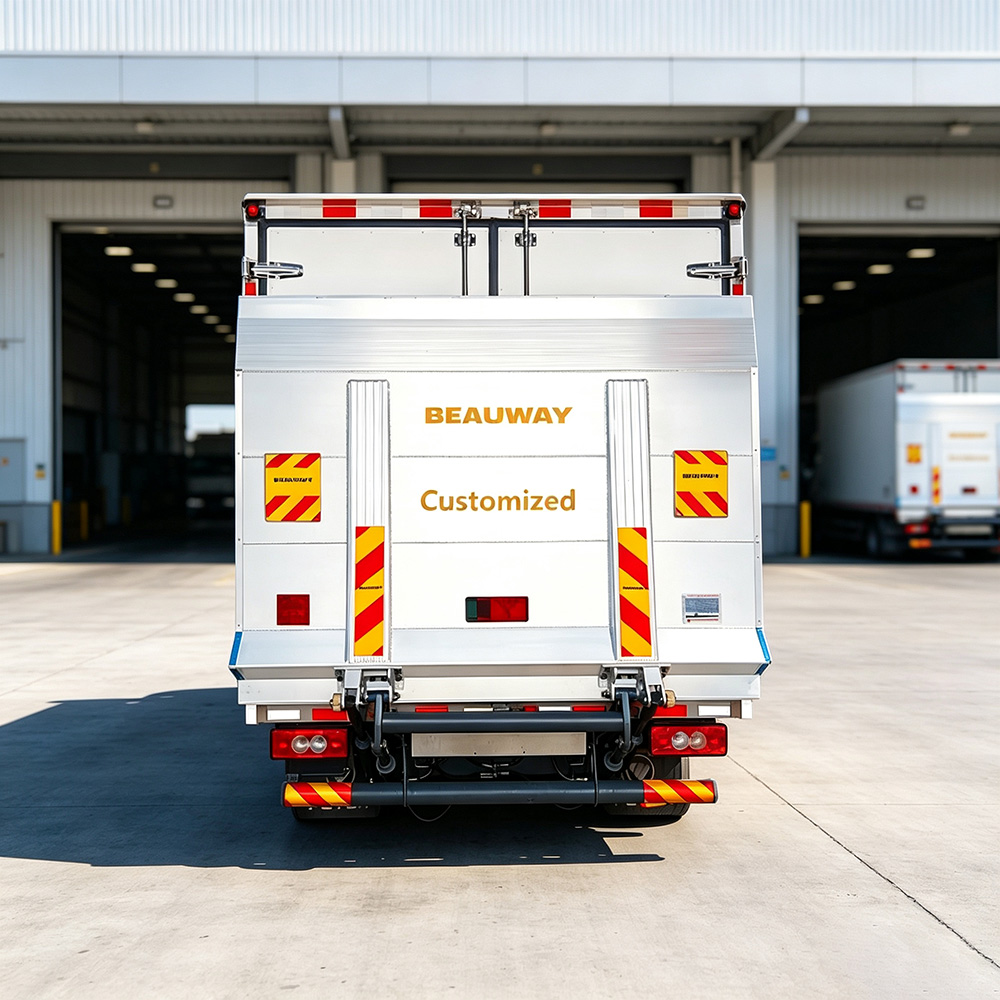
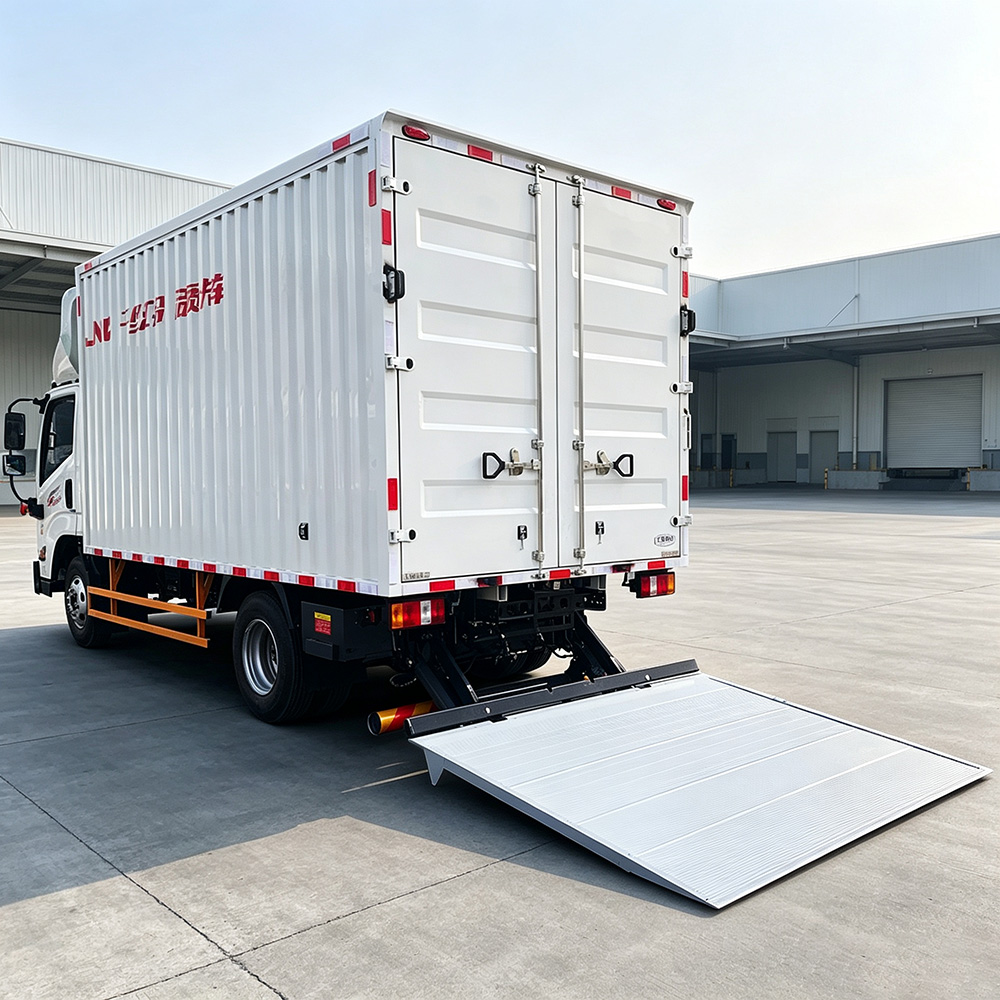
This is where the numbers get concrete. Truck liftgate weight capacity and actual dead weight are related, but they’re distinct figures. A unit built to lift more weight generally needs a heavier structure to do it safely. The material used to build that structure changes the equation, though, sometimes by a meaningful margin for units rated at the same working load.
Steel Liftgates
Steel platforms, still common for heavy-duty applications, typically weigh 400–500 kg. The exact figure depends on rated capacity and platform size. They’re strong, proven, and inexpensive to produce. For decades they were the default choice. Nobody was counting the weight penalty against a fuel budget that could absorb it. Every one of those kilograms still sits on the vehicle permanently, whether the route calls for that much strength or not.
Aluminum Liftgates
An aluminum liftgate tells a different story. It’s built from anodized aluminum rather than mild or high-strength steel. An aluminum liftgate for box truck and van applications typically weighs 350–450 kg for the same working capacity range. Liftgate manufacturers put the overall weight advantage of an aluminum liftgate platform over steel at roughly 10–15%. That’s a smaller gap than the raw material difference might suggest. The frame and hydraulics account for a large share of total weight in both versions. It’s a real, consistent saving on a van liftgate, not a dramatic one. But it matters on last-mile delivery vans, where every spare kilogram of payload counts.
That comparison isn’t abstract. Compare a steel platform at the higher end of its typical weight band against an aluminum platform at the lower end. Say 500 kg versus 400 kg, both rated for the same lifting capacity. That’s a 100 kg difference sitting permanently on the vehicle. It’s there before a single package is loaded and before the van has driven a single mile.
| Steel Liftgate | Aluminum Liftgate | |
|---|---|---|
| Typical dead weight | 400–500 kg | 350–450 kg |
| Weight advantage vs. steel | — | ~10–15% lighter |
| Rated capacity range | 500–2,000 kg | 500–2,000 kg |
| Price vs. steel equivalent | Baseline | ~20% premium |
| Corrosion resistance | Lower (unless galvanized) | Higher (anodized finish) |
| Best fit | High-abuse, high-cycle routes | Range-constrained EV fleets |
Turning Van Liftgate Weight Into Real Range Numbers
The Range Math
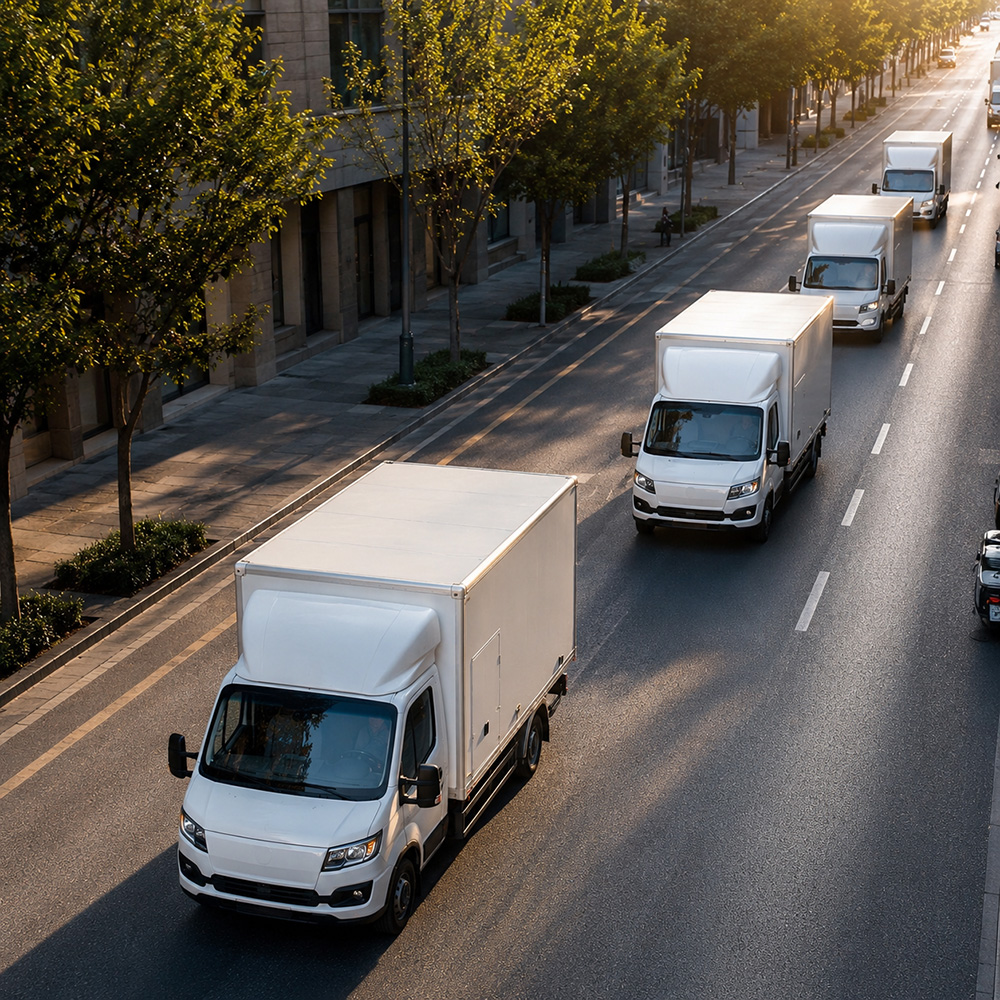
Put the two data sets side by side and the math is simple. Every 100 kg of weight costs an electric van roughly 5–8% of its range. Swap a 500 kg steel van liftgate for a lighter 400 kg aluminum unit, and that’s a 100 kg saving. It recovers somewhere in that same 5–8% band. The exact figure depends on route conditions, ambient temperature, and battery size.
For a van rated at 150 miles of real-world range under load, that’s meaningful. It’s the difference between 150 miles and roughly 158–162 miles on the same battery. It’s not a dramatic swing on any single day. But for a fleet running a dozen vans on tight delivery windows, a consistent few percent of range adds up. Over thousands of stops a year, that means fewer charging interruptions and a little more cushion on routes already running close to the edge of a single charge.
The Trade-Off
It’s worth being honest here too: a lighter aluminum liftgate isn’t a free upgrade. Liftgate manufacturers report a price premium of roughly 20% for aluminum over a comparable steel unit. Modern aluminum alloys hold up well under commercial use. But extremely high-cycle, high-abuse applications may still favor steel’s raw durability and lower replacement cost if damaged. The decision comes down to what your routes actually demand. Range-constrained electric van fleets have a stronger case for going lighter than diesel fleets ever did. For diesel, the same weight saving was worth a rounding error in fuel cost.
What to Look for When Specifying a Van Liftgate for an EV Fleet
Fleet managers converting routes to electric power shouldn’t just ask what liftgate capacity they need. They should ask a second question: what’s the lightest unit that still meets that capacity safely? Specifying a van liftgate for an electric fleet increasingly means treating weight and capacity as the same decision, not two separate ones.
Capacity and Weight
- Match capacity to actual cargo, not worst-case cargo. Oversizing a unit “just in case” is the single most common way fleets end up carrying dead weight they don’t need. If your typical load is 400 kg, specifying more capacity because it feels safer just adds unnecessary structure. That means unnecessary range loss, on every route, every day, for years.
- Prioritize lightweight platforms where the duty cycle allows it. Weight now translates directly into range on electric vans. A lighter aluminum liftgate deserves serious consideration anywhere the application doesn’t specifically demand steel’s extra ruggedness. Anodized aluminum resists corrosion well in wet or coastal climates. The weight advantage doesn’t come at the cost of shortened service life, the way some fleet buyers assume.
Maintenance and Power
- Factor in liftgate maintenance from day one. A poorly maintained hydraulic system doesn’t just risk breakdowns. It can quietly reduce efficiency over time as seals wear and hydraulic fluid degrades. That adds small but real energy losses on top of the weight penalty already built into the equipment. A simple routine helps: fluid checks, hinge lubrication, and seal inspection. It keeps the system running at its designed efficiency, and it’s far cheaper than replacing a hydraulic pump mid-route.
- Consider how the lift is powered. Most modern electric liftgate systems already run on the van’s own electrical system rather than a separate hydraulic pump. They draw power directly from the vehicle battery through a 12V or 24V circuit. On an electric van, that draw comes from the same battery pack powering the drivetrain. Lift cycle efficiency matters more now. A diesel engine’s alternator used to handle the load without a second thought about where the electricity came from.
Matching Van Liftgate Capacity to Your Fleet
Capacity Classes at a Glance
Most cargo van with liftgate applications share a pattern. In last-mile delivery, retail distribution, and courier work, real-world load requirements rarely exceed 2,000 kg per lift cycle. Most fall well under that figure. This is exactly the capacity range where lightweight construction makes the most practical sense. It’s heavy enough for real commercial loads, but light enough that the weight penalty doesn’t erase the benefits of going electric.
| Capacity Class | Typical Use Case |
|---|---|
| 500 kg | Parcel and courier routes, light last-mile delivery |
| 1,000 kg | General retail distribution, mixed-load delivery |
| 1,500 kg | Palletized goods, heavier retail routes |
| 2,000 kg | Cold chain distribution, heavier commercial loads |
| Above 2,000 kg | Custom-engineered platforms |
A product lineup built around these four capacity classes covers most van and light-truck delivery work. Loads beyond that range typically call for a custom-engineered van liftgate. Offering both aluminum and steel platform options within that standard range helps too. It lets a fleet manager dial in exactly how much capacity margin they need, without carrying the weight of a heavier-duty unit the route never demanded.
The Bigger Picture
The practical takeaway is straightforward for anyone specifying a van liftgate for an electrifying fleet. Capacity and weight are no longer separate line items on a spec sheet. They’re the same decision, viewed from two angles. Treating them separately is how fleets end up carrying dead weight they never actually needed.
The Bottom Line
Electric van adoption is forcing fleet managers to rethink components that used to be an afterthought. The van liftgate is a clear example. A 100 kg difference between a steel and a lighter aluminum liftgate used to be a rounding error in fuel costs. It was invisible in any monthly spreadsheet a finance team would actually scrutinize. On an electric van, that same 100 kg is a real, single-digit percentage of daily range. It’s modest on any one trip. But over a full year of routes, it’s enough to shift charging schedules. At fleet scale, it can change how many vehicles are needed to run the same delivery load.
More operators will keep converting delivery and distribution fleets to electric power. As they do, van liftgate weight will move from an ignored spec on a data sheet to a standard line item in every fleet procurement conversation. It will sit right alongside battery size and charging speed. Getting ahead of that shift now is a straightforward move. Specify the lightest platform that safely meets actual load requirements, and you protect range on vehicles where every mile is already harder-won than it used to be.
Frequently Asked Questions
How much weight can a liftgate hold?
Rated capacity on standard van and light-truck units typically ranges from around 500 kg up to 2,000 kg. Custom-engineered platforms are available for loads beyond that. The right rating depends on typical cargo weight, not worst-case load. Oversizing a van liftgate adds unnecessary dead weight. That costs range on electric vehicles, without adding any real-world benefit on routes that never require the extra margin.
Does a lighter van liftgate really make a measurable difference on an electric van?
Yes, though the gain is steady rather than dramatic. Aluminum liftgate platforms typically weigh around 10–15% less than steel units rated for the same capacity. That’s roughly 400 kg versus 500 kg, for example. Electric vans lose roughly 5–8% of range per 100 kg of added weight. So that kind of saving can recover a comparable single-digit percentage of daily range. It’s a real, cumulative edge for tightly scheduled delivery routes running close to the edge of a single charge.
Is maintenance different for electric vans compared to diesel ones?
The core tasks are the same regardless of powertrain: hydraulic fluid checks, hinge lubrication, seal inspection. What changes is the stakes. A system drawing power inefficiently pulls that extra energy from the same battery powering the van itself. So does a hydraulic pump working harder than it should due to wear. A diesel engine has power to spare and a fuel tank that refills in minutes. An electric van doesn’t have that same slack.
What capacity is right for a typical delivery van fleet?
Most delivery, courier, and retail distribution routes use loads well under 2,000 kg per lift cycle. A standard range of 500 kg to 2,000 kg covers the large majority of van and light-truck applications. It’s available in either steel or aluminum platform construction, without oversizing the equipment. Heavier or more specialized loads generally call for a custom-built van liftgate.
Trusted by Fleet Operators Across 60+ Countries
Stop Losing Time at the Loading Dock.
Get a Custom-Matched Tail Lift Quote in 24 Hours.
60
Countries Served
24h
Quote Turnaround
99.9
Field Uptime
5.0
Customer Rating
No Obligation
CE & UKCA Certified
Standard & Custom Builds
Worldwide Shipping