Having trouble submitting? Email us directly at nicole@beauway.com and we'll get back to you within 24 hours.











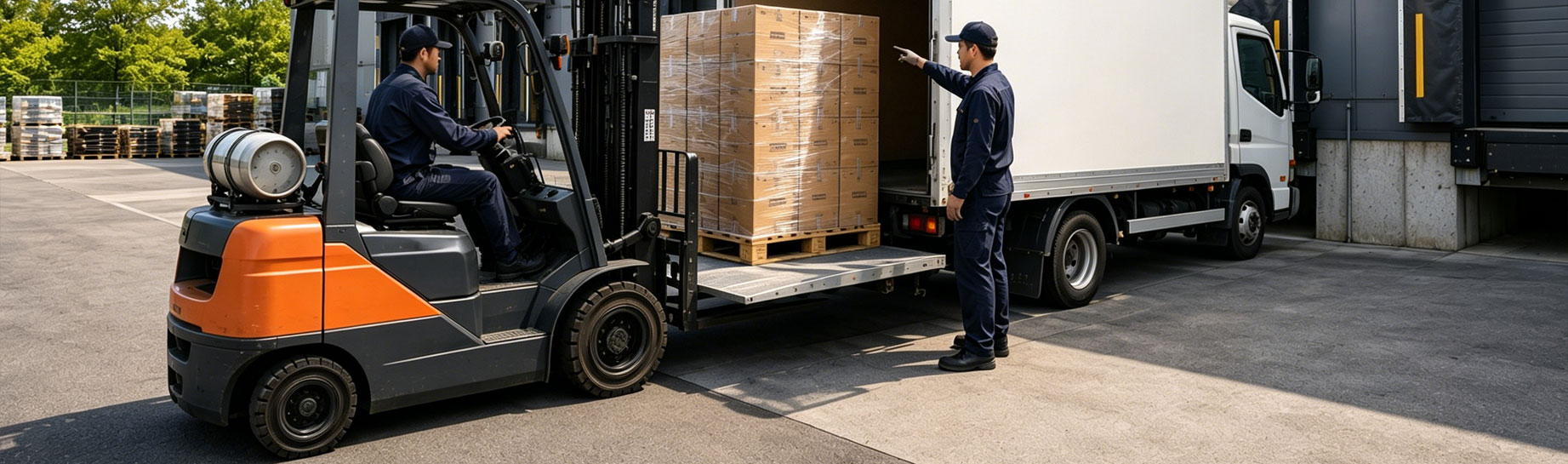
Column Tail Lift Safety Guide for Delivery Trucks
Tail Lift Safety Checklist for Delivery Trucks
Use this tail lift safety checklist before every shift to catch problems early and load cargo safely. A column tail lift moves heavy freight between the truck bed and the ground. It saves your team from manual lifting, but it can cause injury or equipment damage if you skip basic checks. This guide gives you a clear, step-by-step tail lift safety checklist covering equipment basics, pre-use inspection, safe operation, common hazards, and maintenance.
Why You Need a Tail Lift Safety Checklist Before Every Shift
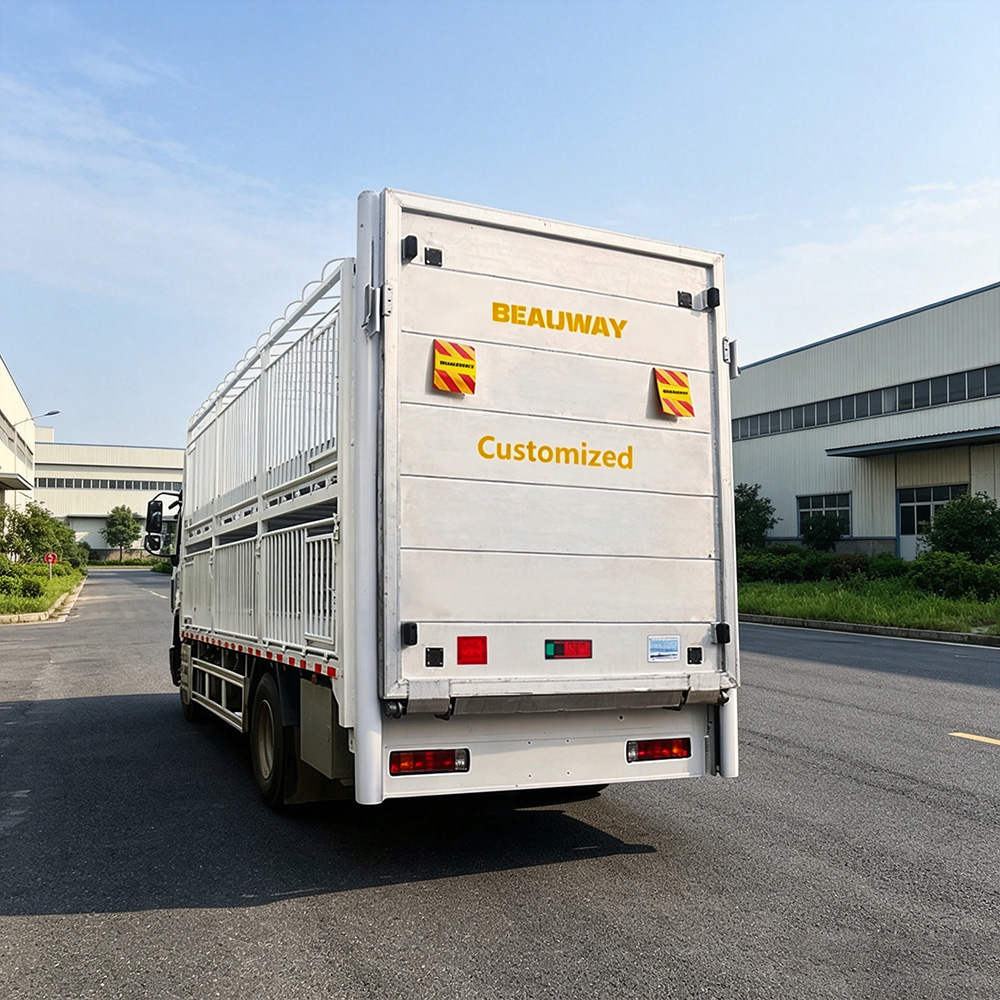
Most tail lift accidents happen for one reason: someone skipped a check. A simple tail lift safety checklist takes only a few minutes to run through. It catches worn hoses, loose bolts, and failing hydraulics before they cause a breakdown or an injury. Build this checklist into your daily routine, and most incidents never happen in the first place.
Understanding the Column Tail Lift
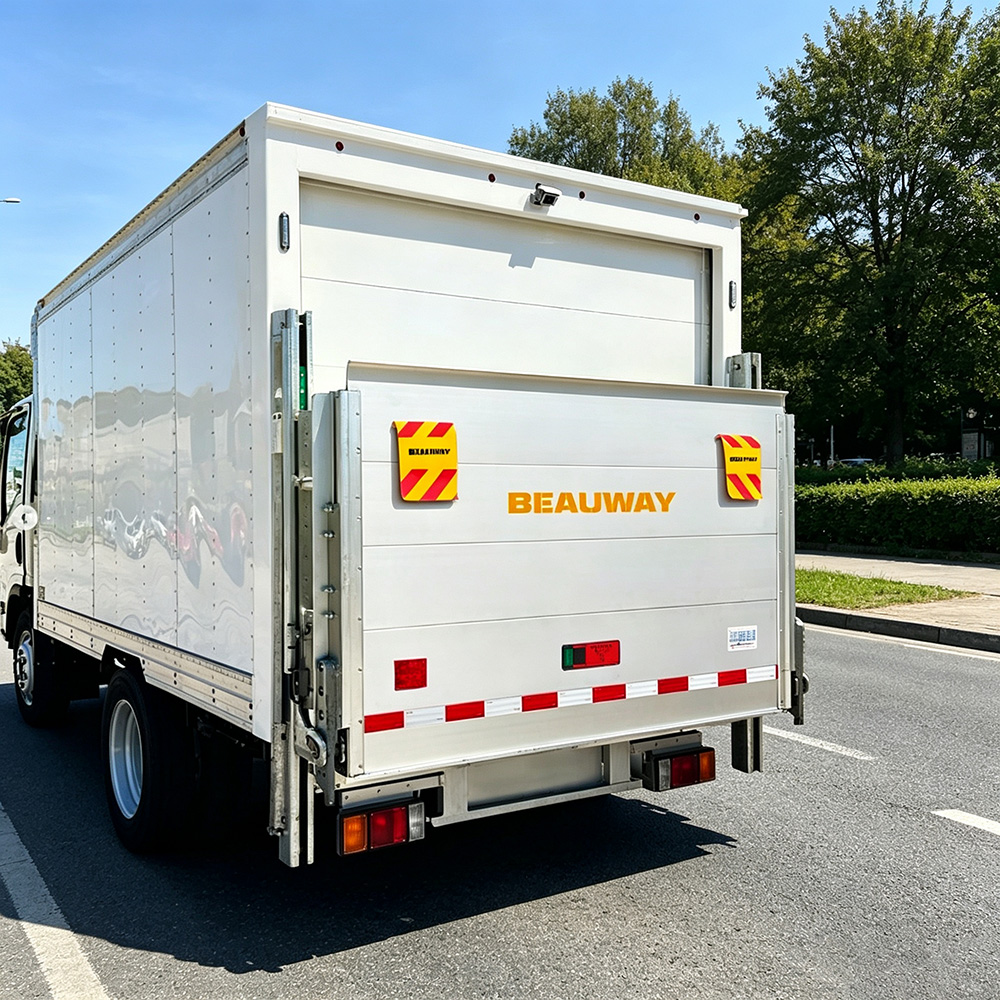
A column tail lift uses vertical posts on either side of the platform. These columns guide the platform in a straight line as it rises and falls. This design differs from a cantilever tail lift, which relies on extending arms instead of columns. Column lifts hold steady under heavy palletized freight, so fleets running medium and heavy-duty trucks often choose this configuration.
Five parts make up the system:
- Platform — carries the load during lifting and lowering
- Columns — keep the platform tracking straight
- Hydraulic system — pump, cylinders, and fluid lines that power the lift
- Control panel or remote — lets the operator raise, lower, and stop the platform
- Safety features — emergency stop button, safety lock, and warning lights
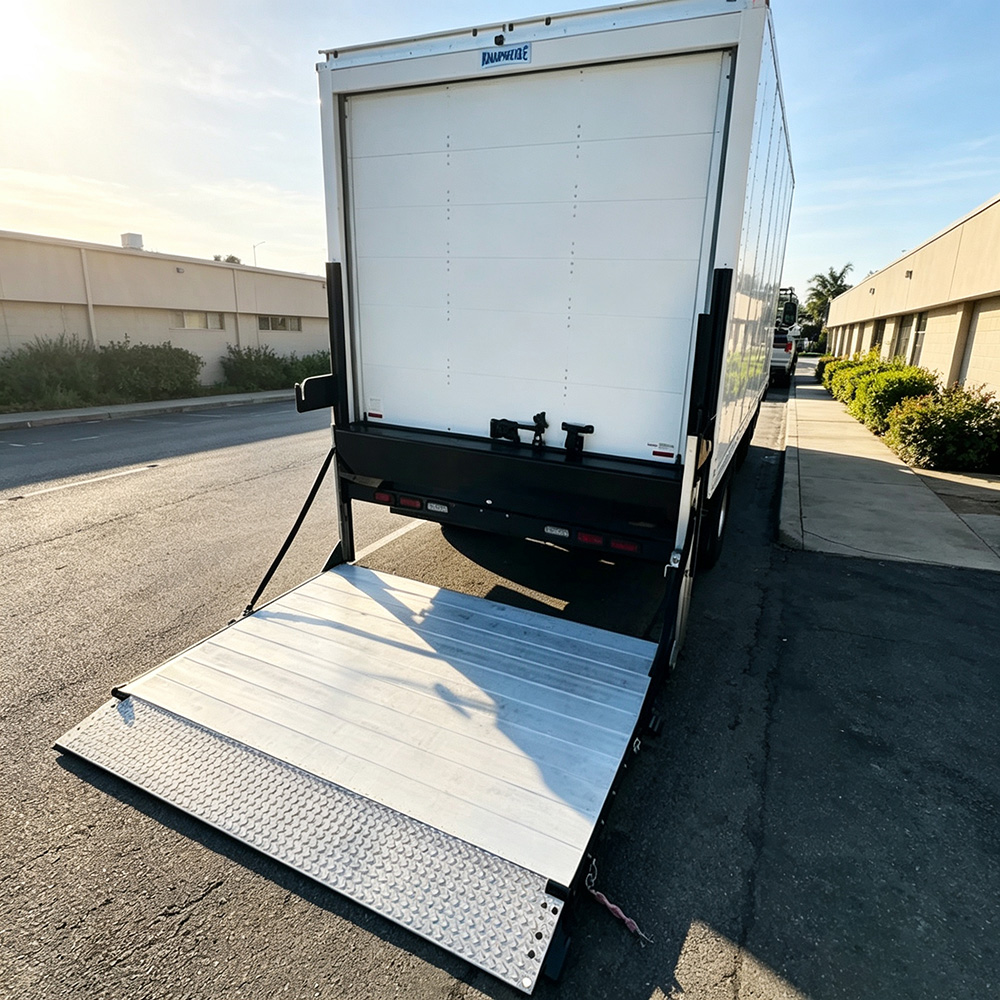
Hydraulic cylinders push the platform up to meet the truck bed, or lower it to ground level. The columns carry the structural load and stop the platform from tilting.
Pre-Operation Tail Lift Safety Checklist
Run through these checks before you switch the lift on.
Visual check:
- Look at the platform, columns, hoses, and controls for damage.
- Check the frame and moving parts for rust or looseness.
- Clear the platform of debris or slippery residue.
- Confirm safety labels are present and readable.
Functional check:
- Test the controls to confirm smooth movement in both directions.
- Press the emergency stop and confirm it halts the lift instantly.
- Check that the safety lock engages the moment you activate it.
- Listen for unusual noise, which often signals a leak or worn part.
Skip this checklist even once, and you increase your risk of a mid-shift failure.
Safe Operating Checklist for Loading and Unloading
Position the vehicle first. Park on level ground. Apply the parking brake. Turn off the engine if your company requires it. Switch on hazard lights in busy areas.
Operate with care. Stay clear of moving parts. Keep hands and feet away from pinch points between the platform and the truck. Control the lift only from its designated position. Never exceed the rated load capacity. Distribute cargo evenly across the platform. Raise and lower the platform slowly.
Load and unload smartly. Use a ramp where one is available. Call for help with heavy or awkward items. Stay clear of spots where cargo could trap you against the truck. Talk to your team throughout the process.
Common Tail Lift Hazards and How to Avoid Them
Overload and imbalance. An overloaded or unevenly loaded platform tilts. A tilted platform drops cargo or triggers a malfunction. Stick to the rated capacity and balance every load.
Hydraulic faults. Leaks, trapped air, or a failing pump all cause jerky or inconsistent movement. Catch these early with regular inspection, before the lift stops working entirely.
Slips and falls. Wet or greasy platforms cause slips independent of the lift mechanism itself. Keep the surface clean and avoid operating in bad weather when you can.
Maintenance Checklist for Long-Term Safety
Follow this maintenance checklist to keep your tail lift reliable over time:
| Frequency | Task |
|---|---|
| Daily | Visual check for damage or leaks |
| Weekly | Functional check of hydraulics and controls |
| Monthly | Lubrication of moving parts |
| Scheduled service | Fluid check, worn-part replacement, full safety test |
Address anything unusual immediately. Don’t wait for the next scheduled visit. Store the lift in the lowered position when it’s not in use. This reduces weather exposure and eases stress on hydraulic parts.
Training Operators to Follow the Safety Checklist
Train every operator on the specific controls of your lift. Cover load limits and balancing technique directly. Walk through emergency procedures, including the stop button. Teach operators to run the pre-operation checklist without supervision.
Schedule refresher training after you introduce a new model or update existing equipment. Old habits cause the most mistakes right after a change.
Fleets that work across multiple countries should note the equipment goes by different names locally. CIS operators often use the term Гидроборт (Gidrobort). Middle East logistics teams may use رافعة ذيلية for the same equipment category. Keep your translated safety materials consistent across these terms. This avoids gaps in understanding for international crews. Check your local workplace lifting regulations too — LOLER in the UK is one example. Keep training records and inspection logs aligned with local rules.
Emergency Response Checklist
Press the emergency stop the moment something malfunctions or feels unsafe. Don’t wait to assess the situation first.
If an incident happens, follow these steps:
- Shut down the equipment immediately.
- Provide first aid or call emergency services if needed.
- Report the incident to a supervisor.
- Follow your company’s full safety procedure.
Tail Lift Safety Checklist: Frequently Asked Questions
What’s the difference between a column and a cantilever tail lift?
A column lift uses vertical posts for straight, stable movement. A cantilever lift uses extending arms instead. Column lifts suit medium and heavy-duty trucks carrying palletized freight.
How often should I run a tail lift safety checklist?
Run a visual check daily. Run a functional check weekly. Lubricate moving parts monthly. Schedule professional servicing separately for fluid checks and part replacement.
What causes most tail lift accidents?
Overloading and uneven weight distribution cause the majority of incidents. Both push the platform toward tilting during operation.
Do operators need certification to use a hydraulic tail lift?
Requirements vary by region. Most areas require equipment-specific training and compliance with local lifting regulations. Confirm your local rules before daily use.
Closing Note
A reliable tail lift safety checklist protects your operators, your cargo, and your equipment. Most incidents trace back to a skipped check, an overloaded platform, or a rushed operation — not equipment failure. Build this checklist into daily operations, and you cut your risk significantly.
Trusted by Fleet Operators Across 60+ Countries
Stop Losing Time at the Loading Dock.
Get a Custom-Matched Tail Lift Quote in 24 Hours.
60
Countries Served
24h
Quote Turnaround
99.9
Field Uptime
5.0
Customer Rating
No Obligation
CE & UKCA Certified
Standard & Custom Builds
Worldwide Shipping