Having trouble submitting? Email us directly at nicole@beaway.com and we'll get back to you within 24 hours.











Cold Chain Tail Lift for Refrigerated Trucks: Buyer’s Guide
Cold Chain Logistics: How to Choose the Right Tail Lift for Refrigerated Trucks
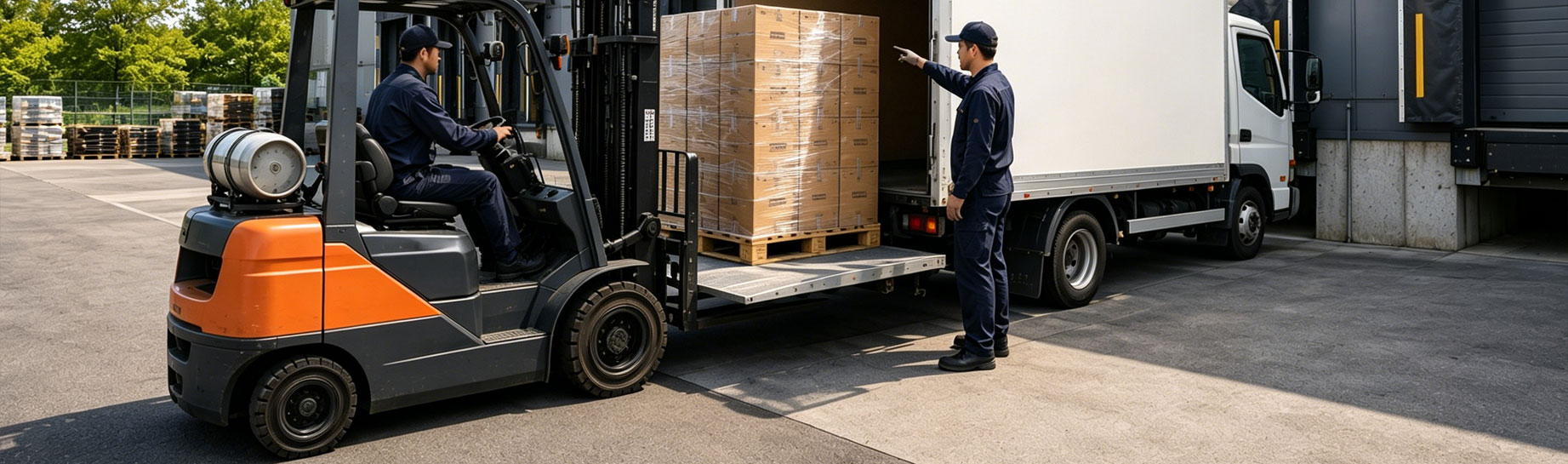
Most buyers sourcing a tail lift for refrigerated trucks focus on the truck itself. The tail lift is an afterthought — until it fails mid-route and a full pallet of pharmaceutical product hits room temperature somewhere between the depot and the delivery point.
In cold chain logistics, a tail lift for refrigerated trucks isn’t a loading accessory.It’s a temperature control decision. Every time that platform drops, the cargo door opens. Every second that door stays open, the internal temperature climbs. Choose the wrong lift type, undersize the capacity, or pick a supplier that can’t deliver low-temperature hydraulic fluid specs — and you’re not just looking at downtime. You’re looking at ATP violations, product loss, and customer contracts at risk.
This guide is written for procurement managers, fleet operators, and cold chain distributors who need to get this decision right — whether you’re placing a sample order or locking in a 50-unit supply contract.
Why the Cold Chain Environment Changes Everything
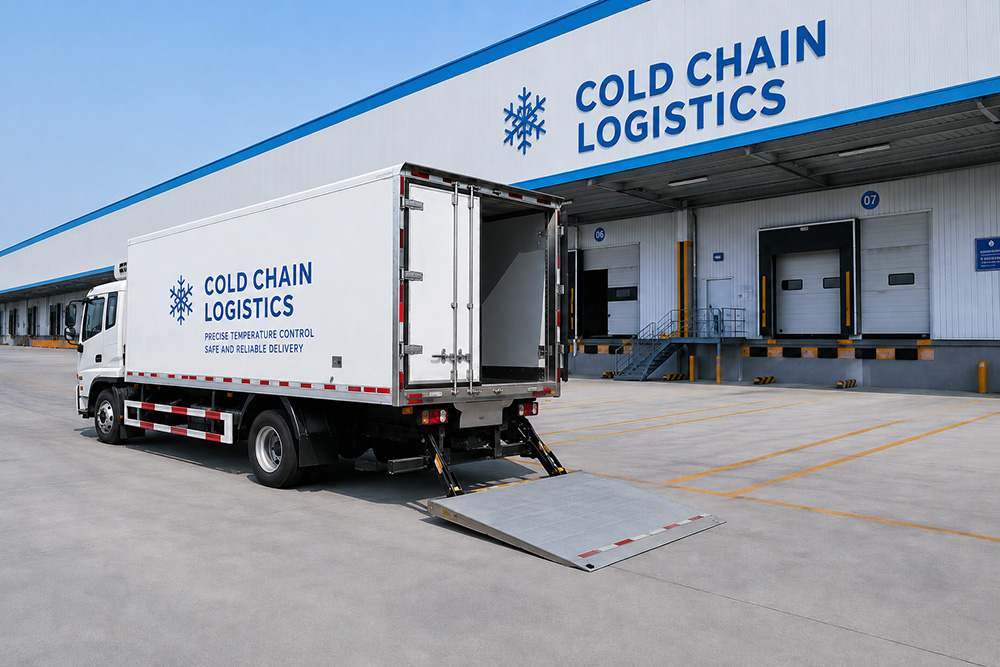
Standard freight tail lift selection is mostly about capacity and price. Cold chain is different. Here you’re dealing with moisture-heavy environments, low-temperature hydraulic performance, corrosion from road salt and refrigerant condensation, and loading bay conditions that range from -25°C cold stores to 35°C Southeast Asian warehouses.
A tail lift that works fine on a dry goods truck may start failing hydraulic cycles at -10°C. A platform that handles 1,500 kg in summer testing may show structural fatigue after two winters of frozen food delivery runs. Corrosion that takes five years to appear on a standard vehicle can show up in eighteen months on a refrigerated truck operating coastal routes.
The right cold chain tail lift selection comes down to five things: lift type, load capacity, platform material, hydraulic system cold-weather performance, and supplier support. Get all five right and the lift disappears into your operation — reliable, invisible, exactly what it should be.
The Four Tail Lift Types That Work in Cold Chain
Not every tail lift belongs on a refrigerated truck. Fold tail lifts, for instance, create hinge-point moisture traps and perform poorly in icy conditions — they’re off the list for serious cold chain applications. The four types that consistently prove out in temperature-controlled fleet operations are cantilever, built-in, vertical, and concealed.
1. Cantilever Tail Lift
No columns. No obstruction. The platform extends straight back from a fixed arm structure on the vehicle frame, leaving the entire rear opening clear for whatever you’re loading — wide pallets, roll cages, bulk dairy crates that don’t fit neatly between side posts.
In cold chain, that matters more than it sounds. A narrower loading window means more repositioning. More repositioning means more time with the door open. With a cantilever lift, you load wide, you load fast, and you close the door before the temperature curve has time to move.
These are the workhorses of food logistics and frozen food distribution fleets. If you’re standardizing a large fleet under a long-term supply contract, cantilever models offer the broadest OEM customization options and the most consistent availability across manufacturers.
Best for: Food logistics companies, dairy fleet purchases, frozen food delivery, bulk order fleet standardization.
2. Built-in Tail Lift (Underfloor Tail Lift)
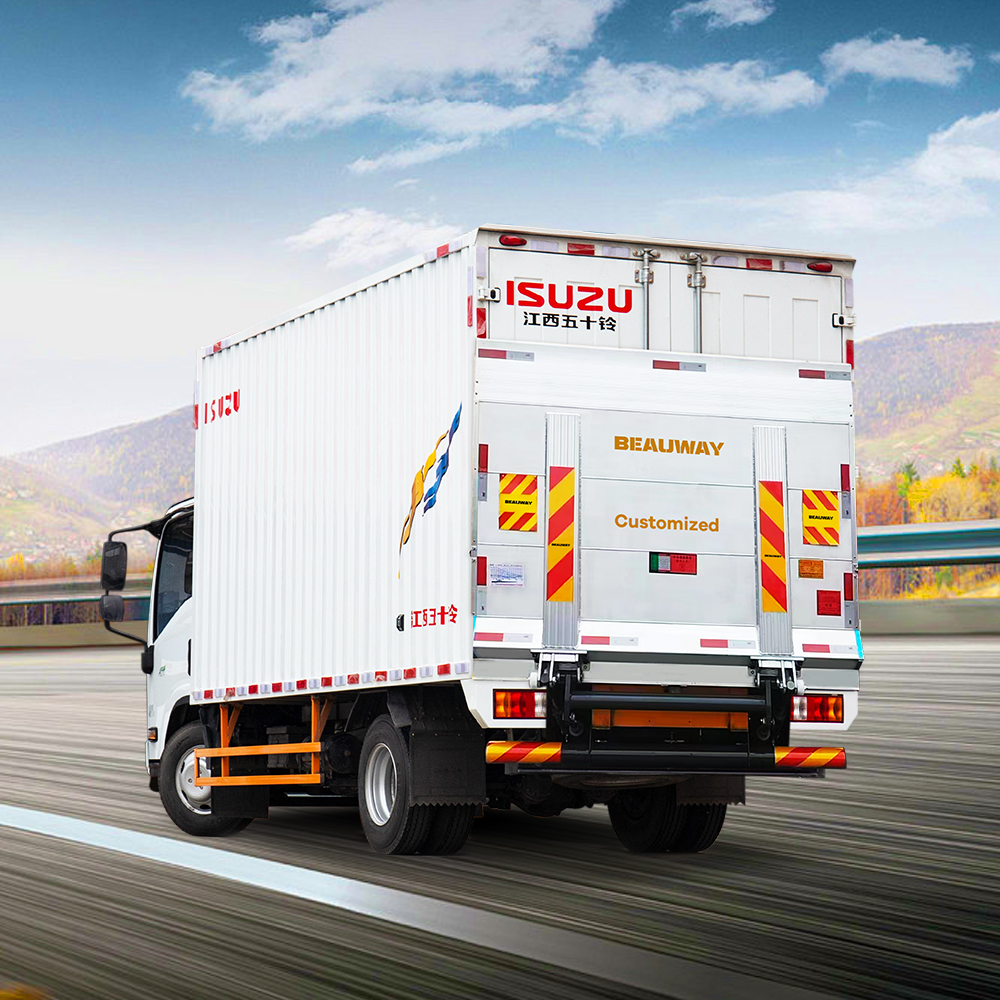
If thermal protection is your top priority — pharmaceutical distribution, strict GDP compliance, controlled-environment cold storage fleets — the built-in underfloor lift is the answer most buyers eventually land on.
The platform retracts completely beneath the cargo floor when not in use. When it deploys, it sits flush with the floor surface, eliminating the gap between platform and vehicle body that other lift types leave open. No gap means no cold air escaping through the bottom of the door frame. It’s a small detail that makes a real difference across thousands of loading cycles a year.
The underfloor position also keeps hydraulic components off the road. Less debris exposure, less moisture ingress, less corrosion maintenance on routes where other lifts would be showing wear.
Worth knowing: built-in lifts need to be integrated during body manufacturing or require a proper retrofit. This isn’t a bolt-on solution. Work with an OEM supplier who offers factory-fitted configurations and get vehicle compatibility drawings before you commit to a bulk order.
Best for: Pharmaceutical logistics, cold storage fleet contracts, chiller vans, strict temperature compliance operations.
3. Vertical Tail Lift (Column Tail Lift)
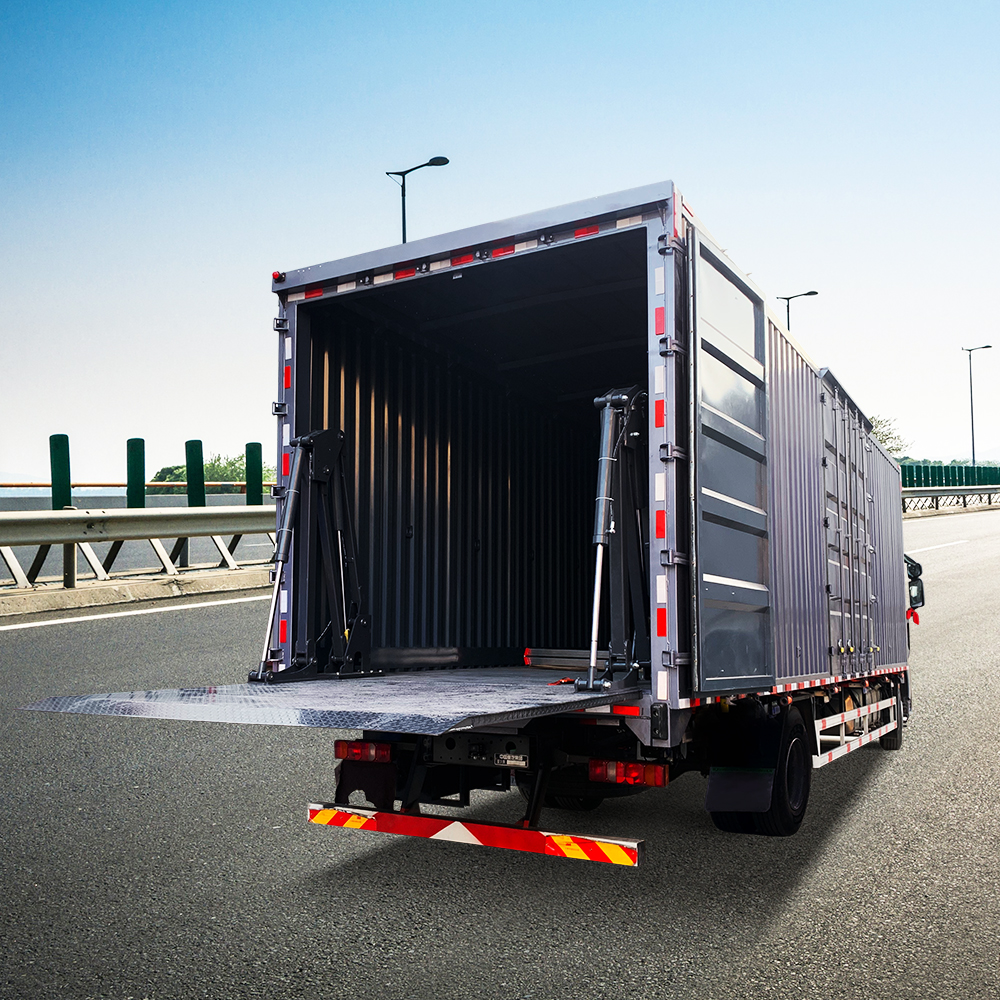
Two columns, one platform, the most load-stable configuration on the market. Vertical column tail lifts are the standard specification for heavy cold chain fleet operations — dairy, frozen food bulk, pharmaceutical pallet freight — where you’re putting serious weight through the lift dozens of times a day, every day, for years.
The stability advantage over cantilever and concealed types is real and measurable under heavy loads. For fleets running 1,500 kg or 2,000 kg capacity requirements, column lifts handle the mechanical stress better over the long term. That’s why they dominate cold chain wholesale contracts and long-term fleet supply agreements. Most OEM suppliers treat vertical models as their primary heavy-duty line — parts availability tends to be better, lead times shorter, and customization options broader.
The trade-off is the columns themselves, which partially obstruct the rear opening and add some visual bulk to the vehicle rear. For most heavy-duty cold chain operations, that’s not a meaningful limitation.
Best for: Dairy fleets, pharmaceutical logistics, frozen food delivery, heavy cold chain bulk orders, fleet supply contracts of 20+ units.
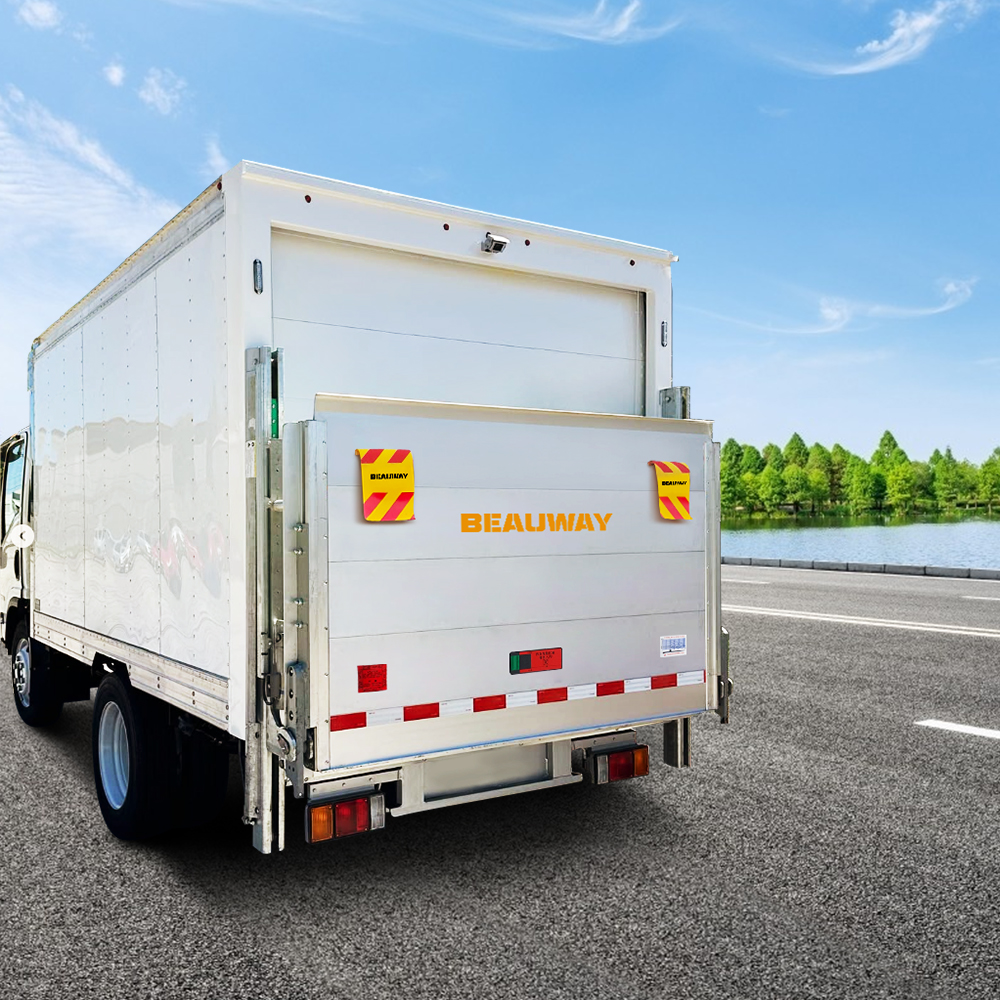
4. Concealed Tail Lift (Tuck-Under Tail Lift)
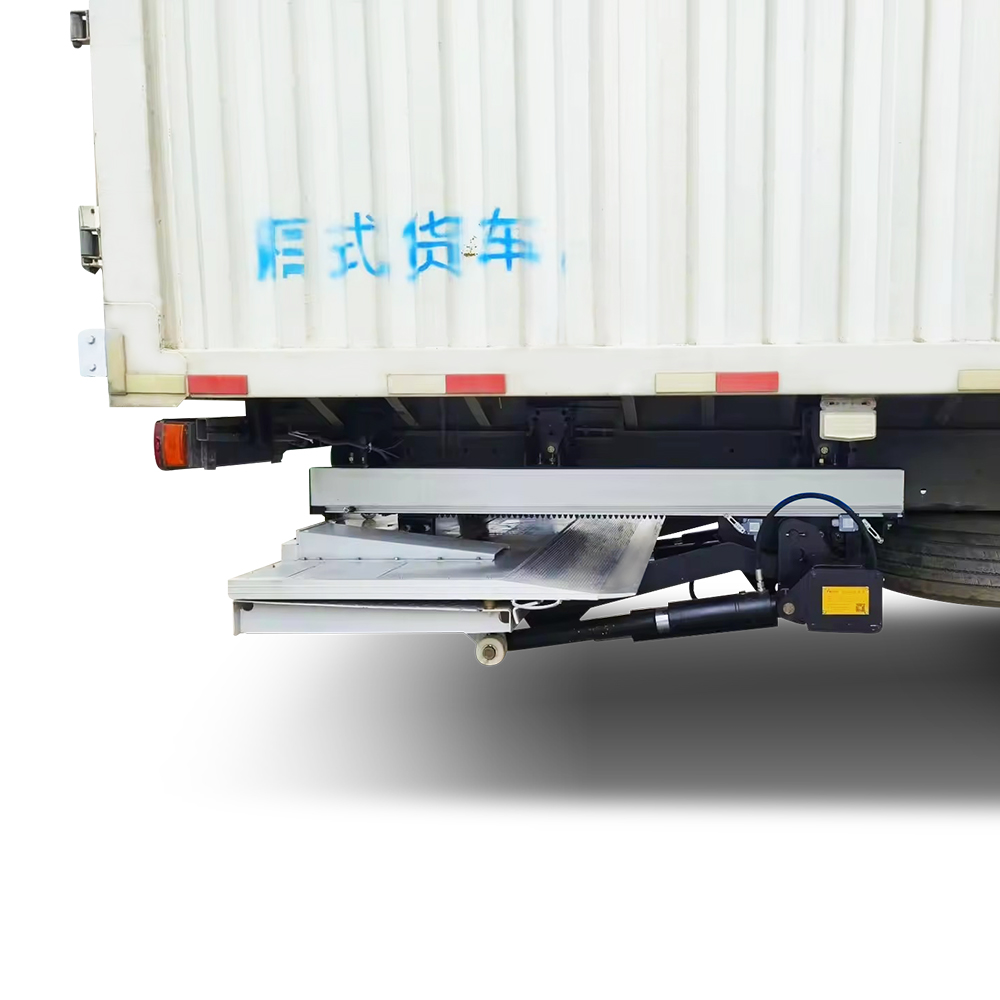
When the lift retracts, it disappears — completely under the chassis, invisible from the rear. No overhang, no exposed platform, no columns catching road debris on long-haul runs.
That hidden profile does more than look clean. It improves rear vehicle sealing during transit, which matters on long refrigerated routes where even small air infiltration points affect hold temperature over eight or ten hours. It also protects hydraulic components from the kind of sustained moisture and debris exposure that shortens service intervals on exposed configurations.
Concealed tuck-under lifts are a natural fit for refrigerated van operations and reefer truck applications where rear profile and long-haul sealing matter. They’re also the most-requested configuration in Southeast Asia export markets, where coastal humidity and road conditions accelerate corrosion on anything left exposed.
Before ordering: verify chassis clearance height and body length compatibility. This is a fitment-sensitive lift type and getting the measurements wrong creates installation problems that are expensive to fix after the fact.
Best for: Reefer trucks, refrigerated vans, long-haul cold chain, Southeast Asia sourcing, low-maintenance fleet configurations.
Tail Lift for Refrigerated Trucks: Load Capacity Across All Four Types
One thing that simplifies the spec process — all four lift types are available at the same standard capacities:
- 500 kg — Light chiller vans, last-mile refrigerated delivery
- 1,000 kg — Standard refrigerated vans, medium cold chain trucks
- 1,500 kg — Heavy refrigerated trucks, food logistics, dairy distribution
- 2,000 kg — High-capacity cold chain fleet operations, pharmaceutical bulk, frozen food delivery
Size to your heaviest single load, not your average. Fleets that spec to average capacity end up with overload failures during peak periods — and peak periods in cold chain are exactly when you can least afford unplanned downtime.
Specifications That Actually Matter in Cold Chain
Platform Material
Aluminum alloy over steel where possible — lighter, naturally corrosion-resistant, and it doesn’t conduct cold away from the cargo area the way steel does. Non-slip checkered surface is non-negotiable for wet or icy loading conditions. Some OEM suppliers offer thermal break platform edge designs that reduce heat transfer at the door frame interface — worth specifying if you’re running pharmaceutical or strict temperature-band operations.
Hydraulic System
Cold thickens hydraulic fluid. A lift that cycles cleanly at 5°C may struggle or fail at -15°C if it’s running standard fluid. Specify low-temperature hydraulic fluid compatibility down to at least -25°C for any cold storage or northern climate operation. Cycle time matters too — target under 15 seconds platform to platform. Every second over that is another second the cargo door is open.
Corrosion Resistance
Hot-dip galvanized or powder-coated steel frame, stainless steel hydraulic cylinder rods, marine-grade wiring harnesses. For sample order evaluations, always request corrosion resistance test documentation — not just a spec sheet claim, actual test data.
Certifications
- EN 1756-1:2021 — The European standard for tail lifts on wheeled goods vehicles, administered by NEN (Nederlands Normalisatie-instituut). This is your baseline compliance requirement for EU market operations and the standard your supplier’s CE marking should reference.
- ATP certification compatibility — Tail lift installation can affect your vehicle’s ATP rating if it compromises body insulation integrity. Confirm this before installation, not after.
- CE marking — Mandatory for EU procurement.
- UKCA — Required for UK market post-Brexit.
- GDP compatibility — For pharmaceutical cold chain buyers, confirm this separately with your supplier.
Controls and Safety
Overload protection, platform tilt adjustment for uneven bays, emergency lowering, wireless remote for single-operator operations. These aren’t optional features in a cold chain context — they’re baseline operational requirements.
Tail Lift for Refrigerated Trucks: Comparison Table
| Cantilever | Built-in (Underfloor) | Vertical (Column) | Concealed (Tuck-Under) | |
|---|---|---|---|---|
| Capacity Range | 500–2,000 kg | 500–2,000 kg | 500–2,000 kg | 500–2,000 kg |
| Rear Opening | Full width | Full width | Partially obstructed | Full width |
| Thermal Protection | Medium | Best | Medium | High |
| Stowed Profile | Visible | Flush with floor | Visible columns | Hidden under chassis |
| Best Vehicle | Truck | Van / Truck | Heavy Truck | Van / Reefer Truck |
| Heavy Load Stability | High | Medium | Very High | Medium |
| Corrosion Exposure | Medium | Low | Medium | Low |
| OEM Customization | Yes | Yes | Yes | Yes |
| Long-Haul Suitability | Medium | High | Medium | High |
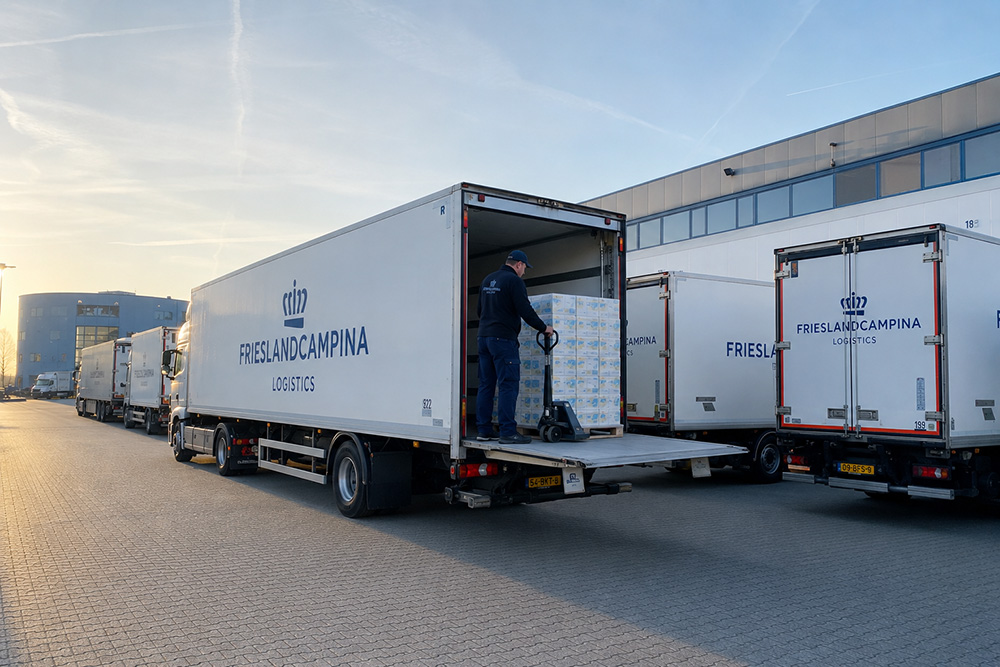
Case Study: Dutch Dairy Fleet, Netherlands
A mid-sized dairy logistics operator in the Netherlands sourcing a tail lift for refrigerated trucks — 50+ refrigerated trucks, daily distribution across multiple cold chain routes — came to us after two consecutive winters of hydraulic failures and parts delays from their existing supplier. Lead times on replacement components were running past three weeks. That’s not a maintenance inconvenience in a dairy operation. That’s trucks off the road during peak season.
After reviewing fleet requirements, they moved to vertical column tail lifts across the full fleet under a structured long-term supply contract. Non-negotiables on their side: EN 1756-1:2021 certification, hydraulic fluid rated to -25°C, and a spare parts SLA with a hard five business day ceiling.
Post-transition, cold-weather hydraulic failures dropped significantly. Maintenance scheduling became predictable. The supply contract locked in stable unit pricing through subsequent fleet expansion rounds — meaningfully lower per-unit cost than their previous spot-purchase approach had been delivering.
What this case illustrates isn’t unusual. European cold chain fleet operators are increasingly moving away from transactional purchasing toward long-term supplier relationships where technical support, parts availability, and compliance documentation are built into the contract from day one. Price per unit matters. But parts availability at 2am in January matters more.
B2B Sourcing: What to Get Right Before You Sign
OEM Customization
Standard platform dimensions won’t fit every refrigerated body configuration. Work with suppliers who can deliver custom platform width and depth, fleet color matching, and application-specific modifications — pharmaceutical cold boxes, frozen food configurations, live seafood tank applications. Get technical drawings reviewed and approved before bulk order commitment.
Bulk Pricing Structure
Wholesale pricing typically kicks in at 10 units. For serious fleet procurement, negotiate price breaks at 10, 25, and 50+ unit thresholds, FOB or CIF terms for factory price comparisons, and warranty extensions tied to supply contract length. Don’t leave warranty negotiation until after pricing is agreed — it’s easier to bundle.
Supplier Evaluation
For 20+ vehicle fleets, single-supplier relationships reduce procurement complexity significantly. Evaluate on: spare parts lead times, technical support response time, distributor network coverage in your operating regions, and verifiable references from comparable cold chain fleet contracts. Ask for references specifically — not testimonials, actual contacts you can call.
Export and International Orders
CE certification for EU, UKCA for UK, ATP installation compatibility for food-grade transport. For Southeast Asia sourcing, confirm tropical corrosion resistance specifications and local distributor support coverage. Submit trade inquiries with full specification packages — incomplete inquiries slow factory pricing responses.
Frequently Asked Questions
Best Tail Lift for Frozen Food Delivery Trucks
What tail lift type works best for frozen food delivery trucks? Vertical column lifts are the default choice for frozen food fleets — the load stability at high capacity is hard to match with other configurations. That said, if your routes are primarily long-haul and rear sealing during transit matters as much as loading performance, concealed tuck-under lifts are worth serious consideration. Both are available across all four capacity tiers.
Tail Lift Installation and ATP Certification
Will a tail lift installation affect my vehicle’s ATP certification? It can, yes. If the installation process compromises insulated body integrity — penetrations through the rear wall, inadequate sealing around mounting points — your ATP rating is at risk. This needs to be confirmed with your supplier before installation, and you want written documentation that the installation method is ATP-compatible for your specific vehicle body type.
Choosing Capacity for a Mixed Refrigerated Fleet
How do I choose the right tail lift for refrigerated trucks in a mixed fleet? Size each vehicle to its heaviest expected single load, not fleet average. Mixed fleets often run 1,000 kg and 1,500 kg units across different vehicle types — this is normal and manageable under a single supply contract with a good OEM supplier. Don’t try to standardize capacity across vehicles with significantly different payload requirements just to simplify procurement.
Required Certifications for Cold Chain Tail Lift Suppliers
What certifications should I require from a cold chain tail lift supplier? Minimum: EN 1756-1:2021 compliance, CE marking, and ATP installation compatibility documentation. UK operations add UKCA. Pharmaceutical buyers add GDP documentation. If a supplier can’t produce these on request, that tells you something about how they’ll perform on parts and support when you actually need them.
Vertical vs Concealed Tail Lift for Cold Chain
What’s the real difference between vertical and concealed lifts for cold chain use? Vertical column lifts are built for load performance — stability, capacity, high-cycle durability. Concealed tuck-under lifts are built for transit performance — aerodynamics, rear sealing, corrosion protection on long routes. If your operation is warehouse-to-warehouse short haul with heavy loads, vertical. If it’s long-haul refrigerated transport where the lift spends most of its time retracted and the rear seal matters during the drive, concealed.
How Bulk Ordering for Cold Chain Tail Lifts Works
How does bulk ordering for cold chain tail lifts actually work? Submit a quote request with complete vehicle specs, lift type preference, required capacity, order volume, operating environment details, and certification requirements. Wholesale pricing typically applies from 10 units. Meaningful price breaks come at 25 and 50+. For long-term contracts, negotiate spare parts SLAs and warranty terms in the same conversation as unit pricing — don’t treat them as separate discussions.
What to Include in Your Quote Request
- Vehicle specifications — chassis type, body length, rear opening dimensions
- Preferred lift type — cantilever, built-in, vertical, or concealed
- Required capacity — 500 / 1,000 / 1,500 / 2,000 kg
- Operating environment — temperature range, climate zone, terrain
- Order volume — sample, initial purchase, or long-term contract
- Certification requirements — CE, UKCA, ATP, EN 1756-1:2021, regional standards
- Customization needs — platform dimensions, surface finish, control system type
Complete specs upfront cut quoting time significantly and reduce the back-and-forth that delays pricing confirmation.
Conclusion
Choosing the right tail lift for refrigerated trucks is a procurement call that touches temperature compliance, fleet uptime, maintenance budgets, and supplier relationships simultaneously. Get it right and it disappears into your operation. Get it wrong and it shows up as cold chain failures, ATP violations, and unplanned repair costs at the worst possible times.
Match the lift type to your actual operating requirements — cantilever for full-width access, built-in for maximum thermal protection, vertical for heavy load stability, concealed for long-haul rear sealing. Spec the capacity to your peak load. Require EN 1756-1:2021 and ATP compatibility documentation from day one. And build the supplier relationship around parts availability and technical support, not just unit price.
Ready to move forward? Send your fleet specifications and we’ll turn around factory-direct pricing on your required configuration.
Trusted by Fleet Operators Across 60+ Countries
Stop Losing Time at the Loading Dock.
Get a Custom-Matched Tail Lift Quote in 24 Hours.
60
Countries Served
24h
Quote Turnaround
99.9
Field Uptime
5.0
Customer Rating
No Obligation
CE & UKCA Certified
Standard & Custom Builds
Worldwide Shipping