Having trouble submitting? Email us directly at nicole@beaway.com and we'll get back to you within 24 hours.











What Actually Decides Whether a Dock Leveler Is Worth Fixing
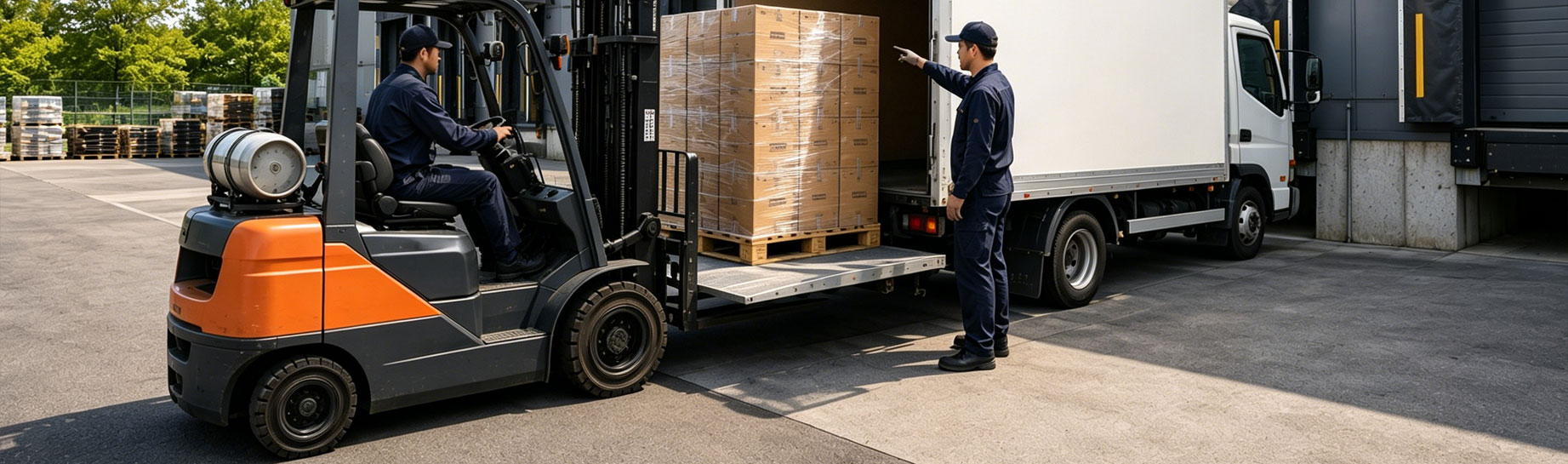
A truck backs into the bay. The driver waits. Someone hits the button. Instead of a clean lift, the platform hesitates, groans, and settles a few inches short of level. Everyone in the warehouse has seen this moment. Most people haven’t figured out what to do next. Do you call a technician for a quick fix? Or do you start budgeting for a dock leveler replacement?
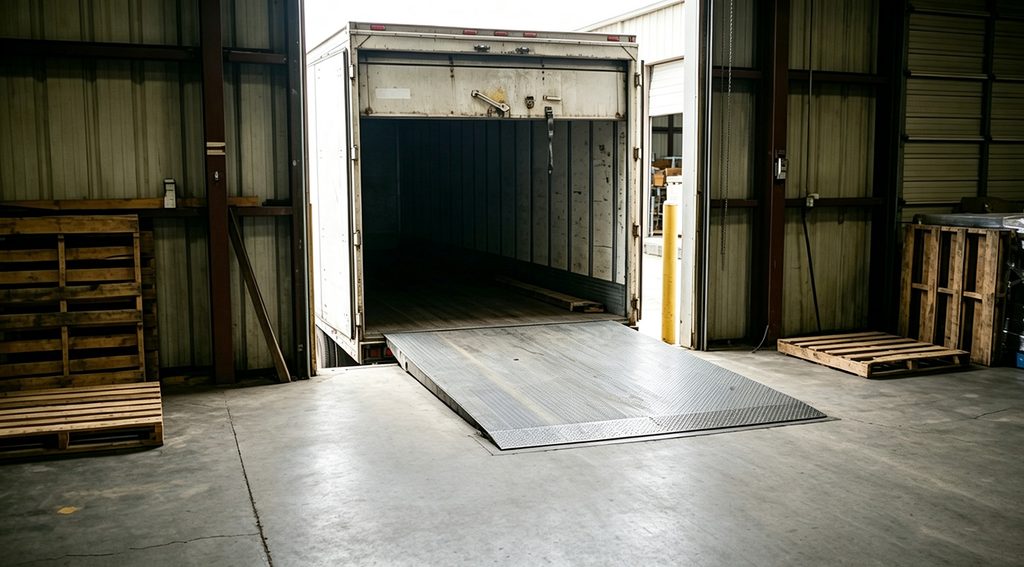
It’s an easy question to put off. The unit still technically works. The queue behind the truck is growing. Nobody wants to be the one who shuts down a bay over what might just be a loose bolt. So the fault gets logged. Someone jams the platform level manually for the shift. The decision waits for “next time it happens.” The problem: next time usually arrives sooner than expected. And it often comes with a bigger repair bill attached.
Why a Dock Leveler Replacement Decision Isn’t One Decision
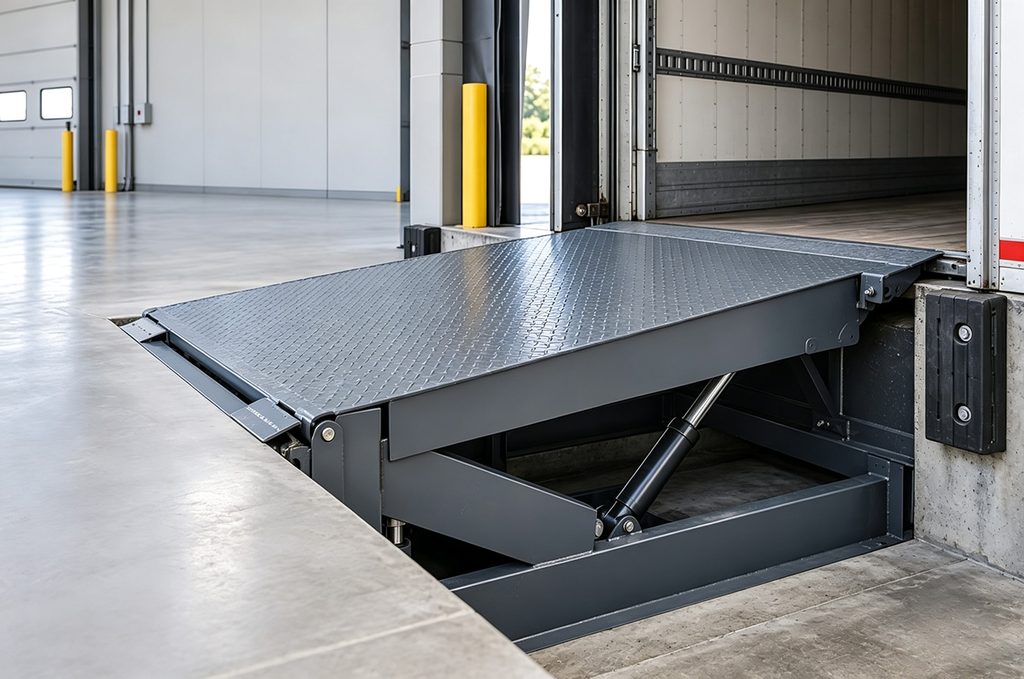
After walking through this decision with enough fleet operators and warehouse managers, one thing becomes clear. A dock leveler isn’t a single object. It’s a frame, a deck plate, a tongue plate, a cylinder, and a power unit. That’s five components, and they age at completely different rates, under completely different kinds of stress.
The frame absorbs structural load. The tongue plate absorbs shock. The cylinder and power unit absorb wear from thousands of lift cycles. You can fix some of these indefinitely, almost regardless of how old the unit is. Others take the whole unit down with them once they fail past a certain point. It doesn’t matter how new the rest of the equipment looks.
The mistake isn’t choosing wrong. It’s treating the leveler as one part instead of five separate decisions, each with its own answer. Here’s how to make that call, component by component.
The Frame: Where Repair Turns Into a Dock Leveler Replacement Decision
A dock leveler frame is the one component that draws a hard line. That’s true whether you’re running a hydraulic dock leveler or any other type. Every other component on this list has a gray zone. The frame doesn’t.
Maybe you’re looking at cracked welds, a bent or dished deck plate, or corrosion that has eaten into structural steel. If so, this is no longer a repair job. It’s a liability sitting in your loading bay. A leveler that flexes or dishes under load isn’t just underperforming. It’s a failure waiting for the wrong forklift pass to make it visible.
A commonly cited rule of thumb in the material handling industry puts it plainly. Once a leveler needs major structural welding to hold its shape, replacement is the sensible path forward. It’s not another patch job. Repairing a compromised frame doesn’t restore its rated capacity. It only delays the moment the failure becomes unavoidable.
Practical Checks Before You Call It a Dock Leveler Replacement
- Run a hand along the underside of the deck, feeling for uneven flex under light pressure
- Look for hairline cracks radiating outward from weld points
- Check the frame corners and pit-facing edges for corrosion where moisture typically pools
- Compare the current deck surface against its original flatness — visible dishing under repeated loading is not cosmetic
For reference, a standard deck plate on a unit like this measures 8mm thick. It’s engineered to hold a 10-ton static load when the platform is level. Once it’s angled into a ramp position, that rating drops to a 6-ton dynamic load. If the deck has visibly deformed under normal use, it has already carried more than its design allows. That’s a structural conversation, not a maintenance one.
It’s worth being honest about why this matters more than it might seem. A dished or fatigued deck doesn’t fail gradually and predictably the way a worn seal does. It tends to hold up under normal loads for months, sometimes longer. Then it gives way suddenly, under a load that isn’t even unusually heavy. The margin that used to absorb that load has already been used up by the existing deformation. That’s why the frame and deck get treated differently from every other component on this list. The failure mode itself is less forgiving.
Signs That Point Straight to Dock Leveler Replacement
The following signs should move a facility straight into replacement planning rather than another round of spot repairs:
- Visible dishing or waviness across the deck surface under normal light
- Weld cracks that reappear in the same location after a previous repair
- Rust that has progressed past the surface into pitting or flaking of structural steel
- A platform that visibly shifts or racks sideways under an off-center load
The Deck and Tongue Plate: Usually Fixable, Sometimes a Dock Leveler Replacement Call
The deck and the tongue plate absorb the most direct abuse of any component on the unit. The tongue plate is the hinged section that bridges the gap to the truck bed. Both are also the parts worth repairing first, before jumping to frame-level conclusions.
Typical, fixable tongue plate issues include:
- The plate hangs limp instead of extending fully
- It drops too fast instead of settling under control
- It won’t retract completely when the platform lowers
In most cases, these come down to a worn hinge pin or a sticking mechanism. Sometimes it’s a cylinder that’s lost pressure on that specific circuit. A technician can usually fix all three without touching the rest of the unit.
Where it stops being fixable: the tongue plate itself is visibly bent, or cracked along its width. Manufacturers build tongue plates thicker than the deck for a reason. On a standard configuration, the tongue plate runs 14mm thick against the deck’s 8mm. That extra thickness exists to absorb the repeated shock of a truck’s rear wheels driving on and off. Once a crack compromises it, welding it back together won’t restore the same fatigue resistance the part was engineered for. A cracked tongue plate calls for a parts swap, not a weld repair.
Cylinder and Power Unit: Follow the Fault, Not the Assumption
This is where misdiagnosis costs the most money. People blame a leveler that “won’t lift” on the dock leveler power unit almost automatically. In reality, the power unit is rarely the actual problem.
Say the motor runs and sounds normal, but the platform doesn’t move, or moves unevenly. In that case, the fault almost always sits downstream of the motor itself:
- A stuck or leaking seal inside the dock leveler cylinder
- Degraded hydraulic fluid that no longer transmits pressure efficiently
- A clogged or misaligned valve in the hydraulic circuit
Replacing a power unit when the real issue is a worn seal is a costly mistake. Arguably, it’s the most expensive misdiagnosis on this list. Before authorizing a cylinder or power unit swap, someone should physically check fluid condition and test the valve. That step is easy to skip. A truck is often already waiting outside the bay.
A Practical Sequence Before You Order Parts
- Confirm the motor actually runs, and listen for it under load, not just at idle
- Check hydraulic fluid level and color — cloudy or unusually dark fluid points to internal contamination, not a motor fault
- Inspect visible hoses and cylinder seals for seepage, often the earliest sign of a pressure loss
- Test the control valve manually if the platform lifts partway but won’t hold height
- Escalate to cylinder or power unit replacement only after these steps rule out fluid and valve issues
Skipping straight to step five under time pressure has a cost. It’s exactly how a facility ends up paying for a new power unit that was never actually the problem.
When the Power Unit Really Does Need a Dock Leveler Replacement
One power unit problem genuinely does justify a straight swap instead of a repair. That’s a motor that overheats repeatedly, or trips the breaker on a standard 220V/380V, 0.75kW supply. It also covers a motor that draws current inconsistently under normal load. Electrical faults on the power unit don’t get “mostly fixed.” Either they run reliably, or they don’t. Left unresolved, they turn into a recurring service call that eats into uptime every few weeks.
One small but easily overlooked detail sits on the control side. A standard dock leveler control panel on this class of equipment ships without an emergency-stop function. You have to specifically request it. If your unit is already due for a loading dock leveler upgrade, add that feature during the same service visit. It costs far less than retrofitting it later as a standalone job.
The Signal That Overrides Every Part-by-Part Judgment
Here’s the pattern that matters more than any single component check above. Say the same fault shows up on the same unit more than once or twice within a year. The unit is telling you something a parts list can’t.
Repeated repairs on the same failure point usually mean the underlying cause is still there. It might be worn tolerances in the frame. It might be a cylinder bore that’s been scored and keeps chewing through new seals. Or it might be a control panel with an intermittent connection. Whatever it is, it keeps quietly producing new symptoms. At that point, the math flips. Several repair visits on an aging unit add up. Together, they can approach the dock leveler installation cost of a new one — without ever solving what’s actually wrong.
Track the Repair Math
A second, quieter signal is worth tracking alongside repair frequency: parts availability. A leveler eventually gets old enough that original components are no longer stocked. Once every fix relies on an aftermarket substitute, that’s not a minor inconvenience. It’s a compounding quality risk. And it sits on top of a unit that has already passed its dock leveler life expectancy on paper.
As a general industry benchmark, a well-maintained hydraulic dock leveler often delivers roughly a decade of working life in continuous commercial use. After that, major component fatigue becomes the norm, not the exception. Actual service life still varies with duty cycle, climate, and maintenance discipline.
Run the math before you approve the next repair invoice. It’s simple, even though it rarely gets written down. Add up what you’ve already spent on this unit over the past twelve months. Include labor and downtime, not just parts. Facilities that actually track this number are often surprised at the total. It’s often close to a full loading dock equipment replacement. That’s before you even factor in the hidden cost of a stalled bay: idle trucks, idle staff, delayed shipments.
Questions That Settle the Dock Leveler Replacement Argument
A short list of questions tends to settle the argument faster than another inspection:
- Has this exact fault happened on this unit more than once in the last twelve months?
- Are the parts being installed genuine, or has the facility already moved to aftermarket substitutes?
- Would fixing this issue extend the unit’s useful life by years, or by months?
- Is the accumulated repair cost this year already approaching a meaningful fraction of a new unit’s price?
If two or more honest answers point to replace, further repair is usually just deferring the same decision. You’ll only pay more for it later.
A Failure Mode That Has Nothing to Do With Age
One issue deserves a separate callout. People often misdiagnose it as “the unit is wearing out.” In reality, it’s usually just a handling mistake. It happens during installation or storage.
Every dock leveler in this category ships with two forklift pockets built into the base. The front pocket is meant only for positioning the unit during installation. The rear pocket is meant for actual loading and transport once the unit is in service. Crews sometimes use the front pocket to lift or stack units after installation. It happens more often than it should on a busy job site. That puts stress on a point that was never engineered to carry that kind of load.
The resulting damage looks exactly like premature structural fatigue. If a relatively new unit already shows frame stress, rule this out first. Don’t assume the leveler was defective from the factory.
Setup Details Worth Checking
A few related setup details are worth double-checking when this comes up:
- The pit width should run roughly 40mm wider than the deck’s own width to allow proper clearance
- The recommended platform height for the loading dock itself sits between 1.2 and 1.3 meters off the ground
- Standard vertical travel on this class of unit runs +400mm up / -300mm down from level. Many facilities specify a narrower ±300mm range instead, depending on the truck fleet they service
None of these count as “repair vs. replace” questions on their own. But getting them wrong at installation is exactly the kind of root cause that produces recurring faults later. Those faults then get misread as the equipment simply reaching the end of its life expectancy.
Putting It Together
None of this needs to be a guessing game. Walk the unit component by component: frame, deck, tongue plate, cylinder, power unit. For each one, ask two questions. Is this damage structural or wear-and-tear? And has this exact fault happened before on this same unit?
A worn hinge or a hydraulic seal is a straightforward repair almost every time. A dished deck, a cracked tongue plate, or a frame that needs structural welding is different. That calls for a dock leveler replacement conversation — a loading dock equipment replacement decision, not a maintenance ticket. If a fault has already been “fixed” twice this year, the honest answer is usually that nobody really fixed it. They just postponed it.
The goal was never to repair less, or replace less. It’s to stop confusing the two decisions in the first place.
Trusted by Fleet Operators Across 60+ Countries
Stop Losing Time at the Loading Dock.
Get a Custom-Matched Tail Lift Quote in 24 Hours.
60
Countries Served
24h
Quote Turnaround
99.9
Field Uptime
5.0
Customer Rating
No Obligation
CE & UKCA Certified
Standard & Custom Builds
Worldwide Shipping