







Dock Leveler Daily Maintenance Guide | Fixed Loading Dock Leveler Care Tips
Fixed Dock Leveler Daily Maintenance: A Practical Guide from the Field
Contributed by: 박준호 | 한국 콜드체인 물류(주) 장비 관리자
Twelve years in loading dock equipment. That’s how long I’ve been doing this. And honestly, the number of dock levelers I’ve seen fail ahead of schedule — not because of bad product, just bad upkeep — is frustrating to think about. A loading dock leveler that gets looked after properly can run for a long, long time. Ignore it for a couple of years and you’re looking at a repair bill that nobody budgeted for.
This guide is written from the floor, not from a textbook.
Understand the Structure First — Then You Know Where to Focus
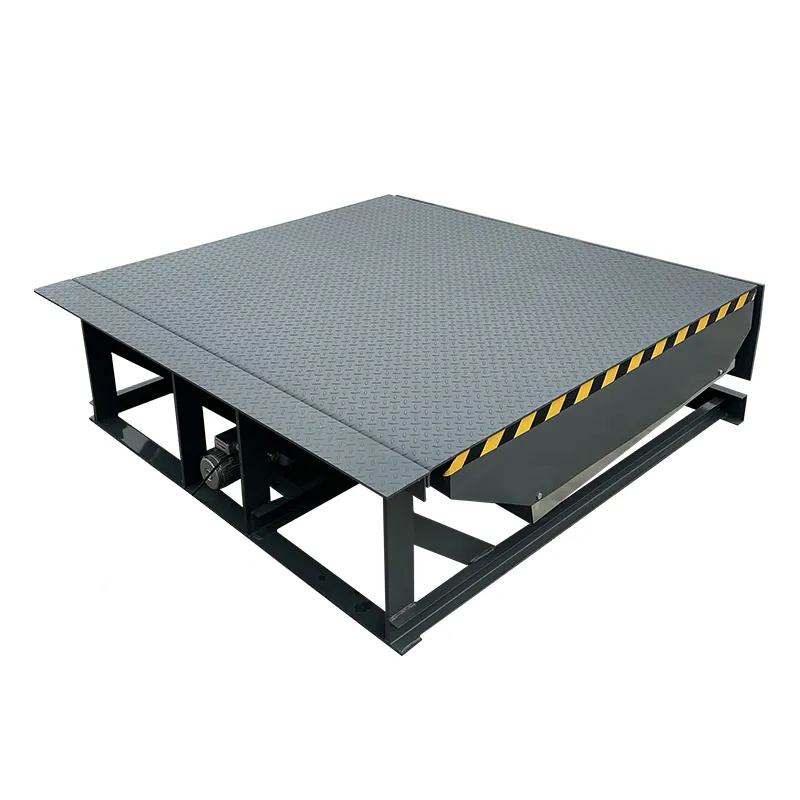
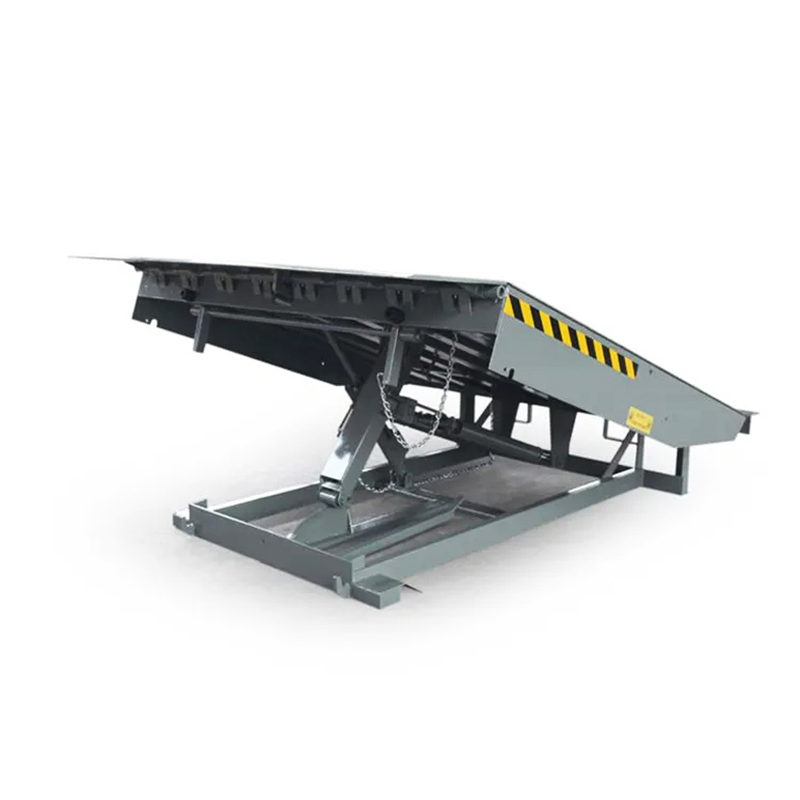
Five main parts on a fixed dock leveler: deck plate, lip plate, rear hinge assembly, drive unit, control system. That’s it. But each one wears differently, and that’s what determines where your maintenance time actually goes.
Different types of loading dock levelers use completely different drive mechanisms. That changes everything about how you maintain them.
Main Types of Fixed Dock Levelers — Comparison
| Type | Drive Method | Key Maintenance Areas | Typical Application |
|---|---|---|---|
| Hydraulic dock leveler | Hydraulic power unit | Hydraulic oil, cylinder seals, line fittings | High-frequency heavy-load logistics |
| Mechanical dock leveler | Spring-stored energy | Spring tension, locking pin, return mechanism | Medium to low frequency warehousing |
| Electric dock leveler | Electric motor and gearbox | Motor, limit switches, control wiring | Higher automation facilities |
| Manual dock leveler | Manual pull chain | Hinge pins, pull chain, locking mechanism | Low-frequency, light-load applications |
| Automatic dock leveler | Sensor-triggered control | Sensors, air bags or hydraulic components | Fully automated loading stations |
| Edge of dock leveler | Mounted at dock edge | Anchor bolts, rubber bumpers | Docks without a pit structure |
| Portable dock leveler | No fixed installation | Folding hinges, anti-slip grating | Temporary loading needs |
A warehouse dock leveler and a commercial dock leveler are structurally almost identical. Usage frequency and load rating are where they diverge. Commercial dock leveler systems in busy facilities can cycle hundreds of times a day — your maintenance schedule has to reflect that.
Hydraulic System Maintenance: The Core of Hydraulic Dock Leveler Upkeep
What the Oil Is Telling You
Here’s something I’ve learned from years on the floor: when a hydraulic dock leveler starts acting up, the oil is usually involved. Not always. But often enough that it’s the first place I look.
The hydraulic oil grade for a hydraulic loading dock leveler has to come from the equipment nameplate or the manufacturer’s manual. Different working pressures, different designs — they don’t all take the same spec. Don’t guess.
When you’re checking the oil, two things matter most: color and level. If you see any of the following, don’t wait — change it:
- Oil has gone noticeably dark or turned black
- Oil looks milky or cloudy — that’s water getting in
- Metal particles or grit sitting at the bottom of the reservoir
- Viscosity feels off — either sluggish or unusually thin
Hydraulic oil replacement — step by step:
- Bring the platform down to its lowest position, bleed off system pressure completely
- Kill the main power, put a lockout tag on the control panel
- Open the drain port, let everything empty out
- Look inside the reservoir — any rust, any sludge, clean it out
- Swap the return-line filter element and the suction-line filter element
- Fill with fresh oil to the level the manufacturer specifies
- Power back up, run 3 to 5 unloaded cycles to push air out of the lines
- Check the level again — top it up if it dropped
Replacement intervals follow the manufacturer’s schedule, full stop. High dust, high heat — shorten the interval. Don’t wait for the oil to look bad before you act.
Lines and Fittings
Loose fittings cause most of the low-level leaks I see on warehouse dock levelers. Monthly walk-through, every connection point — especially around hose bends and fitting bases.
However, wiping it clean and walking away is not a fix. Find the fitting spec, get a torque wrench, tighten it to what the manual says. Going too tight is its own problem — it crushes the seal and you’ve made things worse.
Hinge and Joint Lubrication: The Foundation of Dock Leveler Maintenance
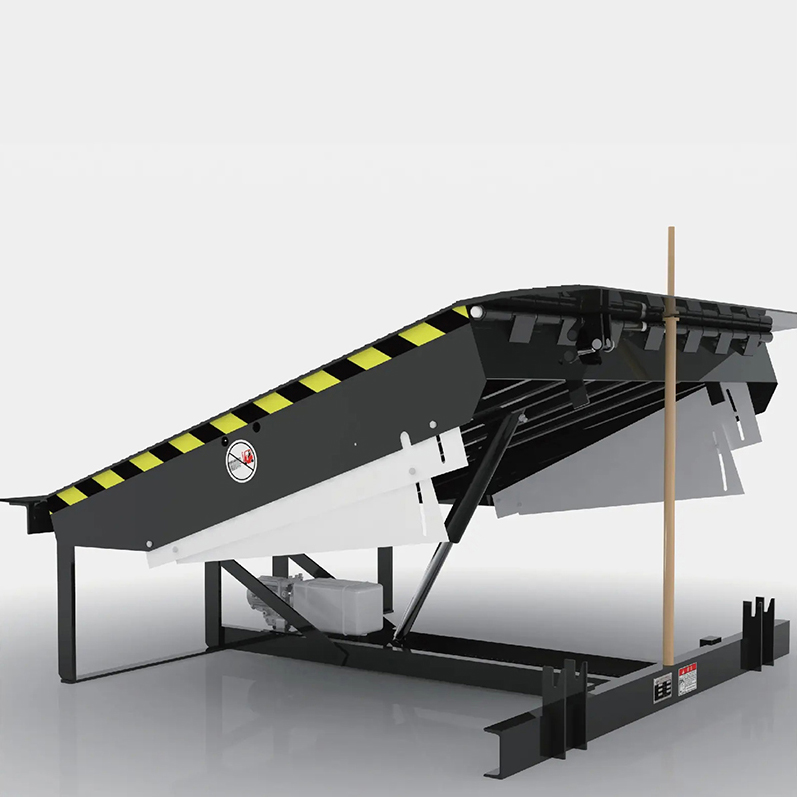
A fixed dock leveler is moving dozens of times a day. The hinges and joints never get a break. Keep them greased and they’ll hold up. Let them run dry and you’ll hear about it — usually as a grinding noise at the worst possible time.
Where to put the grease:
- Rear deck plate hinge pin
- Both sides of the lip hinge
- Every pivot point on the auxiliary linkage
- Both end pins of the hydraulic cylinder — hydraulic dock levelers
- Spring mechanism connection pins — mechanical dock levelers
Use whatever lubricant type the manufacturer recommends. With a grease gun, you keep going until the old grease gets pushed out the side. That’s how you know the new grease is actually in there.
Industry consensus: Hinge pins running dry wear out dramatically faster than greased ones. Abnormal noise or sticking during operation — stop the machine. Don’t push through it.
For example, a worn hinge pin that stays in service starts eating into the bracket bore around it. Now you’re not replacing a pin anymore. You’re repairing a structural component. The cost difference is not small.
Lip Plate and Deck Plate — What to Look For Every Day
The lip plate hits the truck bed on every single cycle. On a truck dock leveler, nothing takes more punishment than that contact surface.
What to check daily:
- Lip extends and retracts smoothly — no binding, no single-side drag
- Locking mechanism is holding — lip must not drop back during a load
- Contact surface shows no cracks or deformation
- Anti-slip grating on the deck plate is intact — no open welds, no missing bars
In addition, a dock pit leveler needs a regular check on the pit interior. Standing water down there corrodes the underside of the equipment faster than most people realize. For a hydraulic edge of dock leveler, the mounting base and its anti-corrosion treatment are worth a close look every quarter.
Edge of dock levelers sit right at the dock face and their rubber bumpers take the hit every time a truck backs in. Cracking or excessive compression — replace them. It’s not a complicated job on an edge of dock leveler, and putting it off never helps.
Real Case: Six Years, Zero Hydraulic Maintenance, Two Days Down
Date: September 2022 Location: Distribution center, Incheon, South Korea Equipment: Fixed hydraulic loading dock leveler, 6-tonne rated capacity, dock pit installation Service history: Approximately 6 years, no hydraulic system maintenance ever performed
What we found when we got there:
Platform was raising slowly. Control button wasn’t responding consistently. Oil seeping steadily from the base of the cylinder rod.
Pulled the reservoir — oil was dark brown, metal particles settled at the bottom. Return-line filter completely blocked. Pump couldn’t build enough pressure. Seals had deteriorated from age, and the contaminated oil had been grinding them down for who knows how long.
What we did:
Full oil drain and refill. Return-line and suction-line filter elements replaced. Cylinder seal kit replaced. Reservoir interior cleaned out.
Result:
Back in service. The facility manager didn’t mince words: “If we’d changed the oil every year, we wouldn’t have lost two days.”
The repair bill was several times what a few routine services would have cost. That math is the same every time.
Maintenance Differences Across Dock Leveler Types
A heavy capacity dock leveler runs in demanding environments — bigger pins, heavier deck structure, more grease per service. Shorten the intervals compared to standard models.
Industrial dock levelers and industrial loading dock levelers live in steel mills, chemical plants, automotive lines. Dust, corrosive agents, hard use. Fitting seals and surface corrosion protection need closer attention in these environments than in a standard warehouse.
Portable dock levelers move around constantly. The folding and repositioning wears hinges faster than a fixed installation ever would. They actually need more frequent lubrication, not less. When portable dock levelers are part of a warehouse dock leveler fleet, they tend to get skipped in the maintenance round. Put them in the same log as everything else.
Therefore, whether it’s a commercial dock leveler or an industrial dock leveler — the maintenance plan has to reflect what’s actually happening on that dock. Cycle counts, loads, environment. A fixed calendar interval applied uniformly across every unit is not going to cut it.
Maintenance Schedule — A Working Framework
This is a general reference. The manufacturer’s manual is the final word.
Daily:
- Visual check of deck plate and lip plate
- Confirm controls are responding normally
- Safety barriers and warning devices intact
Monthly:
- Grease all hinges and active joints
- Hydraulic oil level and color check
- Re-torque exposed bolts and line fittings
- Lip locking mechanism check
Quarterly:
- Full hydraulic line leak inspection
- Deck plate anti-slip grating integrity
- Electrical insulation and connector waterproofing
- Dock pit leveler — check for standing water
Annually:
- Assess hydraulic oil condition, replace based on actual operating conditions
- Replace filter elements
- Measure hinge pin wear
- Structural visual inspection for cracks or deformation
What Goes Wrong — And Why
These come up constantly:
- Sealant on a leaking fitting — hides it, doesn’t fix it, buys you maybe a few weeks
- Raising hydraulic pressure above the factory setting — the structure wasn’t designed for it
- Working on the equipment without lockout — hydraulic systems hold pressure even when powered off
- Adjusting spring tension on mechanical dock levelers without the right tools — this creates a safety risk that isn’t obvious until something fails
- Letting sensors on an automatic dock leveler go without cleaning — dust buildup causes ghost triggers or total non-response
As a result, anyone evaluating dock leveler price or dock leveler cost should be asking about spare parts lead times and technical support response before signing anything. The market for loading dock levelers for sale is wide, and dock leveler for sale pricing swings considerably between suppliers. What you pay upfront is one number. What you spend over the life of the dock leveler equipment is the number that actually matters.
The Door and Access Systems Manufacturers Association (DASMA) publishes technical guidelines covering dock leveler equipment safety and maintenance standards — worth keeping on hand when you’re building out an internal maintenance program.
Good maintenance on a fixed dock leveler is not complicated. It’s consistent. Hydraulic system and hinge lubrication are the two things that matter most — get those right and the equipment will look after itself for a long time. Everything in this article should be verified against your specific equipment manufacturer’s documentation before you act on it.
Frequently Asked Questions About Dock Leveler Maintenance
Maintenance and Hydraulic System Questions
Q: How often should I perform maintenance on a hydraulic dock leveler?
A: Follow the manufacturer’s recommended schedule as the baseline. Specifically, hinges and joints need lubrication monthly, hydraulic line fittings should be checked monthly, and hydraulic oil and filter elements should be assessed annually — or more frequently in high-dust or high-temperature environments.
Q: What are the signs that hydraulic oil needs to be replaced on a loading dock leveler?
A: Replace the oil if it has turned dark or black, appears milky white due to water contamination, contains visible metal particles or grit at the bottom of the reservoir, or if viscosity has changed noticeably from its normal state.
Q: What causes a hydraulic dock leveler to raise slowly or stop responding?
A: The most common causes are low hydraulic oil level, a blocked filter element restricting pump output, deteriorated cylinder seals causing pressure loss, or contaminated oil reducing system efficiency. In most cases, regular maintenance prevents all of these.
Q: How long does a commercial dock leveler typically last?
A: Service life depends heavily on maintenance quality and usage intensity. Specifically, a properly maintained commercial dock leveler in a standard warehouse environment can remain in reliable service for many years. However, units with no maintenance history tend to develop serious issues much earlier.
Equipment Types and Purchasing Questions
Q: What is the difference between a hydraulic dock leveler and a mechanical dock leveler?
A: A hydraulic dock leveler uses a powered pump unit to raise and lower the platform, offering smoother operation under heavy loads. In contrast, a mechanical dock leveler relies on stored spring energy and suits medium to low frequency operations where lower upfront dock leveler cost is a priority.
Q: What is an edge of dock leveler and when should I use it?
A: An edge of dock leveler mounts directly to the face of the loading dock, used where no pit has been built into the floor. In addition, a hydraulic edge of dock leveler suits facilities needing powered operation without major structural modification. However, it is not suitable for very high frequency or heavy capacity operations.
Q: What should I check before purchasing a dock leveler?
A: Beyond dock leveler price, evaluate the rated load capacity against your actual needs, the drive type that suits your operation frequency, the supplier’s spare parts availability, and technical support response time. Therefore, total dock leveler cost over the equipment’s service life matters more than the purchase price alone.
Q: Is a portable dock leveler a good long-term solution for a warehouse?
A: Portable dock levelers work well for temporary or low-frequency needs. For a permanent loading dock with regular truck traffic, however, a fixed installation — whether a warehouse dock leveler, dock pit leveler, or edge of dock leveler — is more practical and safer for daily operations.
Beauway has extensive experience in logistics loading equipment, covering a full range of products including tail lifts, dock levelers, and lift platforms. If you need a solution tailored to your specific site conditions, feel free to schedule a technical consultation.