Having trouble submitting? Email us directly at nicole@beauway.com and we'll get back to you within 24 hours.











Tail Lift Operator Training: What Fleet Managers Must Know
Tail Lift Operator Training: What Fleet Managers Must Know
By James Harrington | Senior Logistics Equipment Specialist | 14 years in commercial vehicle and tail lift systems
Last Updated: June 2026
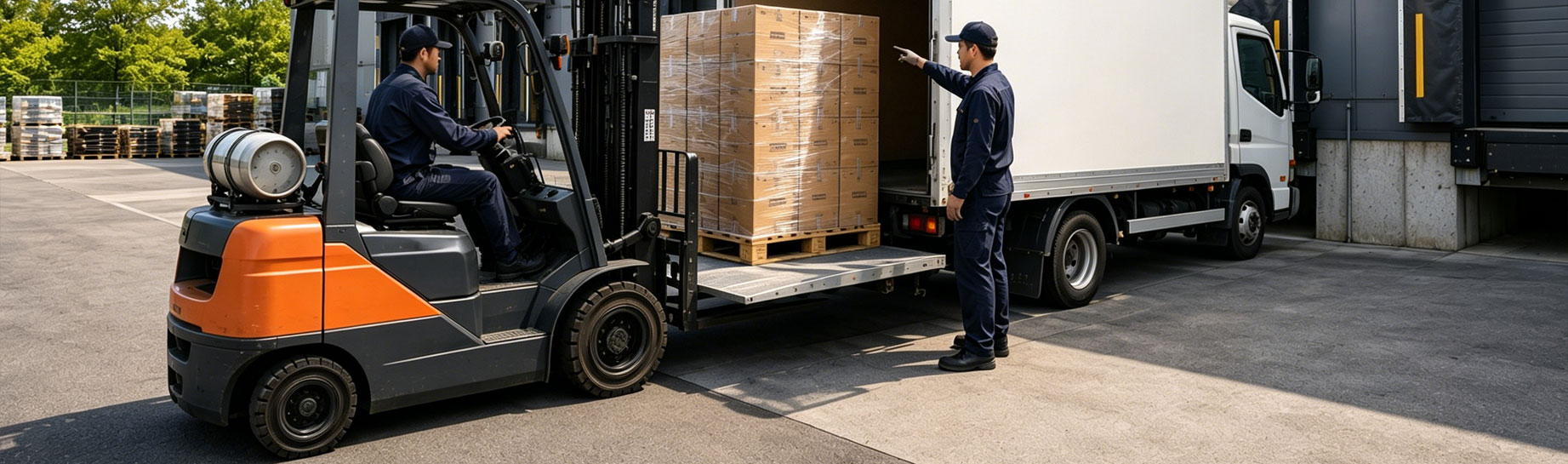
Tail lift operator training is not optional — it is a legal and operational necessity for every fleet manager overseeing vehicles with tail lift equipment. Without structured training, operators face serious injury risks, and fleet managers face regulatory penalties. This guide covers everything you need to build a compliant, effective training programme.
Why Tail Lift Operator Training Is a Legal Requirement
Most fleet managers understand that operators need instruction. However, many underestimate the legal depth behind that requirement.
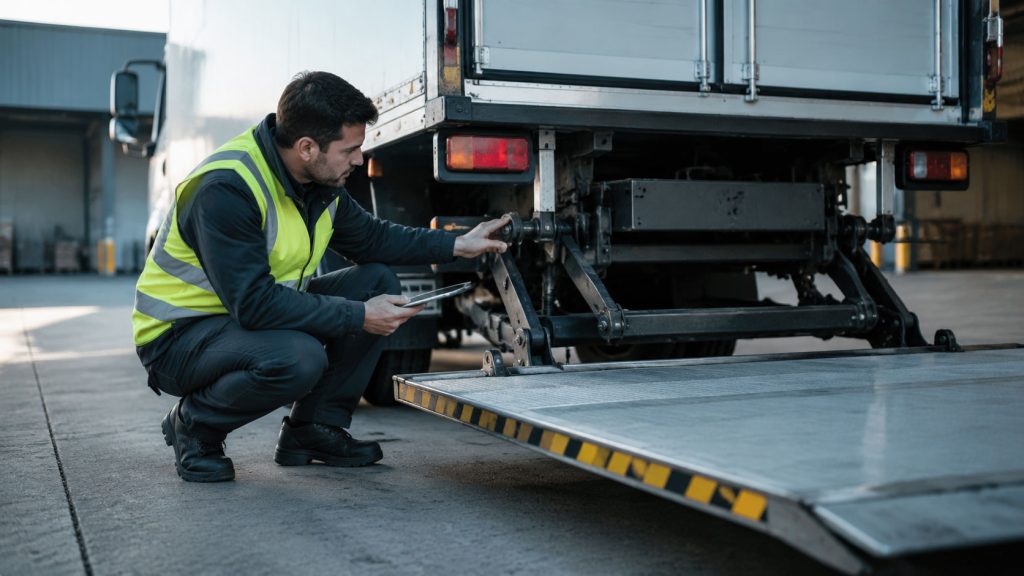
In the UK, tail lift operation falls directly under LOLER 1998 (Lifting Operations and Lifting Equipment Regulations). LOLER requires that all lifting operations are planned, supervised, and carried out by competent people. Tail lifts qualify as lifting equipment under this regulation. Therefore, operating one without proper training creates direct legal liability.
In addition, PUWER 1998 (Provision and Use of Work Equipment Regulations) requires employers to ensure all equipment users receive adequate training for safe operation, including knowledge of risks and precautions. Both regulations apply simultaneously to tail lift use.
For EU-based fleets, similar obligations arise under the EU Machinery Directive 2006/42/EC and national transpositions. Operators must follow training that covers the equipment’s designed parameters.
Non-compliance carries serious consequences:
- Improvement or prohibition notices from the Health and Safety Executive (HSE)
- Unlimited fines in cases of serious breach
- Corporate manslaughter liability if negligence causes a fatality
- Insurance invalidation if untrained operators are involved in an incident
Moreover, a 2023 HSE report confirmed that falls from vehicles — including tail lift incidents — remain one of the leading causes of workplace fatal injuries in logistics. Fleet managers cannot afford to treat training as a formality.
What Tail Lift Safety Training Must Cover
Effective tail lift safety training goes beyond basic button-pressing. A compliant programme addresses operator knowledge, practical skill, and ongoing competency.
Core training content should include:
- Equipment familiarisation — platform type, rated capacity, control panel layout, safety features
- Pre-use inspection procedure — hydraulic fluid levels, platform condition, edge guards, safety props, warning lights
- Safe operating procedure — load positioning, weight distribution, passenger prohibition rules, platform tilt management
- Emergency procedures — manual lowering, power failure protocol, trapped-person response
- Risk assessment awareness — identifying uneven ground, wind exposure, overloading risks, pedestrian proximity
- Defect reporting — what to record, who to notify, when to take the vehicle out of service
- LOLER and PUWER obligations — operator-level understanding of legal duties
For example, at one logistics depot in the West Midlands, we delivered tail lift induction training to a team of 22 drivers after a near-miss incident. The investigation revealed that 17 of those drivers had never received formal instruction on pre-use inspection. They had simply watched a colleague demonstrate the lift once during onboarding. That is not training — and it would not satisfy a LOLER audit.
Tail Lift Pre-Use Inspection: The Daily Non-Negotiable
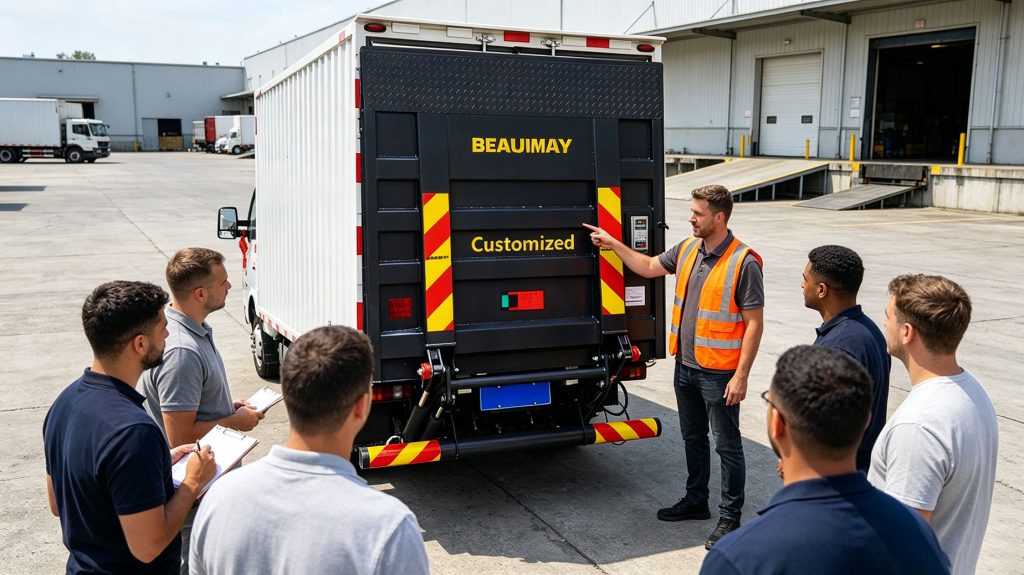
Every operator must complete a tail lift pre-use inspection before the first lift of each working day. This is not a recommendation. Under LOLER, thorough examinations are mandatory at defined intervals, but daily checks give operators their first line of defence.
A standard pre-use checklist covers:
| Inspection Point | What to Check |
|---|---|
| Hydraulic system | No visible leaks, fluid at correct level |
| Platform surface | No cracks, anti-slip material intact |
| Safety edge / bumper | Functional, no damage |
| Control buttons | Responsive, no sticking or misfiring |
| Warning lights / buzzers | Activate correctly during operation |
| Safety prop / strut | Present and accessible |
| Rated capacity label | Visible and legible |
| Platform alignment | Level when fully raised, no tilt drift |
Any operator who identifies a defect must report it immediately. The vehicle should stay out of service until a qualified technician assesses the fault. Operators need to understand this responsibility clearly — tail lift training must embed this standard, not assume it.
Tail Lift Operator Certification: What Counts as Competency?
No single government-issued tail lift operator certification exists in the UK. However, fleet managers must still demonstrate and document competency. Under LOLER, a competent operator is someone who has:
- Sufficient practical and theoretical knowledge of the specific lift type they operate
- Demonstrated safe operating practice under supervision
- A documented record of training completed, trainer details, and assessment outcome
Fleet managers can deliver training through several routes:
- OEM supplier training — Manufacturers including Beauway provide operator training materials and guidance specific to their equipment models. This is the most equipment-specific option and comes highly recommended.
- Third-party training providers — Organisations such as RTITB, ITSSAR, and AITT offer structured liftgate safety training programmes that the industry recognises widely.
- In-house training — A designated competent person within the fleet delivers this. The programme must include documentation and assessment, not just observation.
However, one important point: a generic forklift or materials handling certificate does not automatically cover tail lift operation. The equipment differs, the risks differ, and the regulations apply separately.
Building a Fleet Tail Lift Training Programme That Holds Up to Audit
Fleet managers responsible for multiple vehicles need a systematic tail lift training programme, not ad hoc instruction. An auditable programme protects the business and demonstrates due diligence.
Step 1 — Asset and operator mapping
List every vehicle with a tail lift in your fleet. Record the make, model, platform type, and rated capacity. Then map each operator to the specific equipment they use. Training must match the equipment, not rely on generic content.
Step 2 — Baseline competency assessment
Assess current operator knowledge before training begins. This identifies gaps, allows targeted delivery, and creates a documented baseline.
Step 3 — Deliver structured training by equipment type
Group operators by the type of tail lift they use. A column lift operates differently from a cantilever or slider lift. Tail lift driver training must reflect the actual equipment in service.
Step 4 — Assess and certify
After training, assess each operator through a practical demonstration and a short knowledge check. Record the outcome, date, assessor name, and equipment assessed on.
Step 5 — Schedule refresher training
Competency does not last indefinitely. Refresher training should happen:
- Every 3 years as a minimum (industry best practice)
- After any tail lift-related incident or near-miss
- When an operator moves to a different lift type
- After a significant period away from tail lift duties
Step 6 — Maintain training records
Keep records for the working life of the equipment. Include training date, trainer credentials, assessment result, and refresher history. These records serve as your primary evidence during an HSE inspection or insurance claim.
In addition, consider integrating tail lift training records into your broader fleet management system so that renewal reminders run automatically and nothing slips through the gaps.
Tail Lift Risk Assessment: The Manager’s Responsibility
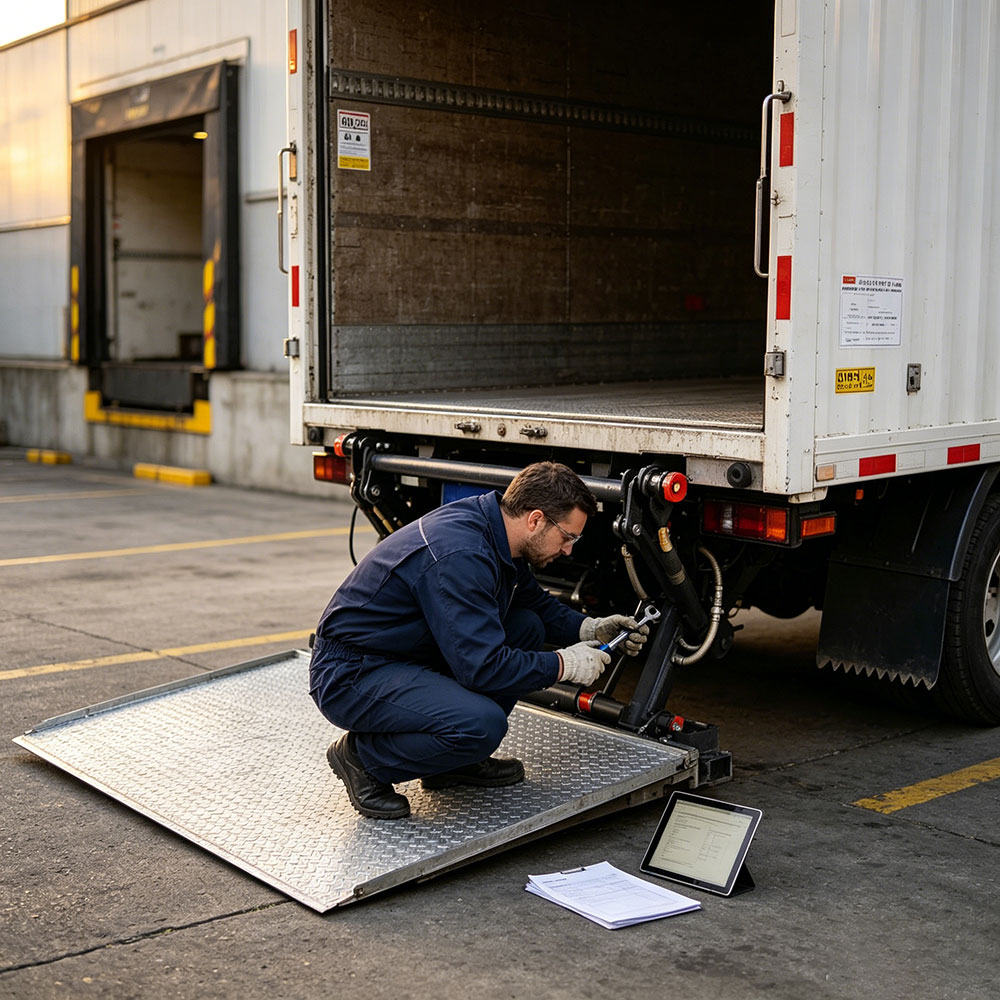
Operator training addresses individual competency. However, fleet managers also carry a duty to conduct and maintain a tail lift risk assessment for each operational context where lifts run.
Risk assessment should consider:
- Site conditions — delivery locations with slopes, kerbs, uneven surfaces, or confined spaces
- Load types — unusual weights, unbalanced loads, fragile goods
- Environmental factors — wet conditions, wind, reduced visibility, night operations
- Traffic management — pedestrian separation at loading bays
- Maintenance frequency — LOLER requires thorough examination every 6 months for tail lifts that carry persons, or 12 months for goods-only lifts, or in line with an examination scheme a competent person draws up
The risk assessment output should directly shape training content. If your fleet operates in sites with significant slope variation, operators must learn specifically how tail lift platform behaviour changes on uneven ground.
FAQ: Tail Lift Operator Training
How often does tail lift operator training need to be renewed?
No fixed legal renewal period exists in UK law, but industry best practice recommends refresher training every three years. Refreshers are also necessary after incidents, equipment changes, or long absences from operating duties.
Is there a formal qualification for tail lift operators?
No single national qualification exists. However, operators must demonstrate clear competency, and employers must document all training. OEM supplier training and courses from accredited bodies such as RTITB are widely accepted as evidence of competency.
Who is responsible for tail lift training in a fleet?
The employer holds primary legal responsibility. In practice, fleet managers act as the accountable person who must plan, deliver, record, and keep training current.
What happens if an untrained operator causes a tail lift accident?
The employer faces potential LOLER and PUWER enforcement action, civil liability, and possible criminal prosecution. Insurers may also reject claims if the employer cannot produce operator training records.
Can a driver train themselves on a tail lift?
No. Self-instruction does not meet the competency standard under LOLER. Someone with sufficient knowledge and experience must deliver the training, and the employer must assess and record the outcome.
Start Building a Compliant Training Programme Today
Tail lift compliance training protects your operators, your fleet, and your business. The framework is clear: map your equipment, assess your operators, deliver structured training, and maintain the records.
Beauway supports fleet managers with operator guidance documentation and training resources specific to our tail lift models. If you are evaluating new equipment or building a training programme around your current fleet, contact our team for support.
For further reference on UK lifting equipment regulations, the HSE publishes authoritative guidance at hse.gov.uk/work-equipment-machinery/loler.htm.
Trusted by Fleet Operators Across 60+ Countries
Stop Losing Time at the Loading Dock.
Get a Custom-Matched Tail Lift Quote in 24 Hours.
60
Countries Served
24h
Quote Turnaround
99.9
Field Uptime
5.0
Customer Rating
No Obligation
CE & UKCA Certified
Standard & Custom Builds
Worldwide Shipping