Having trouble submitting? Email us directly at nicole@beauway.com and we'll get back to you within 24 hours.











Dock Leveler Lip Problems: 3 Common Causes and Fixes
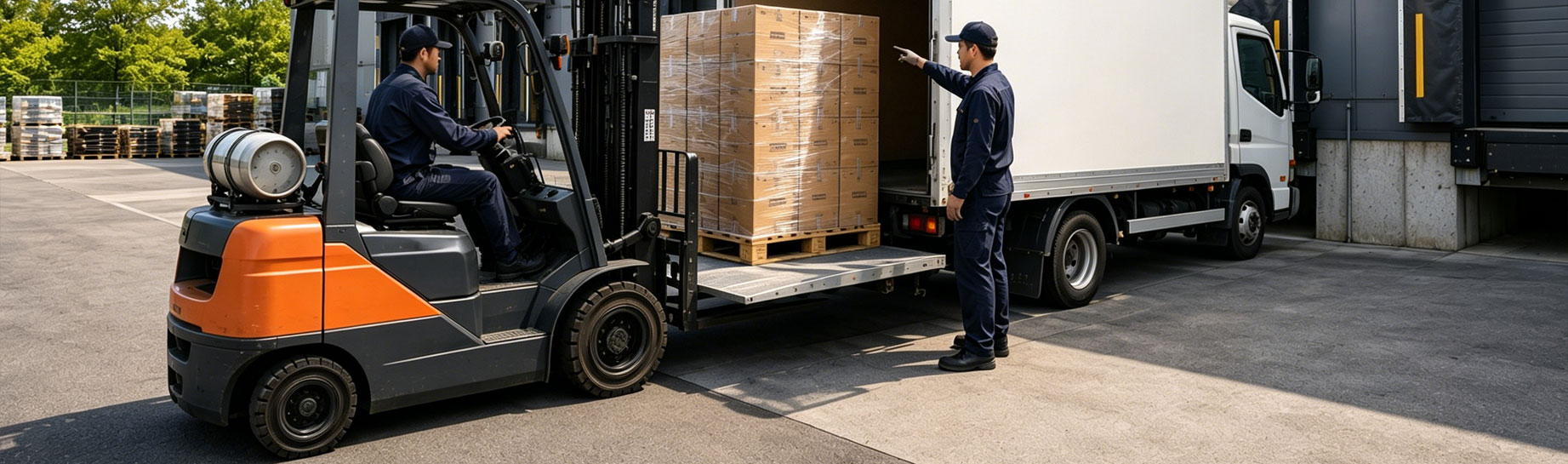
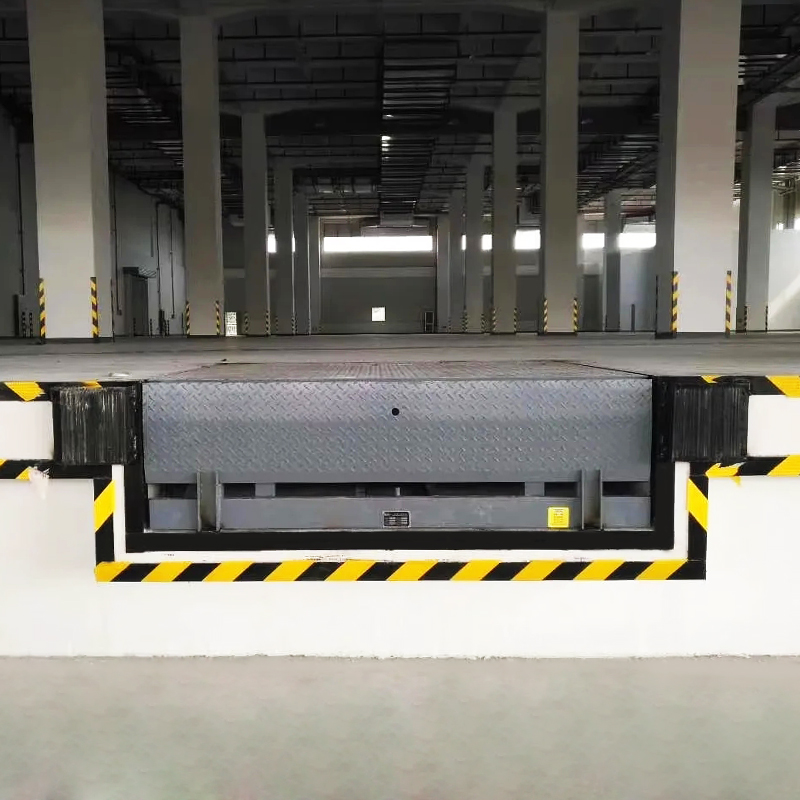
In modern high-throughput logistics centers, unexpected dock leveler lip problems can immediately halt loading dock operations and create severe safety hazards. Fixed hydraulic dock levelers connecting warehouse loading bays to transport vehicles typically feature a 0.75 kW (1 HP) 3-phase AC power unit, an 8 mm tread deck plate, and a 14 mm heavy-duty steel lip plate. During daily high-intensity loading and unloading operations, the leveler must continuously withstand dynamic impacts from forklifts and heavy cargo.
When dock leveler lip problems occur—such as the lip failing to extend, failing to unfold fully, or drifting downward prematurely—the loading bay comes to a halt, creating severe operational bottlenecks and safety hazards for forklift operators. This guide provides a systematic, highly practical approach to hydraulic dock leveler lip troubleshooting, helping maintenance engineers and facility technicians quickly diagnose and resolve root causes.
1. Technical Specifications Overview for Dock Leveler Troubleshooting
Before conducting any dock leveler troubleshooting, maintenance personnel must understand the equipment’s original design parameters and operating limits. Incorrect pressure adjustments or component mismatches can easily lead to secondary mechanical failures.
- Platform Dimensions: 6 ft × 8 ft (1.8 m × 2.4 m). Inspect frame structure regularly for weld cracks or torsional twisting.
- Deck / Lip Thickness: 8 mm tread deck plate / 14 mm steel lip plate. The heavy 14 mm lip plate requires adequate hydraulic pressure and smooth pivot movement.
- Power Unit: 0.75 kW (1 HP) 3-phase / 400V / 50Hz. Verify motor rotation direction and check gear pump wear.
- Hydraulic Fluid Specification: ISO VG 32 (standard operating environment) / ISO VG 15 (cold storage facilities). Check fluid viscosity and contamination regularly.
- System Operating Pressure: 140 – 160 Bar (2000 – 2300 PSI). Never exceed rated pressure limits to prevent hose bursts or seal failures.
2. Dock Leveler Lip Problems Cause 1: Hydraulic Pressure Loss & Fluid Contamination
Symptom & Diagnosis
When the operator presses the control button, the main deck raises normally. However, when the deck reaches its highest point and should trigger dock leveler lip extension, the 14 mm steel lip fails to swing out, or only opens a few degrees before dropping weakly.
This issue is one of the most common scenarios encountered during dock leveler repair. The underlying cause is insufficient hydraulic thrust generated by the lip cylinder, which fails to overcome the weight of the 14 mm steel plate and mechanical friction at the hinge pivot.
Root Cause Analysis
- Low Fluid Level or Aeration: The oil reservoir on a 0.75 kW power unit has a limited fluid capacity. When the ISO VG 32 fluid level falls below the sight line, the pump draws in air, causing cavitation and pressure fluctuations.
- Sequence Valve Clogging or Improper Setting: Fixed hydraulic dock levelers rely on a sequence valve to route fluid once system pressure builds up at full deck elevation. If debris or metal shavings clog the valve spool, the valve will not shift to extend the lip cylinder.
- Cylinder Piston Seal Failure: Internal seals inside the lip cylinder degrade over time from high-pressure fluid flow, causing internal bypass leakage. High-pressure fluid leaks directly back to the low-pressure side without building enough working pressure to extend the lip.
Troubleshooting & Fix Steps
- Inspect Reservoir & Fluid Quality
- Disconnect main power and apply Lockout/Tagout (LOTO) safety protocols.
- Open the power unit enclosure and check the reservoir sight glass.
- If fluid is low, top off with ISO VG 32 hydraulic fluid. If fluid appears milky (water emulsification) or dark/cloudy, completely flush the reservoir and replace with fresh fluid.
- Bleed Air from the Hydraulic Circuit
- Bleeding air is a crucial step when performing hydraulic dock leveler troubleshooting.
- Cycle the lip cylinder 3 to 5 times using the control unit.
- If a bleed screw or accessible hose fitting is present at the lip cylinder, loosen it slightly during operation until clear fluid flows out without air bubbles, then retighten immediately.
- Clean Valve Assembly & Replace Seals
- Disassemble the sequence valve manifold, clean the valve spool and body with industrial solvent, and blow clear using high-pressure compressed air.
- If the lip cylinder piston rod shows fluid leakage or internal bypass, dismantle the cylinder and replace the high-pressure rubber seals.
3. Dock Leveler Lip Problems Cause 2: Mechanical Linkage & Hinge Pivot Binding
Symptom & Diagnosis
During the diagnosis of dock leveler lip problems, hydraulic pressure gauges may read a normal 150 Bar operating pressure without any relief valve noise. However, as the lip attempts to extend, heavy metallic grinding sounds occur, or the lip binds mid-swing.
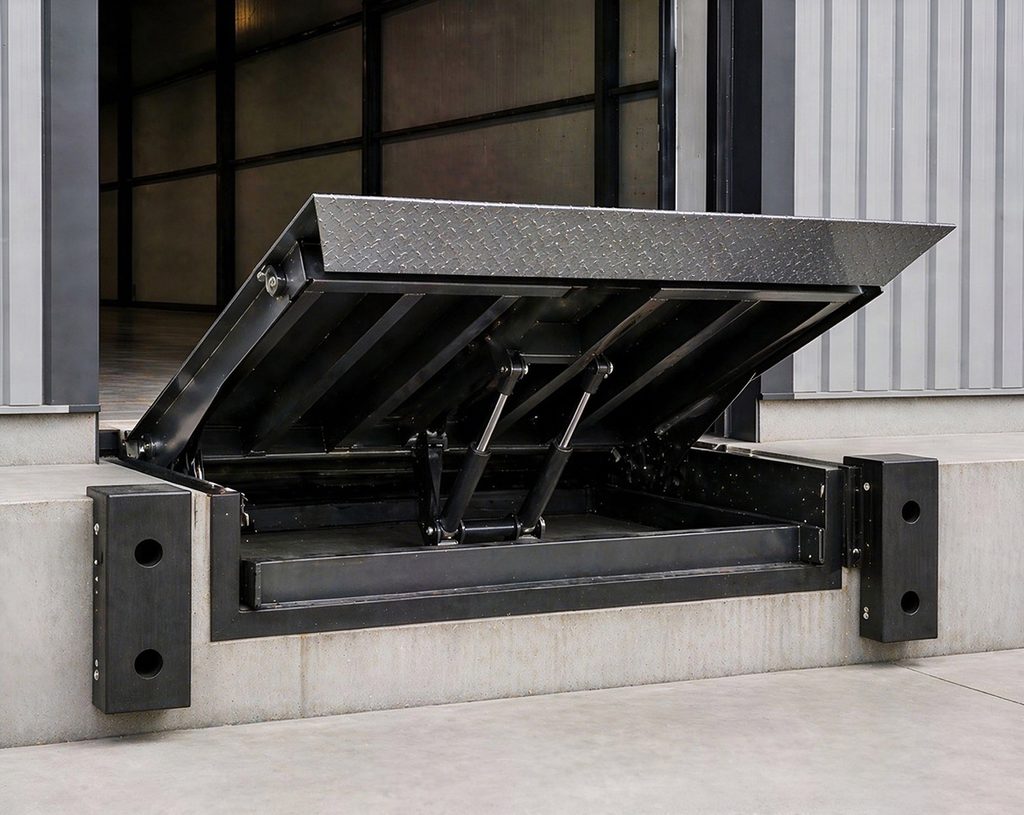
This situation points to a mechanical transmission issue. Maintenance must focus on inspecting the dock leveler lip hinge pivot pin, main hinge tubes, and auxiliary linkage mechanisms.
Root Cause Analysis
- Lack of Lubrication & Hinge Corrosion: Dirt, debris, and washdown water accumulate in the pit behind the leveler. Without regular application of lithium grease, the long hinge pin connecting the 14 mm lip to the 8 mm deck corrodes, causing severe dry friction.
- Pin Deformation & Impact Damage: Excessive impact from backing transport trucks against dock bumpers, or overloaded forklifts driving over an improperly rested lip plate, can bend or twist the lip hinge pin.
- Auxiliary Mechanism Interference: On models equipped with mechanical latches or helper springs, a broken spring or debris-jammed latch hook physically blocks the lip from swinging freely.
Troubleshooting & Fix Steps
- Inspect & Lubricate Hinge Pivot
- Clear out accumulated dirt, sand, and debris from the hinge assembly.
- Use a high-pressure grease gun to inject heavy-duty lithium grease into all grease fittings (zerk fittings).
- Manually assist the lip swing to help grease distribute evenly along the entire length of the hinge pin.
- Check & Straighten or Replace Hinge Pin
- If the hinge pin exhibits bending greater than 3 mm, lubrication alone will not fix the binding, requiring a complete hydraulic dock leveler repair.
- Remove the damaged pin and replace it with a new one, or use a hydraulic alignment tool to realign the hinge lugs on the main deck.
- Inspect Auxiliary Linkages & Latches
- Perform dock leveler lip adjustment on helper springs or mechanical latch linkage tension.
- Ensure that once hydraulic pressure releases, the lip can fold smoothly back into its stored position without mechanical binding.
4. Dock Leveler Lip Problems Cause 3: Check Valve Leakage & Unsynchronized Lowering
Symptom & Diagnosis
The lip extends and unfolds fully, but as the main deck lowers toward the truck bed, the lip suddenly drops or folds back prematurely. As a result, the lip fails to purchase securely on the truck bed floor. Alternatively, as a forklift drives onto the deck during loading, the lip drifts downward slowly under load.
This fault impairs operational efficiency and creates a severe safety risk, as forklift tires can catch in the gap between the leveler deck and the vehicle bed.
Root Cause Analysis
- Pilot Check Valve Internal Leakage: The check valve responsible for maintaining hydraulic pressure in the lip cylinder wears out or suffers seal degradation. Fluid leaks back into the reservoir, leaving the lip unable to hold its extended position.
- Excessive Lowering Flow Control Valve Opening: If the lowering speed control valve on the power unit is set too open, the deck drops too rapidly, creating hydraulic shock spikes that force open the lip circuit.
- Solenoid Valve Fault: Internal coil overheating or spool wear on the directional solenoid valve causes unintended oil routing during the lowering phase.
Troubleshooting & Fix Steps
- Test & Replace Pilot Check Valve
- Extend the lip fully and shut off power to observe whether the lip drops under its own weight.
- If premature dropping occurs, remove the pilot check valve, clean the internal poppet seat, or replace the entire valve assembly.
- Fine-Tune Lowering Velocity Valve
- Execute a precise dock leveler lip adjustment by turning the lowering speed needle valve on the power unit clockwise.
- Set the overall deck and lip descent time between 3 to 5 seconds to ensure smooth, controlled contact with the truck bed.
- Verify Electrical Control Signals
- Use a multimeter to verify control voltage and solenoid coil resistance.
- Clean solenoid spools to prevent sticking, ensuring that electrical commands and hydraulic actions remain fully synchronized across the hydraulic dock leveler.
5. Preventive Maintenance Checklist (PPM) to Prevent Dock Leveler Lip Problems
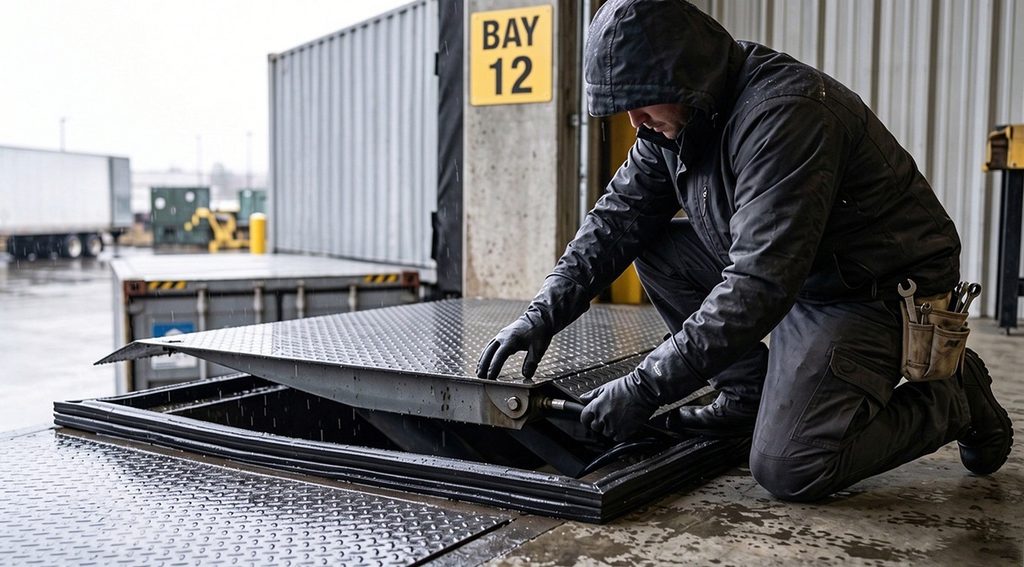
To minimize the occurrence of dock leveler lip problems and extend equipment service life, logistics centers and manufacturing facilities should implement a structured preventive maintenance routine.
1. Weekly Maintenance Routine
- Pit Hygiene: Remove trash, debris, and standing water from the pit area under the leveler to prevent mechanical jams and hose damage.
- Visual Inspection: Check the 14 mm lip plate edge for cracks, bends, or structural deformation. Ensure dock bumpers are intact.
2. Monthly Deep Maintenance
- Lubrication: Apply water-resistant, extreme-pressure lithium grease to all hinge pin fittings, cylinder clevis pins, and linkage joints.
- Electrical & Hydraulic Piping: Inspect the 0.75 kW motor terminal box seal. Check high-pressure hydraulic hoses for abrasion, cracking, or fluid seepage.
3. Quarterly & Annual Overhaul
- Fluid Sampling & Replacement: Sample hydraulic fluid annually. In high-frequency loading bays, flush and replace the ISO VG 32 hydraulic fluid every 12 to 18 months, cleaning the suction strainer in the process.
- Structural & Electrical Audits: Re-tighten electrical terminal connections inside the control box. Test overload relays and safety stop mechanisms to maintain reliable operation.
6. Summary & Maintenance Best Practices
Fixed hydraulic dock levelers are indispensable assets in modern industrial logistics. When addressing dock leveler lip problems, maintenance engineers should always follow a logical diagnostic approach: start with visual mechanical checks, proceed to hydraulic fluid and pressure verification, and conclude with electrical and valve calibration.
- Inspect mechanical hinge pins for corrosion, bending, or physical obstructions.
- Verify ISO VG 32 hydraulic fluid level, fluid purity, and purge any trapped air.
- Use a calibrated pressure gauge to adjust relief and flow valves on the 0.75 kW power unit.
By adhering to systematic dock leveler troubleshooting practices and standardized preventive maintenance, facilities can drastically reduce unexpected equipment downtime, lower overall hydraulic dock leveler repair costs, and maintain a safe, efficient loading dock environment.
Trusted by Fleet Operators Across 60+ Countries
Stop Losing Time at the Loading Dock.
Get a Custom-Matched Tail Lift Quote in 24 Hours.
60
Countries Served
24h
Quote Turnaround
99.9
Field Uptime
5.0
Customer Rating
No Obligation
CE & UKCA Certified
Standard & Custom Builds
Worldwide Shipping