Having trouble submitting? Email us directly at nicole@beaway.com and we'll get back to you within 24 hours.











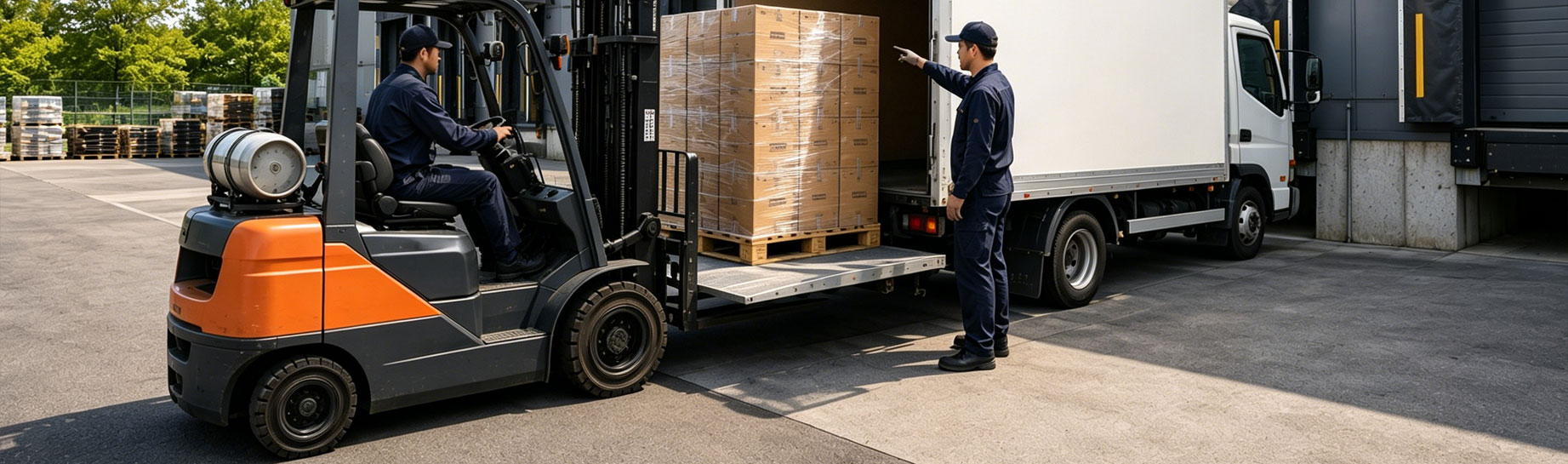
Dock Leveler Capacity Chart: Sizing & Load Rating Guide
Choosing the right dock leveler starts with the number on the spec sheet — but that number only tells half the story. What matters just as much is the dock leveler load rating behind it, and whether it actually matches the facility’s real operating conditions. Misreading a dock leveler capacity chart at the rating-method level can create a safety gap long before the equipment itself ever fails.
A common scenario reported by warehouse operators: a team selects a unit by matching the forklift’s weight directly against a standard capacity chart, without converting that weight into the impact force the platform absorbs each time a loaded forklift crosses it. The leveler — sometimes spelled dock leveller outside North America — then shows early wear, loose hinge points, or lip misalignment within a year or two. Tracing the cause usually leads back to the same gap: the original dock leveler capacity requirements the team worked from covered only static weight, not actual usage frequency or dynamic load.
This is a specification mistake, not an equipment defect. The unit performed exactly as its rating described — the rating itself simply described a different condition than the one it actually faced. Getting the initial sizing right the first time avoids a costly mid-life correction later.
How to Read a Dock Leveler Capacity Chart: Static vs Dynamic Load
A dock leveler is the mechanical or hydraulic platform that sits between a loading dock and a truck bed, bridging the height gap so forklifts and pallet jacks can cross safely. Understanding its load rating starts with separating dock leveler static vs dynamic load.
Under ANSI MH30.1 — the performance and testing standard the Material Handling Industry (MHI) publishes for dock leveling equipment — capacity ratings, expressed as CIR (Comparative Industry Rating), describe the weight a platform can support when evenly distributed in the stored, stationary position. That figure is not the same as the dynamic force a loaded forklift generates while traveling across the deck, and it’s this distinction that gets misread most often in a dock leveler technical specification.
Manufacturers don’t all apply the same dynamic multiplier when calculating rated capacity, either. Two units labeled “6,000 kg” can suit noticeably different operating conditions, because the underlying calculation method — not the number itself — is where the real difference sits.
That’s precisely why reading a dock leveler capacity chart in isolation, without asking how the figure was derived, tends to create more confusion than it resolves. A number on its own is only half the specification; the calculation method behind it is the other half, and both should come from the same source document.
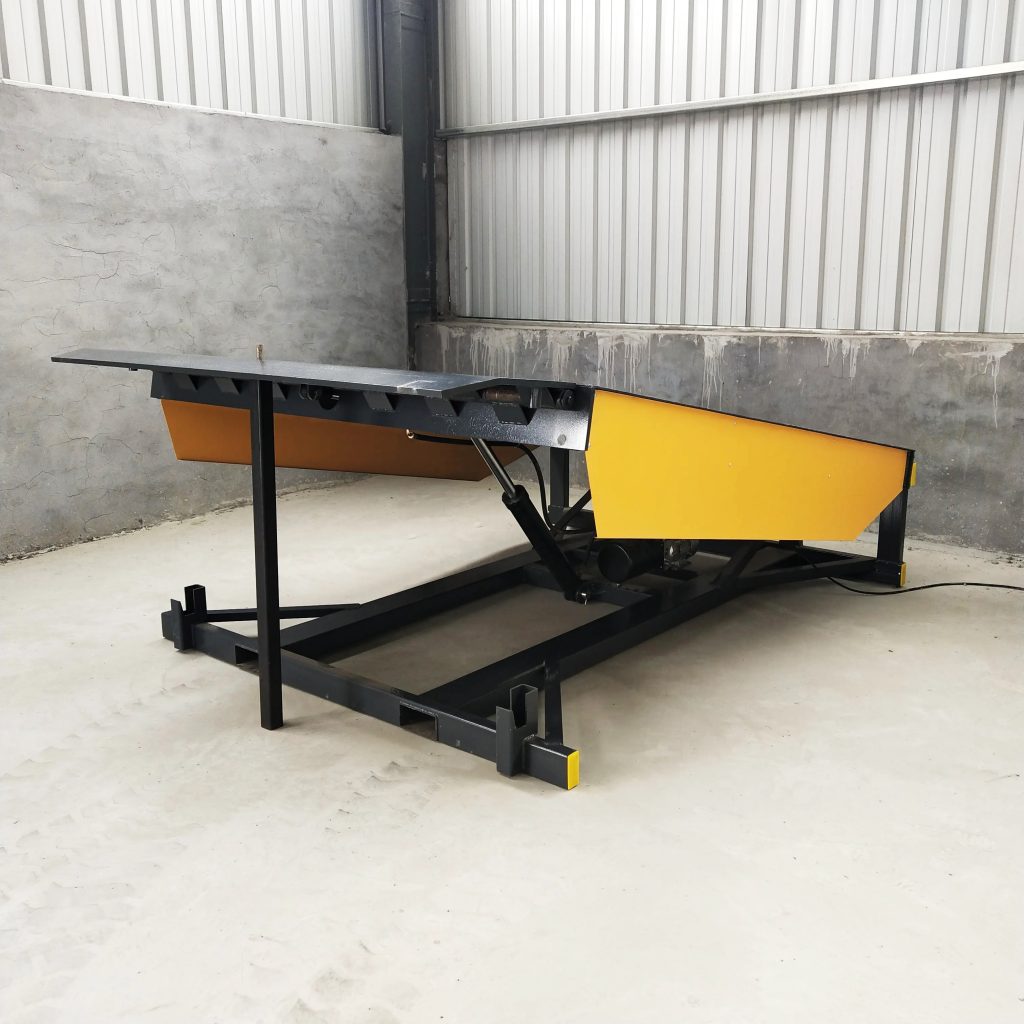
Calculating Dock Leveler Load Rating: Forklift Weight and Safety Margin
The industry-standard approach to dock leveler capacity calculation starts with the forklift’s gross vehicle weight (GVW), multiplied by a dynamic factor:
Standard-duty operations: GVW × 2.5
High-frequency or heavy-duty operations: GVW × 3 to 4
This multiplier accounts for the impact force created the instant a loaded forklift crosses the deck — not the forklift’s weight at rest. A technical consultant would typically recommend building in a dock leveler safety margin above the calculated figure, rather than sizing to the exact threshold, since load distribution, operator habits, and cargo variation all add real-world variability.
Beyond the capacity number itself, dock leveler overload protection deserves equal attention during specification: whether the unit includes overload alarms or automatic travel limits directly affects long-term structural safety. When evaluating dock leveler forklift capacity, both the rated number and the protection mechanism belong on the same checklist — not the number alone.
It also helps to run the calculation against the site’s actual heaviest combination, not an average one. A facility running mixed forklift classes should size against its heaviest unit at full load, since the leveler will eventually see that combination even if it isn’t the daily norm.
Dock Leveler Capacity Chart Dimensions: Platform Size, Pit Size, and Lip Length
Dock leveler dimensions should match the vehicle types and handling methods actually in use on site. The table below reflects commonly available ranges — final figures should always come from the supplier’s own technical specification sheet.
| Specification | Common Options | Selection Notes |
|---|---|---|
| Dock leveler platform size (width) | 6 ft / 6.5 ft / 7 ft | 7 ft is recommended for side-by-side pallet loading |
| Platform length | 6 ft / 8 ft / 10 ft | 8 ft suits most general operations |
| Standard operating range | Approximately ±12 in. | Vertical-storing models offer a smaller range, roughly ±3–5 in., suited to sites without pit infrastructure |
| Dock leveler lip length | Matched to the dock-to-trailer gap | A larger gap requires a longer lip to avoid an unsupported span |
Dock leveler pit size must follow the civil works drawing for the exact model ordered — substituting dimensions from a different model, or a previous project, is a frequent and costly mistake. Pit width, length, and depth correspond respectively to platform clearance, rear hydraulic component space, and the leveler’s working range, and none of the three can be skipped. Concrete strength is typically specified at a minimum of C25/30 to EN 206, though the supplier’s civil works sheet remains the final reference.
Pit dimensions and capacity are more connected than they first appear. A pit built to the wrong depth changes the leveler’s working range, which can push the unit outside its rated operating conditions even though the platform itself is correctly specified. Reviewing the civil works drawing alongside the capacity chart, rather than treating them as two separate documents, catches this kind of mismatch before concrete gets poured.
For a closer look at pit preparation requirements, see this dock leveler pit prep and civil works guide, which breaks down the three critical pit dimensions in more detail.
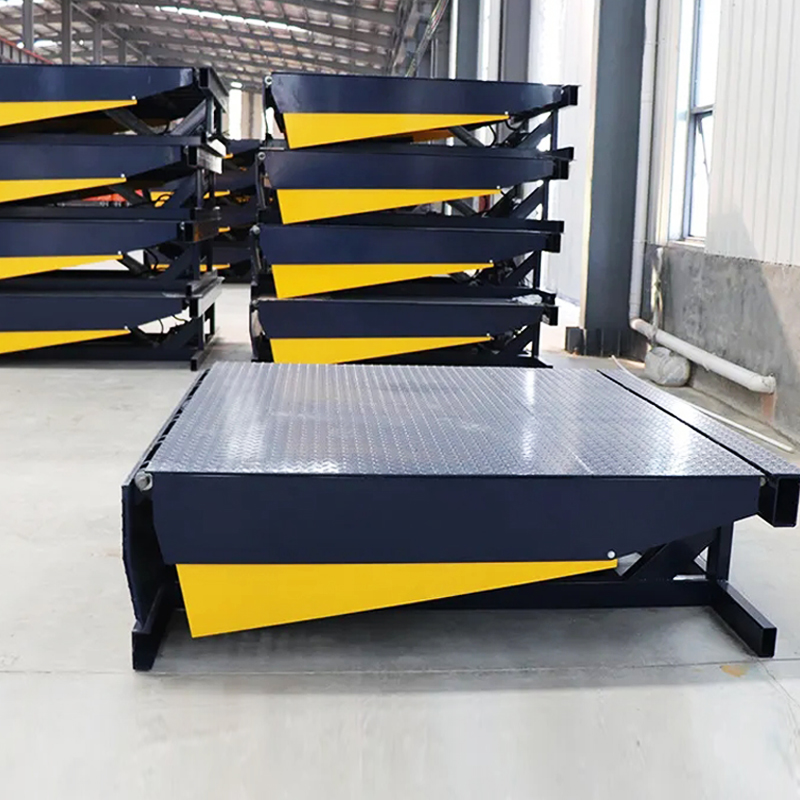
Dock Leveler Capacity Chart by Industry and Duty Rating
There’s no single answer for dock leveler capacity by industry, but operating intensity offers a useful reference point:
Dock leveler standard capacity: suited to general warehousing and retail distribution with moderate cycle frequency, commonly falling in a 6,000–10,000 kg static load range
Dock leveler heavy duty rating: suited to high-frequency, heavy-freight industrial operations such as building materials or machinery logistics
Dock leveler oversized load: oversized or non-standard cargo typically calls for a custom specification rather than a standard model
These ranges are industry-general reference points — the exact dock leveler weight capacity should always come from the equipment nameplate and the supplier’s technical documentation, not from a chart alone. Two sites in the same industry can still land in different rows of that chart once cycle frequency and cargo type are factored in, which is why “what does a similar warehouse use” is a weaker starting question than “what does this site actually load.”
One documented example illustrates why the rating is only the starting point: a distribution center in Incheon, South Korea operated a fixed hydraulic dock leveler rated at 6 tonnes for roughly six years without any dedicated hydraulic system maintenance, and eventually experienced slow platform response. Choosing the correct rating matters, but sustaining performance within that rating over time depends just as much on maintenance discipline.
Comparing Dock Leveler Capacity Ratings Across Suppliers
A meaningful dock leveler capacity comparison goes beyond the number on the spec sheet. A few selection criteria worth confirming before comparing quotes:
Whether compared capacity figures use the same dynamic multiplier — otherwise the numbers aren’t directly comparable
Whether the supplier provides a complete fixed dock leveler specification document, not just summary figures from a marketing page
Whether the drive type — hydraulic, mechanical, or air-powered — matches the site’s actual cycle frequency, since this indirectly affects long-term load performance
For more detail on how the three drive types differ, see this comparison of dock leveler types, which covers where each type fits best.
One habit worth adopting before signing off on any quote: ask each supplier to walk through their own dock leveler capacity chart line by line and explain the multiplier behind each figure. A supplier that answers clearly is usually the same one whose documentation will hold up later, during an inspection or an insurance review.
It’s also worth remembering that the lowest quoted price and the lowest total cost aren’t the same thing. A unit sized just under the site’s real dynamic load may look competitive on paper but shorten service life and increase downtime — erasing any upfront savings well before the equipment reaches the end of its expected lifespan.
Final Thoughts on the Dock Leveler Capacity Chart
Choosing the right dock leveler manufacturer comes down less to comparing capacity figures on a quote and more to confirming the rating method, dynamic multiplier, and actual site conditions behind that figure. Beauway, a dock leveler supplier focused on hydraulic and mechanical loading equipment, manufactures to ISO 9001 quality standards across a capacity range spanning standard to heavy-duty applications, with products shipped to facilities across Europe, Southeast Asia, and the Middle East. For any warehouse or logistics team reviewing a dock leveler capacity chart, confirming the rating methodology should come before comparing quotes — not after.
Frequently Asked Questions
Q: What is the difference between static and dynamic load on a dock leveler?
A: Static load is the weight a dock leveler supports while sitting stationary and evenly loaded. Dynamic load accounts for the extra impact force created the instant a loaded forklift crosses the platform — which is why a proper capacity chart lists both figures rather than a single number.
Q: How do I calculate the right dock leveler capacity for my forklift?
A: Start with your forklift’s gross vehicle weight, then multiply by 2.5 for standard operations or by 3 to 4 for high-frequency, heavy-duty use. Compare that result against the leveler’s rated capacity, and build in a margin above it rather than sizing to the exact threshold.
Q: What dock leveler platform size fits most warehouses?
A: An 8-foot platform length suits most general warehouse operations without creating unnecessary pit costs. A 7-foot platform width is worth the extra footprint when pallets regularly need to be loaded or unloaded side by side rather than one at a time.
Q: Why do two dock levelers with the same capacity rating perform differently?
A: Manufacturers don’t always apply the same dynamic load multiplier when calculating a rated figure. Two units marked with an identical number can be built for different real-world conditions, so the ratings are only truly comparable once the calculation method behind each one is confirmed.
Q: Does dock leveler pit size depend on the model?
A: Yes. Pit width, length, and depth must follow the civil works drawing supplied for the exact model being ordered. Substituting dimensions from a different model, or reusing a previous project’s pit drawing, is a common and costly cause of installation delays and structural mismatches.
Trusted by Fleet Operators Across 60+ Countries
Stop Losing Time at the Loading Dock.
Get a Custom-Matched Tail Lift Quote in 24 Hours.
60
Countries Served
24h
Quote Turnaround
99.9
Field Uptime
5.0
Customer Rating
No Obligation
CE & UKCA Certified
Standard & Custom Builds
Worldwide Shipping