Having trouble submitting? Email us directly at nicole@beauway.com and we'll get back to you within 24 hours.











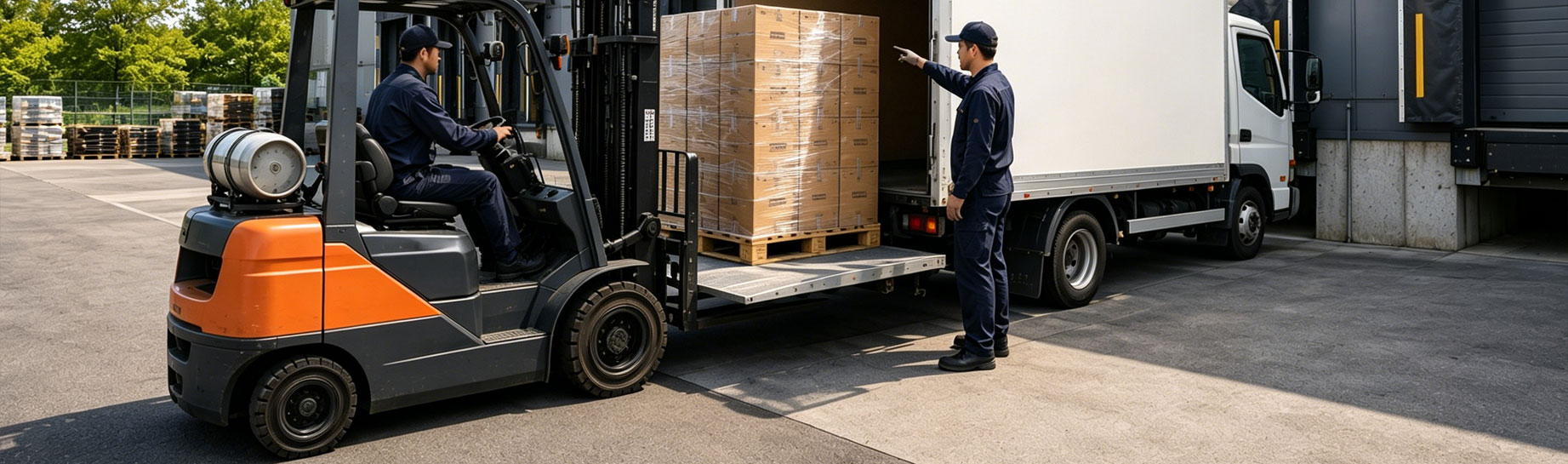
Tail Lift for E-commerce Delivery: Southeast Asia Fleet Guide
Tail Lift for E-commerce Delivery: Southeast Asia Fleet Guide
If you’re running a delivery fleet in Southeast Asia, you already know the pressure. The tail lift decision sounds simple. It isn’t.
Shopee, Lazada, TikTok Shop — these platforms didn’t just grow. They exploded. And the logistics infrastructure behind them is still catching up. Drivers are handling more stops per day than ever before. Manual unloading at every stop isn’t just slow. It’s genuinely dangerous. That’s why the hydraulic tail lift has quietly become one of the most important equipment decisions a fleet operator makes.
Get it right, and your loading times drop, your driver injury rate drops, and your daily delivery capacity goes up. Get it wrong, and you’re dealing with breakdowns, safety violations, and a liftgate that doesn’t actually fit your truck.
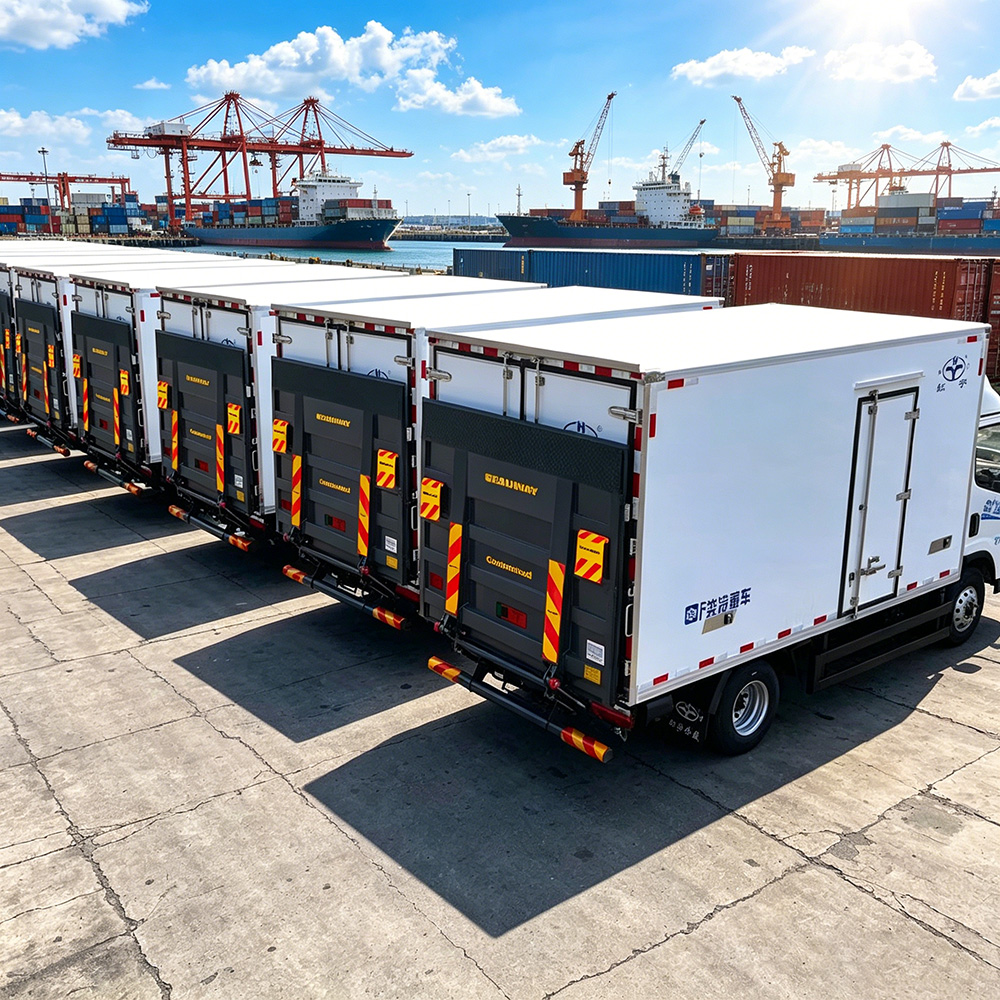
Why E-commerce Delivery in Southeast Asia Needs a Tail Lift
Most fleet operators underestimate this. They think a tail lift is just a convenience feature.
It’s not. In Southeast Asia specifically, it’s a structural necessity.
Here’s the reality: a huge proportion of delivery stops across Indonesia, the Philippines, Vietnam, and Thailand have no fixed unloading dock. There’s no loading bay. No raised platform. Just a driver, a truck, and cargo that needs to move. Without a proper truck lift, that means manual lifting — every single stop, all day, in 35-degree heat.
The numbers bear this out. Vehicles fitted with a car tail lift typically cut per-stop handling time by somewhere around 40%. That’s not a marginal gain. Over a full day’s route, it’s the difference between completing 18 drops and completing 25.
In addition, driver turnover in Southeast Asian logistics is already high. Physical exhaustion is one of the leading reasons people leave. A hydraulic liftgate doesn’t just protect your drivers — it protects your ability to retain them.
Hydraulic Tail Lift: Why It Dominates the Market
The hydraulic tail lift is the default choice across most of the region’s serious fleet operators. There’s a reason for that.
It’s not flashy. The hydraulic power unit drives the platform up and down — that’s essentially it. But that simplicity is exactly what makes it reliable in high-cycle delivery environments. A courier vehicle doing 80 to 100 lift cycles a day needs something that just works. Not something clever.
For example, a 1,000 kg rated hydraulic tail lift handles everything from large electronics to boxed beverages without complaint. Operators running dedicated large-item routes for Shopee Mall or Lazada Choice have found this capacity sweet spot covers the overwhelming majority of their loads.
Compared with manual unloading, a hydraulic liftgate reduces physical strain per cycle by well over half. Drivers arrive at the end of a shift tired, not broken.
Three Tail Lift Types — and Which One Actually Fits Your Operation
This is where most buyers make mistakes. They pick a type based on price or availability. They should be picking based on route profile.
Folding Tail Lift
The folding tail lift folds flat against the rear of the vehicle. Simple concept. But in dense Southeast Asian cities — underground car parks, narrow compound entrances, low-clearance loading areas — that compact stowed profile genuinely matters. The lift platform typically sits under 200mm when folded. Most urban environments handle that without issue.
Cantilever Tail Lift
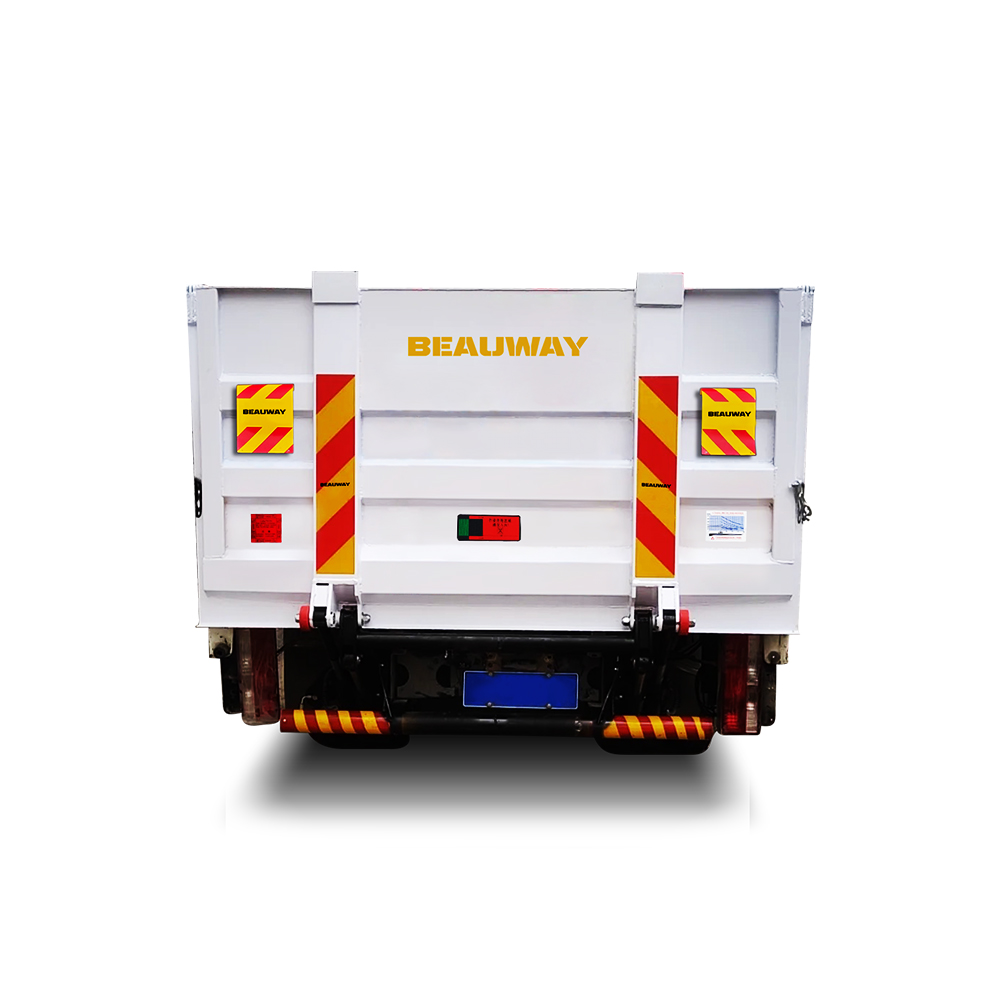
A cantilever tail lift has a straightforward structure and low maintenance costs. It suits trunk route vehicles doing fewer stops at larger consignment points. However — and this matters — the cantilever design loads the rear axle hard. Don’t assume your truck can take it. Check the chassis rating first.
Concealed Tail Lift
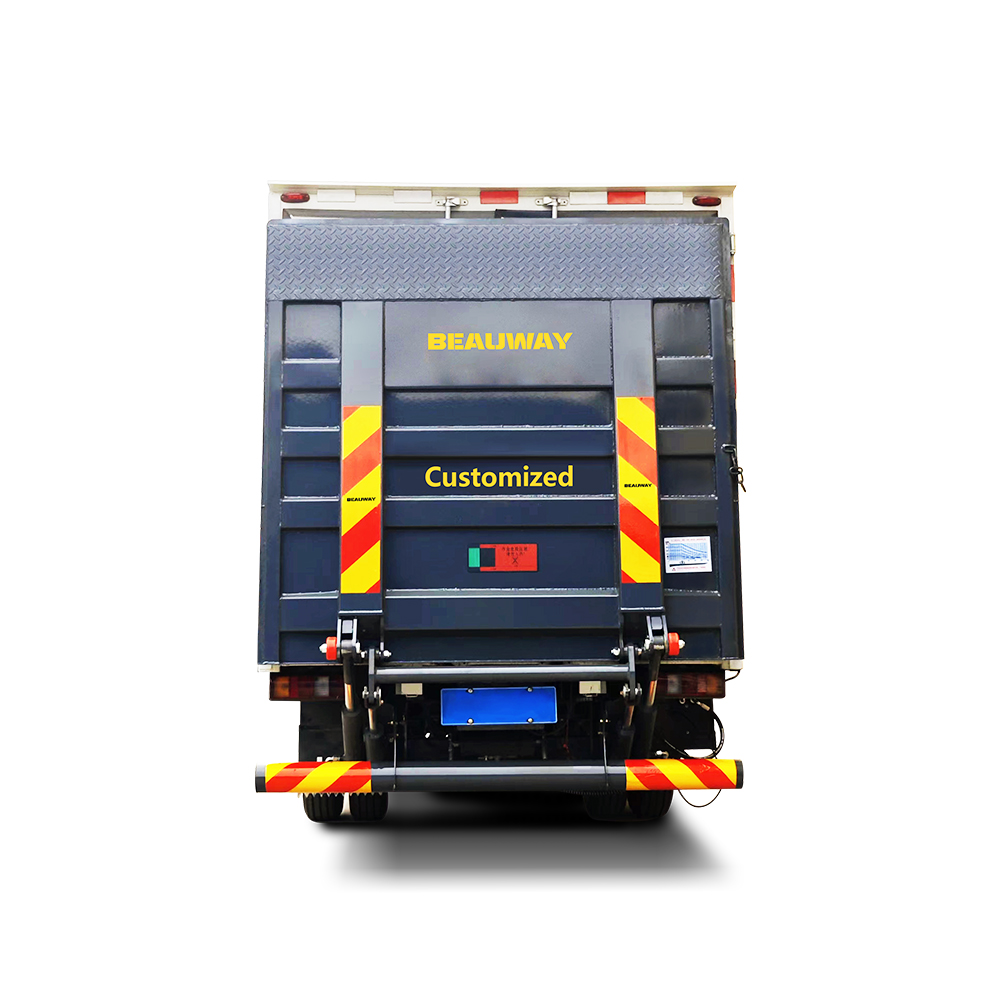
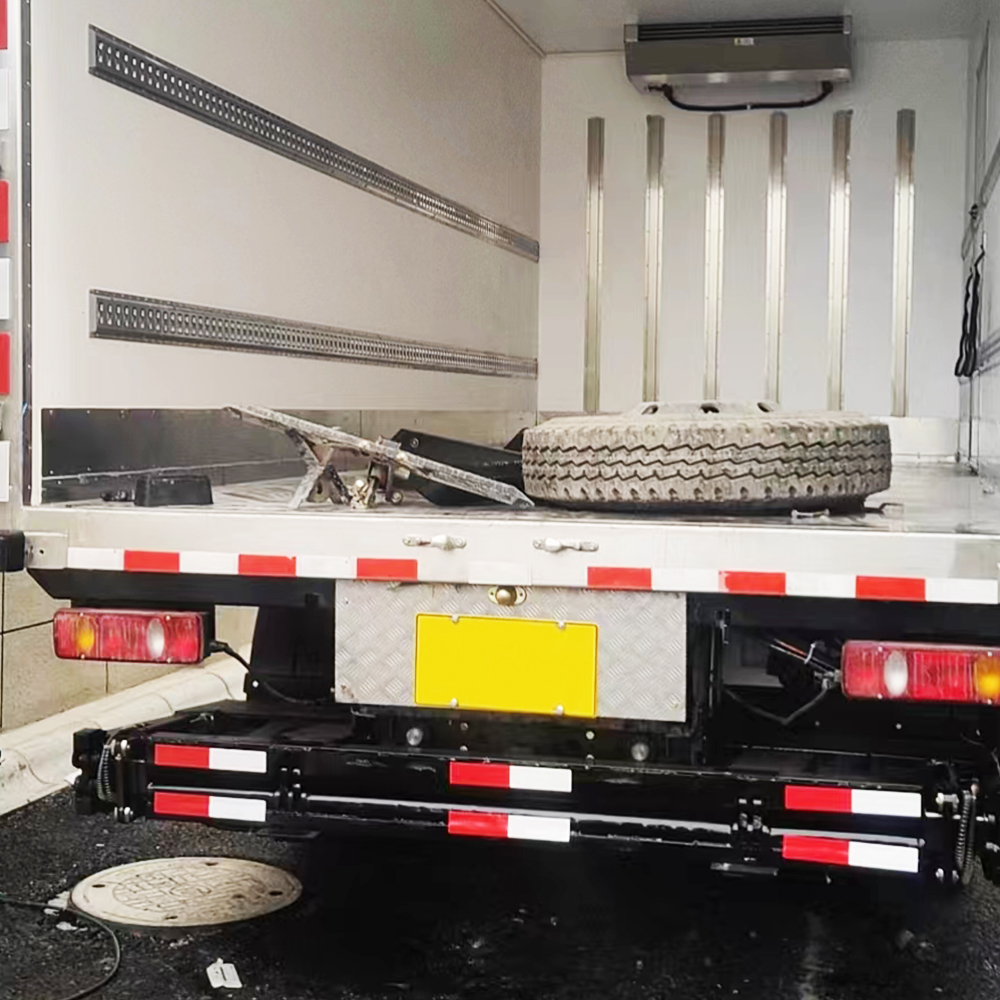
The concealed tail lift system retracts fully beneath the vehicle floor when stowed. Cleanest exterior profile. Better security for high-value cargo. Retailers running branded delivery fleets tend to favor this. In addition, concealed units are significantly harder to tamper with — useful in markets where cargo theft is a real operational concern.
How to Select the Right Load Capacity
Load capacity is the most critical technical parameter in the purchasing decision. For e-commerce delivery applications, the following guidelines apply:
- Small-parcel box trucks: somewhere in the 500–800 kg tail lift load capacity range works for most
- Large appliance or furniture routes: 1,000–1,500 kg hydraulic tail lift is the realistic starting point
- Cold-chain fresh delivery: an electric tail lift reduces noise at residential stops and cuts fuel draw from the main engine
Therefore, always calculate actual maximum single-load weight before confirming load capacity. Apply a minimum 20% safety margin above the measured peak load. Selecting an under-rated model is the single most common cause of early tail lift failure in fleet operations.
Installation: The Part Most Buyers Rush
Tail lift installation must be carried out by qualified technicians. Three checks are required before anything gets bolted on.
First, the vehicle’s rear axle rated capacity has to cover the combined weight of the loading lift and its maximum payload. Second, hydraulic line routing has to stay clear of exhaust heat. Third, the tail lift control system wiring has to follow the vehicle manufacturer’s original electrical spec.
However, price pressure in Southeast Asia pushes a lot of buyers toward non-certified installation points. The short-term saving is real. The long-term cost is worse. Cylinder seals degrade faster. Hydraulic fluid starts weeping within months. What looked like a saving becomes a maintenance spiral.
Work with a proper equipment supplier who handles installation as part of the package. The upfront cost is higher. The total cost of ownership is lower.
Aluminum or Steel? In This Climate, It Actually Matters
Southeast Asia is not kind to metal. High humidity, salt air in coastal cities, temperature swings between air-conditioned warehouses and outdoor routes — it adds up.
An aluminum tail lift platform handles this environment better than steel over the long run. It doesn’t rust. It’s lighter — typically 30% or more below an equivalent steel platform’s weight. That weight saving feeds directly into your legal payload capacity.
The trade-off is repair complexity. Aluminum welding requires different skills and equipment than steel. Before committing to aluminum, check whether your preferred tail lift supplier has local repair capability in your key markets. If they don’t, that 30% weight advantage starts looking less attractive after the first structural incident.
Fleet Maintenance: What 50 Vehicles Actually Needs
High-frequency delivery vehicles are hard on equipment. A car tail lift doing 80-plus cycles a day in tropical heat is not operating in ideal conditions. It needs a real maintenance schedule, not just reactive repairs.
Here’s what actually works in practice:
- Weekly: check hydraulic fluid level, inspect cylinder seals for early weeping
- Monthly: lubricate hinges and slide rails, test control system response time
- Quarterly: full hydraulic tail lift power unit inspection, replace filter elements
In addition, keep a fleet maintenance log per vehicle. Not a shared spreadsheet — a per-unit record with dates, parts replaced, and technician notes. When a loading lift fails unexpectedly, that log tells you whether it’s a one-off or a pattern. It also matters enormously when you’re dealing with insurance claims.
Equipment Safety: The Compliance Reality in Southeast Asia
Roughly a third of hydraulic tail lift units currently operating across the region have incomplete safety configurations. That’s not a statistic invented for effect — it reflects what operators and technicians actually report seeing on the ground.
Malaysia, Thailand, and Vietnam all have labor regulations covering delivery vehicle equipment safety. Platform edge guardrails, overload cutoffs, emergency power isolation — these aren’t optional extras. They’re baseline requirements.
Singapore’s Ministry of Manpower sets a widely referenced regional benchmark through the Workplace Safety and Health Act, which covers lifting equipment safety requirements in detail. Many Southeast Asian fleet operators use it as a practical compliance framework even outside Singapore.
Non-compliant equipment creates real liability exposure. When something goes wrong on a non-compliant vehicle, the legal and compensation costs tend to dwarf whatever was saved on the original purchase.
Choosing a Tail Lift Supplier: Four Things That Actually Matter
Tail lift price is the thing everyone asks about first. It’s also the least useful single metric for making a good decision.
What actually matters:
Certifications. Does the hydraulic tail lift carry CE, ISO, or equivalent? If an equipment supplier can’t answer that clearly, move on.
Local service presence. An authorized service point in Thailand doesn’t help you when your fleet is in Surabaya or Ho Chi Minh City. Map their actual coverage before committing.
Spare parts on the ground. Cylinder seals, hydraulic pumps — if these have to be shipped from overseas, your vehicle is sitting idle for weeks. That’s a real operational cost.
Custom fitment capability. Standard liftgate truck configurations don’t always match. Can the supplier adapt the platform dimensions and load rating to your specific vehicles? Some can. Many can’t.
Therefore, run through these four questions with every tail lift supplier you’re evaluating. The answers will tell you more than any price list.
Buying for a Fleet: A Practical Procurement Sequence
Building or scaling a Southeast Asian e-commerce delivery fleet is a significant capital commitment. The car tail lift procurement decision deserves a proper process.
Start with data. Measure actual cargo weight ranges and daily cycle counts across a representative sample of your routes. Don’t estimate. Measure.
Use that data to set your load capacity and structural type requirements. Then go to market — minimum three suppliers, formal written quotations, installation scope included.
Ask for local references. Not case studies on a website. Actual fleet operators running a hydraulic tail lift in your target markets, in the same climate conditions. Talk to them if you can.
As a result, operators who follow this sequence consistently report fewer specification errors, lower fleet maintenance costs in year two and three, and better supplier accountability when things don’t go to plan. It takes longer upfront. It costs less overall.
Trusted by Fleet Operators Across 60+ Countries
Stop Losing Time at the Loading Dock.
Get a Custom-Matched Tail Lift Quote in 24 Hours.
60
Countries Served
24h
Quote Turnaround
99.9
Field Uptime
5.0
Customer Rating
No Obligation
CE & UKCA Certified
Standard & Custom Builds
Worldwide Shipping