Having trouble submitting? Email us directly at nicole@beauway.com and we'll get back to you within 24 hours.











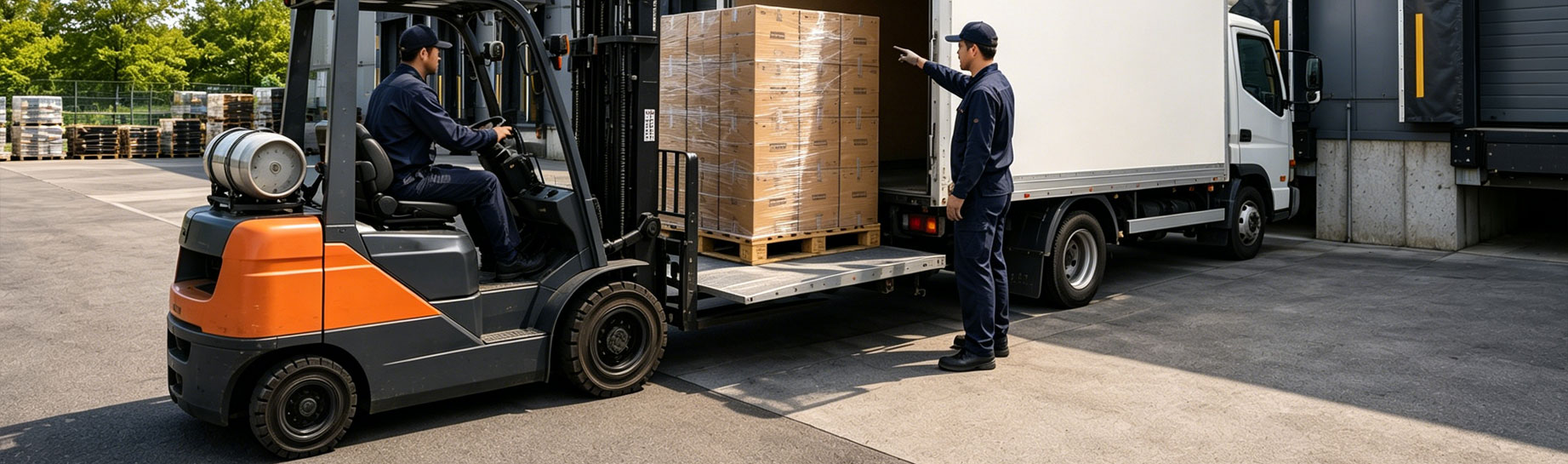
Actual measurement of installing tailboards on 4.2-meter van-type trucks: modification process, performance loss, and the truth about revenue increase
In the fields of urban distribution, express delivery, building materials, and cold chain short-distance transportation, 4.2-meter van-type trucks are the main vehicle type with the highest market penetration. Pain points such as low manual loading and unloading efficiency, dependence on porters, unsafe high-altitude loading and unloading, and inability to accept small orders have long plagued truck drivers and logistics practitioners. Installing hydraulic tailboards has become a mainstream solution to address these issues, but many owners are hesitant due to core concerns such as installation compliance, load loss, construction quality, and payback period.
This time, we have chosen the mainstream standard 4.2-meter blue-plate van as the actual test vehicle, recording the entire process of tailboard modification. We have measured the lifting performance, changes in vehicle load, fuel consumption differences, and loading and unloading efficiency improvement data under both empty and full load conditions. Additionally, we have analyzed the pros and cons of modification, key points to avoid pitfalls, and actual benefits, providing precise and practical references for vehicle owners who are planning to modify their vehicles.
I. Actual measured basic information and modification configuration
For this actual test, we selected a compliant 4.2-meter blue-plate van with a total mass of 4.5 tons, an original curb weight of 2.8 tons, and a rated load capacity of 1.7 tons. It is a commonly used standard model on the market, and the data provided is generally referential. For modification, we chose a mainstream lightweight hydraulic lifting tailgate, which is specifically sized for 4.2-meter vans and fits the standard for installation at the rear of the vehicle. The entire modification process followed the “Commercial Vehicle Modification Technical Specifications” issued in 2025.
Key configuration parameters: The tailboard has a rated load capacity of 1.5 tons and a self-weight of 350kg. It adopts a modular hydraulic design and is equipped with triple safety functions: automatic balancing, anti-pinch and anti-collision, and power-off self-locking. It supports one-button lifting and lowering, as well as flapping and opening/closing, and is suitable for both manual and platform loading/unloading scenarios.
II. Full-process real shooting: standardized installation process of tailboard
This actual test comprehensively documents the entire modification process. The standard construction time for traditional hydraulic tailboards is approximately 6-8 hours, while the new modular electric tailboards can be compressed to 5 hours. We adopted the conventional hydraulic model for construction, which is divided into five core steps. Each step affects the stability and compliance of future use.
- Positioning and drilling, as well as beam alignment
Construction personnel utilize laser calibration technology to precisely locate the installation points of the main beam, avoiding issues such as uneven stress on the frame and drilling deviation. They strictly avoid the key load-bearing points of the original vehicle to ensure that the body structure is not damaged. At the same time, hydraulic pipeline routing channels are reserved to lay the foundation for subsequent wiring and bracket installation, eliminating the potential risks of tailgate tilt and lifting stalls from the source. - Support welding and rust prevention treatment
The main beam bracket is welded using carbon dioxide gas shielded welding, with the weld thickness strictly controlled to be over 8mm to ensure load-bearing strength and prevent deformation and cracking under heavy loads. After welding, an angle grinder is used to meticulously grind all weld burrs and remove the oxide layer. Subsequently, anti-rust and anti-corrosion paint is applied all over, with special attention paid to the welding joints and the contact surface of the main beam, to prevent rust and corrosion caused by long-term exposure to rain and bumps. - Assembly of the main body of the tailboard and installation of accessories
Accurately connect the tail panel to the fixed bracket using pin shafts, and generously apply butter to all pin shafts for lubrication to reduce wear and abnormal noise in the later stages. Install the hydraulic cylinder, swing arm, and balance rod in sequence, and tighten all connecting bolts one by one to ensure no looseness or gaps. Subsequently, arrange the hydraulic piping, route the lines neatly and securely to avoid pipeline wear and oil leakage caused by bumps during driving. - Circuit system layout and debugging
Independently set up dedicated circuits, install safety switches and leakage protection devices, and perform waterproof and insulation treatment at the wiring points to adapt to the complex driving environment of trucks. The circuit control system adopts a dual-control design, allowing operation from both the rear and the side of the vehicle, balancing convenience and safety, and effectively avoiding circuit short circuits and sudden power failures. - Complete machine debugging and safety inspection
After installation, conduct three lifting tests: no-load, half-load, and full-load. Calibrate the levelness of the tailboard, lifting speed, and balance. Debug the hydraulic pressure to ensure smooth lifting, no impact during startup and shutdown, and smooth opening and closing of the flaps. Simultaneously, test the power-off self-locking, anti-pinch protection, and emergency stop functions. Once all meet the standards, clean up the construction site and complete the modification and delivery.
III. Actual measurement of core data: real comparison between loss and efficiency
After the modification, we conducted field tests focusing on four key areas that car owners are most concerned about: load loss, loading and unloading efficiency, operational costs, and driving impact. The data provides a true representation of the pros and cons of tailgate modifications, eliminating false advertising. - Actual measurement of load loss
The original vehicle has a curb weight of 2.8 tons and a rated payload of 1.7 tons. After the installation of a 350kg tailboard, the curb weight increases to 3.15 tons, while the rated effective payload decreases to 1.35 tons, a reduction of 350kg, representing a loss of approximately 20.6%. This is the core hard loss incurred by the modification of a blue-plate 4.2-meter cargo vehicle with a tailboard. It is a key consideration for owners of heavy-duty general cargo and building material transportation vehicles, while it has little impact on light-duty express delivery, fast freight, and cold chain scenarios. - Actual measurement of loading and unloading efficiency (multi-scenario comparison)
We simulated three mainstream transportation scenarios for urban distribution and compared the time consumption differences between traditional manual loading and unloading and tailboard operations. The efficiency improvement effect is very significant:
- Express sorting scenario: Traditional manual loading and unloading of a full truck takes 38 minutes, while automated tailboard operations only require 8 minutes, saving 82% of time. A single person can complete all operations, eliminating the need to hire porters.
•Building material loading and unloading scenario: Manual handling of 1.5 tons of hardware building materials takes 65 minutes, while loading and unloading with tailboard lifting takes only 12 minutes, saving 81% of time and eliminating the loss due to manual handling and collision. - Cold chain transportation scenario: It takes 52 minutes to manually load and unload cold chain goods, while tailboard operations only take 9 minutes, saving 83% of time. This significantly reduces the unpacking time, and the goods loss rate has dropped from 3% to almost zero.
Overall, the tailboard can reduce conventional loading and unloading time by over 60%. Loading and unloading work that originally takes 1 hour can now be completed in as fast as 15-20 minutes, greatly enhancing vehicle turnover efficiency.
- Actual measurement of driving fuel consumption and stability
After driving 100 kilometers on a mix of urban and national road conditions under both empty and full load conditions, the measured results showed that the fuel consumption increased by 0.3L/100km under empty load and 0.5L/100km under full load compared to before modification. The increase in fuel consumption is negligible and can be ignored in daily operation. There was no significant change in driving stability, and the tailboard was firmly fixed, with no shaking or abnormal noise during high-speed driving or on bumpy roads, which did not affect the normal operation of the vehicle.
IV. 30-Day Practical Operation: Receiving Orders and Actual Revenue Measurement
To verify the actual revenue-generating capability of the tailboard, we put the modified vehicle into regular urban distribution operations for a period of 30 days, and conducted a comparative test with the same model of truck without a tailboard. The operational data differences are intuitive:
4.2-meter cargo van without tailboard: receives an average of 3.2 orders per day, mostly relying on short-distance and lightweight cargo sources. It cannot handle heavy cargo, orders from warehouses without platforms, or orders without personnel to receive them, thus limiting its effective operating time per day.
4.2-meter cargo van with added tailboard: With an average daily order receiving volume of 5.4 orders, the order receiving volume has increased by 68%. It can independently undertake heavy cargo, bulk cargo, and direct warehouse orders, significantly expanding the applicable scenarios. This avoids the problem of laborers raising prices on the spot and saves labor loading and unloading costs ranging from 20 to 100 yuan per order.
Based on real-life cases of vehicle owners, after installing tailboards on new energy 4.2-meter trucks, the monthly order volume increased from 78 to 143, representing an 83% increase. This led to an additional income of over 29,000 yuan in just half a year. After deducting the modification costs, most urban distribution vehicle owners can recoup their investment within 6-8 months, with considerable long-term operational profits.
V. Actual Measurement Summary: Pros and Cons of Modifications and Tips to Avoid Pitfalls - Core advantages
Firstly, it aims to reduce costs and increase efficiency by completely eliminating the reliance on manual handling, saving labor costs for loading and unloading, significantly shortening loading and unloading time, and enabling the vehicle to run 1-2 more trips per day for orders. Secondly, it covers all scenarios, adapting to various loading and unloading scenarios such as warehouses, stores, construction sites, and sites without platforms, with a wider range of order receiving. Thirdly, it is safe and controllable, with mechanical operations throughout the process, eliminating the risks of falls and injuries caused by manual climbing and heavy object handling, and significantly reducing the rate of cargo damage. Fourthly, it is compliant and stable, with standard modified tailboards that can pass annual inspections normally, without affecting the roadworthiness of the vehicle. - Shortcomings that cannot be ignored
The primary issue is load loss. The self-weight of around 350kg will reduce the effective load capacity of blue-plate trucks, which will impose certain restrictions on high-frequency heavy-load transportation. Secondly, there is a slight increase in fuel consumption. Long-term high-speed operation will generate a small amount of additional energy consumption. Lastly, regular maintenance is required. Hydraulic pipelines, pin shafts, and electrical circuits need regular maintenance, otherwise they are prone to jamming and oil leakage failures. - Key points for avoiding pitfalls in modification
Refuse non-standard modifications and always choose compliant standard tailboards to avoid hindrances during annual inspections due to incompatibility in size and load capacity. Prioritize professional shops for construction to ensure that welding, wiring, and calibration processes meet standards, eliminating potential safety hazards in the later stages. Avoid overloading during daily use, strictly follow rated load capacity operations to prevent tailboard deformation and hydraulic failure. Regularly perform rust prevention, lubrication, and circuit testing to extend the service life of the equipment.
VI. Final practical test conclusion: Is it worth installing?
Based on comprehensive real-world test data and long-term operational results, installing tailboards on 4.2-meter vans is a cost-effective modification solution for light-load urban distribution, express delivery, cold chain, and sporadic freight transportation. Although there is a load loss of around 20% and a slight increase in fuel consumption, the benefits in terms of efficiency improvement, increased order receiving, and labor cost savings far outweigh the losses.
For vehicle owners who primarily transport light goods, less-than-truckload (LTL) cargo, and city distribution, and frequently handle cargo independently without a dedicated handling site, installing a tailboard can significantly increase income and reduce labor intensity. For vehicle owners who frequently transport heavy loads on trunk routes and use fixed platforms for loading and unloading, the impact of load loss is significant, and they can make a cautious choice based on their specific operational scenarios. With reasonable modification and standardized use, a tailboard can become a core tool for enhancing the profitability of 4.2-meter trucks.
Trusted by Fleet Operators Across 60+ Countries
Stop Losing Time at the Loading Dock.
Get a Custom-Matched Tail Lift Quote in 24 Hours.
60
Countries Served
24h
Quote Turnaround
99.9
Field Uptime
5.0
Customer Rating
No Obligation
CE & UKCA Certified
Standard & Custom Builds
Worldwide Shipping