Having trouble submitting? Email us directly at nicole@beauway.com and we'll get back to you within 24 hours.











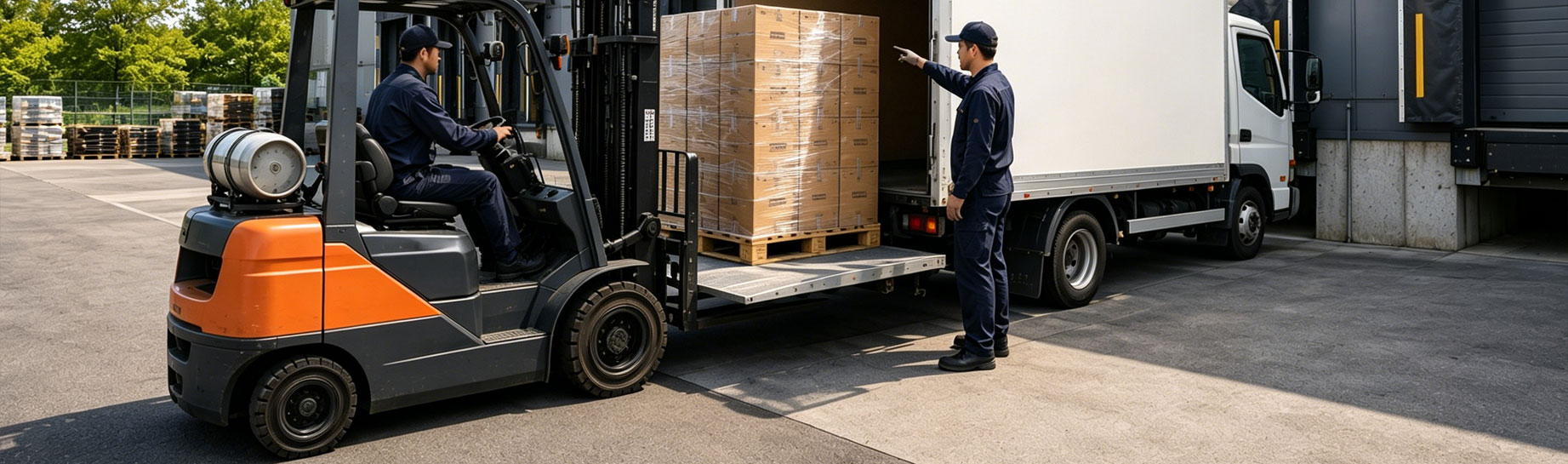
Boosting Loading Dock Efficiency with the Right Dock Leveler
In today’s fast-paced global supply chain, optimizing loading dock efficiency is critical for third-party logistics (3PL) providers, distribution centers, and warehouse operators aiming to maximize throughput and profitability. While management often invests heavily in automated storage and retrieval systems (AS/RS) or advanced warehouse management software, physical bottlenecks frequently occur right at the shipping and receiving bays. Every minute a transport vehicle spends stalled at a loading bay translates to lost productivity and escalating labor costs. At the heart of this transition point between the fixed warehouse floor and the variable truck trailer chassis lies an indispensable piece of warehouse loading dock equipment: the dock leveler. Choosing the right loading dock leveler ensures smooth material handling, protects valuable cargo, and safeguards workers.
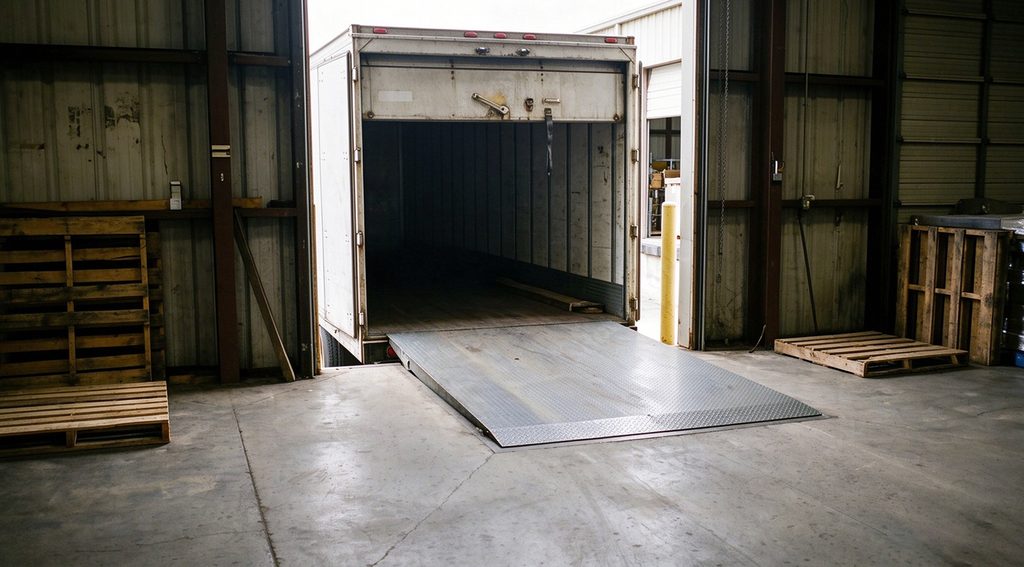
The Operational Reality of Loading Bay Inefficiency
A distribution center can operate state-of-the-art sorting technology, but if its shipping and receiving bays suffer from congestion and delays, the entire supply chain breaks down. When trucks experience excessive turnaround times at logistics hubs, downstream scheduling and upstream packaging lines grind to a halt.
Inefficient loading zones typically stem from several common infrastructure challenges:
- Height Mismatch: Commercial truck trailers vary significantly in bed height due to suspension designs and load distributions. Without a proper transition tool, forklifts cannot safely enter or exit trailers.
- Steep Transition Slopes: Outdated or poorly sized equipment creates steep inclines and drops, forcing operators to crawl slowly or risk spilling fragile goods.
- Cumbersome Manual Labor: Relying on manual boards wastes valuable seconds or minutes per cycle, accumulating into massive productivity losses over a fiscal year.
To streamline this workflow, facilities must upgrade their infrastructure. Implementing advanced warehouse loading dock equipment is no longer optional; it is a core strategy for operational excellence.
How Modern Dock Levelers Transform Material Handling
The primary function of any dock leveler is to bridge the vertical and horizontal gaps between the warehouse floor and the vehicle bed. Structurally, a standard system consists of a robust underframe, a bridge deck, a lip, hydraulic cylinders, and a power unit.
Advanced systems provide a smooth, continuous transition path. When heavy forklifts cross between the facility and the trailer without experiencing jarring physical impacts, operators maintain optimal speed, reducing long-term mechanical wear on forklift tires, steering axles, and hydraulic components. Furthermore, integrated safety features—such as automatic lip extension, interlocked vehicle restraints, and high-visibility signal lights—ensure safe operations under all environmental conditions.
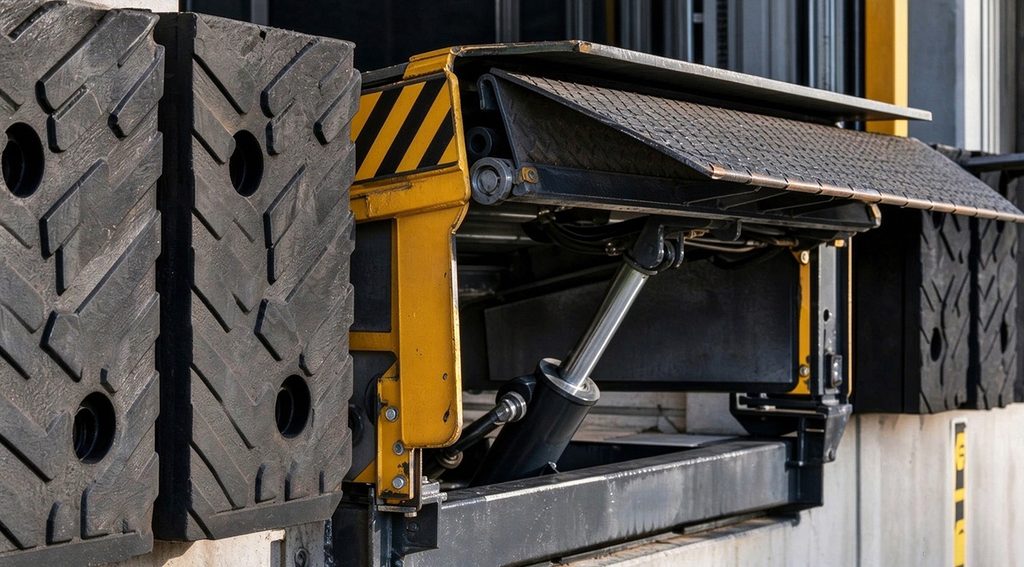
Hydraulic vs. Mechanical: Selecting the Right System
Selecting the correct mechanism type is vital for balancing initial capital expenditure, long-term maintenance costs, and daily throughput capacity.
Hydraulic Dock Levelers
High-performance hydraulic dock levelers use push-button electrical activation to effortlessly control deck height and lip extension. These units are engineered for high-cycle environments where speed, safety, and ergonomics are paramount.
- Shorter Cycle Times: Drastically enhances daily truck turnaround capability and maximizes door utilization.
- Enhanced Safety: Built-in velocity fuses automatically prevent uncontrolled free-fall if a truck pulls away unexpectedly.
- Ergonomic Excellence: Eliminates physical strain and manual pulling, reducing worker fatigue and injury risks.
Mechanical Dock Levelers
Traditional mechanical dock leveler units rely on spring-loaded pull-chain mechanisms to raise and lock the deck.
- Capital Efficiency: Ideal for facilities with moderate daily shipping volumes and tight initial budgets.
- Robust Design: Heavy-duty steel construction delivers reliable performance with minimal electrical infrastructure requirements.
- Maintenance Considerations: Regular manual adjustments and spring calibrations are necessary to maintain smooth operation over time.
Critical Technical Specifications and Selection Factors
When procuring systems for your facility, engineers must evaluate several non-negotiable technical specifications to ensure long-term durability and safety compliance:
- Dimensional Specifications: Widths and lengths must precisely match your facility’s pit design to prevent hazardous gaps and structural stress points.
- Travel Range: Standard vertical travel accommodates the vast majority of vehicle height variations, providing a gentle transition slope.
- Dynamic and Static Load Capacity: Equipment must be rated not only for static loads when stationary but also for heavy, dynamic forklift traffic rolling across gradients under load.
- Electrical Configuration: Power units typically support standard industrial AC power supplies and adapt easily to multi-phase electrical grids across different regions.
Field Installation Standards and Safety Best Practices
During on-site installation, handling, and daily operations, engineering teams must adhere strictly to established safety protocols. A critical rule involves the proper use of structural forklift holes:
- Front Forklift Holes: Designed strictly for hoisting, positioning, and adjusting the unit during initial on-site installation. Never use front forklift holes for heavy lifting or unauthorized handling during general warehouse stacking or transportation, as this can cause permanent structural damage.
- Rear Forklift Holes: Designated for standard, safe material handling and transit procedures during regular operations.
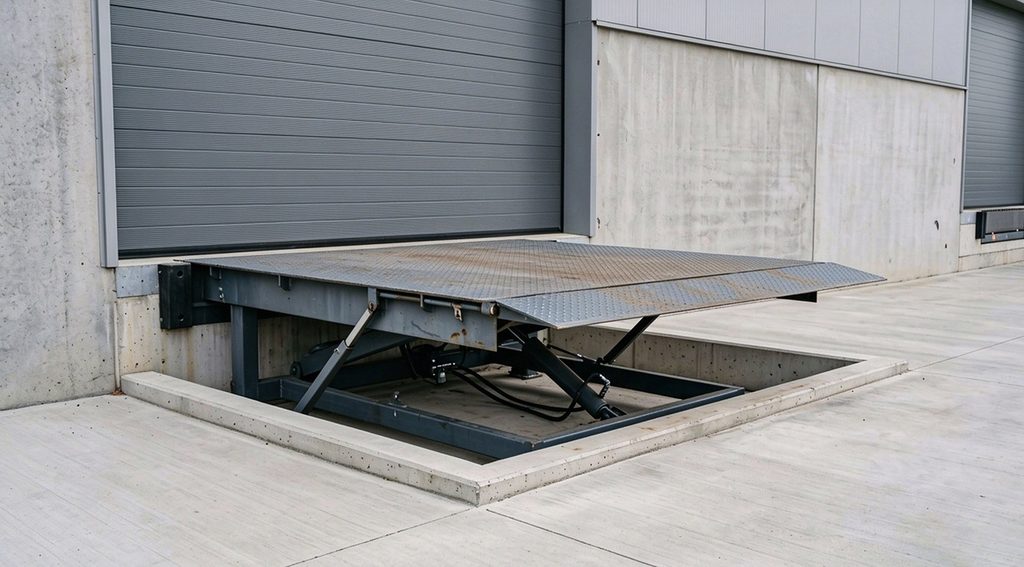
Advanced Hydraulic Power Unit Design and Fluid Dynamics
At the core of any advanced hydraulic dock leveler is its hydraulic power unit (HPU). Modern HPUs integrate precision gear pumps, integrated control valves, and submersible electric motors to deliver consistent lifting power under extreme thermal conditions. Unlike older gravity-drop systems, modern configurations incorporate controlled lowering valves to regulate descent speeds securely, even under maximum forklift loads. Utilizing anti-wear hydraulic oils with wide viscosity indices ensures seamless performance across varying climates, from frozen cold storage facilities to scorching summer loading bays.
Ergonomics, Safety Standards, and Industry Compliance
Loading bays are statistically among the most hazardous zones in industrial facilities. Uncontrolled vehicle movement, slips, falls, and awkward lifting postures can lead to serious injuries. Regulatory bodies such as OSHA and standards organizations like ANSI enforce rigorous safety guidelines for material handling equipment. Modern hydraulic options mitigate these risks by allowing operators to control systems safely from the warehouse floor via push-buttons, completely removing the need to bend or pull heavy mechanical springs.
Integration with Smart Warehouse Ecosystems and Automation
As modern supply chains transition toward Industry 4.0, individual loading bay components are evolving into smart, networked nodes. Facilities now integrate loading dock levelers with programmable logic controllers (PLCs), automated vehicle restraints, and warehouse management software. For instance, systems can be programmed so a leveler cannot activate until vehicle restraints positively lock a truck’s rear guard, preventing premature drive-aways. IoT-enabled sensors track cycle counts and hydraulic stress in real time, feeding data directly into predictive maintenance algorithms.
Proactive Maintenance to Protect Your Investment
Even the highest-grade warehouse dock equipment requires a disciplined, scheduled maintenance program to prevent unexpected downtime.
- Weekly Inspections: Visually check decks, lip hinges, and perimeter seals for physical damage, rust, or wear.
- Monthly Checks: Inspect hydraulic hoses, fittings, and fluid reservoirs to prevent pressure drops and contamination.
- Quarterly Servicing: Lubricate all structural pivot pins, grease fittings, and mechanical hinges.
- Annual Audits: Schedule comprehensive technical reviews performed by certified specialists.
Routine dock leveler maintenance extends machinery lifespan significantly while ensuring strict adherence to national safety standards.
Maximizing Return on Investment (ROI) and Future-Proofing
Upgrading loading bay infrastructure yields compounding financial returns over a facility’s lifecycle. Deploying high-efficiency loading dock levelers alongside streamlined fleet scheduling reduces truck turnaround times, directly boosting daily shipping volumes and revenue potential. Furthermore, energy-efficient perimeter seals and insulated deck options minimize conditioned air loss, lowering overall facility utility expenses.
Conclusion
Achieving sustainable operational efficiency requires a holistic, engineering-driven approach that combines proper equipment selection, rigorous safety protocols, and disciplined maintenance. By integrating advanced dock levelers for loading docks into your broader logistics ecosystem, your facility can eliminate critical bottlenecks, reduce equipment wear, and accelerate throughput for long-term enterprise profitability.
Trusted by Fleet Operators Across 60+ Countries
Stop Losing Time at the Loading Dock.
Get a Custom-Matched Tail Lift Quote in 24 Hours.
60
Countries Served
24h
Quote Turnaround
99.9
Field Uptime
5.0
Customer Rating
No Obligation
CE & UKCA Certified
Standard & Custom Builds
Worldwide Shipping