Having trouble submitting? Email us directly at nicole@beaway.com and we'll get back to you within 24 hours.











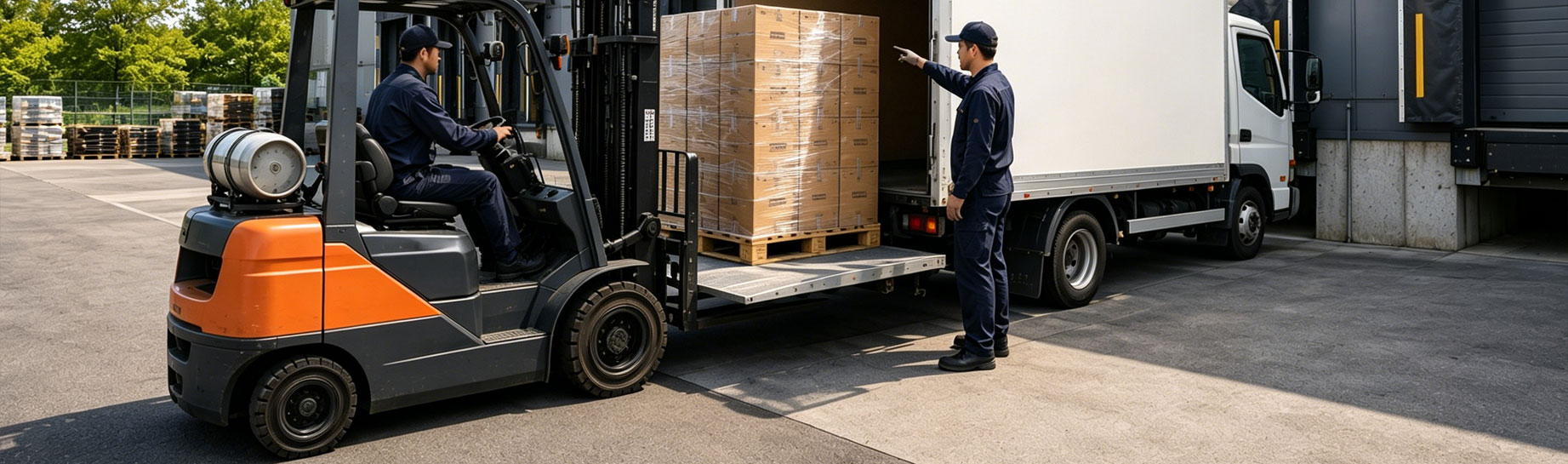
What Winter Does to a Dock Leveler That Was Never Sealed Right
By late November, most warehouse managers have already noticed something without quite naming it. A dock position that used to feel fine now has a cold pocket right where the forklift turns. Someone grabs a space heater and points it at the door. Nobody checks the leveler itself. A dock leveler is steel, so it doesn’t seem like the kind of thing that lets weather through. But it does. Worn-out dock leveler weather seals let the draft in slowly. By the time anyone traces it back to the leveler, a full winter’s worth of heating has already escaped through gaps nobody checked.
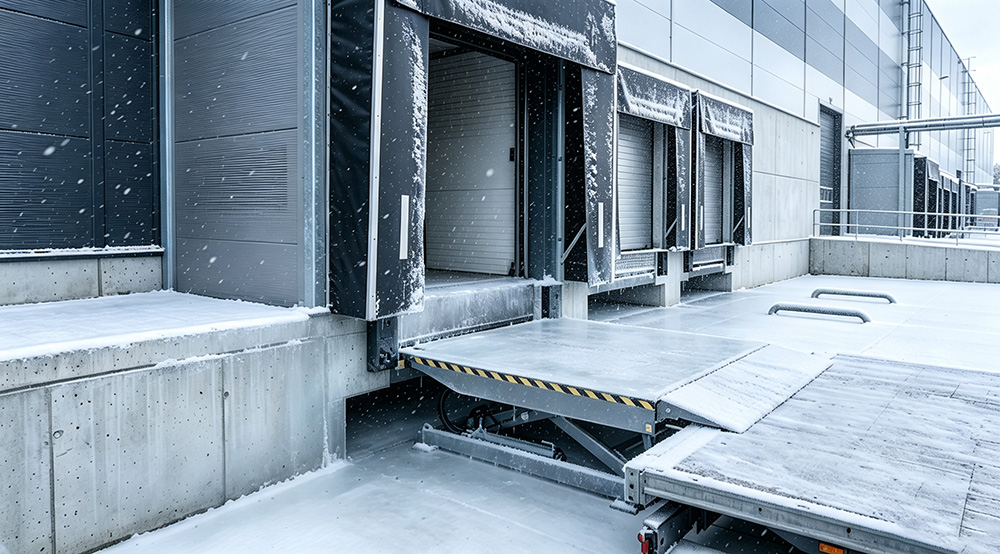
Dock Leveler Weather Seals: It’s Not One Gap, It’s Three
A dock leveler sits in a rectangular pit, and a pit has edges. Steel expands and contracts through the seasons. Bumpers wear down. Forklifts hit the platform a few hundred times a week, year after year. Eventually the leveler stops sitting flush against the structure around it, and every edge becomes a potential air path.
Three separate spots let air through, and each one fails for a different reason:
- The header, up top, where the leveler meets the door frame.
- The sides, where dock leveler side seals should close the strip between the platform and the pit wall. This is usually the first spot to go, because a forklift’s wheel clips the edge on every tight turn.
- Underneath, where the platform’s rear hinge and the pit floor leave a gap most people never see. You’d have to get down and look under a moving piece of steel to notice it.
Treat these as three separate problems, because they are. A facility can seal the sides perfectly and still lose heat all winter through the header. Or it can fix the header and still have the pit acting like an open vent. Whoever specced the dock leveler weather seals for the building may have covered one or two of these. They likely missed the third. That happens more often than not — someone sealed the older docks once, years ago, and nobody has checked them since.
The part underneath is the one everyone forgets
Warm air from inside a heated warehouse meets cold air sitting under an unheated dock pit. That meeting point is the steel deck of the leveler. In the trade, workers call this sweating slab syndrome. Condensation forms on the underside and top of the platform because of that temperature difference, and in freezing weather, it turns to ice. Ice under a dock leveler is a slip hazard for anyone climbing down into the pit. It also speeds up corrosion on components already exposed to road salt tracked in off the truck.
An under leveler dock seal closes off that gap between the rear hinge and the pit wall. That keeps warm and cold air from meeting there in the first place. It’s a small, unglamorous piece of the setup, and usually the last thing anyone thinks to check. Most winterizing checklists go straight to the door seals and skip the leveler’s own underside entirely.
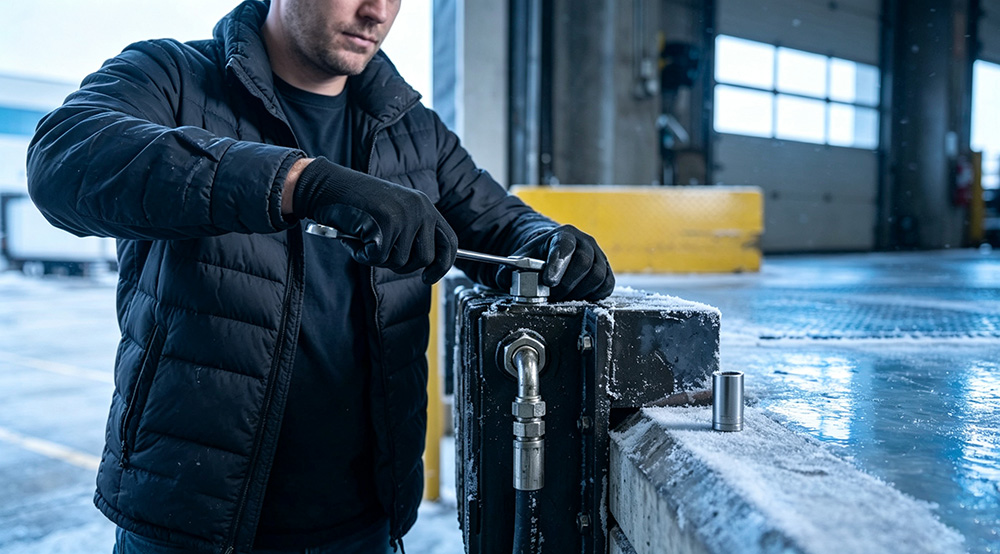
What’s actually down there, physically
Most people never look closely at what actually seals a dock leveler. The pieces are simpler than the terminology suggests:
| Type | Where it goes | What it’s for |
|---|---|---|
| Brush seal (dock leveler brush seals) | Along the side rails | Flexes with the platform as it moves, closing the gap without jamming |
| Rubber membrane backing | Behind the brush, on exposed sites | Extra protection against wind-driven rain, not just cold air |
| Insulation blanket (dock leveler insulation blanket) | Underneath the deck | Cuts down how much cold the steel conducts into the warehouse floor above it |
None of these are exotic parts. Installers typically specify them once, during the leveler installation, then forget about them for the next decade. That’s part of why they fail quietly — nobody watches them the way they’d watch a hydraulic cylinder or a motor.
What it’s actually costing
The number that tends to get people’s attention is the energy bill, and it’s not small. Industry estimates put the annual energy loss from a poorly sealed dock position at $200 to $900 per position, per year. Sealing upgrades typically pay for themselves within six to eighteen months. The stakes run higher for a facility with refrigerated or temperature-controlled space. Heating and cooling can eat up 30% of total operating costs in a cold storage warehouse. Every dock position with a bad seal drains that budget a little more every day.
It adds up faster on a multi-door facility than most people expect. One bad seal on one door reads like a minor maintenance item. Six or eight of them across a distribution center is a different story. Left unaddressed through a full winter, that starts to look like a line item worth explaining to someone upstream.
On a single dock position, a poor seal can waste enough heat to cost $200–$900 a year. Most sealing fixes pay for themselves within a year and a half.
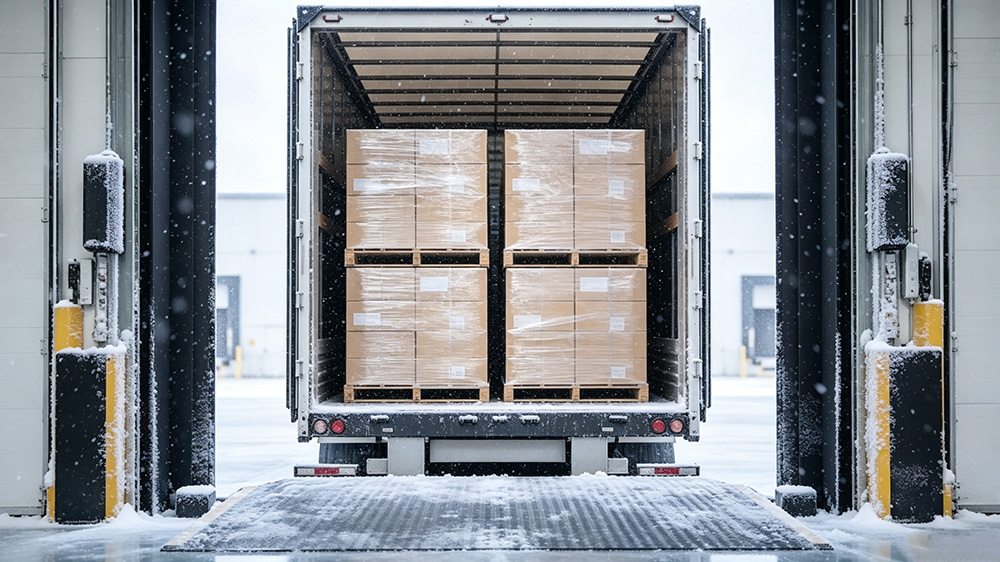
Cold doesn’t just reveal the problem — it makes it worse
This is the part that’s easy to miss. A seal that’s marginal in October usually isn’t the same seal by February. Rubber and PVC compounds stiffen and grow brittle as temperatures drop. A seal that flexed fine in warmer months can start cracking under the cold — exactly when it’s being asked to do the most work. Every temperature swing adds stress on material that’s already less flexible than it was in summer, as the dock warms up during the day and freezes overnight. That’s why seal failures often cluster in the coldest stretch of the year, rather than spreading out evenly. The equipment isn’t failing randomly; cold weather is asking the most of it at exactly the wrong moment.
How to tell if yours has already failed
You don’t need a technician for the first pass. On a cold day, with a truck backed in:
- Run your palm slowly along the header, then both sides of the platform. Feel for a specific line of moving air — not just general cold, but a draft you can point to.
- With the leveler locked and the truck secured, crouch down and check underneath the same way.
- Look for frost or ice forming in a line along one edge of the platform. That’s usually meltwater from condensation, refreezing exactly where a seal should be but isn’t — and it’s close to a diagnosis on its own.
If nobody has checked this since the leveler was installed, assume at least one of the three gap points needs attention. Seals wear unevenly. The side that takes more forklift traffic usually degrades faster than the other. That makes a partial failure far more common than a total one — and easy to miss for a season or two before the energy bill makes it obvious.
Where this fits into the bigger picture
A dock leveler that’s sealed properly doesn’t just save on heating. It also keeps the platform’s own components — hinges, cylinders, the deck itself — out of the freeze-thaw cycle. That cycle accelerates wear on any piece of hydraulic dock leveler equipment operating outdoors through a cold season. Facilities running older mechanical units tend to notice this first. A stiff, corroded hinge is a more visible failure than a slow energy leak. But the underlying cause is often the same gap that’s been letting weather in for years.
If a facility already has dock leveler weather seals on the fall maintenance list, treat it as three separate checks rather than one. Check the header, the sides, and underneath. Fixing the visible strip along the edge doesn’t automatically solve the whole problem. Anyone evaluating equipment ahead of a colder season should also look at how a platform handles sealing from the start. Beauway builds its hydraulic dock leveler range for that kind of long-term outdoor exposure, rather than treating sealing as something bolted on afterward.
Either way, the fix here isn’t complicated or expensive relative to what a bad winter costs in wasted heat. It just requires someone to actually go look. On most docks, that hasn’t happened in longer than anyone wants to admit.
Trusted by Fleet Operators Across 60+ Countries
Stop Losing Time at the Loading Dock.
Get a Custom-Matched Tail Lift Quote in 24 Hours.
60
Countries Served
24h
Quote Turnaround
99.9
Field Uptime
5.0
Customer Rating
No Obligation
CE & UKCA Certified
Standard & Custom Builds
Worldwide Shipping