Having trouble submitting? Email us directly at nicole@beauway.com and we'll get back to you within 24 hours.









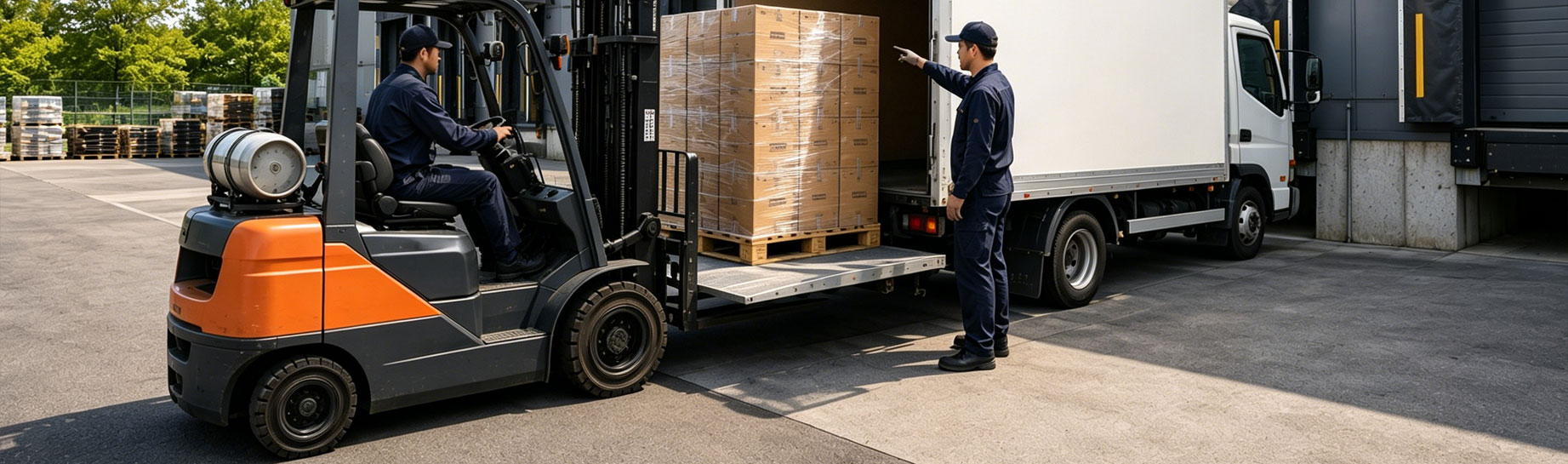
Anodized Aluminum Tail Lift Platform: Why It Needs Two Extra Processes
An anodized aluminum tail lift platform often costs more than a steel one. Buyers see it on the quote and ask why. Two line items usually explain the gap: a side anti-slip strip, and anodizing. At first glance, this looks like upselling. But each step solves a specific problem that aluminum — and only aluminum — actually has.
This isn’t a comparison chart. It’s a walk through what these two processes do, why they only appear on aluminum platforms, and how much they matter once the tail lift is out on the road.
Two Metals, Two Different Weaknesses
Steel and aluminum each carry their own soft spot. The finishing work on a tail lift platform simply responds to whatever that soft spot is.
Steel is strong, stiff, and cheap to work with. It handles impact and repeated flexing well. That’s exactly what a loading platform experiences hundreds of times a week. Its weakness is obvious to anyone who parks a truck outdoors through a wet winter: it rusts. Once rust gets under a coating, it spreads fast.
Aluminum takes the opposite trade-off. It weighs roughly a third of steel for the same volume. That matters a lot on a tail lift — every kilogram saved on the platform becomes extra payload capacity for the truck. Aluminum also resists rust in the traditional sense, because it doesn’t oxidize the way iron does. But it has its own weak point. The natural oxide layer on raw aluminum is thin and uneven. It doesn’t hold up well against abrasion. A lightweight aluminum platform left untreated will scuff, dull, and pit faster than most buyers expect — especially with pallets and hand trucks dragging across it daily.
So when a steel platform and an aluminum platform carry different finishing steps, that isn’t inconsistency. Two different materials need two different fixes.
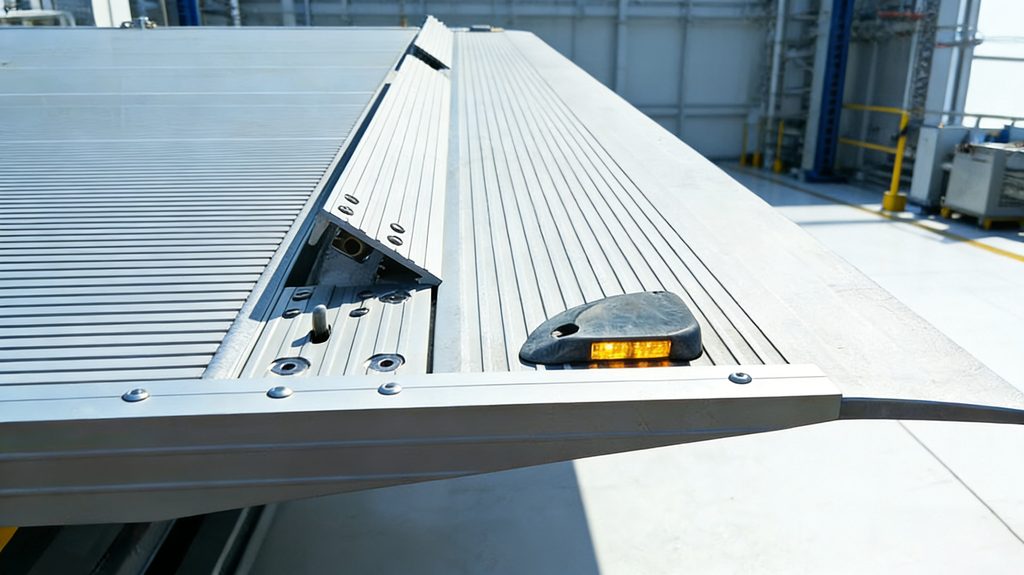
Anodized Aluminum Tail Lift Platforms: The First Extra Step
Anodizing draws the most questions. The name sounds complicated, but the process itself is simple to picture.
Manufacturers submerge the aluminum part in an electrolytic bath and pass an electrical current through it. That current triggers a controlled oxidation reaction on the surface. It grows a layer of aluminum oxide that’s far thicker, denser, and harder than the oxide film that forms naturally in open air. This layer isn’t a coating sitting on top of the metal, the way paint is. It’s part of the metal itself, grown outward from the surface.
Smartphone bodies, camera housings, and automotive trim use this same basic process. Manufacturers need the aluminum to resist scratching and stay presentable under constant handling. On a tail lift platform, the goal isn’t cosmetic. It’s survival — years of pallets sliding across the surface, rain and road salt sitting on it, and the daily abuse that comes with commercial loading.
An anodized aluminum tail lift platform holds up to that abuse in a few concrete ways:
- Hardness. The anodized layer resists scratching and gouging far better than bare aluminum. Crates, drums, and pallet jacks drag across the surface daily without leaving deep marks.
- Corrosion resistance. Because the layer bonds chemically to the metal, it won’t peel or flake the way a surface coating can after enough impacts.
- Consistent appearance over time. Untreated platforms go dull and blotchy within a year or two of daily use. An anodized surface keeps its finish far longer.
This is the aluminum anodizing process in short: a genuine upgrade the base metal needs, not a coating added to justify a higher price.
E-Coating vs. Anodized Aluminum: Two Different Jobs
Anodizing gets the spotlight, but a related process deserves a mention too — one that shows up on both steel and aluminum platforms. Manufacturers call it electrophoretic coating, or e-coating for short.
E-coating works differently from anodizing. It doesn’t grow an oxide layer out of the base metal. Instead, an electric current deposits a uniform, paint-like film onto the part while it sits submerged in a coating bath. The result reaches into every recess, weld seam, and edge — areas that spray painting often misses.
That’s why manufacturers offer e-coating as a shared option across both steel and aluminum platforms. It’s the general-purpose layer: good adhesion, even coverage, solid resistance to rust and chipping. On a steel platform, it’s often the primary defense against corrosion. Manufacturers can apply it to aluminum too — but anodizing goes a step further there, because it targets exactly how aluminum behaves at a molecular level.
In short: e-coating is the baseline that works reasonably well on either metal. An anodized aluminum tail lift takes a more specialized route, one that only makes sense — and is only available — on aluminum. That’s the real reason anodizing shows up as an “extra” step on aluminum quotes.
Second Extra Step for Aluminum: Side Anti-Slip Protection
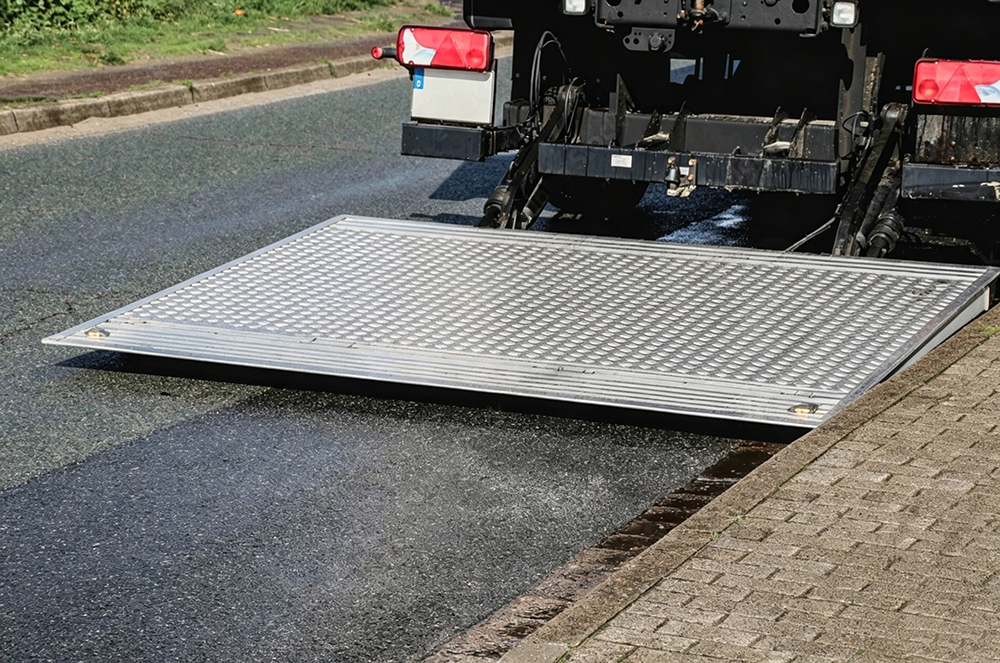
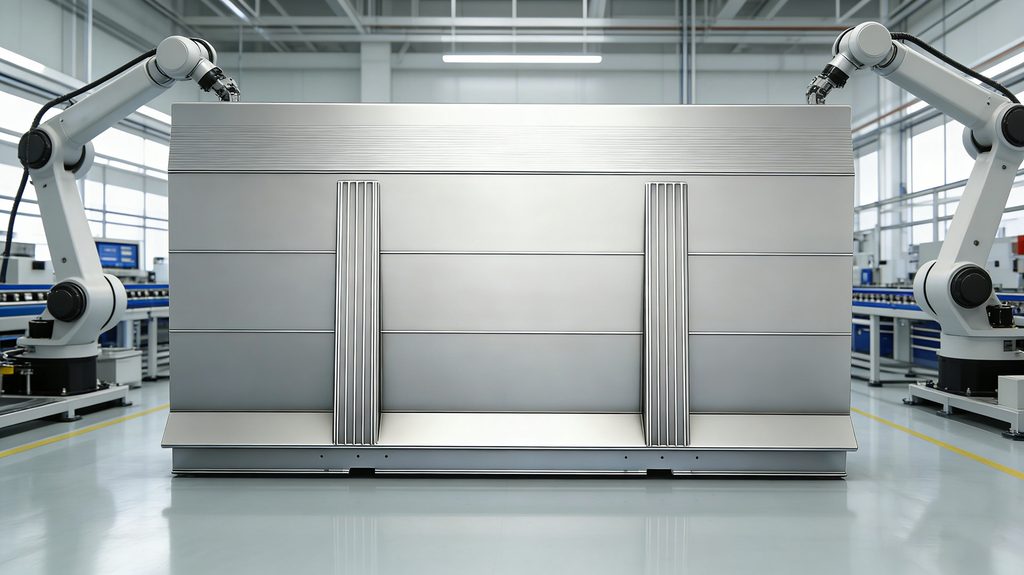
The second line item on most aluminum quotes is a side anti-slip strip, added on top of the anti-slip surface already built into the rear of the platform.
Cargo doesn’t always move on and off in a straight line from the back. Operators walk the sides of the platform constantly. They reposition pallets, guide hand trucks, and steady loads that shift during the lift. That side surface takes as much foot traffic and product contact as the rear — sometimes more, in tight warehouse bays.
Aluminum’s natural surface texture runs smoother than steel’s. The same weight savings that make aluminum attractive also mean a slightly less aggressive surface grain by default. That side zone can get noticeably slicker underfoot, especially with rain, snow, hydraulic fluid residue, or dust buildup. A side anti-slip strip closes that gap. It gives the sides the same traction operators already expect at the rear.
This isn’t about aluminum being an inferior material. It’s about matching the safety design to how people actually use the platform. Wherever people stand, step, or guide loads by hand, slip resistance isn’t optional.
Beyond the Platform: The Brackets Matter Too
A tail lift is a system, not a single flat piece of metal. The support brackets and mounting structure go through their own finishing decisions — separate from whether the platform itself is steel or aluminum.
Buyers usually choose between a few approaches here: powder coating, galvanizing, or electrophoretic galvanizing on the brackets. Each protects the structural steel from rust and fatigue in a different way.
- Powder coating applies a dry powder, then cures it under heat into a tough, even finish. It resists chipping well.
- Galvanizing coats the steel with zinc. The zinc sacrifices itself to protect the underlying metal, even after a scratch — something paint alone can’t do.
- Electrophoretic galvanizing combines the even coverage of e-coating with the sacrificial protection of zinc. It targets brackets facing the harshest exposure.
A beautifully anodized aluminum tail lift platform sitting on brackets that rust still fails as a system. A tail lift is only as durable as its weakest treated component. Buyers who only ask about platform material miss half the picture.
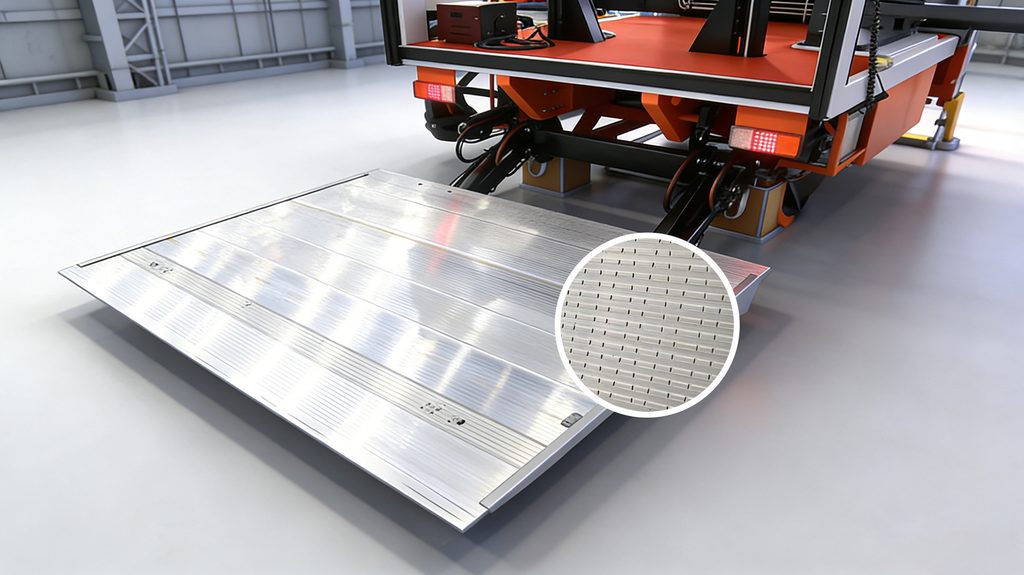
Where Anodized Aluminum Tail Lift Platforms Earn Their Keep
None of this matters in the abstract. It matters in the specific conditions that push a platform hardest.
Take cold chain logistics. Refrigerated trucks moving in and out of cold storage face constant condensation and temperature swings. That dampness accelerates corrosion faster than almost any other environment. An untreated platform starts showing pitting within a season under this kind of use. Fleets running temperature-controlled routes tend to notice the difference fastest, simply because their conditions are unforgiving.
High-frequency logistics and last-mile delivery test a tail lift differently. Here, a platform might cycle up and down dozens of times a day. The anti-slip surface and the anodized hardness both face constant testing — not from weather, but from sheer volume of use. Boxes, hand trucks, and foot traffic wear down an untreated surface far faster under that kind of repetition.
Construction and municipal work sit somewhere in between. Heavier, rougher cargo combines with outdoor exposure. Here, a hardened anodized surface paired with solid side traction survives abuse that would chew through an untreated platform within a year or two.
The pattern repeats across every setting. Someone worked out exactly where an aluminum platform tends to fail first, then built a fix for it.
Is an Anodized Aluminum Tail Lift Worth It?
Every buyer eventually lands on this question. It deserves a straight answer, not a sales pitch.
Skipping anodizing or side anti-slip protection won’t cause a visible problem on day one. The truck rolls off the lot looking identical either way. The difference shows up over time — a season of scuffing that dulls the surface faster than expected, a rainy winter that reveals just how slick the sides get, a couple of years that leave one platform looking tired while the treated one still performs like new.
That’s the core of the decision. These two processes don’t change what the tail lift can lift or how fast it moves. They change how well it holds up to real conditions. For equipment expected to last years and run daily, that’s not a small thing to leave off a spec sheet.
Frequently Asked Questions
Q: Is anodized aluminum really better than steel for tail lift platforms?
A: It depends on the priority. Steel offers more strength at a lower upfront cost. An anodized aluminum tail lift offers a lighter platform with strong surface hardness and corrosion resistance. Neither wins universally — the right choice depends on payload priorities and route conditions.
Q: Do all aluminum tail lifts come with anodizing by default?
A: Not always. Manufacturers commonly offer anodizing as a selectable option rather than a standard inclusion. That’s why it shows up as a separate line item on many quotes, rather than being baked into the base price.
Q: What’s the difference between anodizing and powder coating on a tail lift?
A: Anodizing grows a hardened oxide layer out of the aluminum itself, so it can’t peel or chip like a surface coating. Powder coating applies a separate protective layer on top of the metal instead. Manufacturers typically use powder coating on structural steel brackets, not aluminum platforms.
Q: Does the extra processing affect the tail lift’s weight or performance?
A: No. Anodizing and anti-slip treatments add a negligible amount of thickness and weight. They don’t change the platform’s dimensions, lifting capacity, or daily operation.
The Takeaway on Anodized Aluminum Tail Lift Platforms
Next time a quote lands on the desk with steel on one side and aluminum on the other, read past the headline price. Check exactly what’s included under tail lift accessories. Anodizing and side anti-slip protection aren’t padding. They’re specific answers to the specific weaknesses that come with choosing a lighter aluminum tail lift over a steel one. Skipping them doesn’t save money — it just defers the cost to a couple of years down the road, once the surface has already told the story on its own.
Trusted by Fleet Operators Across 60+ Countries
Stop Losing Time at the Loading Dock.
Get a Custom-Matched Tail Lift Quote in 24 Hours.
60
Countries Served
24h
Quote Turnaround
99.9
Field Uptime
5.0
Customer Rating
No Obligation
CE & UKCA Certified
Standard & Custom Builds
Worldwide Shipping