Having trouble submitting? Email us directly at nicole@beaway.com and we'll get back to you within 24 hours.











Loading Dock Leveler Steel: Why Deck Plate Grade Matters More Than Thickness
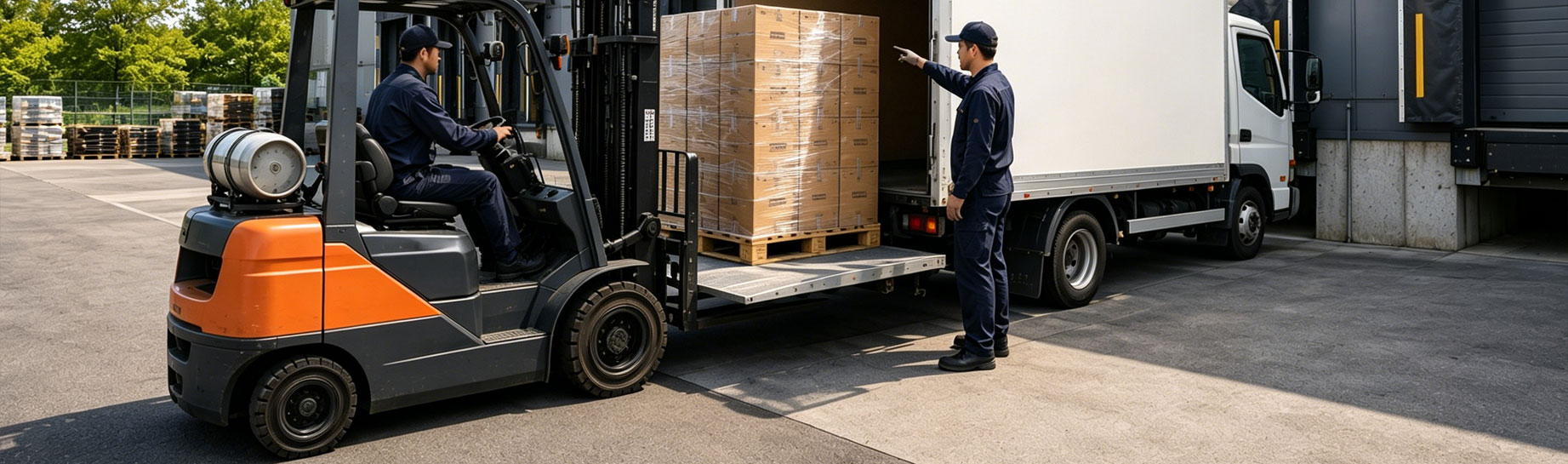
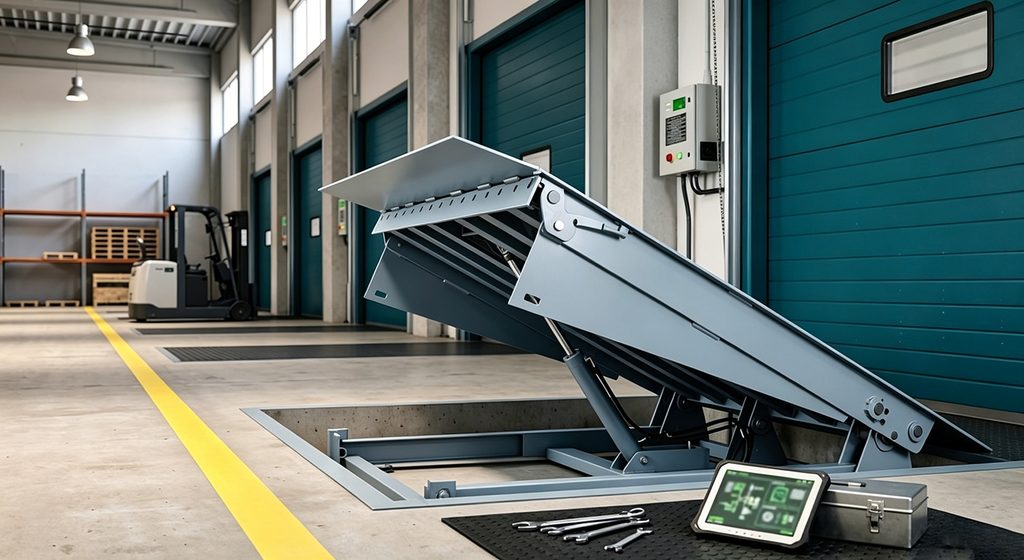
A loading dock leveler is the steel bridge that closes the gap between a warehouse dock and a trailer bed. It lets forklifts drive straight across without a drop, a lip, or a stall. Mechanically, it’s simple: a hinged steel platform, a lip, and a hydraulic or mechanical lift system. But one part takes the real punishment, cycle after cycle — the deck plate itself. A loaded forklift rolls over that flat steel surface every time a truck loads or unloads. It’s also the part buyers think about the least.
Ask most people what makes a good loading dock leveler, and they’ll mention capacity rating, lip length, or hydraulic response time. Few ask what the deck plate is made of. That’s a gap worth closing. The steel grade under a level loading dock surface determines how long that surface stays flat, how much it weighs, and how it holds up under repeated impact. Capacity numbers and lip specs matter less than that.
Why the Deck Plate Takes More Abuse Than Any Other Part
Picture a busy warehouse bay. A fully loaded forklift, carrying two or three tons of goods, crosses the same six to ten feet of steel dozens or hundreds of times a day. Each pass delivers an impact load, not a static one. The forklift’s wheels hit the deck the instant they transition from the dock floor onto the leveler, then again as they cross onto the trailer bed. Over a year, that adds up to tens of thousands of impact cycles on one plate of steel.
This differs from most structural steel applications. A building beam carries a mostly static load. A truck dock leveler deck plate carries a dynamic, repeated, concentrated load instead — closer to what a mining haul road or a construction equipment bucket sees than what a typical building beam sees. That distinction changes what “strong enough” actually means. A deck plate doesn’t just need to hold a maximum weight once. It needs to resist fatigue, denting, and gradual deformation across years of daily impact cycles.
This is exactly where deck plate steel grade separates a leveler that stays flat for a decade from one that shows wheel ruts and soft spots within a couple of years.
The Common Fix: More Thickness, Not Better Steel
Here’s a pattern common across dock plate leveler manufacturing. When a manufacturer needs a deck plate strong enough for heavy forklift traffic, thickness is the easiest lever to pull. Add more steel, and you add more strength. But you also add more weight — weight the hydraulic or mechanical lift system then has to move on every cycle — plus more raw material cost.
Public specification sheets from established dock equipment brands show this trade-off clearly:
- Several well-known North American manufacturers build their mechanical and hydraulic loading dock levelers with tread plate steel rated around 40,000 to 55,000 PSI yield strength (roughly 276 to 379 MPa). Deck thickness commonly runs 1/4 inch to 3/8 inch, depending on capacity rating.
- European-market loading dock levelers frequently use S235 or S355 structural steel — 235 MPa and 355 MPa yield strength respectively, per the EN 10025 designations common in EU equipment specs.
- Both approaches compensate for moderate steel strength with extra deck thickness and mass. That’s a genuinely common industry practice, not a flaw specific to one brand.
This approach works. But it isn’t the only way to solve the problem, and it isn’t the most efficient one.
What Changes With a 700 MPa-Class Steel Deck Plate
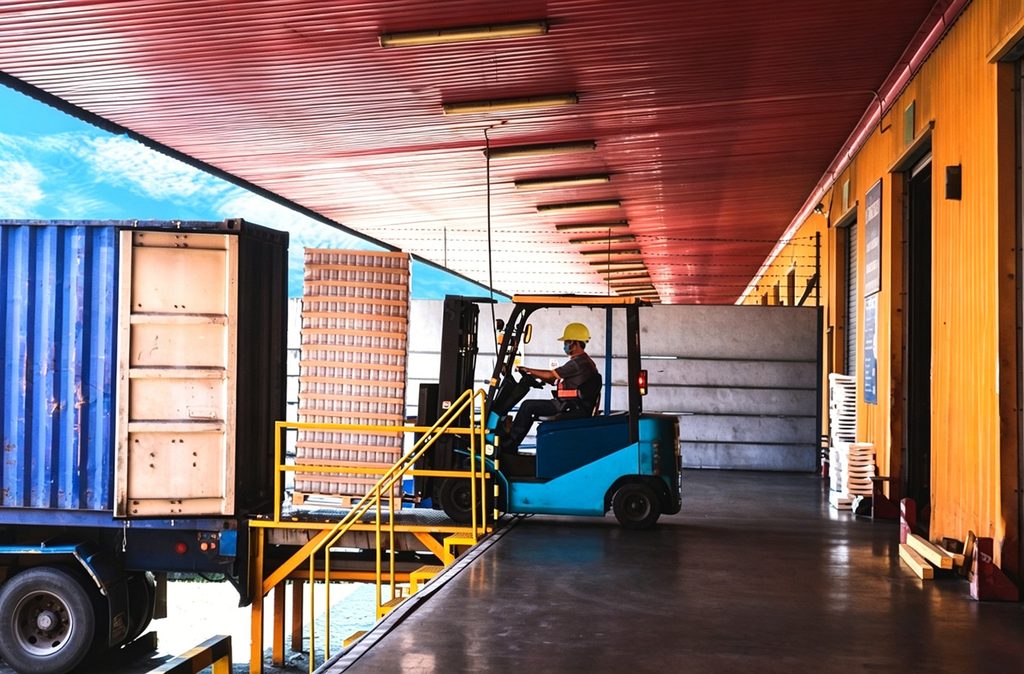
Yield strength measures a steel’s real strength: the point where the material stops returning to its original shape after a load lifts, and starts to deform permanently. A 700 MPa-class high-strength structural steel — roughly 101,500 PSI, or about 101 ksi — sits close to double the yield strength of S355 structural steel. It also sits comfortably above the 55,000 PSI ceiling on several published US tread plate specifications.
China produces and sells a large share of this steel grade. The trade commonly calls it “Q700” — a shorthand that follows the domestic Q-series naming convention (Q235, Q345, Q690, and so on). 700 MPa itself sits outside the formal national standard, though, which tops out at Q690. Internationally, mills sell equivalent grades under proprietary names: Weldox 700 and Quend 700 from Sweden’s SSAB, for example, or BISALLOY Q700D from Australia. Whatever the trade name, the underlying material category stays the same — low-alloy, high-strength structural steel built for applications where reducing weight without reducing strength actually matters.
A dock plate leveler deck faces that same trade-off every day:
- Higher yield strength lets manufacturers specify the deck plate thinner for the same load rating.
- A thinner deck cuts overall platform weight without sacrificing impact resistance.
- Less deck mass reduces the load on the hydraulic cylinders that lift the platform each cycle.
- Lower cylinder load means less wear on seals, pump, and cylinder components over years of daily use.
One caution deserves a plain statement: higher yield strength doesn’t automatically mean better performance if it comes paired with poor toughness or the wrong thickness. Trailer manufacturers learned this the hard way after adopting 700 MPa-class steel for lightweight chassis beams. Some specified beams too thin, without enough attention to ductility, and those beams cracked under real-world flex loads. The lesson isn’t that high-strength steel carries risk. It’s that grade alone doesn’t guarantee a good result — thickness, heat treatment, and mill source all still matter.
Standard Steel vs. High-Strength Steel: What Actually Changes
| Factor | Standard-Grade Deck Plate | 700 MPa-Class Deck Plate |
|---|---|---|
| Yield strength | ~235–379 MPa (34,000–55,000 PSI) | ~700 MPa (~101,500 PSI) |
| Deck thickness for a given load rating | Needs more thickness to reach capacity | Reaches the same capacity at a thinner gauge |
| Platform weight | Higher — more mass through every lift cycle | Lower — less mass without cutting load rating |
| Hydraulic system load | Higher cylinder load on every cycle | Reduced cylinder load, less long-term wear |
| Resistance to denting and rutting | Wheel ruts and soft spots develop sooner | Resists permanent deformation better |
| Fabrication approach | Lower cost, lower complexity | Needs careful sourcing and welding control |
None of this means every warehouse needs the highest-strength deck plate available. A light-duty dock with infrequent forklift traffic may never push a standard-grade deck close to its limits. But a truck dock leveler running high-cycle operations — distribution centers, cold chain, manufacturing plants moving palletized freight all day — tells a different story. There, the deck plate is exactly where cutting corners shows up first. It usually surfaces as a maintenance problem two or three years down the road, not a failure on day one.
Applying This to a Fixed Dock Leveler Deck
Beauway’s fixed loading dock leveler platform, model BW-GT-Y10, follows this exact logic. Its deck plate runs 8 mm thick in 700 MPa-class high-strength structural steel, instead of a thicker standard-grade plate. At 8 mm, the deck stays within a practical weight range for the hydraulic lift system, while it still resists the repeated forklift impact a busy dock delivers daily. The tongue plate — the smaller hinged section that bridges directly onto the trailer bed — runs 14 mm. That section absorbs the sharpest edge-of-impact loading as a forklift transitions from the dock leveler onto the truck.
This isn’t a claim that thinner always wins. It’s a specific engineering choice: match deck thickness to the steel’s actual strength, instead of defaulting to extra thickness as a substitute for it. A facility specifying a dock leveler pit and comparing platform options should ask about that distinction directly — not just “what’s the load rating,” but “what steel grade gets you there, and at what deck thickness.”
Frequently Asked Questions
Q: What is a dock leveler deck plate made of?
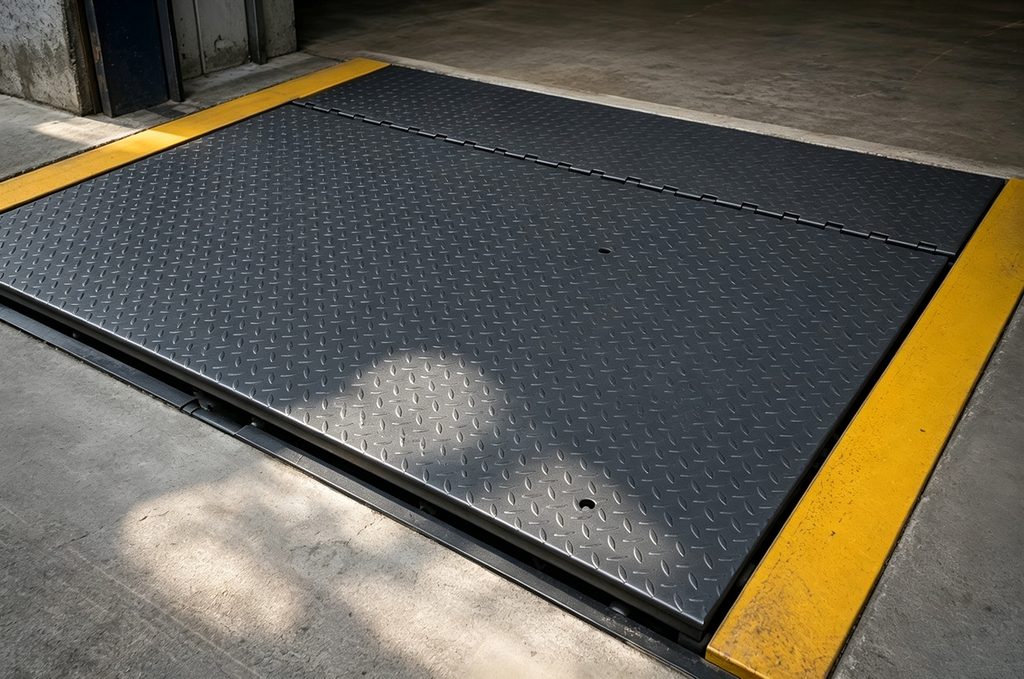
A: Manufacturers build most loading dock leveler deck plates from carbon or low-alloy structural steel, usually in a checkered or diamond-tread pattern for traction. Grade varies significantly by manufacturer — common ranges run from roughly 235 MPa structural steel up to 700 MPa-class high-strength steel, depending on the intended duty cycle.
Q: Does a thicker deck plate always mean a stronger dock leveler?
A: Not necessarily. Thickness compensates for lower steel strength. But a thinner deck in a higher-strength steel grade can match or exceed the load capacity of a thicker deck in standard-grade steel, while it adds less weight to the overall platform.
Q: What steel grade is best for a high-cycle loading dock leveler?
A: For high-frequency forklift traffic, a higher-yield-strength steel (in the 550–700 MPa range) generally resists long-term denting and fatigue better than standard 235–345 MPa structural steel does — assuming the manufacturer specifies thickness and welding correctly for the grade.
Q: Is “Q700” an official steel standard?
A: No, not in China’s national standard system, which stops at Q690. “Q700” is a widely used trade term for 700 MPa-class high-strength steel. Mills typically supply it under their own enterprise standard, rather than the national GB/T designation.
Q: How do I know if a dock leveler’s deck steel suits my operation?
A: Ask the manufacturer for the specific yield strength and deck thickness together, not the load rating alone. Two levelers can carry the same rated capacity with very different steel grades and thicknesses. That combination tells you more about long-term durability than the capacity number alone.
Choosing the Right Deck Plate for Your Facility
Choosing between a fixed dock leveler and other platform options ultimately comes down to how your facility uses it: cycle frequency, cargo weight, and how long you expect the deck to hold its shape without maintenance. For facilities weighing steel grade against deck thickness for a new or replacement loading dock leveler, Beauway’s engineering team can walk through the specification for your specific load and cycle profile.
Trusted by Fleet Operators Across 60+ Countries
Stop Losing Time at the Loading Dock.
Get a Custom-Matched Tail Lift Quote in 24 Hours.
60
Countries Served
24h
Quote Turnaround
99.9
Field Uptime
5.0
Customer Rating
No Obligation
CE & UKCA Certified
Standard & Custom Builds
Worldwide Shipping