







Tail Lift Manufacturer Guide: China vs Europe Compared
Tail Lift Manufacturer Guide: China vs Europe — A Buyer’s Decision Framework
Picking the wrong tail lift manufacturer costs more than money. It creates warranty disputes, failed roadside inspections, and supply chain delays that ripple across your entire fleet operation. Picking the right one locks in competitive landed costs, predictable lead times, and certified equipment your drivers can rely on.
This guide gives fleet managers, distributors, and OEM integrators a practical framework for evaluating Chinese tail lift suppliers against established European brands. No gut feel. No sales brochure trust.
Why the “China vs. Europe” Question Has No Easy Answer Anymore
Ten years ago, the conversation was straightforward. European brands meant quality. China meant price. That gap has closed — unevenly, but meaningfully.
Several Chinese liftgate manufacturers now hold CE marking under the Machinery Directive 2006/42/EC. Many produce units tested to EN 1756-1 and operate ISO 9001-certified facilities with third-party audit schedules. However, capability varies wildly across the supplier landscape.
A factory producing 50,000 units per year with in-house hydraulic cylinder manufacturing is not the same animal as a small assembly workshop sourcing every subcomponent externally. Treating “China tail lift supplier” as a single category is the first mistake serious buyers make.
On the European side, brands like Dhollandia, Zepro, Bär Cargolift, Anteo, and Palfinger bring decades of field data and dense dealer networks. They also carry price premiums. A column lift rated at 1,500 kg capacity can run 30–50% higher at FOB Europe versus FOB Shenzhen for a comparable Chinese unit. Across a fleet procurement of 50 or 100 units, that gap is significant.
Therefore, the real question is never “China or Europe?” It is: which specific tail lift manufacturer meets your technical, compliance, and commercial requirements at the total cost that makes sense for your business?
Step 1: Verify Certifications First — Every Time
Certification is the floor, not the ceiling. Before you discuss price or lead time with any hydraulic tailgate supplier, confirm what they actually hold — not what they claim in a PDF.
For European markets, the non-negotiable baseline includes:
- CE marking under the Machinery Directive 2006/42/EC, backed by a signed Declaration of Conformity
- EN 1756-1 compliance covering platform stability, load capacity, and control requirements for tail lifts on goods vehicles
- Relevant electrical safety compliance for onboard control systems
For the UK market post-Brexit, CE marking alone is no longer sufficient. UKCA marking is required for equipment placed on the UK market. Verify that your shortlisted tail lift manufacturer has completed the separate UKCA conformity assessment — not every supplier has.
For North American markets, FMVSS/DOT compliance is the relevant framework. A liftgate manufacturer supplying the US must be able to demonstrate alignment with applicable Federal Motor Vehicle Safety Standards.
Ask for the actual certificate documents. Verify the issuing body. Certificates from TÜV Rheinland, SGS, Bureau Veritas, or Intertek carry genuine weight. A scanned logo in a brochure does not.
In practice, certificate verification alone removes roughly 30–40% of shortlisted Chinese suppliers at the initial screening stage.
Step 2: Run a Production Capability Audit
A site audit — physical or virtual — shows you what a product catalogue cannot. Focus on four areas.
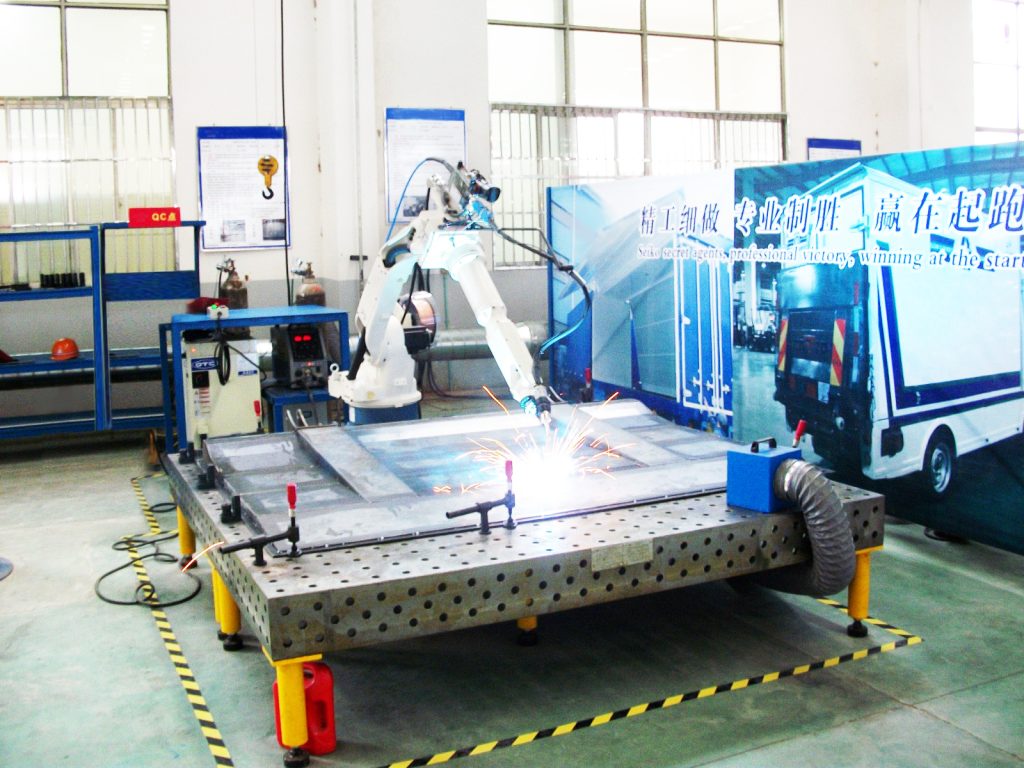
Manufacturing scope. Does the factory produce hydraulic cylinders in-house, or buy them externally? In-house cylinder manufacturing typically signals better process control over the component most responsible for field failures in hydraulic tailgate systems.
Weld quality and surface treatment. Tail lift platforms and scissor arms take cyclical fatigue loading across their entire service life. Ask for weld procedure qualification records (WPS/WPQR to ISO 15614-1 or equivalent). Check whether the factory uses hot-dip galvanising, epoxy primer with powder coat topcoat, or zinc phosphate pre-treatment. These choices determine corrosion resistance over a 10–15 year lifespan.
Testing protocols. What does each unit go through before it ships? A credible tail lift manufacturer should produce test records covering static load testing at 1.25× rated capacity and dynamic cycle testing per EN 1756-1.
Lead time commitments. Get these in writing. Standard lead times from Chinese manufacturers typically run 45–75 days ex-works for standard configurations, extending to 90–120 days for custom builds. European brands generally quote 8–14 weeks for delivery within Europe.
How to Compare Total Cost — Not Just FOB Price
FOB price is the most visible number in any tail lift OEM quote request and the most misleading one. Real procurement decisions require a full cost model.
Freight and import duties. Under standard MFN terms in the EU, the import duty rate on hydraulic platform lifts (HS code 8428.20) is currently 1.7%. Always verify current rates with your customs broker before building a financial model — tariff schedules change, and trade policy shifts can move these numbers meaningfully.
Spare parts availability. This is where many liftgate manufacturer FOB price comparisons fall apart. Downtime cost for a refrigerated distribution vehicle can exceed €500–€1,000 per day. If critical hydraulic seals or control modules take six weeks to ship from China, a lower unit price disappears fast. Ask every tail lift supplier for their European spare parts stockholding location and standard parts lead times before signing a contract.
Warranty terms. Duration matters. Coverage scope matters more. Does the warranty cover labour as well as parts? Is it backed by a local entity, or does a claim require shipping units back to the factory of origin?
Residual value. In fleet disposal, vehicles fitted with recognised European tail lift brands typically command higher residual values. For fleets operating 5–7 year replacement cycles, this factor belongs in the total cost model.
Moreover, when you run total lifecycle cost across purchase price, maintenance, downtime risk, and residual value, the gap between well-qualified Chinese and European options frequently narrows. Sometimes it reverses entirely.
Step 3: Structure Your OEM Quote Request Properly
A price list is not a quote. When approaching any tail lift manufacturer for commercial terms, request a structured document covering all of the following:
- Unit price at your required annual volume (FOB port of export)
- Incoterms clearly stated — FOB, CIF, or DDP
- Lead time from confirmed purchase order to goods ready at port
- Minimum order quantity (MOQ) per model line
- Payment terms — T/T advance, LC at sight, or open account
- Packaging specification and export crating details
- Warranty period and full coverage scope
- Spare parts list with pricing for the top 20 wear items
A tail lift supplier that cannot respond to this request clearly within 48–72 hours of a serious enquiry is telling you something about their operational capability. One that responds with a complete, structured document is demonstrating commercial maturity worth paying attention to.
Tail Lift Manufacturer Audit Checklist
When evaluating any tail lift manufacturer — Chinese or European — work through this checklist before committing to a purchase order.
Certification verification
→ CE or relevant market certification confirmed with original documents
→ EN 1756-1 compliance verified
→ ISO 9001 certificate from accredited third-party body
→ UKCA marking confirmed (UK market)
Production audit
→ Site visit or structured video audit completed
→ In-house hydraulic cylinder manufacturing confirmed
→ Weld procedure qualification records reviewed
→ Load test records available per unit
Commercial terms
→ Structured OEM quote received covering all 8 items listed above
→ Spare parts availability and lead time confirmed in writing
→ Warranty terms reviewed
→ Reference customers in your market contacted and verified
Financial model
→ Total lifecycle cost calculated (not FOB price only)
→ Import duty rates confirmed with customs broker
→ Downtime risk costed for your specific operation
This tail lift supplier evaluation checklist takes time to complete. It eliminates the suppliers you do not want to find out about after you have placed a 100-unit order.
What to Look For in a China Tail Lift Manufacturer Guide
The China tail lift manufacturer guide question buyers most commonly ask is: how do I know which factories are genuinely capable versus which ones just have a polished website?
Three signals matter most. First, third-party certification from a recognised international body — not a domestic-only testing house. Second, willingness to accept a structured audit without resistance or delay. Third, a reference list of existing European or North American customers who will take a call. A factory with nothing to hide makes these three things easy.
For reference on EN 1756-1 and related machinery safety standards, the European Committee for Standardization (CEN) publishes the normative scope and current status of applicable standards.
Beauway: A Verified Chinese Tail Lift Manufacturer for Global Markets
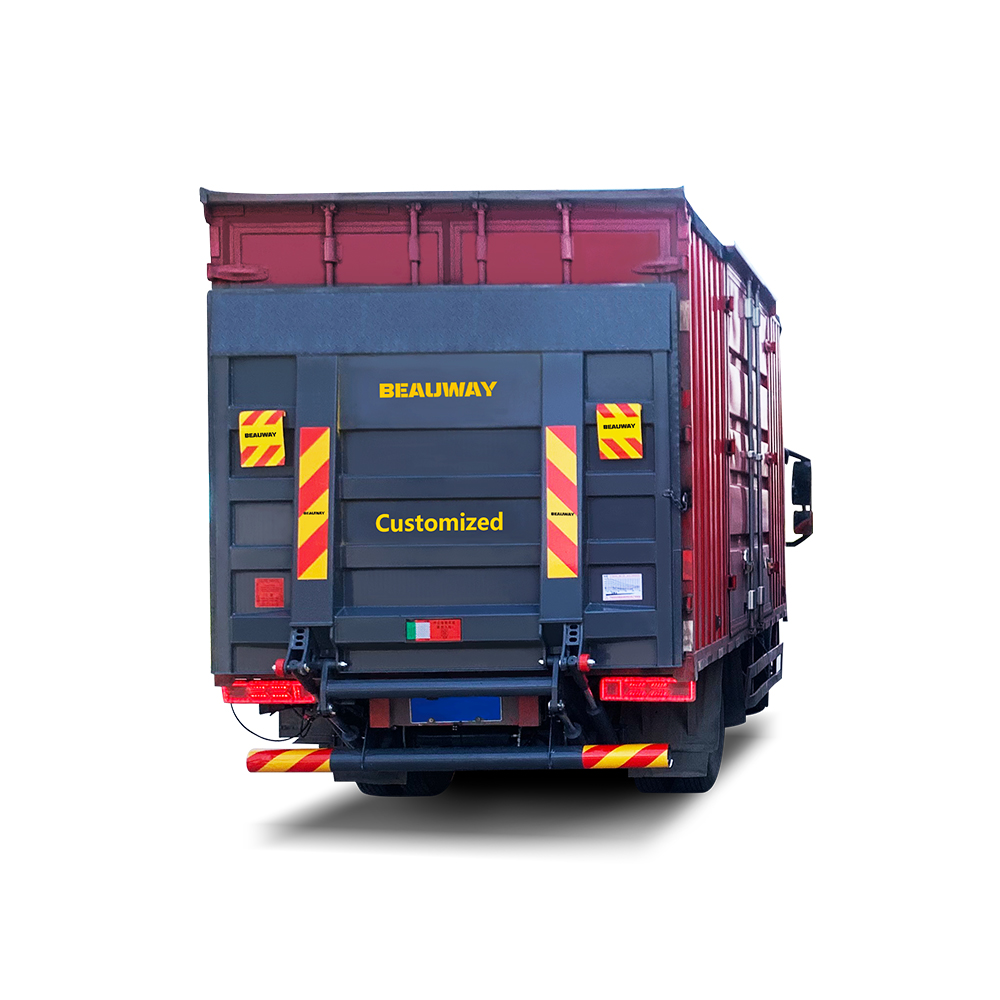
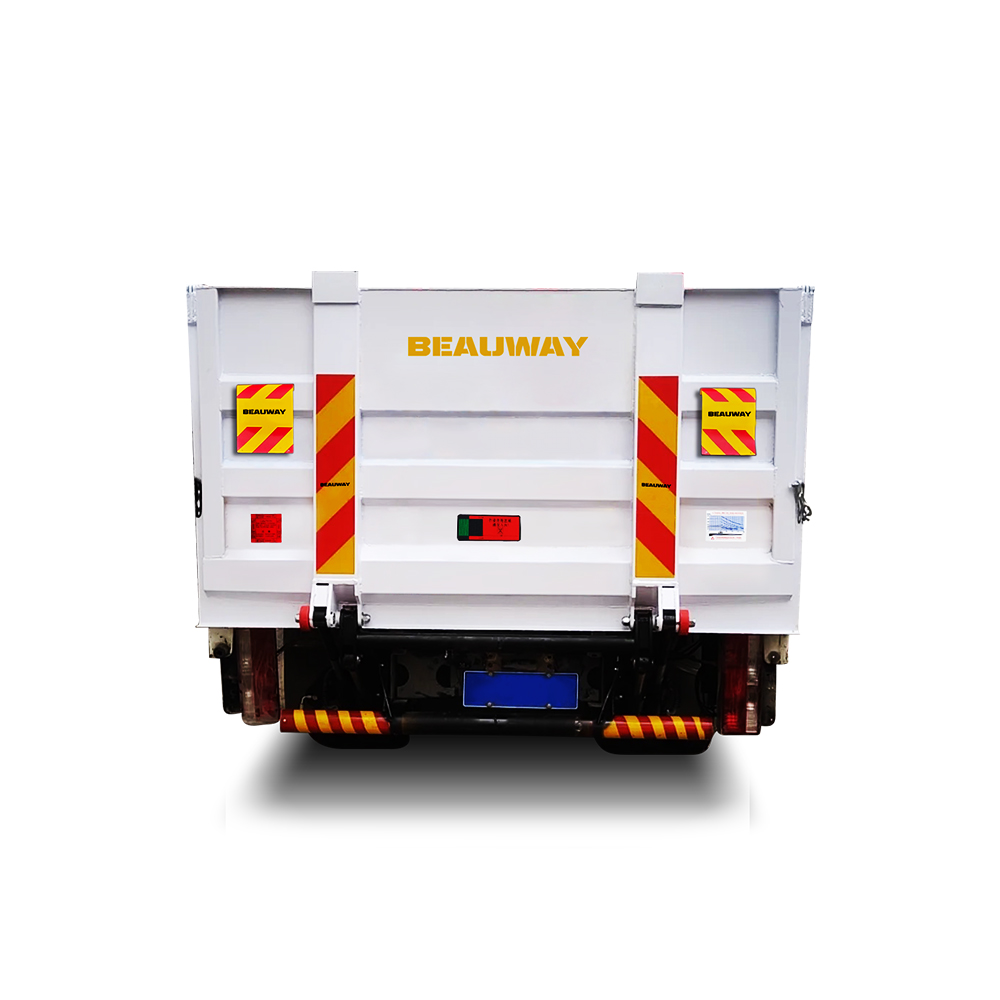
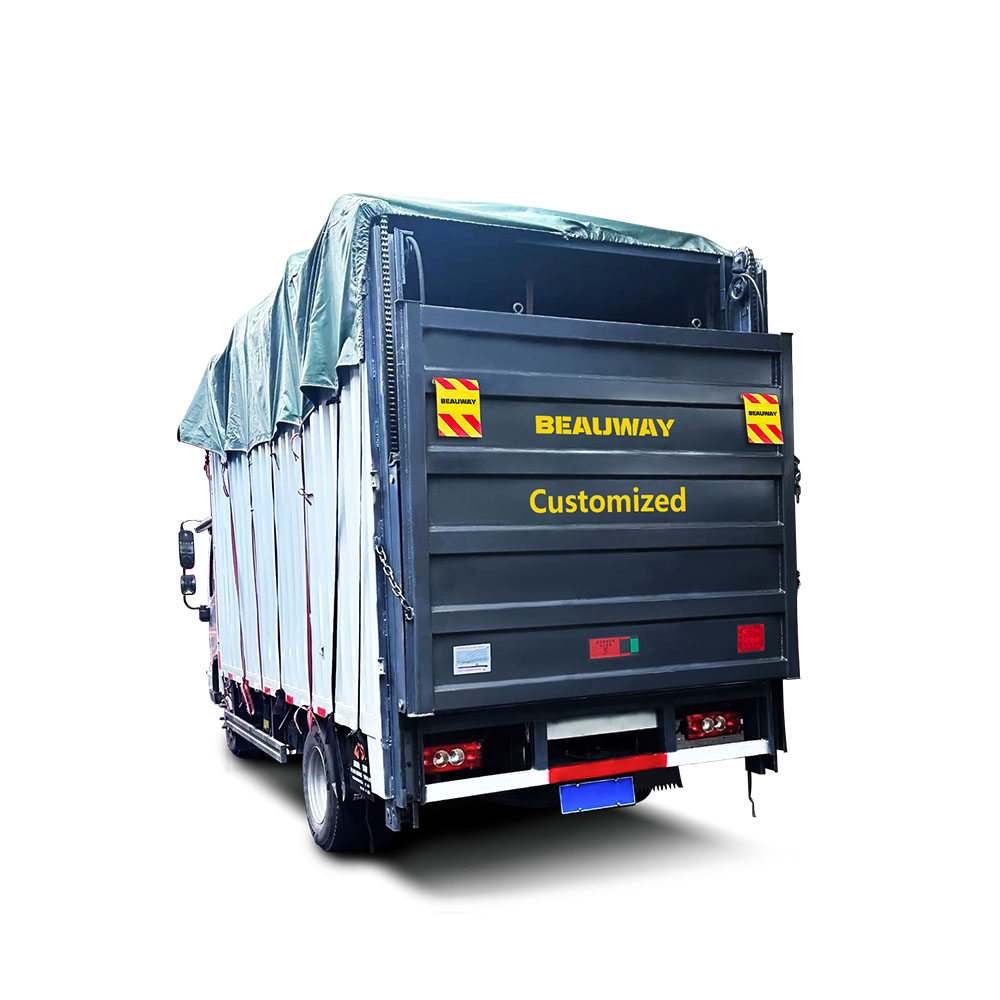
Beauway produces tail lifts with CE marking under the Machinery Directive, EN 1756-1-compliant designs, and ISO 9001-certified manufacturing. Our range covers column lifts, scissor lifts, and foldable platform lifts across load capacities from light commercial vehicles through heavy truck applications.
We support third-party audits, provide full technical documentation for importers and distributors, and respond to structured OEM enquiries with complete commercial documentation. Contact our export team to request a structured quote or to discuss your specific fleet requirements.
FAQ
What certifications should a tail lift manufacturer hold for the European market?
A tail lift manufacturer supplying Europe must hold CE marking under the Machinery Directive 2006/42/EC and demonstrate EN 1756-1 compliance. A Declaration of Conformity must be available on request. Third-party certification from bodies such as TÜV Rheinland, SGS, or Bureau Veritas provides additional verification that the self-declaration is credible.
How do I compare FOB prices between a Chinese liftgate manufacturer and a European brand?
FOB price is one input, not the full picture. Add freight, import duties, spare parts lead time risk, warranty coverage, and residual value. Total lifecycle cost over 5–7 years is the correct comparison metric for any serious liftgate manufacturer evaluation.
What is a realistic lead time from a Chinese tail lift supplier?
Standard configurations typically require 45–75 days ex-works from a confirmed purchase order. Custom specifications extend lead times to 90–120 days. Secure written lead time commitments as part of the purchase contract with any tail lift supplier.
Can a Chinese tail lift manufacturer supply UKCA-marked units for the UK market?
Yes, provided the tail lift manufacturer has completed the UKCA conformity assessment independently from CE marking. Not all Chinese manufacturers have done this. Verify directly and request the UKCA Declaration of Conformity before contracting.
What is the difference between a tail lift manufacturer and a tail lift supplier?
A tail lift manufacturer produces units in its own facility and controls the manufacturing process end-to-end. A tail lift supplier may be a trading company reselling units from a third-party factory. For OEM procurement, working directly with the manufacturer gives better control over specifications, quality, and pricing.
Trusted by Fleet Operators in 50+ Countries
Stop Losing Time at the Loading Dock.
Get Your Matched Tail Lift Spec in 24 Hours.
50
Countries Served
24h
Spec Turnaround
99.7
Uptime Reliability
4.9
Customer Rating
No Commitment Required
CE & UKCA Certified
Standard & Custom builds
Worldwide Shipping