










Vehicle Wheelchair Lift Cost, Size and Buying Guide
I’ve been working in vehicle-mounted accessibility lifting equipment for nearly twelve years. From running projects with dealers across the American Midwest for paratransit fleets, to advising medical transport companies and transit operators on equipment selection — what’s in this article isn’t pulled from a manual. It’s what’s left after years of making mistakes on actual job sites.
One thing most people don’t realize upfront: when you search wheelchair lift costs in the US market, about 80% of results are talking about architectural vertical platform lifts — not vehicle-mounted equipment. The two are completely different in structure, installation logic, and maintenance cycles. If you’re a fleet manager or procurement specialist trying to apply building-lift selection logic to a vehicle application, you’re going to run into a lot of unnecessary problems.
Pricing: What Vehicle-Mounted Wheelchair Lifts Actually Cost
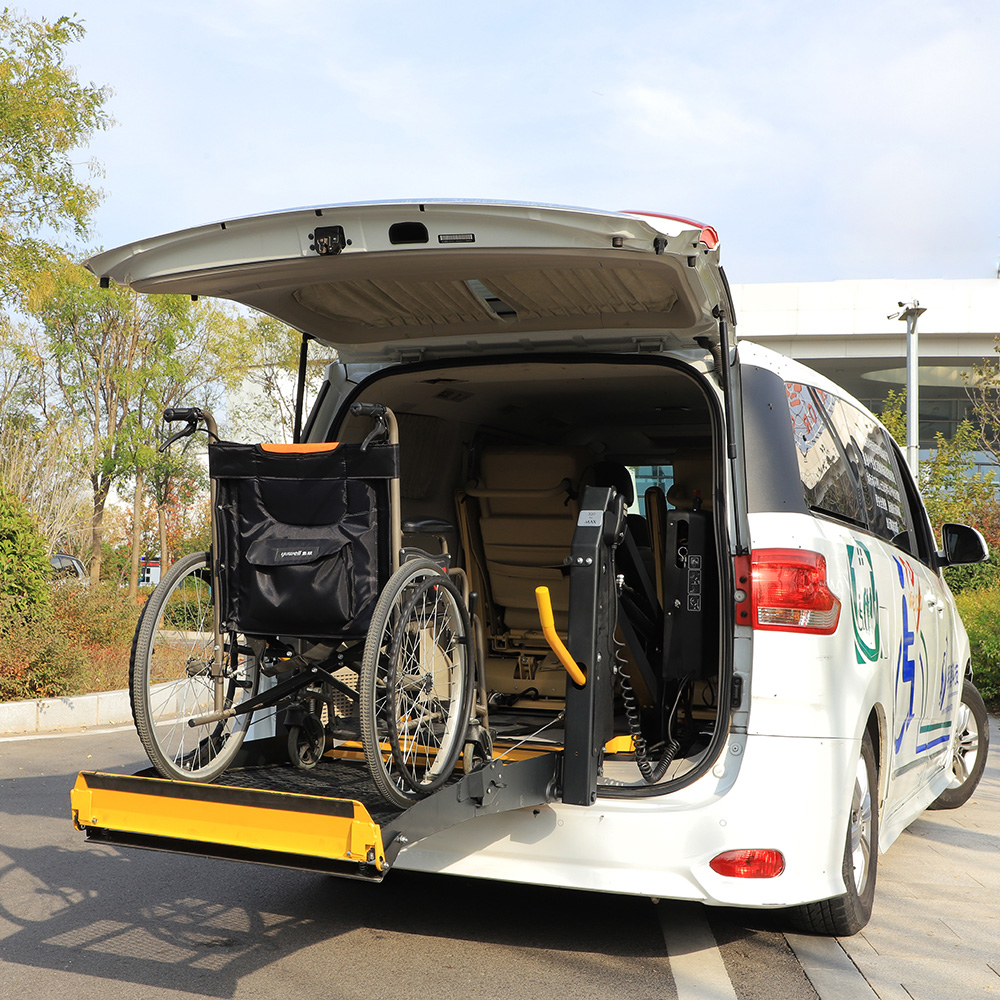
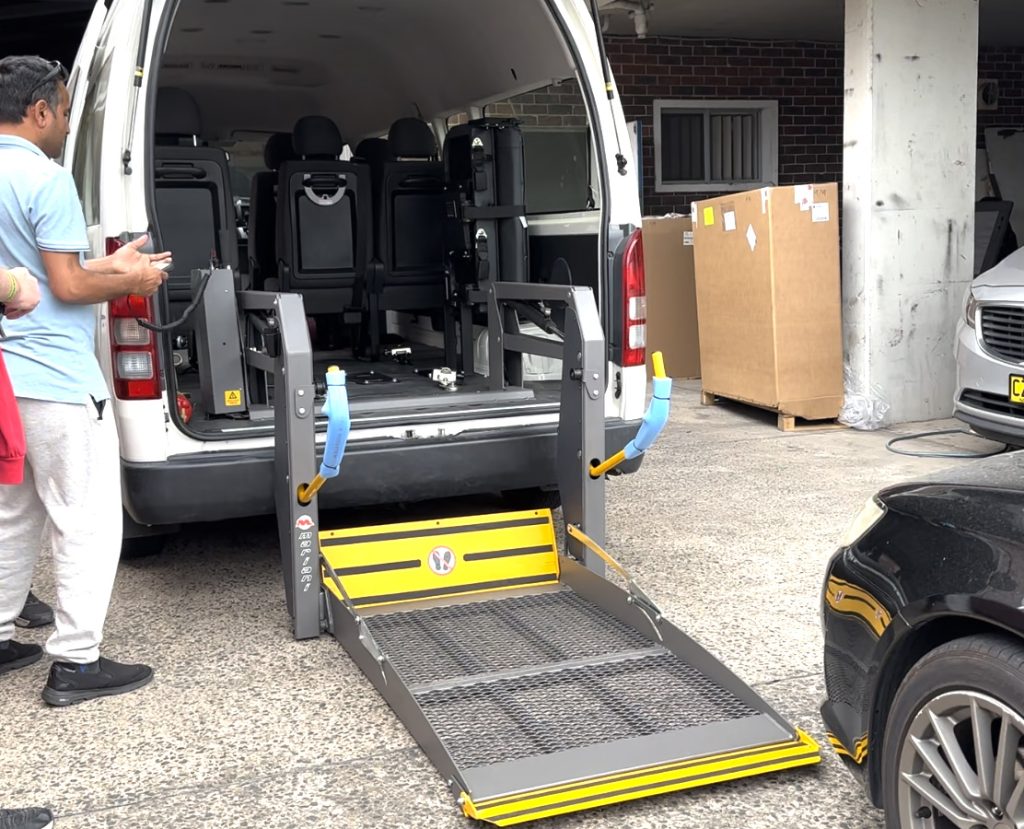
Hydraulic Folding Arm Van Lift
How much do wheelchair lifts cost — it’s the most common question procurement teams ask, and the hardest one to answer with a single number. Vehicle-mounted lifts break down into two main structural categories, and the pricing logic is completely different between them.
Hydraulic Folding Arm Van Lifts are the dominant format in the US paratransit and converted minivan market. The platform folds and stows at the rear or side door, deploys when needed, and raises hydraulically. For a fully converted new accessible van including chassis and lift system, the complete vehicle price typically runs $65,000 to $98,000, with the conversion package itself generally ranging $17,000 to $45,000 depending on chassis type, brand, and entry configuration (side-entry vs. rear-entry). If you’re retrofitting an existing vehicle with a folding arm lift only, bare-unit pricing starts around $4,995, with mid-range models from BraunAbility, Harmar, and Bruno concentrated in the $6,000 to $12,000 range.
Vertical Platform Vehicle Lift (Transit Bus / Medical Van Lift)
Vertical Platform Vehicle Lifts are used on city accessible transit buses, airport shuttles, and large medical transport vehicles. The platform raises and lowers vertically directly from the vehicle floor at the door opening — no folding, heavier construction, higher weight capacity. Bare-unit pricing for this category typically runs $8,000 to $25,000, with heavy-duty commercial models going higher. Add vehicle structural modification and installation commissioning, and total project cost routinely exceeds $30,000.
What About Cost of Wheelchair Lift for Home?
Worth addressing here: the search term cost of wheelchair lift for home drives significant traffic from residential users comparing building-mounted and vehicle-mounted options. Architectural vertical platform lifts for residential use typically run $12,000 to $35,000 installed — a completely separate product category with different installation credentials, maintenance systems, and regulatory requirements. Don’t cross-compare pricing between the two.
Below is a vehicle-application price reference table (US market, 2024–2026, equipment only, excluding full vehicle conversion):
| Equipment Type | Representative Brands | Weight Capacity | Bare Unit Reference Price (USD) | Applicable Vehicles |
|---|---|---|---|---|
| Hydraulic Folding Arm Van Lift (entry-level) | Harmar, RAM | 600–750 lbs | $5,000 – $8,000 | Personal minivans, paratransit vehicles |
| Hydraulic Folding Arm Van Lift (mid-range) | BraunAbility, Bruno | 750–1,000 lbs | $8,000 – $15,000 | Commercial paratransit vehicles |
| Vertical Platform Vehicle Lift (standard) | BraunAbility UVL, Ricon | 800–1,000 lbs | $8,000 – $18,000 | Medical transport vans, mid-size buses |
| Vertical Platform Vehicle Lift (heavy-duty) | Custom commercial configurations | 1,000 lbs+ | $18,000 – $30,000 | Transit buses, airport shuttles |
Figures above reflect bare-unit equipment with basic installation. Vehicle structural modification, electrical system work, and applicable taxes are not included.
Wheelchair Lift Size: Vehicle Applications Have Their Own Logic
Platform Clear Dimensions and ADA Requirements
Lift size for wheelchair selection is more involved in vehicle applications than in architectural ones — it’s not just “is the platform big enough.” You’re also dealing with how the folded unit affects door clearance, what ground clearance the deployed platform needs, and what the vehicle structure itself will actually accommodate.
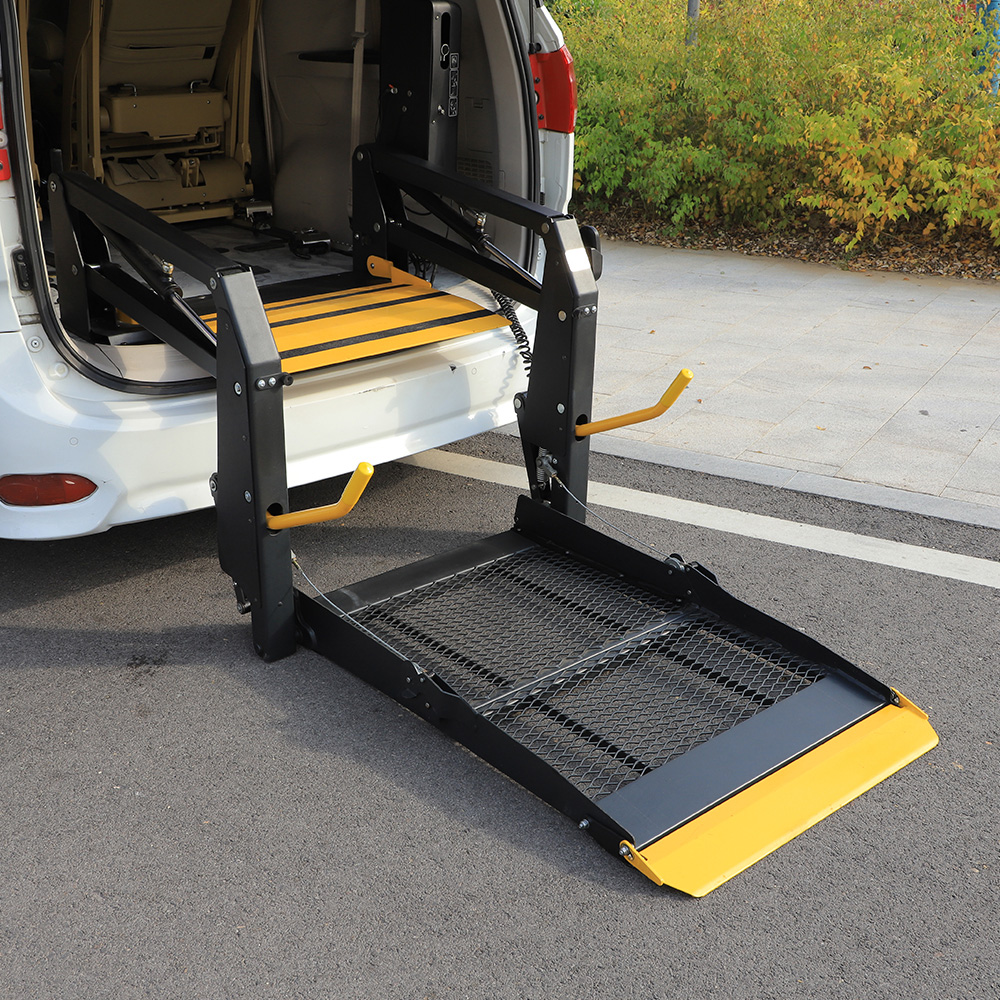
Wheelchair lift size in vehicle applications requires tracking three sets of parameters simultaneously. Standard models typically offer at least 36″ × 48″ of platform space, which covers most manual wheelchair users. Power wheelchairs and heavy-duty mobility scooters typically measure 26″–32″ wide, with some heavy models reaching 34″. Platform clear width must exceed the wheelchair’s maximum footprint by at least 3″ on each side as minimum operating clearance.
On regulatory requirements: ADA standards require a platform clear width of at least 36 inches. Vehicle-mounted lift platforms must include edge barriers at least 1.5 inches high, handrails positioned 30–38 inches above ground level, and a structural safety factor of no less than 6x rated load on all lift mechanisms — these parameters get checked line by line during inspection and annual certification.
Folded-State Envelope: The Most Overlooked Dimension
Folded-state envelope is the dimension most commonly overlooked in vehicle lift selection. I’ve seen more than one project where the equipment arrived on site only for the team to discover that the stowed lift blocked the vehicle’s rear door from opening fully. The cost of re-selecting equipment plus a second installation visit was substantially more than a proper site survey would have cost in the first place.
Step-by-step selection process:
- Confirm the actual footprint of the target wheelchair, including footrests fully extended and handgrips at widest point
- Measure the vehicle’s rear or side door opening clear dimensions and door sill height above ground
- Cross-reference the equipment technical datasheet for platform clear dimensions, folded-state envelope, and maximum travel stroke
- Confirm on-site that the deployed platform clears local ground conditions — ramps, curb heights, pavement transitions
- Verify electrical interface compatibility with the target vehicle model; some brands offer vehicle-specific wiring harness versions
Used Wheelchair Lift For Sale: How Much You Can Save, and What You’re Taking On
Where Used Units Come From and What They Cost
Used wheelchair lift for sale inventory in the US market comes from three main sources: fleet replacement and retirement, private owners upgrading or changing vehicles, and dealer refurbished trade-ins. Used accessible vehicle equipment generally prices out at 30%–60% of new, with complete used converted vehicles typically ranging $18,000 to $75,000 depending on age, mileage, lift system condition, and conversion complexity.
The Biggest Risk: Hydraulic Seal Degradation
For used vertical wheelchair lifts for sale specifically — the vertical platform category — hydraulic system hidden degradation is the biggest risk factor. The main hydraulic cylinder operates under continuous dynamic load. Early-stage seal wear often shows as only a few drops of oil, nothing that affects short-term function, but under high-frequency commercial operating cycles it can escalate to full system pressure loss quickly.
“With used hydraulic vehicle lifts, the real danger isn’t mechanical wear — it’s hidden seal degradation.” A colleague of mine with twenty years in heavy equipment repair said that. I’ve confirmed it firsthand on actual projects.
On-site inspection checklist:
- Hydraulic system: Check cylinder outer walls, line fittings, and control valve block for any oil trace; under full rated load, hold for 5 minutes — allowable drop is 3mm maximum
- Folding mechanism: Run through full deploy and stow cycle at least 10 times; check hinge pin wear and whether the full travel range is smooth throughout
- Electrical system: Inspect control enclosure interior for any burn or scorch marks on wiring; test emergency stop circuit response
- Platform structure: Check anti-slip surface wear condition, edge barrier weld integrity, and limit switch function
- Nameplate and service records: Verify serial number, production date, and maintenance history traceability — equipment with no traceable records is high risk
Risk Factors to Be Aware Of
- Equipment with no nameplate or traceable documentation is not recommended for commercial fleet operation — the compliance exposure and insurance claim risk are both significant
- Control modules and hydraulic valve components for imported brands can have sourcing lead times of 3–6 months; fleet downtime losses typically dwarf the cost of the repair itself
- If the hydraulic fluid type is unknown, budget for a full system fluid flush before putting the unit into service — it’s not a negligible cost
- Major brands including BraunAbility require installation through certified dealers; used equipment sourced outside certified channels carries compliance risk in certain states
Refurbished certified units run 20%–30% more than bare used equipment, but deliver substantially more predictable service life and maintenance cost. For an operating fleet, one day of vehicle downtime typically costs more than the entire purchase premium you saved on a bare used unit.
Real Project Case: Six-Vehicle Fleet Lift Replacement, North Carolina
Project Background and Equipment Selection
In fall 2023, a nonprofit accessible transportation provider in North Carolina contacted us to replace the vehicle-mounted lifts across a six-vehicle Toyota Sienna fleet. Original equipment had been in service for over seven years — the hydraulic cylinders were showing oil seepage and the control systems had developed response delays. The fleet manager needed all six lifts replaced within a total budget of $60,000.
Equipment selected: BraunAbility Century Series hydraulic folding arm van lift, rated capacity 800 lbs, platform dimensions 34″ × 51″, rear-entry configuration, hydraulic drive, compatible with Toyota Sienna factory wiring harness.
Fault Found During Installation
On the third vehicle, post-installation testing showed the lift platform automatically dropping approximately 1.5 inches after reaching the upper position — failing the static load hold requirement.
Diagnostic process:
- Inspected all hydraulic line fittings — no leaks found
- Tested hydraulic pump output pressure — within specification
- Disassembled control valve block — found metallic debris lodged in the check valve seat, preventing full closure
- Cleaned valve seat, replaced seals, retested — hold pressure confirmed within spec
Root Cause and Final Outcome
The vehicle’s original hydraulic system had not had fluid changes performed on schedule. Particulate contamination in the old fluid carried over into the new valve assembly during the retrofit. Two units received full hydraulic fluid replacement and circuit flush as part of the process, at an additional cost of $480 total. Complete six-unit installation including all labor came to $57,200 — within budget. Fleet returned to service with no further fault events.
The practical lesson from this job is straightforward: when retrofitting new equipment onto an older vehicle, circuit contamination inspection is not optional. Skipping it to save time is a trade you will pay back at a higher rate later.
Vehicle-mounted wheelchair lift procurement is considerably more involved than most search results suggest. Price, platform dimensions, vehicle compatibility, and compliance requirements all have to align simultaneously. If you’re working through a specific fleet selection decision or need technical parameter comparisons for your vehicle type and operating profile, contact Beauway directly for a customized equipment recommendation.
FAQ
How much does a wheelchair lift cost for a vehicle?
It depends on the type and application. Hydraulic folding arm van lifts start around $4,995 for bare-unit entry-level models, with mid-range options from major brands running $6,000 to $15,000. Vertical platform vehicle lifts for transit buses and medical vans typically run $8,000 to $30,000 depending on weight capacity and configuration. Full vehicle conversion including chassis adds significantly to the total.
What is the difference between a van lift and a vertical platform vehicle lift?
A hydraulic folding arm van lift folds and stows at the rear or side door when not in use — compact, widely used on minivans and paratransit vehicles. A vertical platform vehicle lift raises and lowers directly from the vehicle floor at the door opening with no folding mechanism — heavier construction, higher weight capacity, typically used on transit buses, airport shuttles, and large medical transport vehicles.
What wheelchair lift size do I need for my vehicle?
Start by measuring your wheelchair’s actual footprint with footrests extended and handgrips at their widest point. ADA standards require a minimum platform clear width of 36 inches. As a working rule, platform clear width should exceed the wheelchair’s maximum width by at least 3 inches on each side. Folded-state envelope and door opening dimensions of your specific vehicle must also be confirmed before selecting a model.
Is buying a used wheelchair lift worth it?
It can be, but the risk is concentrated in areas that are hard to spot without a thorough inspection. Hydraulic seal degradation is the most common hidden issue — early-stage wear shows as minor oil seepage but can escalate quickly under commercial operating loads. Used units generally price at 30%–60% of new. Refurbished certified units cost more than bare used equipment but offer more predictable maintenance costs, which matters significantly for operating fleets.
Where can I find used vertical wheelchair lifts for sale?
The main sources in the US market are fleet operators replacing aging equipment, private owners changing vehicles, and certified dealer refurbished trade-ins. Brands like BraunAbility and Harmar have dealer networks that occasionally carry used and refurbished inventory. Always verify serial number, production date, and service history before purchasing — units with no traceable documentation carry significant compliance and insurance risk for commercial operation.
Can Beauway help me select the right wheelchair lift for my fleet?
Yes. Whether you’re sourcing new hydraulic folding arm van lifts, vertical platform vehicle lifts for transit applications, or evaluating used equipment options, Beauway can provide technical parameter comparisons and customized recommendations based on your vehicle type and operating requirements. Contact us directly for a consultation.
Trusted by Fleet Operators in 50+ Countries
Stop Losing Time at the Loading Dock.
Get Your Matched Tail Lift Spec in 24 Hours.
50
Countries Served
24h
Spec Turnaround
99.7
Uptime Reliability
4.9
Customer Rating
No Commitment Required
CE & UKCA Certified
Standard & Custom builds
Worldwide Shipping