Having trouble submitting? Email us directly at nicole@beaway.com and we'll get back to you within 24 hours.











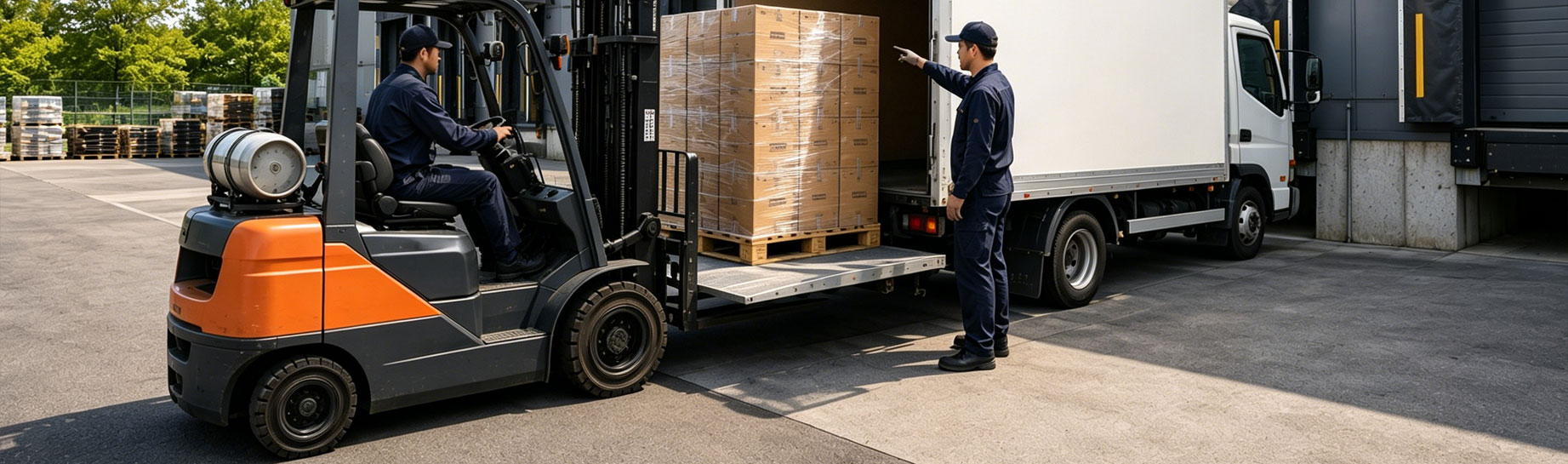
Low-Temperature Hydraulic Lift: Cold Climate Guide
A low-temperature hydraulic lift usually fails in extreme cold because of condensation — not because of the wrong oil grade. Fleet managers specifying cold-climate equipment tend to focus first on oil viscosity and seal material. Both matter, but they miss much of the real picture behind cold-weather failures.
Fleet operators commonly report a scenario like this: a vehicle moves between a heated depot and outdoor sub-zero conditions. Or the cargo box opens and closes repeatedly during loading. Each time, the temperature swing condenses moisture inside the hydraulic system and the electrical control box. At low speed or standstill, that moisture causes no immediate problem. Once temperatures drop below freezing, though, the condensation turns to ice. Ice can then compromise hydraulic flow and electrical contact reliability at the same time. This kind of failure tends to surface all at once during the first cold snap of the season, not gradually.
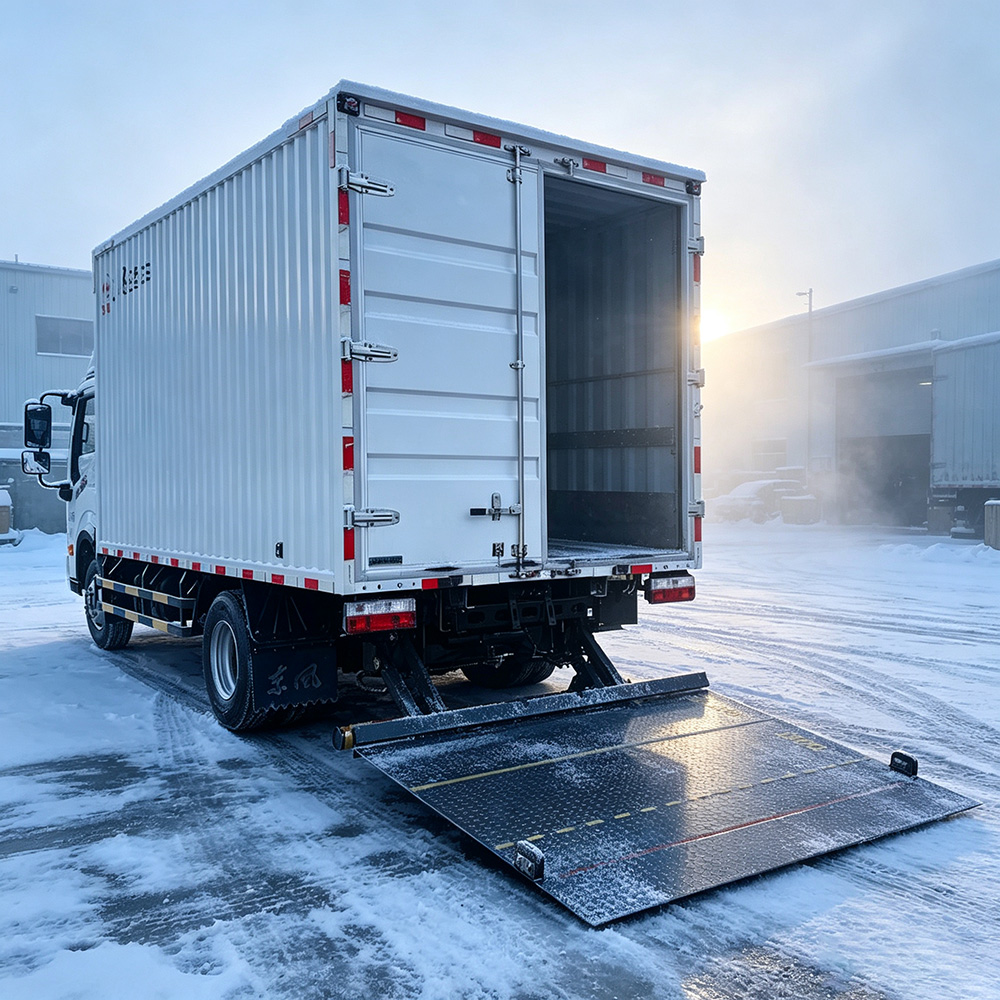
Why a Low-Temperature Hydraulic Lift Fails at the Condensation Stage
A hydraulic system is a relatively closed loop. But breather valves, tank vents, and piston rod seals all let outside moisture in. When a unit moves from a warm environment into cold air, the air inside the reservoir contracts. This creates a slight vacuum that draws in humid air. Water vapor then condenses on the surface of the oil or on the inside of the lines.
Mainstream hydraulic equipment manufacturers typically address this with two complementary approaches, not one or the other. The first is a dedicated low-viscosity hydraulic oil. Some manufacturers offer arctic-grade oils rated down to around -40°C or lower, which reduces flow resistance during cold starts. The second is a filter with a transparent housing. Beyond catching ordinary particulate contamination, it also collects moisture suspended in the oil. This prevents ice crystals from forming at low temperatures — ice that would otherwise block return-oil passages or damage precision valve components.
Electrical Control Units in a Hydraulic Lift Need the Same Moisture Protection
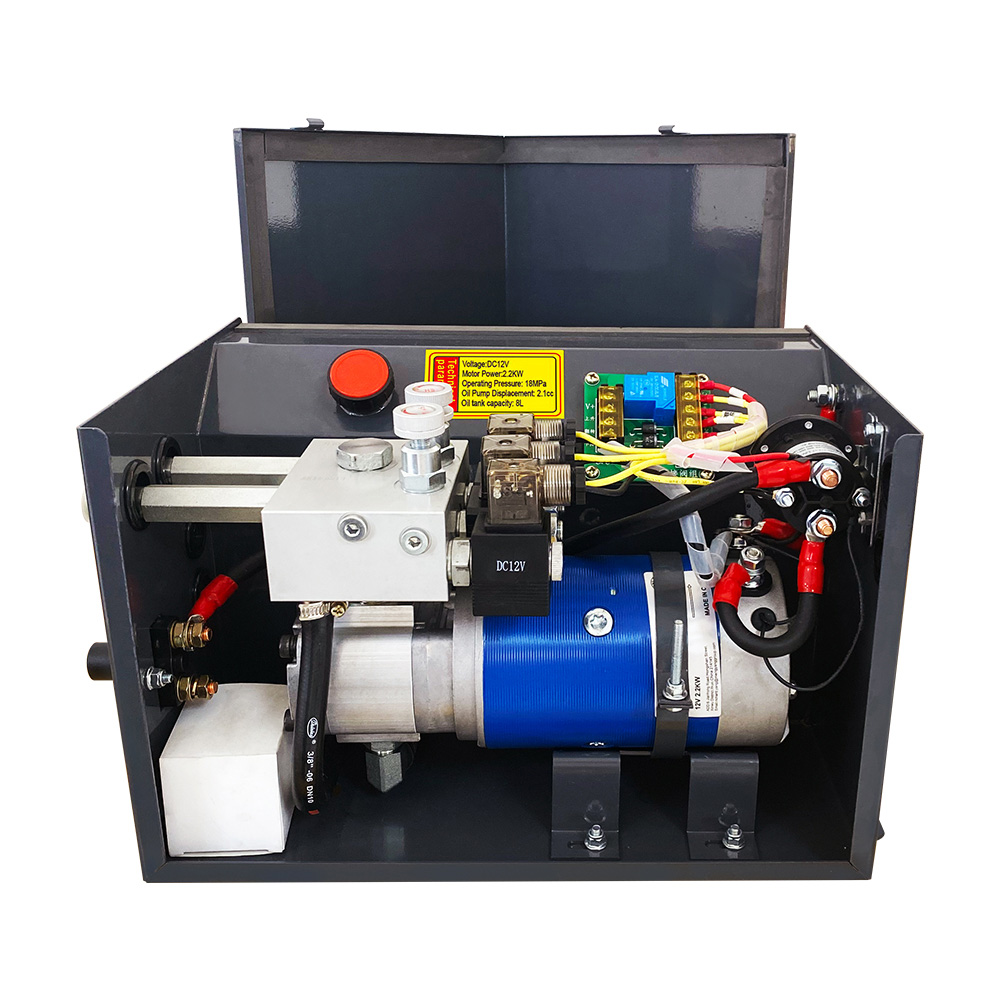
Beyond the hydraulic system, fleets often overlook the electrical control box as another cold-weather risk point. Relays, terminal connections, and switch contacts inside the box accumulate the same kind of moisture through repeated temperature cycling. Some fixed-mount control units on the market include a low-wattage heating element. It keeps the internal temperature slightly above the dew point, which prevents condensation from damaging the electronics inside.
For older equipment without a built-in heater, fleets can reduce this risk two ways. First, upgrade the sealing rating — an IP65 rating or higher is a reasonable target. Second, check terminal box gaskets regularly for signs of aging.
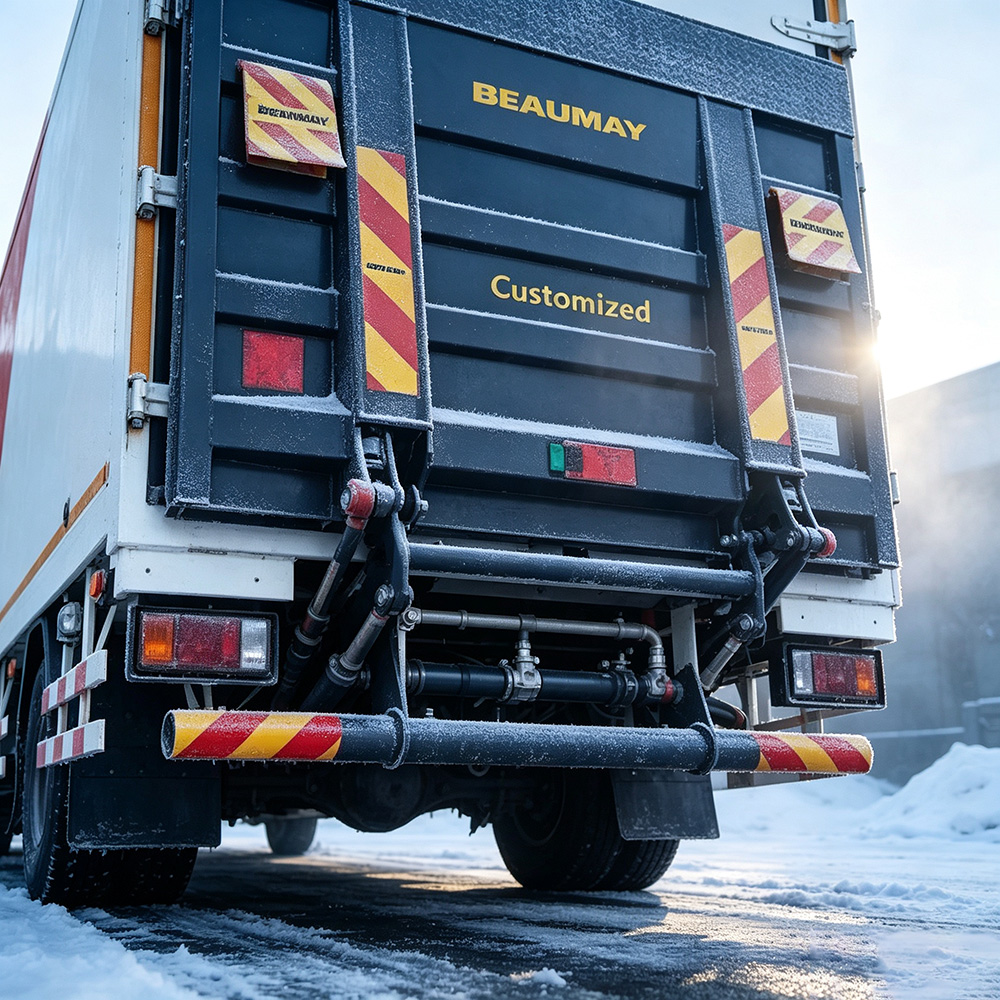
Cold-Climate Hydraulic Lift Specification Reference
| Ambient Temperature Range | Recommended Hydraulic Oil | Recommended Seal Material | Recommended Electrical Protection Rating |
|---|---|---|---|
| 0°C to -15°C | Standard low-temperature oil (e.g., ISO VG 32 grade) | Nitrile Rubber (NBR) | IP54 or higher |
| -15°C to -30°C | Dedicated low-temperature oil — confirm exact grade with the manufacturer | Fluoroelastomer (FKM) or equivalent cold-rated material | IP65 or higher |
| Below -30°C | Arctic-grade oil, typically requires custom confirmation | Manufacturer-confirmed low-temperature sealing solution required | IP65 or higher, with heating protection recommended |
These ranges are general industry reference points. The actual figures for a specific unit should always come from the equipment’s data plate or the manufacturer’s technical manual. Exact values vary between manufacturers.
When a Low-Temperature Hydraulic System Is Actually Worth Specifying
If a vehicle operates in conditions that stay above 0°C most of the time, the standard configuration is usually sufficient. There’s no need to pay for an upgrade. It’s worth raising a low-temperature specification requirement at the procurement stage if any of the following apply:
- The vehicle is based year-round in a region where the average annual low temperature drops below -15°C
- Daily operations involve frequent transitions between extreme temperature environments (for example, moving repeatedly between a cold storage room and the outdoors)
- The fleet has already experienced slow winter startups, sluggish hydraulic response, or erratic electrical behavior in cold weather
If cold exposure only happens occasionally during a seasonal cold snap, the standard configuration plus routine inspection is usually enough. Fully upgrading to low-temperature-rated components can cost more than the problem it solves. This is worth weighing carefully at the budgeting stage.
Daily Inspection and Maintenance Checklist
Before each cold snap: Check that the tank breather vent isn’t frosted over or blocked, and inspect the electrical control box gasket for visible cracking or aging.
Weekly: Check the hydraulic oil’s color and clarity — a milky or cloudy appearance usually indicates water contamination.
Monthly: Inspect electrical terminal connections for oxidation or moisture marks, and clean and reseal them promptly if anything looks off.
For more detail on seal material selection logic, see Hydraulic Tail Lift Components Explained. For the specific testing steps used to judge hydraulic system condition, see How to Inspect and Test a Corrosion-Resistant Tail Lift.
Summary
Specifying a low-temperature hydraulic lift shouldn’t start and end with oil viscosity. Condensation buildup and icing — in both the hydraulic system and the electrical control box — cause just as much downtime as other failure points. Yet fleets overlook this far more often. Fleets evaluating specification should treat condensation management as its own checklist item. Switching oil grades and seals alone won’t solve it. Whether a unit actually needs an upgrade depends on its real temperature range and frequency of exposure in that vehicle’s operating environment. It shouldn’t come down to a blanket assumption either way.
FAQ
Q: What causes a low-temperature hydraulic lift to fail in cold weather?
A: High oil viscosity makes cold starts difficult. But condensation freezing inside the hydraulic circuit and the electrical control box causes failure just as often — and fleets often overlook it.
Q: How can condensation be prevented in a hydraulic tail lift system?
A: Three measures help most: a filter that traps moisture from the oil, a clear tank breather vent, and a control box that meets its rated sealing standard.
Q: What hydraulic oil viscosity is recommended for sub-zero conditions?
A: Recommendations vary by manufacturer. Generally, lower temperatures call for a lower viscosity grade. Always confirm the exact figure against the equipment’s data plate or technical manual.
Q: Do all cold-climate fleets need low-temperature rated components?
A: Not necessarily. Only vehicles that operate long-term in extreme cold typically need upgraded low-temperature components. The same goes for vehicles that cycle frequently through large temperature swings. Standard configuration and routine checks usually handle occasional cold exposure fine.
Q: Can electrical components in a tail lift be damaged by cold weather condensation?
A: Yes. Relays and terminal connections accumulate moisture through the same temperature cycling. If the protection rating is inadequate or a seal has aged, this can lead to poor contact or short circuits.
Trusted by Fleet Operators Across 60+ Countries
Stop Losing Time at the Loading Dock.
Get a Custom-Matched Tail Lift Quote in 24 Hours.
60
Countries Served
24h
Quote Turnaround
99.9
Field Uptime
5.0
Customer Rating
No Obligation
CE & UKCA Certified
Standard & Custom Builds
Worldwide Shipping