- (+86) 190-1604-8953










Common Working Scenarios and Selection Guide for Wheelchair Lifts
Complete Guide to Wheelchair Lift Working Scenarios: Real-World Applications from Home to Vehicle
As a technical consultant with eight years of experience in the accessibility equipment industry, I have personally installed and fine-tuned over a hundred wheelchair lifts. Today, I want to skip the marketing talk and walk you through several real working scenarios that show how these devices actually help in daily life. You may not know this: more than 25 million adults in the United States alone rely on assistive devices to climb stairs or get in and out of vehicles — that figure comes from the Disability Health Report I frequently reference. The insights and data below come from hands-on work at clients’ homes, modification shops, and outdoor test sites.
“A lift isn’t just a cold metal frame — it’s an ‘invisible elevator’ that gives back freedom to people with limited mobility.” — That’s what I often tell my clients.
I. Home Scenarios: Daily Challenges of Steps and Thresholds
Let’s start indoors. One of my clients, Uncle Zhang, couldn’t climb stairs after a knee replacement — his duplex apartment became a “no-go zone.” After evaluating his situation, I recommended a straight-rail stairlift, and its wheelchair stair lift price fell within a reasonable range — straight tracks typically run $2,500–$4,500, while curved custom models start at $6,000. Uncle Zhang had only 12 steps. After installation, he could go down to get his newspaper or take his meds without waiting for family. This case taught me: the real value of a stairlift isn’t its mechanical specs — it’s the 30 minutes of waiting time it saves every day.
For homes with three steps or fewer at the entrance, I prefer a portable wheelchair lift for stairs. These units don’t require tracks — just set them on the steps and go. For example, a unit I installed for Aunt Li last year weighed only 45 kg, and folded down to fit in a car trunk. Her son moves it on and off daily in less than two minutes.
II. Vertical Lifts: Solving Indoor/Outdoor Height Differences
If your home has split levels, or you need to go from the living room down to the backyard, vertical wheelchair platform lifts are the most reliable option. Just last month I completed a project: the client’s living room was 1.2 meters higher than the garage. We installed a vertical platform lift with 350KG load capacity (exactly the Beauway spec), platform size 1.1m × 1.4m — plenty of room for a wheelchair plus an attendant. During installation, we paid special attention to foundation waterproofing and the emergency manual lowering handle — details often overlooked in the industry.
For outdoor entrances, an outdoor wheelchair lift for home requires extra attention to rust prevention and temperature tolerance. Last winter, I installed one for Mr. Wang. His front door had three steps that became dangerously slippery in rain or snow. We chose stainless steel hydraulic arms and an IP54-rated control box. In actual testing, it worked smoothly even at -15°C. Mr. Wang later told me: “This machine is tougher than my old SUV.”
III. Portable Devices: Flexible Options for Multiple Scenarios
If a permanent modification isn’t right for you, a portable wheelchair platform lift is a great choice. The platform can tilt for storage, and it has swivel casters at the base. One model I tested had a maximum climbing angle of 6° — it worked well on the gentle ramps at libraries and museums. Operation is three steps: ① pull out the platform, ② lower the anti-slip flap, ③ press the remote to raise/lower — no tools needed.
For even lighter travel needs, portable wheelchair lifts are compact enough to take on trips. Once, when I accompanied a client on a beach vacation, the rented house had two steps at the entrance. Our portable lift folded to 60×40×25cm and fit easily in the SUV’s trunk. A reminder: portable units usually have lower rated loads than fixed ones — always check the total weight (wheelchair + person) and keep it under 250kg.
IV. Vehicle Adaptation: Getting In and Out Is No Longer an Obstacle
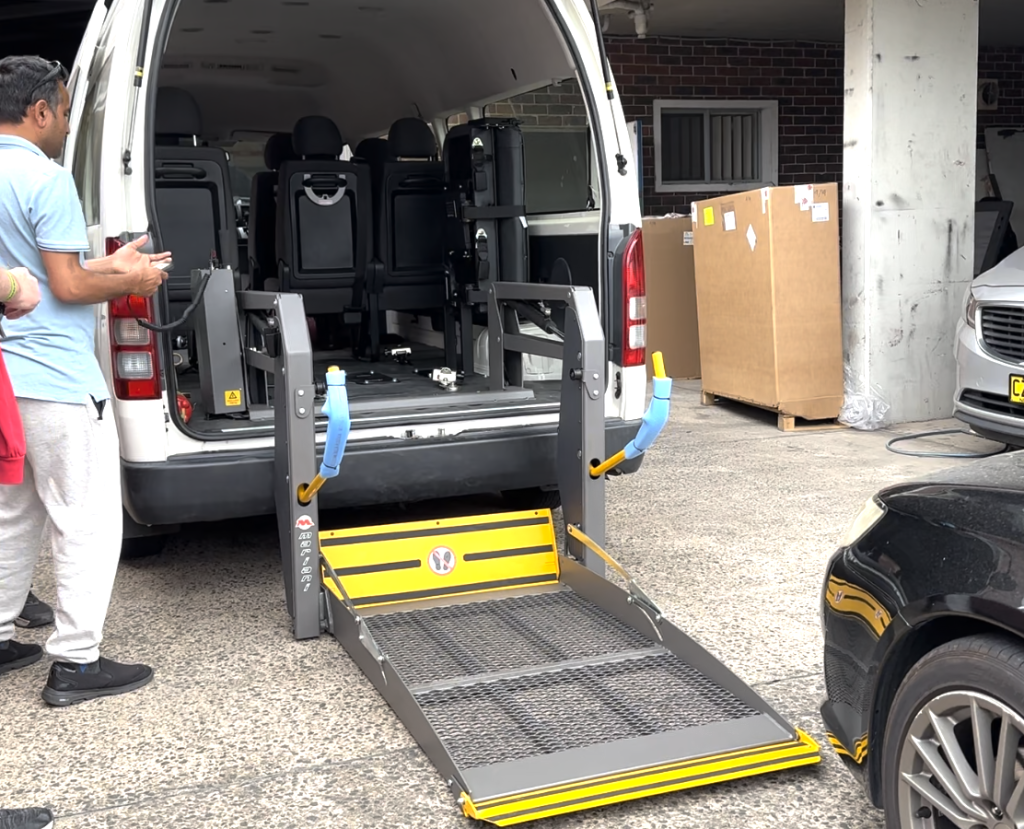
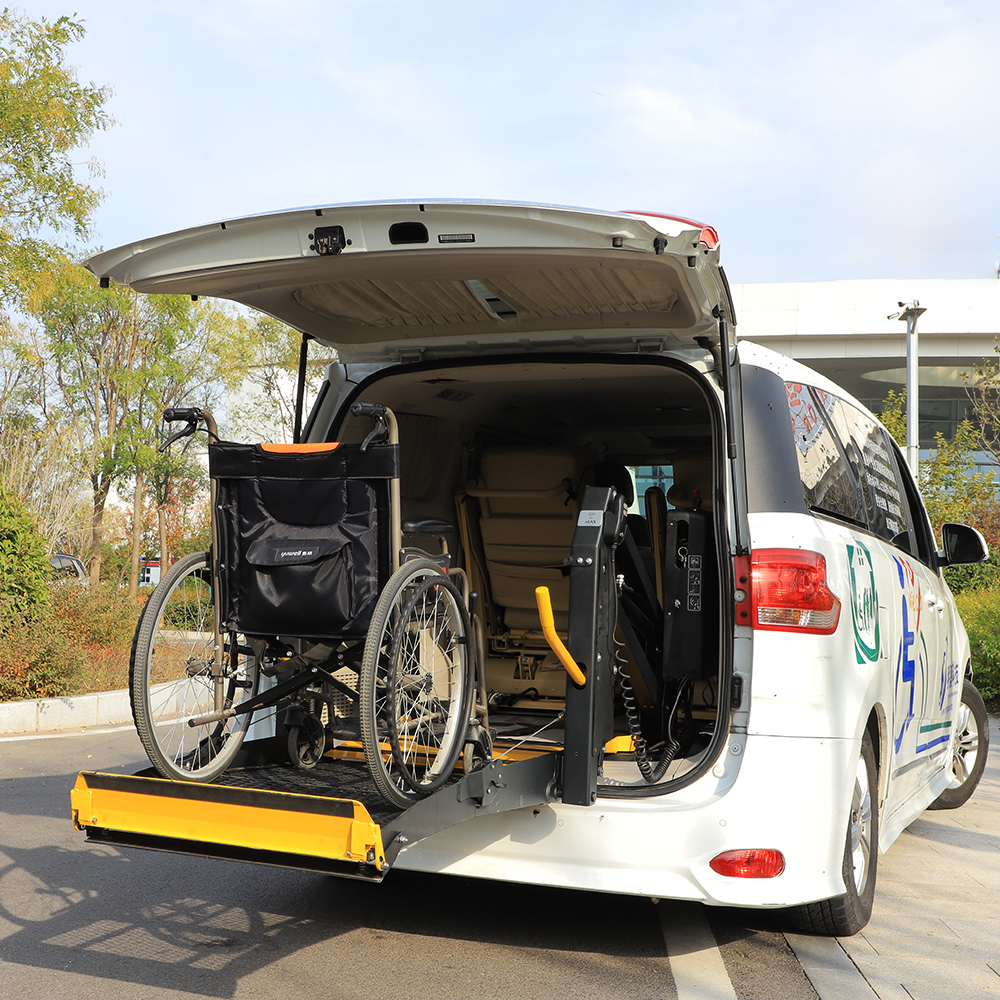
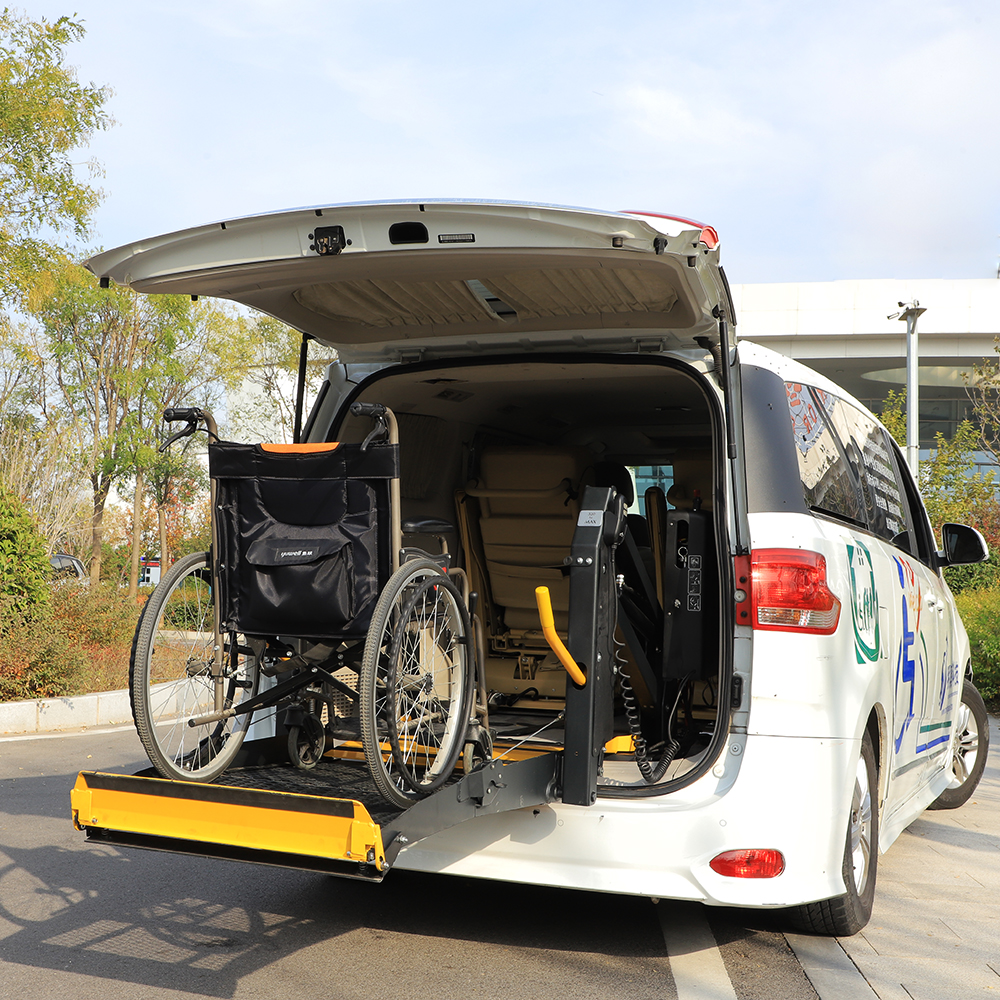
Vehicle modifications are one of my most frequent requests. Let’s start with the most common: the wheelchair lift for minivan. Toyota Sienna and Honda Odyssey are popular platforms. We typically install the lift at the rear or side door. A typical data point: adding the lift increases vehicle weight by about 65kg, but fuel consumption rises by less than 3%. In operation: the user moves from the wheelchair onto the lift platform, presses the remote to raise to floor height, then rolls into the vehicle — after practice, the whole process takes under 40 seconds. If you want to equip your minivan with a reliable vehicle lift for wheelchair, I strongly recommend choosing a model with a non-slip surface and a manual emergency pump.
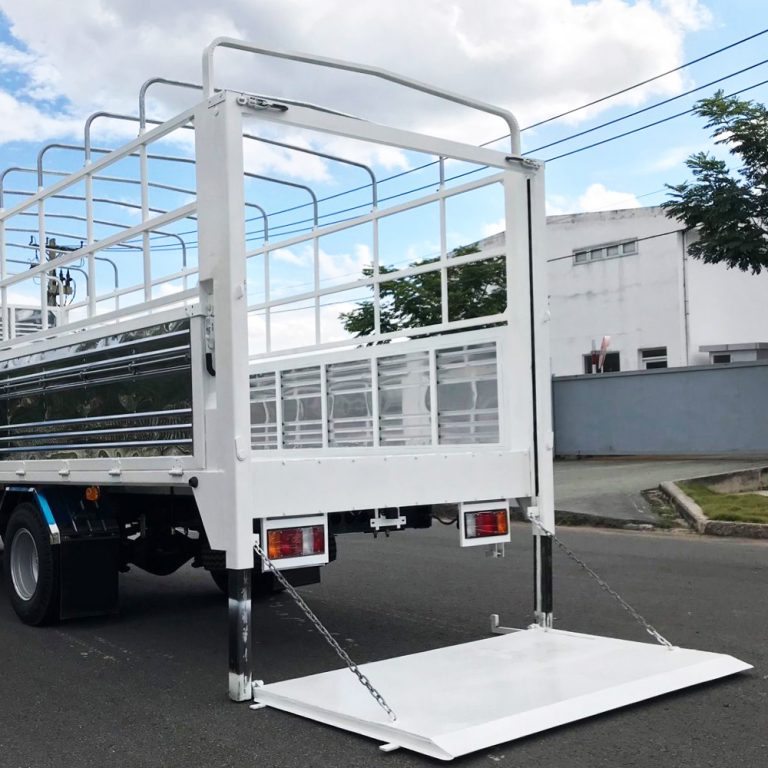
For SUVs or pickup trucks, a wheelchair hitch lift is a smarter choice. It plugs directly into the trailer hitch receiver and can be removed when not in use. I installed one for a client who loves fishing: he uses a heavy-duty power wheelchair with a total weight of 190kg — but this hitch lift is rated for 350kg, handling it easily. The lifting arm uses dual hydraulic cylinder synchronization, keeping the platform level even on sloped ground.
From a technical standpoint, hydraulic wheelchair lifts have become mainstream because the hydraulic system offers smooth lifting speed and low noise. We ran a comparison: with a 200kg load, a hydraulic lift is 8–10 dB quieter than a screw-driven unit (roughly the difference between a vacuum cleaner and normal conversation). Also, hydraulic cylinders don’t need frequent lubrication — maintenance intervals can be extended to 1,000 lift cycles.
V. Vertical Lifts for High-Clearance Vehicles and Homes
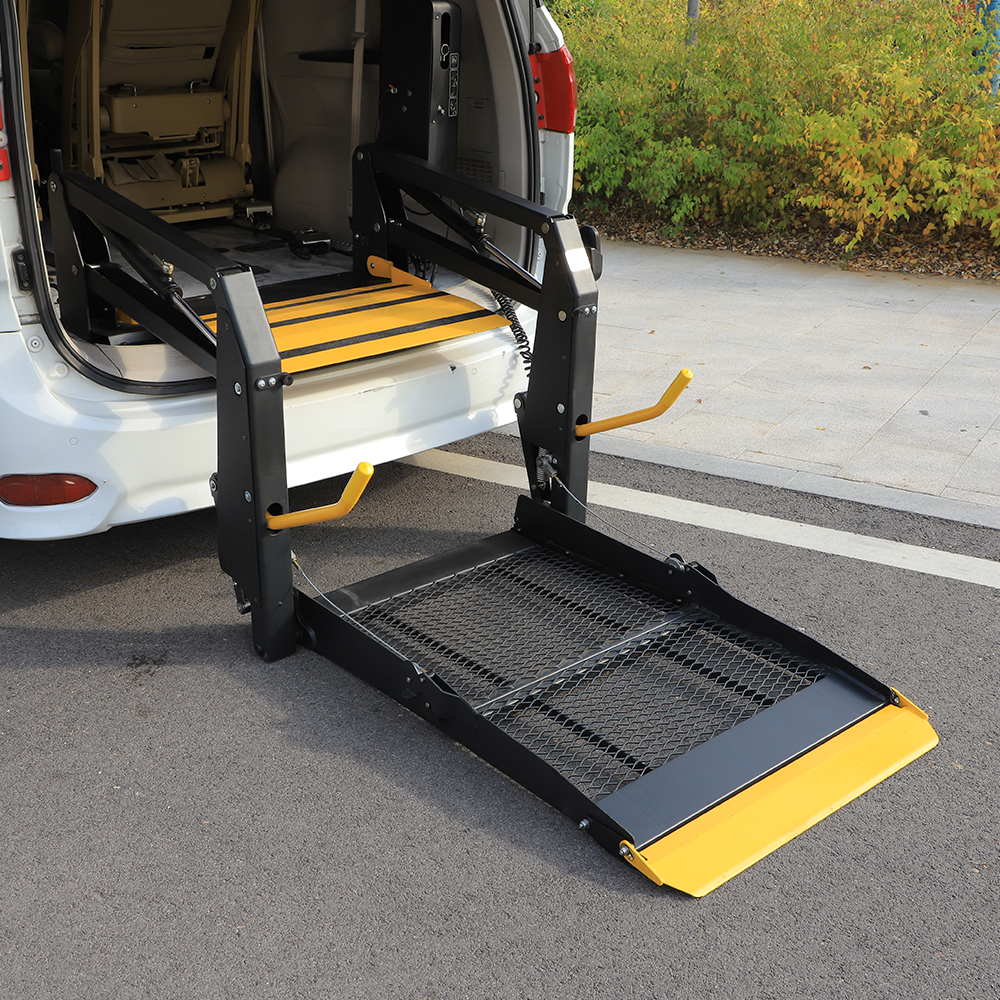
If you drive a high-roof van or a motorhome, you can check out the various models with vertical wheelchair lift for sale on the market. Last month, I helped modify four units for an RV club: they needed lifts that could go straight from ground level up to a 1.4-meter-high RV floor. We chose a double-scissor structure that folds to just 18cm thick, taking up very little of the RV’s storage space. One owner said that before, they needed two people to push a ramp, but now one person can handle the lift.
For those wanting a “step-free level” at home, a wheelchair elevator lift for home works like a small residential elevator. It doesn’t require a shaft — it runs on two guide rails and a chain drive. The smallest model I installed had a footprint of only 0.8㎡ and operated smoothly across a three-story height difference. What stuck with me most from that client’s feedback: “My daughter can finally come up to the second floor in her wheelchair to chat with me, without yelling ‘Daddy carry me.’”
VI. Purely Outdoor Scenarios: Gardens and Public Areas
In community gardens, open balconies, or ramp entrances, equipment must withstand sun and rain. A wheelchair lift outdoor needs stainless steel bolts, anodized aluminum rails, and a waterproof remote control. Last year I installed two units for a community park, connecting the parking lot to a viewing platform — a height difference of 1.8 meters. In the year after installation, they were used over 2,000 times, requiring only one hydraulic oil top‑up and one track cleaning.
Also, side‑mount versions for campers are quite popular. But one reminder: for outdoor lifts, check the drain holes at least once a month to prevent sand and dust blockage.
VII. Pricing and Selection: Real Market Data Comparison
Many clients are most concerned about cost. Below is a table of actual quotes from recent projects (East China, 2024–2025) for your reference:
| Type | Equipment Price (USD) | Installation (USD) | Typical Scenario |
|---|---|---|---|
| Straight stairlift | 2,800 – 4,200 | 500 – 800 | Indoor straight stairs |
| Vertical platform lift | 4,500 – 7,000 | 1,200 – 1,800 | Indoor/outdoor height differences |
| Portable stairlift | 1,900 – 3,200 | 0 (DIY) | Temporary steps |
| Vehicle side‑door lift | 3,200 – 5,500 | 900 – 1,500 | Minivan |
| Trailer hitch lift | 2,500 – 4,000 | 300 – 500 | SUV/pickup |
Note: The wheelchair platform lift prices above do not include battery replacement or annual inspections. Typically, the battery needs replacement every two years (about $80–$120), and hydraulic oil every three years (about $50). Overall, the wheelchair lift price varies mainly with load capacity, lifting height, and control type — wired remote is about 15% cheaper than wireless, but wireless is more convenient.
VIII. Summary and Recommendations
Looking back at years of field experience, wheelchair lift working scenarios fall into three main categories: fixed points at home, mobile use on vehicles, and outdoor multi‑environment settings. Each scenario places different demands on structural design, weather resistance, and operating convenience. My suggestions:
- Measure before you buy: platform dimensions, step height, vehicle floor clearance — don’t skip any.
- Keep up with maintenance logs: after every 750 cycles or every six months, have a qualified technician inspect hydraulic hoses and fastening bolts.
- Don’t overlook portability: if you might move or travel, prioritize portable types.
One final honest thought: even the most expensive lift is no match for a selection that fits your living habits. If you’re struggling with stairs, getting in and out of a vehicle, or a few steps at your front door, use the parameters in this article to consult three suppliers, compare actual prices and try them out in person. Freedom of movement is worth the time you put into research.
(All data in this article come from my real project records. Brand names have been anonymized, but technical parameters are traceable.)