-
(+86) 190-1604-8953










Cantilever Tail Lifts: A Fleet Operator’s Guide to Specification, Selection and Long-Term Performance
In today’s logistics, distribution, and industrial transport environments, a cantilever tail lift is no longer optional equipment—it has become a core component of efficient cargo handling.
From our experience working with fleet operators, the difference between a well-matched tail lift and a poorly selected one is immediately visible in daily operations. Loading speed, operator fatigue, safety incidents, and even vehicle wear are all directly affected.
This guide is built around real-world applications and a Beauway project case, focusing on how to match the right configuration to your vehicle and workload—not just theoretically, but practically.
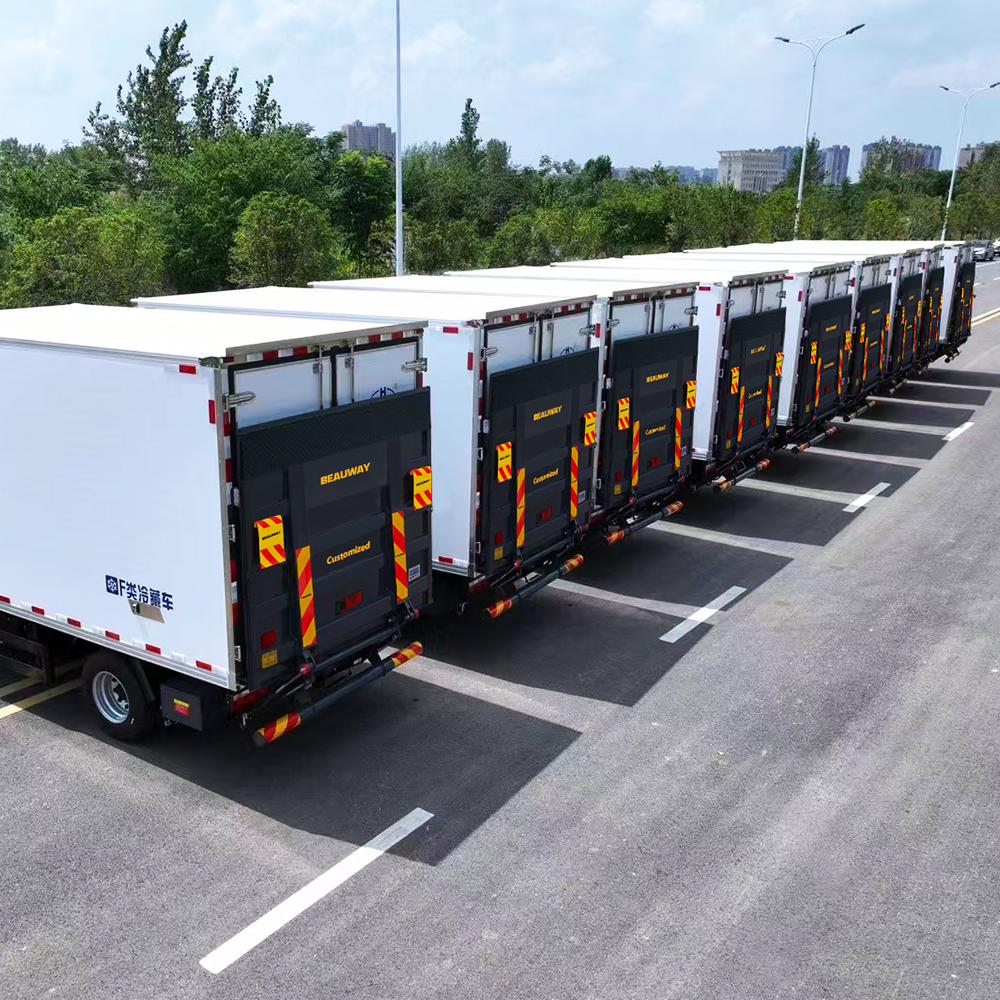
What is a Cantilever Tail Lift
A cantilever tail lift is a hydraulically driven lifting platform mounted at the rear of a vehicle. Unlike folding designs, the platform extends outward and operates independently, creating a stable and unobstructed loading surface.
In practical use, this structure provides three clear advantages:
- Higher load capacity – typically covering 500–2000 kg, suitable for everything from boxed cargo to heavy equipment
- Consistent stability – the multi-link system keeps the platform level throughout the lifting cycle
- Wider application range – compatible with box trucks, refrigerated vehicles, and flatbeds
From a technical standpoint, what is a cantilever tail lift comes down to its hydraulic synchronization system. The platform does not tilt during movement, which is critical when handling palletized goods or machinery.
In most commercial fleets, 1000–2000 kg models are the standard choice rather than entry-level configurations.
Core Structure and How It Works
A cantilever system is relatively simple in concept, but each component plays a critical role in reliability.
| Component | Function |
|---|---|
| Platform | Directly supports cargo, typically steel or aluminum |
| Hydraulic system | Provides lifting force and speed control |
| Linkage mechanism | Maintains balance and prevents tilting |
| Control unit | Enables precise operation (wired or remote) |
In a hydraulic cantilever tail lift, the coordination between cylinders and linkage determines whether the system feels “smooth” or unstable during real use.
From field feedback, operators can immediately tell the difference when synchronization is poorly calibrated.
Types and Real-World Applications
In the market, cantilever tail lifts are not one-size-fits-all. The structure varies depending on usage scenarios.
Standard Cantilever Type
This is the most widely used configuration. It is structurally straightforward and handles palletized cargo efficiently.
For most logistics fleets, this remains the default choice.
Folding Cantilever Type
Designed for urban environments where space is limited.
The platform folds underneath the chassis, allowing better clearance during driving or docking.
Sliding Cantilever Type
Less common, but useful in warehouse-connected operations.
The platform can move horizontally, reducing manual repositioning of goods.
In practice, selecting between these options depends less on price and more on workflow. Many fleet managers initially focus on cantilever tail lift price, but later realize operational efficiency matters more over time.
Load Capacity and Selection Logic
Instead of choosing based on nominal capacity alone, experienced operators usually apply a buffer rule.
| Capacity | Typical Use | Recommendation |
|---|---|---|
| 500 kg | Light cargo | Limited use |
| 1000 kg | Standard pallets | Common |
| 1500 kg | Mixed loads + forklifts | Preferred |
| 2000 kg | Heavy equipment | High-demand |
A practical rule: select a model where your average load stays below 80% of rated capacity.
This reduces hydraulic stress and extends service life significantly.
In markets like the cantilever tail lift uk segment, this buffer approach is already standard practice among fleet operators.
Platform Size and Vehicle Matching
A mismatch here causes more operational issues than most people expect.
- Standard pallets require at least 1800 mm platform length
- Equipment handling often requires 2000 mm or more
- Width must align with vehicle cargo space
Beyond dimensions, installation compatibility is critical.
Before selecting a china cantilever tail lift, you should verify:
- Rear chassis strength
- Mounting interface
- Axle load distribution after installation
Ignoring these factors often leads to long-term structural issues.
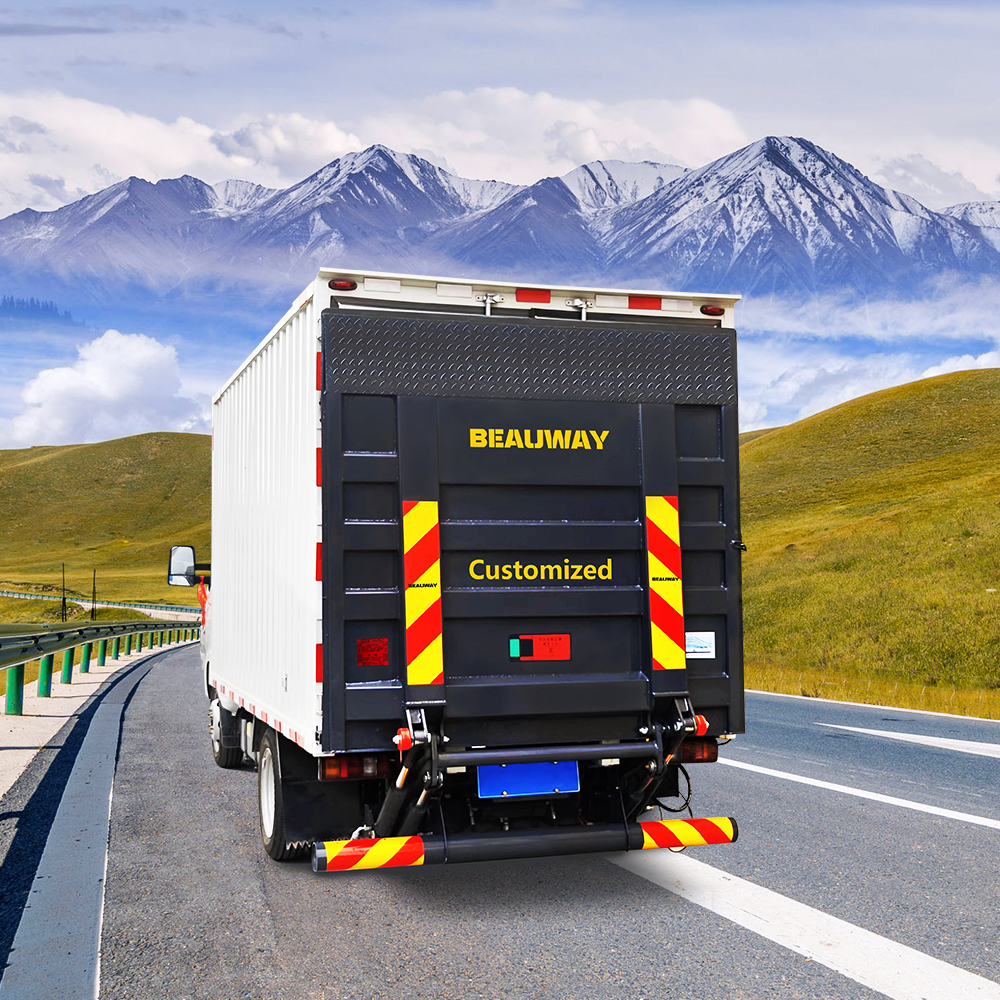
Control Systems and Safety
The choice of control system directly affects both efficiency and risk.
- Manual hydraulic – simple, but rarely used in modern fleets
- Electric control – precise and fast response
- Remote control – improves safety in complex environments
From operational data, adding proper safety features can reduce incidents significantly:
- Anti-slip platform surface
- Emergency stop function
- Overload protection
- Mechanical locking system
These are not optional upgrades—they are essential in high-frequency operations.
Material Selection in Practice
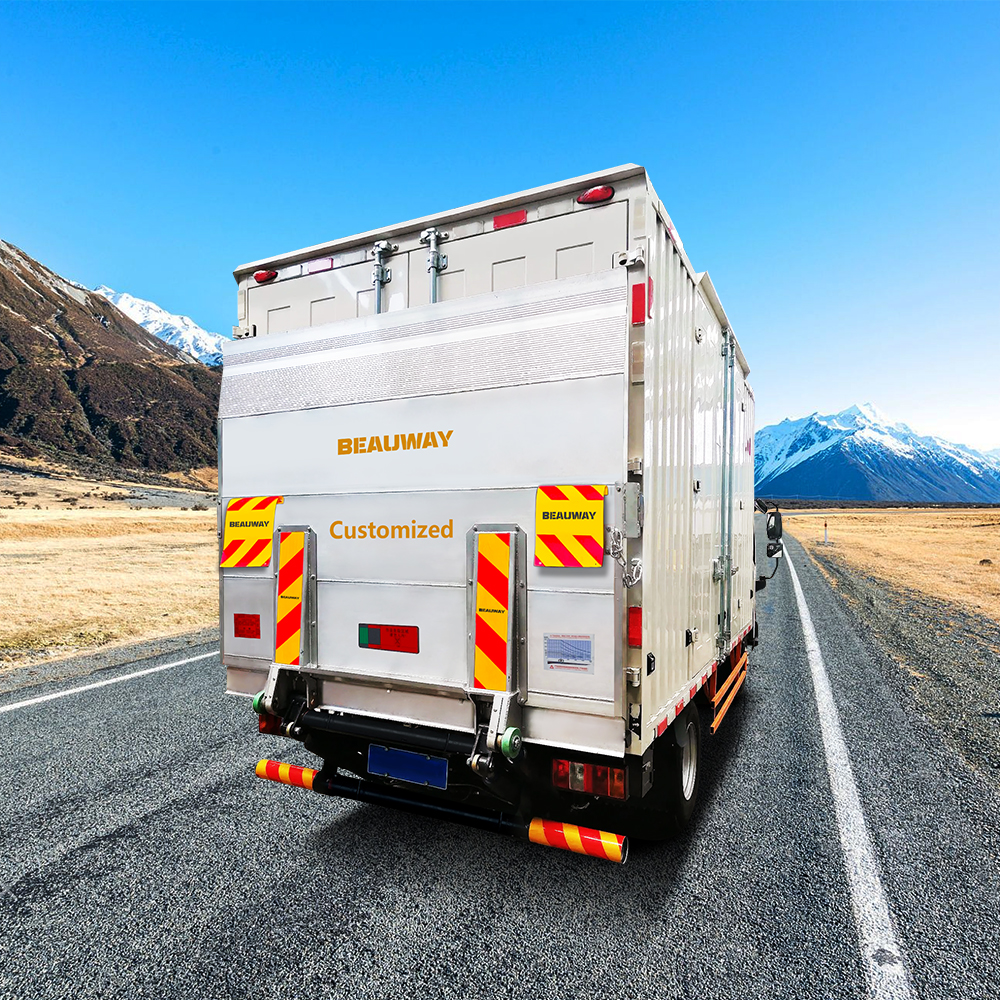
Material choice is often underestimated during procurement.
- Steel platforms
- Strong and durable
- Suitable for heavy-duty, high-frequency use
- Aluminum platforms
- Lighter by 15–20%
- Better corrosion resistance
In coastal or cold-chain logistics, aluminum performs noticeably better over time.
This is especially relevant when evaluating used cantilever tail lifts, where corrosion can become a hidden issue.
Cost and Procurement Strategy
There are typically three procurement paths:
- New equipment (cantilever tail lift for sale)
- Second-hand units (used cantilever tail lifts)
- Fleet orders (wholesale cantilever tail lift)
Each has its place, but long-term cost should always be evaluated instead of upfront pricing alone.
Many buyers initially focus on cantilever tail lift price, but operational downtime and maintenance often become the real cost drivers.
Customer Case — Beauway
One of our projects involved a mid-sized logistics company in Germany.
Their original folding lift struggled under frequent pallet handling, causing instability and slow operation.
Solution
Beauway provided a 1500 kg cantilever configuration, optimized for their vehicle structure and upgraded to an electric control system.
Results
- Loading efficiency increased by 30%
- Approximately 15 minutes saved per shift
- Improved forklift coordination
- Reduced labor cost by around 12%
- Zero safety incidents reported after upgrade
This case highlights a key point: performance gains are not from higher specifications alone, but from correct matching.
Final Considerations
Choosing the right cantilever tail lift is not just a technical decision—it is an operational one.
A well-matched system improves efficiency, reduces risk, and extends equipment lifespan. Poor selection, on the other hand, leads to continuous hidden costs.
From our experience, the most reliable results come from evaluating real usage conditions first, then selecting specifications accordingly—not the other way around.