-
(+86) 190-1604-8953










From Three Breakdowns a Month to One: A Fleet Operator’s Guide to Tail Lift Maintenance
From Three Breakdowns a Month to One: A Fleet Operator’s Guide to Tail Lift Maintenance
Table of Contents
- Where Tail Lifts Actually Fail
- Daily Tail Lift Maintenance Checks
- Tail Lift Maintenance Checklist and Service Schedule
- Common Tail Lift Problems and Maintenance Solutions
- Tail Lift Maintenance Requirements and Compliance
- Tail Lift Maintenance Cost and Budget Planning
- Case Study: Turning Around a High-Failure Fleet
- FAQ
Most tail lift failures don’t arrive without warning. There’s usually a sign — a slight hesitation on the way up, a hose that’s been weeping hydraulic fluid for a week, a control pendant that occasionally needs a second press. The problem is that in busy depot environments, those signs get ignored until the unit stops working entirely and a vehicle is suddenly off the road.
Knowing how to maintain a tail lift properly — through structured daily tail lift maintenance checks, a realistic tail lift service schedule, and a clear approach to tail lift troubleshooting and maintenance — is what separates fleets that run reliably from those that don’t. This guide covers all of it: what to inspect, when to do it, what common tail lift problems actually mean, and what the real tail lift maintenance cost looks like when things go wrong.
1. Where Tail Lifts Actually Fail
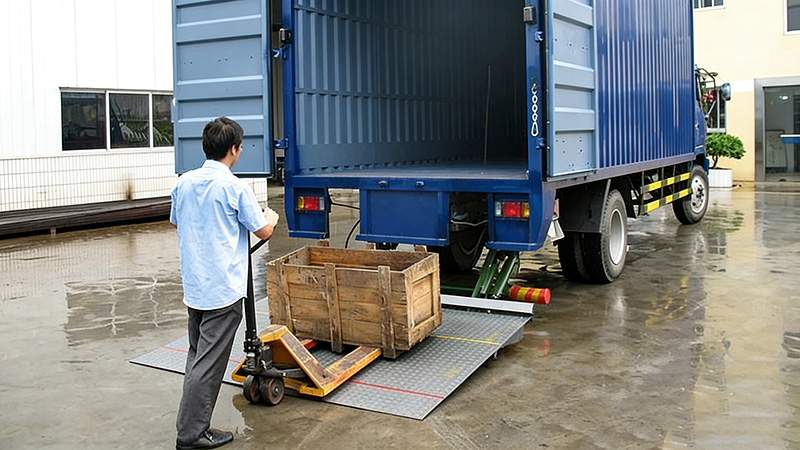
Understanding failure patterns is the foundation of any effective tail lift preventive maintenance programme. Three systems account for the overwhelming majority of breakdowns — and each one has a distinct failure signature worth knowing.
Hydraulic Tail Lift Maintenance
Hydraulic tail lift maintenance starts with the fluid itself. Hydraulic oil degrades over time — it absorbs moisture, picks up metal particles from component wear, and eventually loses the viscosity it needs to function properly. Tail lift hydraulic system maintenance matters because contaminated oil doesn’t just reduce performance; it accelerates wear on every component it touches.
Hoses are the other persistent weak point. They crack, they chafe against chassis members, and the fittings at each end are under constant stress. A slow hydraulic leak rarely announces itself dramatically — it shows up as a damp patch on the underside of the vehicle or a gradual drop in the reservoir level. Catch it early and it’s a fitting replacement. Miss it and it becomes a seized cylinder.
Electric Tail Lift Maintenance Tips
The electrical system causes a different category of problems, and they’re often harder to diagnose. Following electric tail lift maintenance tips starts with the battery — condition degrades steadily with each charge cycle, and a battery that tested fine six months ago may no longer deliver adequate voltage under load.
Wiring connections are equally vulnerable to vibration. Over months of road use, terminals work loose, insulation chafes through where cables run against metal edges, and moisture finds its way into connectors that weren’t properly sealed. The result is intermittent faults that are difficult to reproduce on the spot and easy to misdiagnose — the most frustrating category of tail lift not working calls a depot manager receives.
Structural Components
Structural components take continuous punishment. The platform, linkage arms, and pivot points all absorb load stress on every single operation. Weld cracking tends to appear at high-stress junctions first. Hinge pins wear and develop play. Platform surfaces deform under repeated off-centre loading. None of this is dramatic until it is.
2. Daily Tail Lift Maintenance Checks
A maintenance schedule is only useful if it’s realistic for the operating environment. The framework below is based on standard commercial fleet use — adjust frequencies upward for high-cycle operations such as multi-drop distribution or cold chain work.
Before First Use — Daily Tail Lift Maintenance Checks
Consistent daily tail lift maintenance checks take under five minutes and should be non-negotiable at every vehicle handover:
- Walk around the rear of the vehicle and look for hydraulic fluid on the ground or on the underside of the unit
- Operate the lift through one full cycle and listen for anything different — grinding, knocking, or unusual hesitation
- Check that the platform sits level at ground height and at vehicle floor height
- Confirm the emergency stop is accessible and functioning from both sides
- Inspect the platform surface for damage that could create a trip or load hazard
Weekly Checks
- Check the hydraulic fluid reservoir level — a consistent drop indicates a leak that needs tracing, not topping up
- Inspect all visible hose runs for cracking, chafing, or weeping at fittings
- Test all control functions including any secondary or emergency controls
- Check lubrication points on pivot pins and linkage arms
- Inspect platform hinges and check for play developing in pivot points
Monthly Checks
- Full electrical system check: battery load test under operating conditions, not just open-circuit voltage
- Check wiring loom routing for chafe points against chassis or body members
- Inspect all structural welds, particularly at high-stress junctions on the linkage arms
- Measure platform level accuracy across its full travel range
- Review and update the service log
Annual Professional Service
Regardless of how well the daily and weekly routines are maintained, an annual strip-down service by a qualified engineer is essential. This covers:
- Hydraulic oil change and full hose inspection
- Electrical system audit and battery load assessment
- Structural NDT (non-destructive testing) on critical welds
- Calibration checks across full platform travel range
- Statutory inspection documentation update
3. Tail Lift Maintenance Checklist and Service Schedule
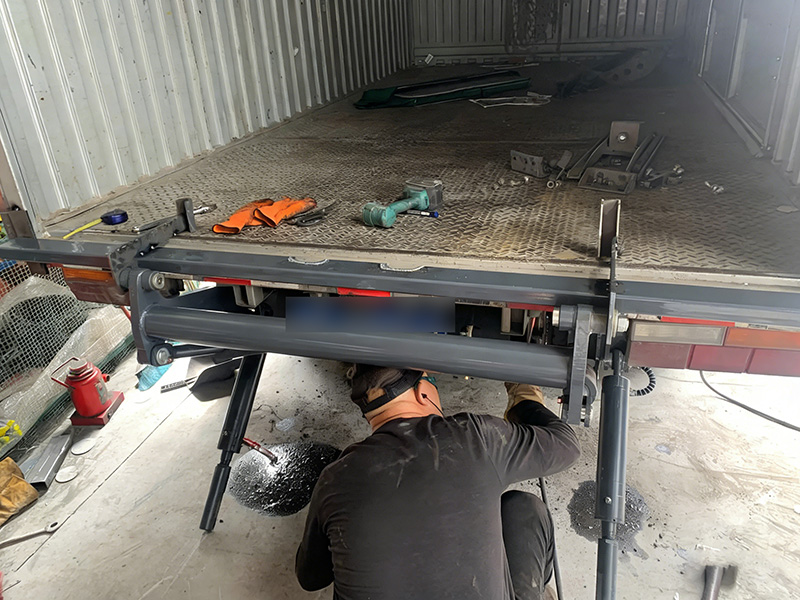
A properly structured tail lift maintenance checklist and tail lift inspection checklist remove guesswork from the process. The table below consolidates both into a single working reference.
Tail Lift Service Schedule — Full Reference Table
| Inspection Item | Method | Frequency | Risk Level |
|---|---|---|---|
| Hydraulic fluid level | Visual check + reservoir inspection | Daily | High |
| Hose condition | Visual inspection along full run | Daily | High |
| Platform level & surface | Operational test + visual | Daily | High |
| Emergency stop function | Functional test | Daily | High |
| Lubrication points | Manual grease application | Weekly | Medium |
| Electrical connections | Terminal check + pendant test | Weekly | Medium |
| Battery condition | Load test under operating voltage | Monthly | High |
| Structural welds | Visual + NDT where indicated | Monthly | Medium |
| Full hydraulic oil change | Drain and refill | Annually | High |
| Statutory thorough examination | Qualified engineer inspection | Annually | High |
Following this tail lift service schedule consistently is the single most effective way to reduce unplanned downtime. The checks themselves cost almost nothing — what they prevent can be very expensive.
4. Common Tail Lift Problems and Maintenance Solutions
This section covers common tail lift problems and maintenance responses — organised by symptom so the right action can be identified quickly on site.
Tail Lift Troubleshooting and Maintenance — Fault Diagnosis Table
| Symptom | Most Likely Cause | First Action |
|---|---|---|
| Unit won’t operate at all | Battery failure or blown fuse | Load-test battery; check fuse rating and condition |
| Slow or weak lifting | Low or contaminated hydraulic fluid | Check reservoir level; inspect fluid colour and clarity |
| Platform drifts down under load | Internal hydraulic valve leakage | Take out of service immediately |
| Grinding or knocking noise | Worn pivot pins or dry linkage joints | Lubricate and inspect for wear; measure pin play |
| Intermittent control response | Loose terminal or corroded connector | Inspect pendant cable and all wiring connections |
| Platform not level at ground | Linkage adjustment or worn pivot | Adjust or replace as required |
| Hydraulic fluid on ground | Hose failure or fitting leak | Do not operate until source is identified and fixed |
⚠️ Safety note — tail lift not working under load: A platform that drifts downward while carrying weight is not a minor inconvenience. It indicates internal leakage past a hydraulic valve or cylinder seal. The unit must be taken out of service immediately and inspected by a qualified engineer before returning to use. This is the single most important entry in any tail lift troubleshooting and maintenance reference.
What “Tail Lift Not Working” Usually Means in Practice
When a driver reports a tail lift not working, the cause falls into one of three categories more than 90% of the time:
- Electrical failure — flat or failing battery, blown fuse, or a wiring fault introduced by vibration
- Hydraulic failure — low fluid, contaminated oil, or a hose failure reducing system pressure
- Operator error or damage — overloading, off-centre loading, or an impact that’s introduced structural damage
Structured tail lift troubleshooting and maintenance works through these in order. Start with the electrical system — it’s faster to check and accounts for the majority of sudden failures. If electrical checks out, move to hydraulic. If both check out, inspect the structure and linkage for impact damage.
5. Tail Lift Maintenance Requirements and Compliance
Tail lift maintenance requirements vary by country, but the common thread across most commercial vehicle regulations is this:
“You need to be able to demonstrate that the equipment has been properly maintained and inspected, and that the people operating it are competent to do so.”
In practice, meeting tail lift maintenance requirements means three things:
- A written service record for each unit — date, mileage or cycle count, work carried out, and the name of the person responsible
- Periodic thorough examination by a competent person — in most markets, a qualified engineer rather than a depot mechanic
- Documented operator training for anyone using the equipment on a regular basis
The service record is consistently the weakest link in compliance audits. It’s worth building the paperwork into the handover routine rather than trying to reconstruct it afterwards. A missing service record doesn’t just create a compliance problem — it removes your ability to spot developing trends in a unit’s fault history before they become expensive failures.
6. Tail Lift Maintenance Cost and Budget Planning
Tail lift maintenance cost is one of the more controllable variables in a fleet operating budget — but only if it’s managed proactively.
An unplanned breakdown typically costs two to four times more than the equivalent planned maintenance. Emergency call-out rates, expedited parts, and the operational disruption of a vehicle off the road at short notice all compound quickly.
The cost comparison between tail lift preventive maintenance and reactive repair breaks down like this:
| Cost Factor | Preventive Maintenance | Reactive Repair |
|---|---|---|
| Hydraulic oil change | £80–£150 per service | £300–£800+ if pump or cylinder fails |
| Hose replacement (scheduled) | £60–£120 per hose | £200–£500+ emergency call-out |
| Electrical inspection | £50–£100 | £150–£400+ fault diagnosis + repair |
| Vehicle downtime | Planned, minimal disruption | Unplanned, 1–3 days average |
| Total annual spend | Predictable, lower | Variable, significantly higher |
Beyond direct tail lift maintenance cost, there’s the question of lifespan. Units with consistent oil change regimes and structured servicing show noticeably less internal wear at the same age and cycle count. A well-maintained tail lift will typically outlast a neglected one by several years — which means the replacement capital cost is deferred considerably.
7. Case Study: Turning Around a High-Failure Fleet
A mid-sized logistics operator was averaging three to four unplanned tail lift breakdowns per month across a fleet of eighteen vehicles — enough to create genuine operational disruption and a repair bill that was difficult to justify at budget reviews.
The diagnosis wasn’t complicated. There were no daily tail lift maintenance checks built into the handover process, hydraulic fluid changes had been happening reactively rather than on any tail lift service schedule, and service records were incomplete. Several drivers had developed habits — abrupt operation, consistent off-centre loading — that were accelerating structural wear.
The intervention was straightforward:
- A documented tail lift maintenance checklist built into the daily vehicle handover process
- A fixed hydraulic oil change interval aligned to the manufacturer’s specification
- Quarterly engineer inspections covering tail lift hydraulic system maintenance and electrical audit
- A half-day driver refresher session covering correct operation, basic daily tail lift maintenance checks, and how to report early-stage faults
The result: Within six months, unplanned breakdowns had dropped to under one per month across the same fleet. The annual tail lift maintenance cost for the programme was a fraction of the previous repair spend — and vehicle availability improved measurably.
8. FAQ
Q: How often should tail lifts be serviced?
How often should tail lifts be serviced depends on operating intensity, but the baseline framework for most commercial fleets is: daily operator checks, weekly lubrication and electrical inspection, monthly full system review, and annual professional service by a qualified engineer. High-cycle operations — multi-drop distribution, cold chain, construction logistics — should increase monthly checks to fortnightly and consider six-monthly engineer inspections rather than annual.
Q: What does a proper tail lift inspection checklist cover?
A complete tail lift inspection checklist covers four areas: hydraulic system (fluid level, hose condition, pressure consistency), electrical system (battery load, wiring integrity, control function), structural components (platform condition, weld integrity, pivot wear), and safety systems (emergency stop, overload protection, anti-slip surface condition). The tail lift maintenance checklist in Section 3 of this guide provides a full reference table with frequencies and risk ratings for each item.
Q: What are the most common tail lift problems and maintenance responses?
The most common tail lift problems and maintenance responses break down by system. Hydraulic issues — slow lifting, fluid loss, platform drift — account for roughly 40% of faults and are addressed through hydraulic tail lift maintenance: fluid changes, hose inspection, and valve checks. Electrical faults — units not starting, intermittent control response — account for another 35–40%, and are addressed through electric tail lift maintenance tips: battery load testing, terminal inspection, and wiring audit. Structural wear makes up most of the remainder.
Q: What should I do if a tail lift is not working?
When a tail lift not working call comes in, work through the following in order. First, check the electrical system — battery voltage under load, main fuse, and pendant connections. Second, check the hydraulic system — fluid level, visible leaks, and reservoir condition. Third, inspect for visible structural damage or impact. If the platform drifts downward under load at any point during this process, take the unit out of service immediately — this is a hydraulic valve failure and is covered in detail in the tail lift troubleshooting and maintenance section of this guide.
Q: What are the tail lift maintenance requirements for commercial fleets?
Tail lift maintenance requirements for commercial fleets typically include: documented daily pre-use checks, periodic thorough examination by a competent engineer (usually every six to twelve months depending on jurisdiction), written service records for each unit, and evidence of operator training. The specific legal framework varies — UK operators follow LOLER and PUWER regulations, while EU operators follow equivalent national implementations of the Machinery Directive. Failure to meet tail lift maintenance requirements creates both compliance exposure and insurance liability.
Q: How can tail lift maintenance cost be controlled?
| Strategy | Impact on Tail Lift Maintenance Cost |
|---|---|
| Implement daily checks | Catches faults before they escalate — highest ROI action |
| Follow a fixed service schedule | Eliminates emergency call-out rates for predictable maintenance |
| Keep complete service records | Identifies developing fault patterns before they cause failure |
| Train operators on correct use | Reduces wear from abrupt operation and off-centre loading |
| Batch annual servicing across fleet | Reduces per-unit engineer call-out cost significantly |
The most reliable way to control tail lift maintenance cost is to treat maintenance as an operational system rather than a reactive response to failure.
Q: Can depot mechanics carry out all maintenance?
| Task | Who Should Do It |
|---|---|
| Daily tail lift maintenance checks | Trained depot staff or drivers |
| Weekly lubrication and electrical inspection | Trained depot mechanic |
| Monthly full system inspection | Technically competent mechanic with manufacturer training |
| Annual service and statutory examination | Qualified engineer with specific tail lift experience |
Summary
The tail lift gets used dozens of times a day in a busy operation. Most operators don’t think about it until it stops working. The ones who do — who build daily tail lift maintenance checks into the handover routine, who follow a proper tail lift service schedule, who keep a complete service record and know how to read a tail lift troubleshooting and maintenance table when something sounds wrong — spend considerably less on repairs and considerably less time dealing with vehicles off the road.
None of the practices in this guide are difficult. The tail lift maintenance checklist, the fault diagnosis table, the cost comparison — all of it is straightforward to implement. It just needs to be consistent.