- (+86) 190-1604-8953










How to Inspect and Test a Corrosion-Resistant Tail Lift — Step by Step
How to Inspect and Test Your Corrosion-Resistant Tail Lift: A Practical Guide from Someone Who’s Seen What Happens When You Don’t
Let me be direct with you: I’ve watched expensive tail lifts get scrapped years ahead of schedule, not because they were built badly, but because nobody took the time to check them properly. A corrosion-resistant tail lift is only as good as the maintenance program behind it. The anti-corrosion engineering — galvanizing, powder coat, stainless reinforcement — buys you time. What you do with that time is up to you.
This guide walks through what I actually do when inspecting these units. Not theory. Not manufacturer boilerplate. Real steps, in order, with the kinds of details that only show up after you’ve done this enough times to know what you missed.
Why You Can’t Skip This — Even on “Corrosion-Proof” Equipment
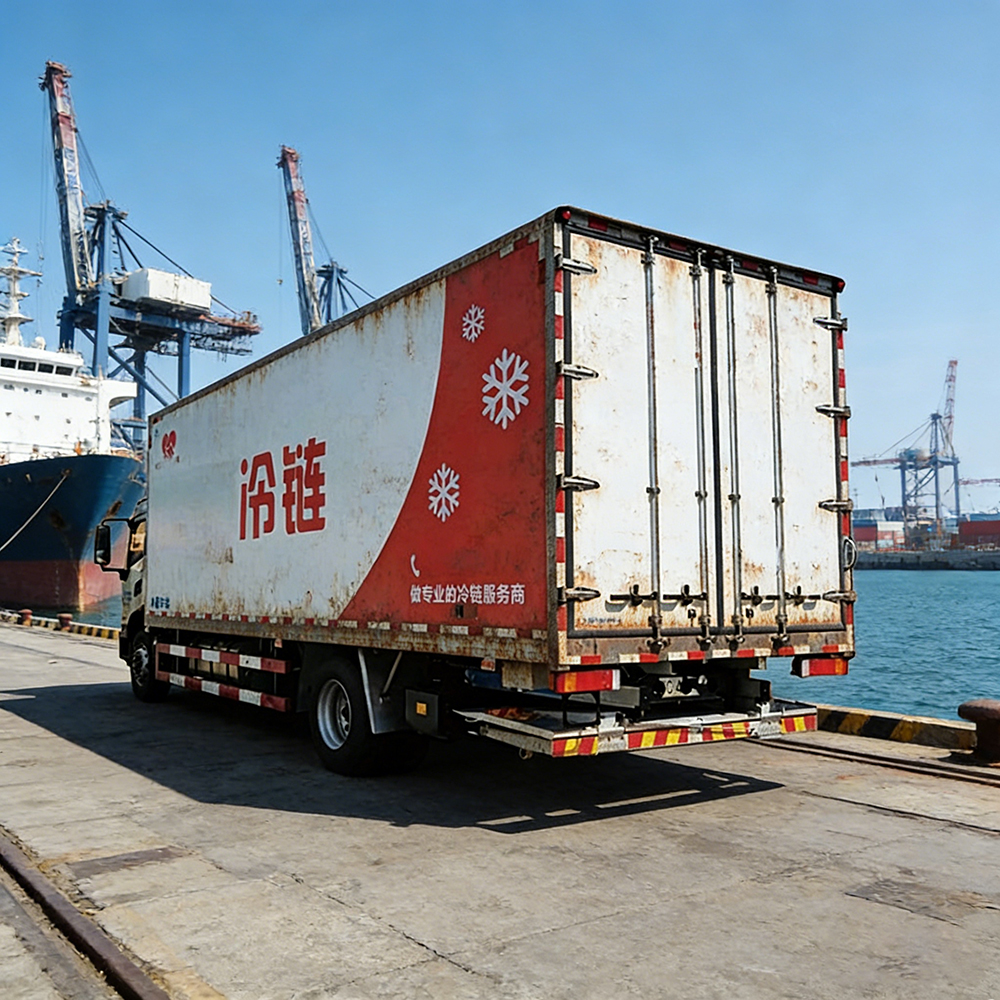
Here’s something suppliers rarely tell you upfront when you Buy Corrosion-Resistant Tail Lift equipment: no coating system is permanent. Hot-dip galvanizing, epoxy primer, powder topcoat — they all have failure modes. The question isn’t whether the protection degrades. It’s whether you catch the early signs before a €400 touch-up job turns into a €4,000 structural repair.
What accelerates this degradation faster than most operators expect:
- Winter road salting — brine gets into hinge gaps and sits there for weeks
- Cold-chain and coastal environments with persistent salt-laden air
- Chemical residues from cargo that don’t get cleaned off between runs
- Coating micro-cracks caused by repeated platform flexing under load
The European freight maintenance data isn’t surprising once you understand this: fleets running proper quarterly inspections see roughly 40% longer mean time between failures and about 28% lower annual repair costs than those operating without a structured program. That gap compounds over years.
Working with a reliable Corrosion-Resistant Tail Lift Supplier who actually documents maintenance expectations in the supply agreement makes a real difference. Push for it during contract negotiations — not as an afterthought.
Before You Start: Get the Right Tools Together
Showing up to a tail lift inspection without a thickness gauge is like a doctor doing a checkup without a stethoscope. You can eyeball things, but you’ll miss what matters.
Inspection Tool Reference
| Tool | What It’s For |
|---|---|
| LED inspection torch + 10× loupe | Catching micro-cracks and early coating blisters |
| Ultrasonic thickness gauge | Measuring steel wall and coating thickness without disassembly |
| Hydraulic pressure gauge (0–350 bar) | Comparing working pressure against the spec sheet |
| Multimeter + insulation resistance tester | Tracing electrical faults and connector corrosion |
| Grease gun + lubricant sampler | Checking lube quality and confirming fill levels |
| Calibrated test weights or marked pallets | Load verification — you need a known figure, not a guess |
A few practical notes before beginning: park on flat, solid ground. Disconnect the power unit. Put cones or barriers around the work area. If you’re working with equipment procured through a Corrosion-Resistant Tail Lift Wholesale arrangement and you have multiple units from the same batch, pull the factory inspection record for that model — it gives you the baseline figures you’re comparing against.
The Visual Check: Where Most Problems Actually Reveal Themselves
I know visual inspection sounds basic. That’s exactly why it gets underestimated. In my experience, a careful eye catches upward of 70% of developing faults before they become failures. The trick is knowing where to look.
Structural Areas That Hide Problems
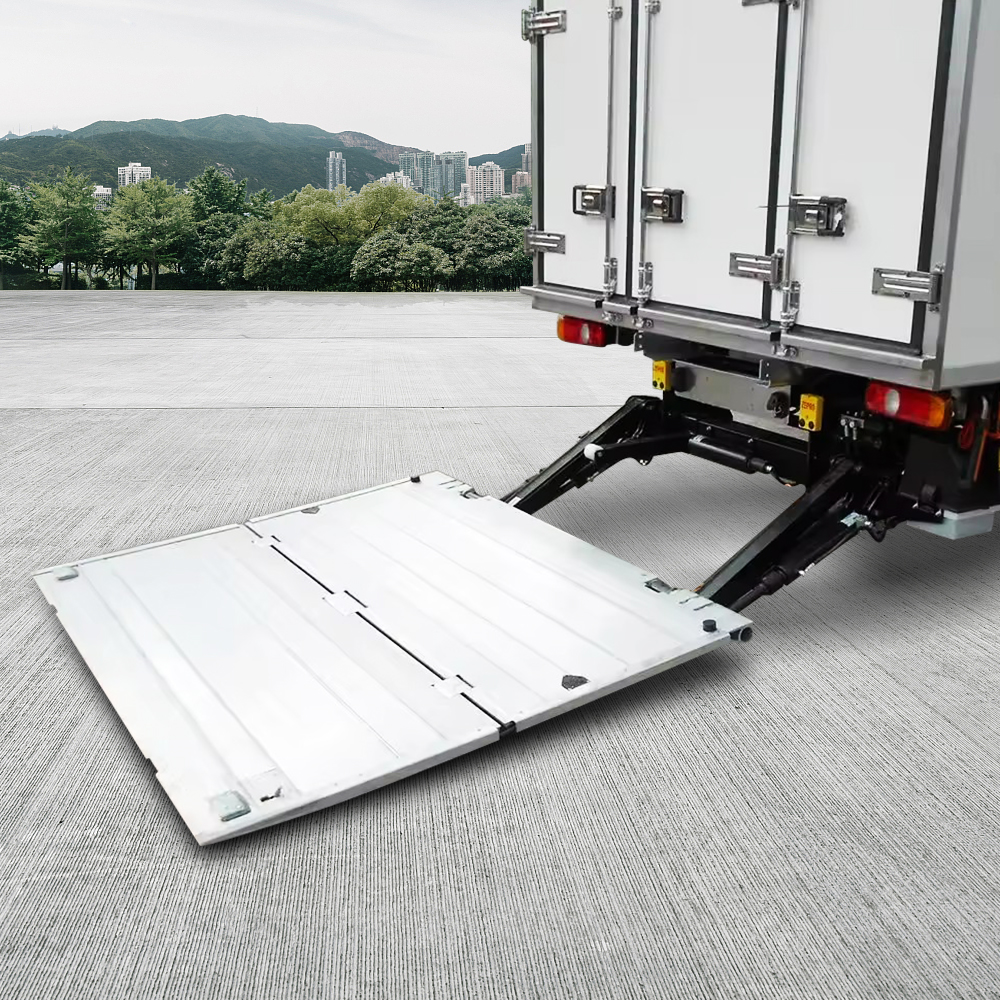
Work from the platform surface outward, then underneath:
- Anti-slip drainage channels — salt and grit pack into these grooves and hold moisture against the coating for days at a time
- Weld seams where the platform meets the folding hinge — the heat-affected zone is where coating adhesion is thinnest; corrosion starts here more often than anywhere else
- Main lift arm and pin bores — look for oval-shaped elongation of the bore alongside rust. That combination means the pin has been running loose for a while
- Bottom contact surfaces where the tail lift meets the vehicle body — two different metals in contact means galvanic corrosion risk, especially where paint gets worn by repeated contact
Flag any rust spot larger than 2mm, or any coating blister covering more than 1cm². These need treatment within 48 hours — not at the next scheduled service, now.
Equipment from a reputable Corrosion-Resistant Tail Lift Manufacturer will have the coating specification on the data plate or in the documentation. Use that to calibrate your expectations — a 90μm epoxy system degrades differently than a basic powder coat.
Hydraulic and Power Unit Checks
| Area | What Pass Looks Like | What Raises a Flag |
|---|---|---|
| Hose outer sheath | Clean, flexible, no oil tracking | Stiffening, cracking, weeping at fittings |
| Quick-connect fittings | Seated, dry, no seepage | Extruded O-ring, visible oil film |
| Reservoir body | Intact coating, no base corrosion | Pitting on the underside from trapped water |
| Solenoid valve wiring | No burnt odor, insulation intact | Green or white deposits on connector pins |
Functional Testing: Does It Actually Work as Designed?
After visual work comes operation. For any unit you’ve recently acquired through Corrosion-Resistant Tail Lift Online Purchase channels — especially if it arrived without a live commissioning check — treat this as your baseline.
Running the Unloaded Cycle Test
Work through this in sequence:
- Deploy from stow to horizontal — time it and write the number down. A variance of more than ±15% from the factory figure usually points to something worth investigating
- Three full raise-and-lower cycles — listen throughout. A healthy hydraulic pump under normal load produces a steady, low-frequency hum. What you don’t want: intermittent cavitation, metal-on-metal grinding, or a vibration that wasn’t there last month
- Static hold at 600mm — hold the empty platform there for a full 60 seconds and watch for drift. More than 5mm of descent means there’s leakage in the hydraulic sealing — find it before it finds you
- Safety device function check — trigger the emergency stop, the platform lock, and the overload cutout individually. Each one should respond cleanly, without hesitation
If the platform tracks to one side during movement — what the trade calls “running off” — that usually means the two hydraulic cylinders are producing unequal force, or there’s asymmetric wear in the guide rails. That requires a deeper look, not just a note on the report.
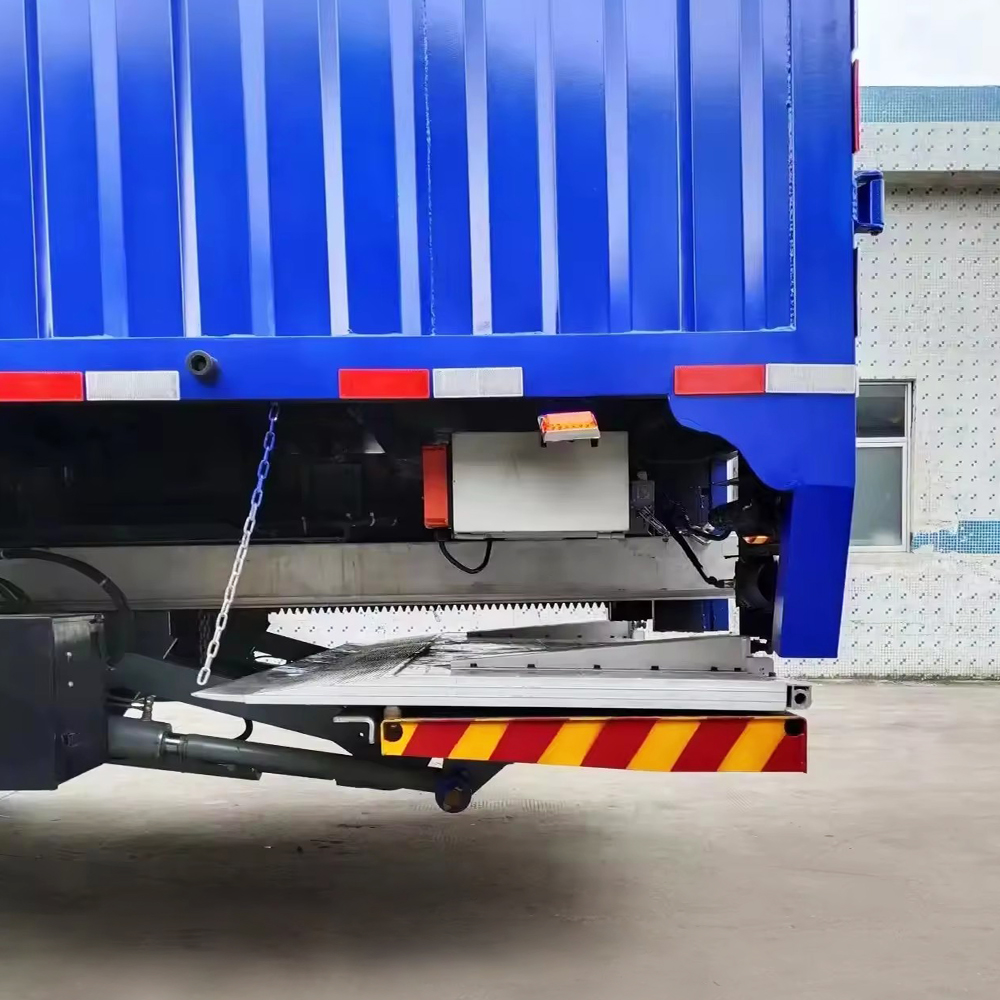
Cleaning: The Part People Rush and Regret
Good cleaning is active corrosion prevention, not housekeeping. Salt, mud, and organic residue left sitting on coated surfaces create localized electrochemical conditions that attack the substrate from underneath.
For operators placing a Rust-Proof Tail Lift Bulk Order across a fleet, getting everyone on a consistent cleaning protocol makes a measurable difference in how units age. Here’s the breakdown that works:
- End of every shift: Water rinse and soft brush along the platform surface, with focused attention to hinge areas and any folding seams. Takes five minutes. Prevents a lot.
- Weekly: Neutral detergent, low-pressure wash — keep it under 80 bar — followed by compressed air through the hidden cavities. These are where water pools and sits.
- Monthly: Pull the pin shaft covers, clear out old grease and debris from the bushings, and measure the wear clearance while you’re in there.
One thing I’ve seen cause more electrical headaches than almost anything else: technicians directing high-pressure washers straight at connectors, sensors, and hydraulic fittings. Don’t. Water at pressure finds its way into places it shouldn’t be and stays there.
Lubrication: Less Obvious Than It Looks, More Important Than It Sounds
Lubrication is frequently treated as a formality. It isn’t. Done correctly, it reduces friction, yes — but it also excludes moisture and oxygen from metal-to-metal contact surfaces, which is exactly where corrosion starts when lubrication lapses.
Service Intervals by Component and Usage Level
| Component | Lubricant Type | High-Use Interval | Light-Use Interval |
|---|---|---|---|
| Main hinge pin shafts | Lithium grease, NLGI Grade 2 | Weekly | Monthly |
| Guide rail sliding surfaces | MoS₂ grease | Weekly | Every 2 months |
| Folding arm connection pins | Water-resistant lithium grease | Fortnightly | Monthly |
| Exposed hydraulic cylinder rod | Thin anti-rust film oil | Monthly | Quarterly |
| Platform locking hook | Spray lubricant | Weekly | Monthly |
For Heavy-Duty Corrosion-Resistant Tail Lift for Sale equipment running in demanding cycles — high-frequency dock operations, heavy cargo environments — tighten these intervals by about 30%. Keep a consumption log per unit; if grease usage per service starts climbing, that’s a wear indicator worth tracking.
Coating Repair: The 72-Hour Rule
Once bare metal is exposed, you have a narrow window. In my experience, any rust spot left unaddressed for more than three days in a normal yard environment will double in affected area. The process isn’t complicated, but the sequence matters:
- Angle grinder with a wire cup wheel — work to St2 standard (you should see a consistent metallic sheen, not just lighter-colored rust)
- Degrease the prepared area completely with acetone or a purpose-made degreaser; don’t skip this step
- Apply epoxy zinc-rich primer — dry film thickness should land at 60μm minimum; measure it, don’t estimate it. Allow a full 24-hour cure
- Apply a compatible topcoat in the same system family as the original coating
- Re-measure total dry film thickness over the repair area before closing out the job
If your equipment is running a Custom Corrosion-Resistant Tail Lift OEM specification with non-standard colors or coating chemistry, go back to the original manufacturer for repair materials. Mixing systems from different suppliers is how adhesion failures happen.
Load Testing: The Check Most Maintenance Programs Skip Too Long
Full load testing can run quarterly for units in normal service. But it’s mandatory — not discretionary — after any of the following: collision or impact incident, confirmed overloading, hydraulic major overhaul, or large-scale coating restoration work.
This is especially true for units from a Warehouse Corrosion-Resistant Tail Lift Supplier operating in high-cycle fixed dock environments, where cumulative mechanical fatigue accumulates faster than field units.
The Test Sequence
- Warm-up at 25% rated load — two full cycles to bring the hydraulic system up to operating temperature
- Full rated load, three cycles — record cycle times and peak pressure on each one. Variation between cycles is informative
- 110% overload verification (where your site conditions permit) — one cycle at 10% above rated to confirm the overload protection actually triggers
- Full load static hold at 600mm for 5 minutes — descent limit is 10mm for a pass result
- Emergency stop under load — trigger it mid-raise and confirm the stop timing is within spec
Electrical: The System That Corrodes Quietly Until It Fails Loudly
In humid, coastal, and cold-chain environments, the electrical system is consistently where tail lifts cause the most operational disruption. The corrosion is slow and invisible until a connector fails at exactly the wrong moment.
Anyone who has made a Truck Rust-Proof Tail Lift Purchase for coastal or port-adjacent operations needs this on the quarterly checklist:
- Insulation resistance across all circuits to earth — below 1MΩ is a problem, full stop
- Open every weatherproof connector — white powder means aluminium oxide; green means copper corrosion. Both mean replace the terminal, not just clean it
- Check the control box rating and seal condition — IP65 minimum for outdoor service; if the gasket has taken a compression set it no longer seals
- Remote handset test at maximum range — signal attenuation from antenna corrosion is gradual and easy to miss until range drops significantly
Folding Tail Lifts: Three Extra Checks That Matter
The folding mechanism multiplies the number of hinge points, which multiplies the number of places corrosion can start. Before committing to a Folding Corrosion-Resistant Tail Lift Wholesale arrangement, understanding these inspection specifics helps with realistic maintenance budgeting.
Dedicated inspection points for folding mechanisms:
- Platform flatness when fully deployed — use a straightedge and record the deviation. More than 3mm per metre needs adjustment before the next operating shift, not the next scheduled service
- Fold-lock spring free length — a reduction of more than 10% from nominal means the spring needs replacing. Springs don’t give obvious warning signs; they just stop locking reliably
- Dual cylinder extension synchronicity — both cylinders should be within 5mm of each other at full extension. Larger discrepancy means unequal wear or a flow control issue
Building the Record That Pays for Itself
A single inspection is a snapshot. A series of inspections over time is a trend — and trends tell you what’s coming before it arrives. I’d argue the inspection record is as valuable as the inspection itself for anyone managing more than a handful of units.
What belongs in each unit’s file:
- Date, technician, checklist items checked, and findings — every time
- Photos of anything flagged, with location noted
- Lubricant log: brand, grade, quantity used per service
- Coating repair log: location, materials, post-repair thickness measurement
- Hydraulic fluid log: specification, change date, oil sample results if analysed
For anyone in a long-term supply relationship with a Durable Tail Lift Corrosion Protection Supplier, complete records also serve as warranty claim evidence and underpin any future asset valuation. Gaps in the record get expensive in both scenarios.
Total Cost of Ownership: What the Price Tag Doesn’t Include
When submitting a Corrosion-Resistant Tail Lift Price Inquiry, the purchase price is the starting point, not the full picture. A unit that costs 15% more upfront but requires half the maintenance intervention over its service life comes out significantly cheaper when you run the numbers across five or seven years.
When gathering quotes, ask specifically for: recommended lubrication intervals and approved lubricant specifications; compatible repair coating materials and where to source them; hydraulic fluid change intervals and approved fluid grades; and current pricing on seals, filter elements, and pin shafts. These numbers tell you a lot about the total cost picture.
Working Directly With Suppliers: What to Look For
Whether you’re structuring a long-term Corrosion-Resistant Tail Lift Trade / Deal for fleet-scale procurement or a more straightforward purchase agreement, the quality of the technical relationship matters as much as the hardware spec.
Suppliers worth working with typically offer:
- On-site technical training covering inspection procedures — not just a PDF
- Remote diagnostic support drawing on the unit’s operating data
- A preventive maintenance schedule built around your actual usage patterns
- Spare parts availability with predictable lead times, not “we’ll check with the factory”
On the Question of Direct Supply
A growing number of fleet operators are moving toward Rust-Proof Tail Lift Direct Sale arrangements specifically to access original factory documentation, proprietary coating specifications, and customized after-sales programs. The economics make sense when volume justifies it.
The tradeoff is real, though. Direct procurement works best when your team can independently evaluate technical claims — verifying coating thickness specs, interpreting oil analysis results, assessing load test data. Without that internal capability, the intermediary layer that direct procurement removes was actually providing something useful.
What This Guide Covers — and Why It’s Structured This Way
This piece walks through six core inspection and maintenance steps — visual inspection, functional testing, cleaning, lubrication, coating repair, and load verification — plus dedicated guidance on electrical systems and folding mechanism specifics. A few things worth noting:
The numbers included here are actual thresholds with yes/no answers attached to them, not ranges left deliberately vague. The maintenance intervals are organized into four tiers — daily, weekly, monthly, quarterly — because a program with four tiers actually gets followed, and one with seventeen line items doesn’t. The scope runs from first price inquiry through to asset disposal because the decisions made at purchase affect what maintenance actually costs later. And every section is written for someone who needs to do this work, not someone who just needs to feel informed about it.
A systematic inspection and maintenance program isn’t overhead. For anyone running equipment that moves goods and depends on tail lift reliability, it’s the core of how you protect that investment.
By Carlos Mendes Fleet Operations Manager, Atlantic Cold Chain Logistics — Lisbon, Portugal Reviewed by BEAUWAY Operations Team · Last updated March 2026